.webp)

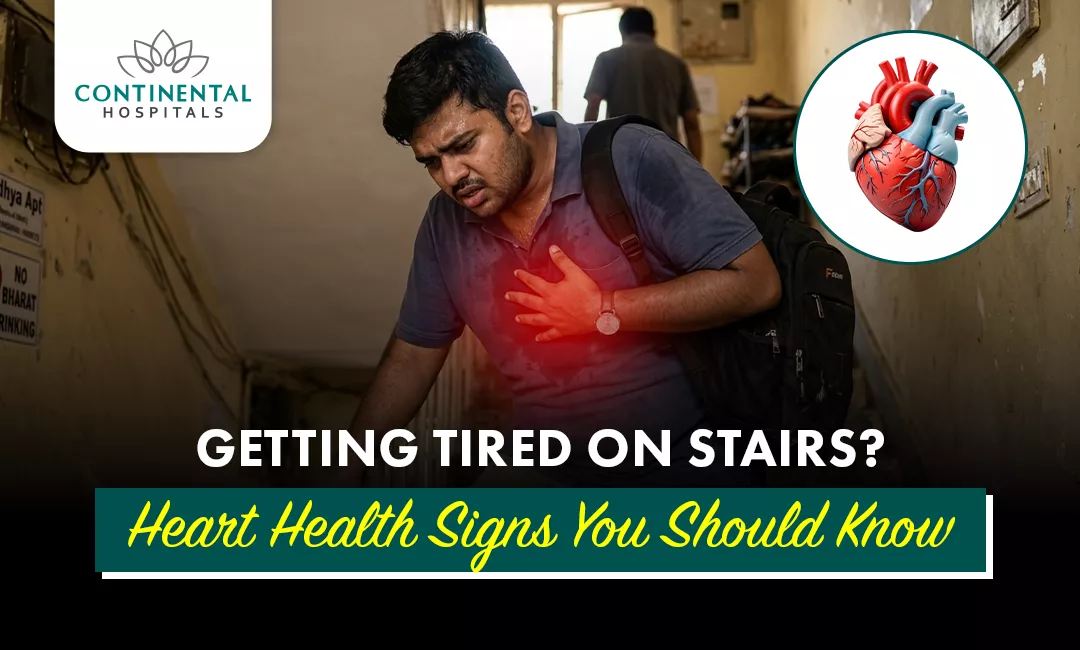
Physical exertion often reveals what the body hides during rest. For many, the simple act of climbing a flight of stairs serves as an informal stress test for the cardiovascular system. While it is common to feel a slight increase in breathing, experiencing significant exhaustion after a few steps may indicate that the heart is struggling to pump blood efficiently. Understanding the link between stair climbing and heart health is essential for early intervention.
Why Does Getting Tired on Stairs Matter?
Stair climbing requires multiple muscle groups to work against gravity, which significantly increases the demand for oxygenated blood. When the heart is healthy, it adapts by increasing its rate and stroke volume. However, if the arteries are narrowed or the heart muscle is weakened, this demand cannot be met.
Getting tired on stairs is often one of the earliest markers of declining cardiovascular function. It provides a baseline for personal fitness. If an activity that was once easy now causes profound fatigue or breathlessness, it is a signal from the body that requires professional evaluation.
Feeling persistent fatigue, breathlessness, or chest discomfort on stairs? Visit our cardiology department at Continental Hospitals for expert heart care today.
Identifying Heart Health Warning Signs
Fatigue is a broad symptom, but when it is specifically linked to climbing stairs, it takes on more clinical significance. Distinguishing between general tiredness and heart-related exhaustion is the first step in prevention.
Early Signs of Heart Disease
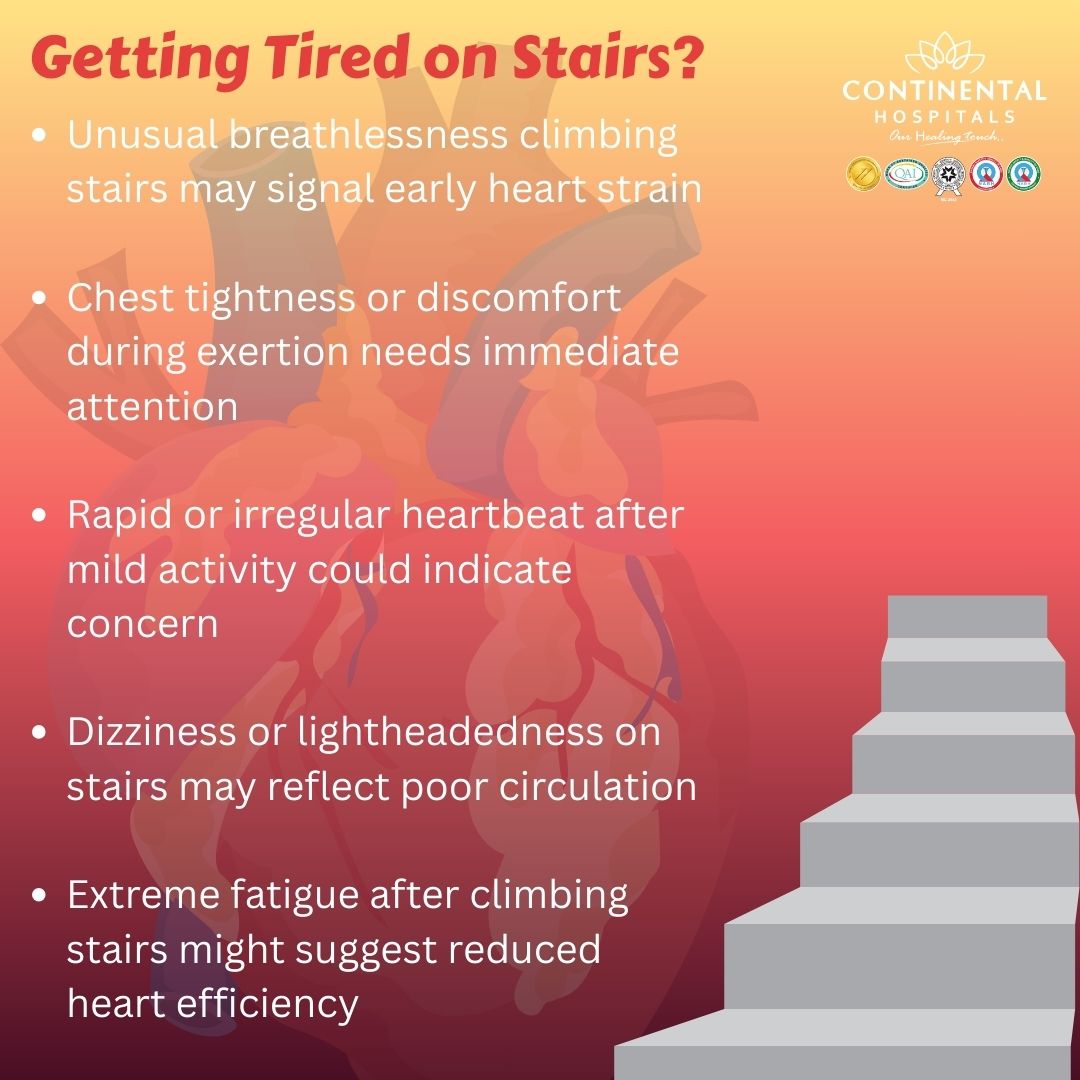
- Breathlessness Out of Proportion: Feeling winded after a single flight of stairs when you previously handled several floors without issue.
- Chest Tightness: A sensation of pressure or squeezing in the chest area that subsides once you stop moving.
- Rapid Palpitations: Feeling as though the heart is racing or skipping beats during or immediately after the climb.
- Dizziness: Feeling lightheaded or unsteady while ascending.
- Delayed Recovery: Taking more than five minutes to catch your breath or feel normal after reaching the top of the stairs.
Fatigue and Heart Problems
Chronic fatigue is not always about lack of sleep. In the context of heart health, fatigue occurs because the heart cannot circulate enough blood to meet the needs of the body's tissues. When you are getting tired on stairs, it may be due to:
- Coronary Artery Disease: Plaque buildup restricts blood flow to the heart muscle.
- Heart Valve Issues: Malfunctioning valves can cause blood to leak backward or restrict flow, forcing the heart to work harder.
- Heart Failure: A condition where the heart muscle is too weak or stiff to pump efficiently.
- Arrhythmia: Irregular heart rhythms that disrupt the steady flow of oxygen to the muscles.
Is it a Heart Attack or Just Tiredness?
It is vital to recognize when getting tired on stairs crosses the line into a medical emergency. A heart attack does not always look like a sudden collapse. It can manifest as intense discomfort during physical activity. If the tiredness is accompanied by pain radiating to the jaw, neck, or left arm, seek emergency care immediately.
Simple Ways to Monitor Your Heart Health
Monitoring your response to physical activity is a proactive way to manage your health. You can use the stairs as a daily check-in. Pay attention to your breathing patterns and the time it takes for your heart rate to return to a resting state. Consistent monitoring helps you provide accurate information to your doctor during a check-up.
Why Choose Continental Hospitals for Heart Care?
Continental Hospitals is recognized as a leading institution for cardiac care, providing comprehensive solutions for patients experiencing early warning signs of heart disease. When you choose Continental Hospitals, you are opting for a facility that prioritizes clinical excellence and patient safety.

Global Standards and Accreditations
The quality of care at Continental Hospitals is backed by prestigious international and national accreditations. These certifications ensure that the hospital adheres to the highest protocols for patient outcomes and safety.
JCI Accreditation: Joint Commission International (JCI) accreditation is the gold standard in global healthcare. It signifies that the hospital meets rigorous international standards for quality and patient care.
NABH Accreditation: The National Accreditation Board for Hospitals & Healthcare Providers (NABH) ensures that Indian healthcare facilities maintain high standards of clinical excellence and operational safety.
Specialized Cardiac Wing: The hospital features a dedicated heart institute equipped with the latest diagnostic and therapeutic technology.
Advanced Diagnostic Infrastructure
To accurately diagnose why you are getting tired on stairs, Continental Hospitals utilizes state-of-the-art imaging and testing facilities. From advanced ECG and Echo tests to high-resolution CT Coronary Angiography, the hospital provides a clear picture of your cardiovascular health. The focus is on early detection to prevent complications like a heart attack.
Heart Health Maintenance Tips
While medical intervention is necessary for underlying conditions, lifestyle choices play a significant role in improving your stamina on the stairs.
- Consistent Activity: Engage in regular aerobic exercises like walking or swimming to strengthen the heart muscle.
- Nutritional Balance: Focus on a diet rich in fiber, lean proteins, and healthy fats while reducing sodium intake.
- Stress Management: High stress levels can strain the heart; practice mindfulness or breathing exercises.
- Regular Screenings: Periodic heart check-ups can identify issues before they become symptomatic.
When to See a Doctor?
If you find yourself getting tired on stairs frequently, do not dismiss it as a sign of aging or a temporary lack of fitness. It is important to consult a specialist to rule out heart disease. Early diagnosis often leads to simpler, more effective treatments that can improve your quality of life and longevity.
Continental Hospitals offers access to some of the most experienced cardiologists who specialize in preventive and interventional cardiology. They provide personalized care plans tailored to your specific health profile.
Conclusion
Your heart health is often reflected in how your body handles physical challenges. Getting tired on stairs is a common yet significant symptom that should never be ignored. By paying attention to these early warning signs and choosing a facility with world-class accreditations like Continental Hospitals, you can take control of your cardiovascular future. Taking the stairs should be a sign of health, not a source of struggle.
If you suffer from persistent fatigue, shortness of breath, or chest discomfort while climbing stairs, it is time to seek expert advice. Consult our best cardiologist in Hyderabad at Continental Hospitals today for a comprehensive heart evaluation.
Related Blog Topics: