.webp)


Scrub typhus is a serious bacterial infection caused by the bite of infected chiggers. Most people recover well when treatment begins early, but many individuals continue to experience long-term symptoms even after the infection has cleared. Understanding the possible long-term effects of scrub typhus on your body can help you manage complications, seek timely medical support, and protect your health.
What Happens After Scrub Typhus Treatment?
Once the fever settles and antibiotics are completed, most patients expect to return to normal life immediately. However, some may continue to experience lingering symptoms. These ongoing issues are often linked to inflammation caused by the infection. Scrub typhus affects multiple organs, and the healing process varies from person to person.
Follow up after scrub typhus treatment is very important because certain complications may not appear immediately. Regular monitoring ensures that any long-term effects are identified early and managed effectively.
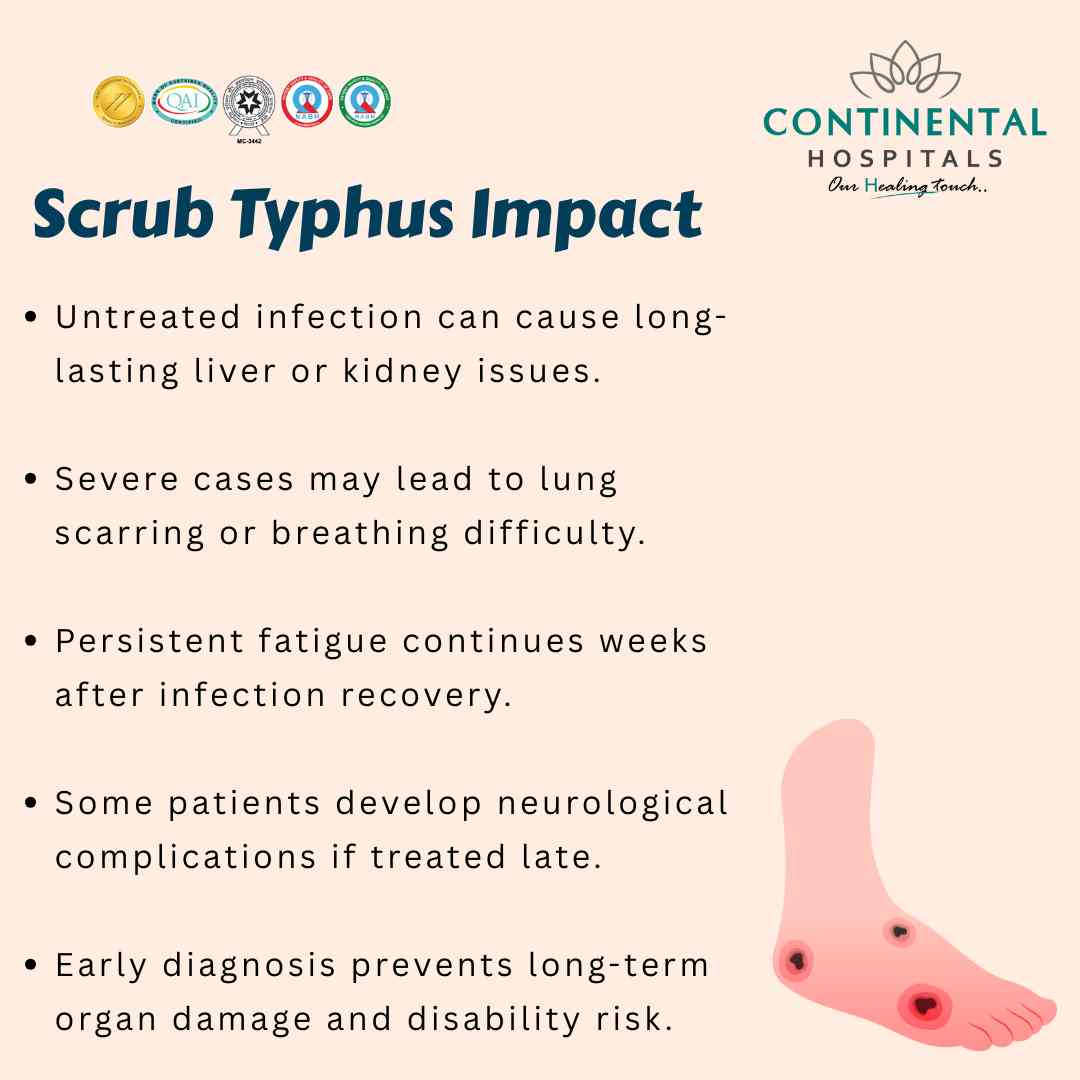
Long-Term Effects of Scrub Typhus After Recovery
Even after recovery, some patients may experience physical and neurological symptoms. These effects depend on the severity of the infection and how early treatment was initiated.
Common long-term effects include:
Persistent fatigue
Many people report post infection fatigue that lasts for weeks or months. This happens because the body takes time to repair tissues affected by the infection.
Muscle and joint pain
Inflammation during infection can leave lasting discomfort in muscles and joints.
Weakness and reduced stamina
Activity levels may drop as the body rebuilds lost energy reserves.

Headaches and dizziness
These symptoms may occur due to temporary changes in the nervous system.
Sleep disturbances
Some individuals struggle with poor sleep patterns after infection.
These symptoms usually reduce gradually with proper rest, hydration, nutrition, and medical guidance.
Scrub Typhus Neurological Complications
Scrub typhus can sometimes affect the nervous system. When this happens, patients may experience neurological symptoms even after the fever resolves.
Possible neurological complications include:
- Difficulty concentrating or memory issues
- Tingling or numbness in hands or feet
- Episodes of confusion
- Mood changes
- Balance problems
These occur because the bacteria can trigger inflammation in the brain and nerves. Though these symptoms are usually temporary, they require medical evaluation and follow up to prevent worsening.
Does Scrub Typhus Cause Organ Damage
Scrub typhus can affect multiple organs during the acute stage. In some cases, the effects may continue after recovery.
Organs that may be affected include:
Liver
Mild liver inflammation may cause fatigue for a longer period.
Kidneys
Temporary kidney involvement can slow recovery if not monitored.
Lungs
Some patients experience breathlessness or reduced lung capacity for a short time.
Heart
Mild heart inflammation may occur, causing tiredness or chest discomfort.
Timely treatment usually prevents permanent organ damage. However, patients who had severe infection must attend regular checkups.
Chronic Symptoms After Scrub Typhus
Some individuals may experience long-lasting symptoms, especially if the infection was severe or treatment was delayed.
Chronic symptoms may include:
- Low energy levels
- Body aches
- Recurring headaches
- Slow recovery of appetite
- Weak immunity
- Mood imbalances
These symptoms may last for several weeks. Proper medical guidance, lifestyle changes, and timely follow up care help in improving recovery outcomes.
Scrub Typhus Recovery Timeline
Recovery from scrub typhus is different for each person. However, a general recovery timeline can help patients understand what to expect.
First two weeks after treatment
Fever reduces, appetite improves, weakness begins to settle.
Three to six weeks after recovery
Fatigue and mild discomfort may continue but gradually improve.
Two to three months after infection
Most long-term symptoms reduce significantly with proper care.
Regular follow up consultations are essential to track recovery and address any lingering issues.
Post Infection Fatigue and Its Management
Fatigue is one of the most common long-term effects of scrub typhus. Patients may feel tired even after small tasks.
Ways to manage post infection fatigue:
- Eat balanced meals rich in proteins and vitamins
- Stay hydrated
- Perform light physical activities
- Get enough sleep
- Avoid stress
- Attend follow up checkups
- Do breathing exercises
- Follow doctor prescribed supplements if needed
Good health habits help your body regain strength over time.
Prevention of Scrub Typhus Reinfection
Scrub typhus can occur again if you are exposed to infected mites. Reinfection is possible, so preventive measures are very important.
Preventive tips:
- Wear protective clothing in grassy or bushy areas
- Use insect repellents
- Keep your surroundings clean
- Avoid sleeping on the ground in rural or forested regions
- Check pets for mites
- Seek early treatment if symptoms reappear
Prevention is the best way to stay safe from repeated infections.
Why Choose Continental Hospitals
Continental Hospitals in Hyderabad provides advanced, patient focused care supported by expert infectious disease specialists. The hospital is equipped with modern diagnostic technology and delivers evidence based treatment. Continental Hospitals follows international healthcare protocols and is recognized for quality and safety. The hospital maintains global accreditations that reflect its commitment to maintaining the highest standards in infection control, clinical excellence, and patient care. With multidisciplinary support, patients receive comprehensive evaluation, timely treatment, and long-term monitoring for conditions like scrub typhus and its complications.
Conclusion
Scrub typhus is a treatable condition, but long-term effects can affect your energy levels, organs, and overall well-being. Understanding symptoms such as post infection fatigue, neurological issues, and chronic discomfort helps you seek early medical help. With proper rest, nutrition, and follow up care, most patients recover fully.
If you suffer from lingering symptoms after scrub typhus or need expert care for recovery, consult our best Infectious Diseases specialist at Continental Hospitals for complete evaluation and personalised treatment.