post-title

Lumbar Puncture for Meningitis: How It Helps Diagnosis

Written by - Editorial Team
Medically Reviewed by - Dr M K Singh

Meningitis is one of the most dangerous brain infections, and early diagnosis is the key to saving a patient’s life. When doctors suspect meningitis, the most accurate and essential test is a lumbar puncture. Many people know this procedure by another name: the spinal tap. It is a simple, scientific, and trusted method used worldwide to confirm meningitis quickly and accurately.

What is a Lumbar Puncture?

A lumbar puncture is a medical procedure in which a thin needle is gently inserted into the lower back to collect a small sample of cerebrospinal fluid. This fluid surrounds and protects the brain and spinal cord. When bacteria, viruses, or fungi infect the brain, the properties of this fluid change. By analysing the cerebrospinal fluid, doctors can accurately identify the cause of infection, confirm meningitis, and start the right treatment immediately.

This test helps diagnose several conditions, but it is especially important for suspected meningitis because it provides direct and timely information. It plays a major role in emergency and critical care settings.

For expert evaluation, accurate diagnosis, and advanced neurological care, visit our best neuro doctor hyderabad at Continental Hospitals for comprehensive treatment and compassionate care.
Why Lumbar Puncture is Essential for Meningitis?

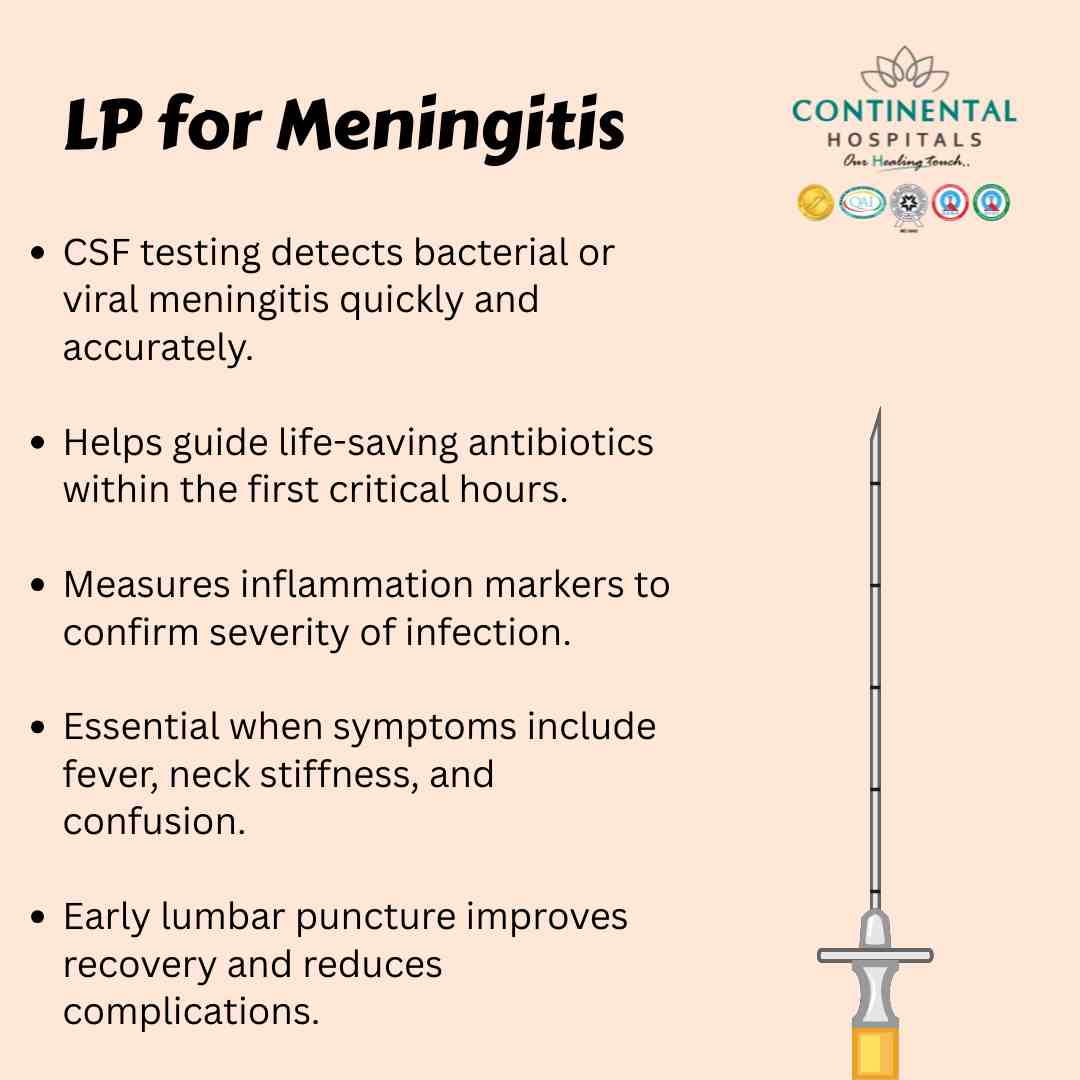
Meningitis progresses fast, and every hour matters. A lumbar puncture helps doctors:

  • Confirm if meningitis is present
  • Identify the exact organism causing the brain infection
  • Understand the severity of inflammation
  • Select the correct antibiotic or antiviral treatment
  • Save critical time in emergency situations

Without a spinal tap, doctors would have to rely only on symptoms and imaging tests, which cannot provide complete accuracy. Cerebrospinal fluid analysis is considered the gold standard because it gives the most precise information.

How Lumbar Puncture Helps Diagnose Meningitis?

The power of this procedure lies in the laboratory examination of the cerebrospinal fluid. Through CSF analysis, experts can detect:

  • Infection causing organisms
  • Increase in white blood cells
  • Changes in protein and glucose levels
  • Signs of inflammation
  • Pressure abnormalities

These findings guide doctors in confirming bacterial, viral, fungal, or tubercular meningitis. The accuracy of the test helps avoid misdiagnosis and ensures that the patient receives the correct treatment on time.

Second Opinion

Keywords Integrated Smoothly

  • lumbar puncture meningitis
  • CSF diagnosis
  • spinal tap for meningitis
  • meningitis test accuracy
  • brain infection diagnosis
  • meningitis emergency testing
  • CSF analysis benefits
  • lumbar puncture safety
  • meningitis early symptoms
  • spinal tap test India

All these keywords relate to the procedure and help in strengthening search engine visibility.

How do you know if you have early symptoms of meningitis?

Recognizing the early symptoms is extremely important. Patients may experience:

  • Severe headache
  • High fever
  • Neck stiffness
  • Sensitivity to light
  • Nausea and vomiting
  • Confusion or irritability
  • Seizures in severe cases

If these symptoms appear, especially in children or older adults, immediate medical attention is essential.

What happens during a lumbar puncture procedure step by step?

  • The patient lies on their side or sits with their back curved forward
  • The lower back area is cleaned under sterile conditions
  • Local anaesthesia is given to numb the region
  • A fine needle is inserted between the backbone spaces
  • Cerebrospinal fluid is collected in sterile tubes
  • The needle is removed and the site is covered
  • CSF is sent to the laboratory for urgent analysis

The entire procedure is done in a controlled setting by trained medical professionals.

How safe is a lumbar puncture procedure?

Many people worry about the safety of the procedure. However, lumbar puncture is considered a very safe test when performed by experienced doctors. It is minimally invasive, and complications are extremely rare.

Lumbar puncture safety has improved over the years due to better techniques, sterile procedures, and advanced imaging support. Patients may feel temporary discomfort or mild headache, but these symptoms settle with rest and hydration.

What Are the Benefits of CSF Analysis in Diagnosing Meningitis?

CSF diagnosis offers several life saving advantages such as:

Need an Appointment?

  • Highest level of meningitis test accuracy
  • Helps differentiate between bacterial and viral infections
  • Guides the treatment plan immediately
  • Detects early brain infection diagnosis markers
  • Supports meningitis emergency testing in critical cases
  • Helps monitor treatment response

This is why every suspected meningitis patient undergoes a spinal tap for meningitis before treatment begins.

Why Imaging Alone is Not Enough?

CT scans and MRI scans are very useful, but they cannot confirm meningitis. They help rule out other conditions and ensure it is safe to perform a spinal tap, but only cerebrospinal fluid analysis can confirm the infection.

Imaging studies cannot detect the exact organism and cannot guide treatment the way CSF testing can.

When Do Doctors Suggest a Lumbar Puncture?

A lumbar puncture is recommended when:

  • Meningitis early symptoms appear
  • There are signs of brain inflammation
  • A patient has high fever with confusion
  • Neurological symptoms worsen rapidly
  • Blood tests indicate infection
  • Doctors need to check pressure inside the brain

This test plays a central role in emergency and critical care because of its speed and accuracy.

Why is early diagnosis of meningitis important?

Delayed diagnosis puts the brain at risk of complications. Early diagnosis through a spinal tap helps prevent:

  • Brain swelling
  • Seizures
  • Hearing issues
  • Long term neurological problems

Immediate lumbar puncture and CSF analysis benefits the patient by enabling early treatment and faster recovery.

Why Choose Continental Hospitals for Meningitis Diagnosis and Treatment?

Continental Hospitals in Hyderabad is one of the leading centres for emergency and advanced neurological care. Patients choose our hospital for lumbar puncture meningitis evaluation because of:

  • Expertise of highly trained neurologists, infectious disease specialists, and emergency care teams
  • State of the art diagnostic laboratories with rapid CSF testing facilities
  • Advanced imaging support for safe spinal tap test India procedures
  • International level patient safety standards with global accreditations
  • 24x7 emergency and critical care units
  • JCI accredited hospital known for strict quality and safety practices
  • Infection control standards that match global healthcare guidelines

Our hospital ensures accurate diagnosis, timely treatment, and complete care for every patient.

Conclusion

Lumbar puncture is a simple but powerful test that plays a central role in meningitis diagnosis. It offers unmatched meningitis test accuracy, helps identify the infection early, and guides doctors in choosing the right treatment. CSF diagnosis is the most reliable method for detecting brain infections and remains the gold standard worldwide.

Continental Hospitals provides expert neurological care, advanced CSF analysis, internationally accredited services, and round the clock emergency support. Our focus is on accurate, fast, and safe diagnosis for every patient.

For expert evaluation, accurate spinal tap for meningitis testing, and advanced neurological care, book an appointment with our Best Neurologist in Hyderabad at Continental Hospitals.

Frequently Asked Questions

A lumbar puncture, also known as a spinal tap, is a medical procedure used to collect cerebrospinal fluid (CSF) from the lower back. The CSF surrounds and protects the brain and spinal cord, making it an important sample for diagnosing neurological conditions. When meningitis is suspected, examining the CSF helps identify whether the infection is caused by bacteria, viruses, fungi, or other organisms. Laboratory analysis measures white blood cells, protein, glucose, and other markers of inflammation. It may also include cultures and molecular tests to detect the specific pathogen. Early identification of the cause allows doctors to start the most effective treatment as soon as possible. The procedure is considered one of the most reliable methods for confirming meningitis. Prompt diagnosis through lumbar puncture can reduce the risk of complications such as brain damage, seizures, hearing loss, or death. It also helps distinguish meningitis from other conditions with similar symptoms. The information obtained guides treatment decisions and improves patient outcomes.
A lumbar puncture provides direct access to cerebrospinal fluid, which reflects the health of the brain and spinal cord. In meningitis, the CSF often shows characteristic changes depending on the type of infection. Increased white blood cells indicate inflammation, while elevated protein levels suggest damage to the protective membranes. Low glucose levels are commonly seen in bacterial meningitis because bacteria consume glucose. The collected sample is examined under a microscope, cultured to identify bacteria, and tested using rapid molecular methods such as PCR. These tests help determine the exact organism responsible for the infection. Identifying the cause allows doctors to choose targeted antibiotics, antiviral medications, or antifungal therapy. The results also help estimate the severity of the infection and guide ongoing treatment. In many cases, lumbar puncture provides the definitive diagnosis when meningitis is suspected. This makes it an essential investigation in neurological emergencies.
A lumbar puncture is generally well tolerated and is usually performed under local anesthesia to minimize discomfort. Patients are positioned either lying on their side or sitting while keeping the lower back curved. After cleaning the skin thoroughly, the doctor injects a local anesthetic to numb the area. A thin needle is then inserted between two lower lumbar vertebrae to collect a small amount of cerebrospinal fluid. Most patients feel pressure rather than severe pain during the procedure. The entire process typically takes around 20 to 30 minutes, including preparation. Afterward, patients may be asked to lie flat for a short period and drink adequate fluids. Mild soreness at the puncture site or a temporary headache can occur but usually resolves within a few days. Serious complications are uncommon when the procedure is performed by experienced specialists. Doctors provide detailed instructions to ensure a smooth recovery.
A lumbar puncture is considered a safe procedure when performed by trained healthcare professionals. The most common side effect is a post-lumbar puncture headache, which may occur because of a temporary leak of cerebrospinal fluid. This headache often improves with rest, hydration, caffeine, or specific medical treatment if required. Mild back pain or tenderness at the needle insertion site is also relatively common. Rare complications include bleeding, infection, or irritation of nearby nerves. Before performing the procedure, doctors assess whether it is safe based on the patient's medical history, medications, and neurological examination. In some situations, a brain CT scan may be recommended first to reduce the risk of complications. Careful sterile techniques further minimize the chance of infection. Serious adverse events are uncommon, and the diagnostic benefits usually outweigh the risks. Patients should immediately report severe headache, fever, persistent numbness, or worsening symptoms after the procedure.
Although lumbar puncture is an important diagnostic test, it may be delayed or avoided in certain situations where safety is a concern. Patients with signs of increased pressure inside the skull, significant brain swelling, or large brain masses may require brain imaging before the procedure. Severe blood clotting disorders or the use of certain blood-thinning medications can increase the risk of bleeding. Infection at the needle insertion site may also postpone the procedure until it is treated. Doctors carefully assess the patient's neurological status, medical history, and current condition before proceeding. If immediate lumbar puncture is not safe, treatment for suspected meningitis is usually started without delay. Imaging studies such as CT scans help determine whether the procedure can be safely performed later. Individual clinical judgment is essential in deciding the right timing. Patient safety always remains the highest priority. The final decision is based on established medical guidelines and expert evaluation.
Preparation for a lumbar puncture begins with discussing your medical history and current medications with your doctor. Patients should inform the healthcare team about allergies, bleeding disorders, pregnancy, or the use of blood-thinning medicines. Depending on the situation, certain medications may need to be temporarily stopped before the procedure. Blood tests may be performed to evaluate clotting function if necessary. Most patients can eat and drink normally unless instructed otherwise by their healthcare provider. Wearing comfortable clothing and arranging transportation home may be helpful if sedation is planned. Before the procedure, the doctor explains the benefits, risks, and expected outcomes and obtains informed consent. Patients are encouraged to ask questions to understand the process completely. Following all preparation instructions helps ensure the procedure is safe and successful. Good communication between the patient and healthcare team contributes to better comfort and confidence.
Some lumbar puncture results are available within a few hours, while others require additional laboratory testing. Initial examination of cerebrospinal fluid includes its appearance, white blood cell count, protein level, and glucose concentration. These findings can provide early clues about the presence and type of meningitis. Gram stain results may identify bacteria quickly and help guide immediate treatment. More detailed bacterial cultures usually take 24 to 72 hours to produce final results. Molecular tests such as PCR can rapidly detect viruses or bacteria in many cases. Additional specialized tests for fungal or tuberculosis infections may require more time. Doctors often begin treatment based on the initial findings without waiting for all laboratory reports. Once complete results become available, therapy may be adjusted to target the specific organism. Timely diagnosis and prompt treatment significantly improve recovery and reduce the risk of complications.
Although doctors consider the patient's symptoms, physical examination, blood tests, and imaging studies when evaluating suspected meningitis, a lumbar puncture remains the gold standard for confirming the diagnosis. Blood cultures can identify bacteria in some patients, but they cannot provide the detailed information available from cerebrospinal fluid. Brain CT or MRI scans help detect complications or identify conditions that may delay a lumbar puncture, but they cannot reliably determine the exact cause of meningitis. Without CSF analysis, distinguishing between bacterial, viral, fungal, and other forms of meningitis becomes much more difficult. This distinction is essential because treatment differs significantly depending on the cause. In certain emergencies, doctors may begin treatment before performing the lumbar puncture if delaying therapy would be dangerous. Once it is safe, the procedure is usually completed to confirm the diagnosis. Accurate diagnosis supports effective treatment and improves long-term outcomes. Therefore, lumbar puncture continues to play a central role in meningitis diagnosis.
Disclaimer: The information provided in this blog is intended for general knowledge and informational purposes only, and does not constitute medical advice. Always consult with a qualified healthcare professional for any medical concerns or before making any decisions about your health.

Get in Touch With Us

Whether you are from India or abroad, we are here to help you with your medical queries. Please fill out the form below and our team will connect with you shortly.

  • ✔ Quick response from our medical experts
  • ✔ Secure data handling & privacy
  • ✔ Easy upload for reports & documents
banner_image

Chat with our medical experts on WhatsApp for quick assistance and hassle-free appointment booking

Recent Posts