.webp)

The Nipah Virus is a serious infectious disease that can affect both humans and animals. Though rare, it has gained attention due to its high fatality rate and the possibility of outbreaks. Understanding what is Nipah Virus, how it spreads, its symptoms, and available treatment options is essential for early action and prevention.
What is Nipah Virus?
Nipah Virus is a zoonotic virus, meaning it spreads from animals to humans. It was first identified in Malaysia and later reported in other parts of Asia, including Nipah Virus in India. The virus belongs to the Paramyxoviridae family and is closely linked to fruit bats, which are considered its natural carriers.
Humans can get Nipah Virus infection through direct contact with infected animals, contaminated food, or close contact with an infected person. Because the virus can spread from person to person, outbreaks need immediate medical attention and public health response.
Visit our General Physician Department at Continental Hospitals, Hyderabad, for expert diagnosis, advanced care, and globally trusted medical standards.
Nipah Virus in India
India has reported several Nipah Virus outbreaks, mainly in southern regions. These outbreaks were managed through strict surveillance, isolation of patients, and public awareness. Nipah Virus in India remains a public health concern, especially in areas where human contact with bats or contaminated fruits is common. Early detection and responsible healthcare systems play a key role in controlling the spread.
Causes of Nipah Virus Infection
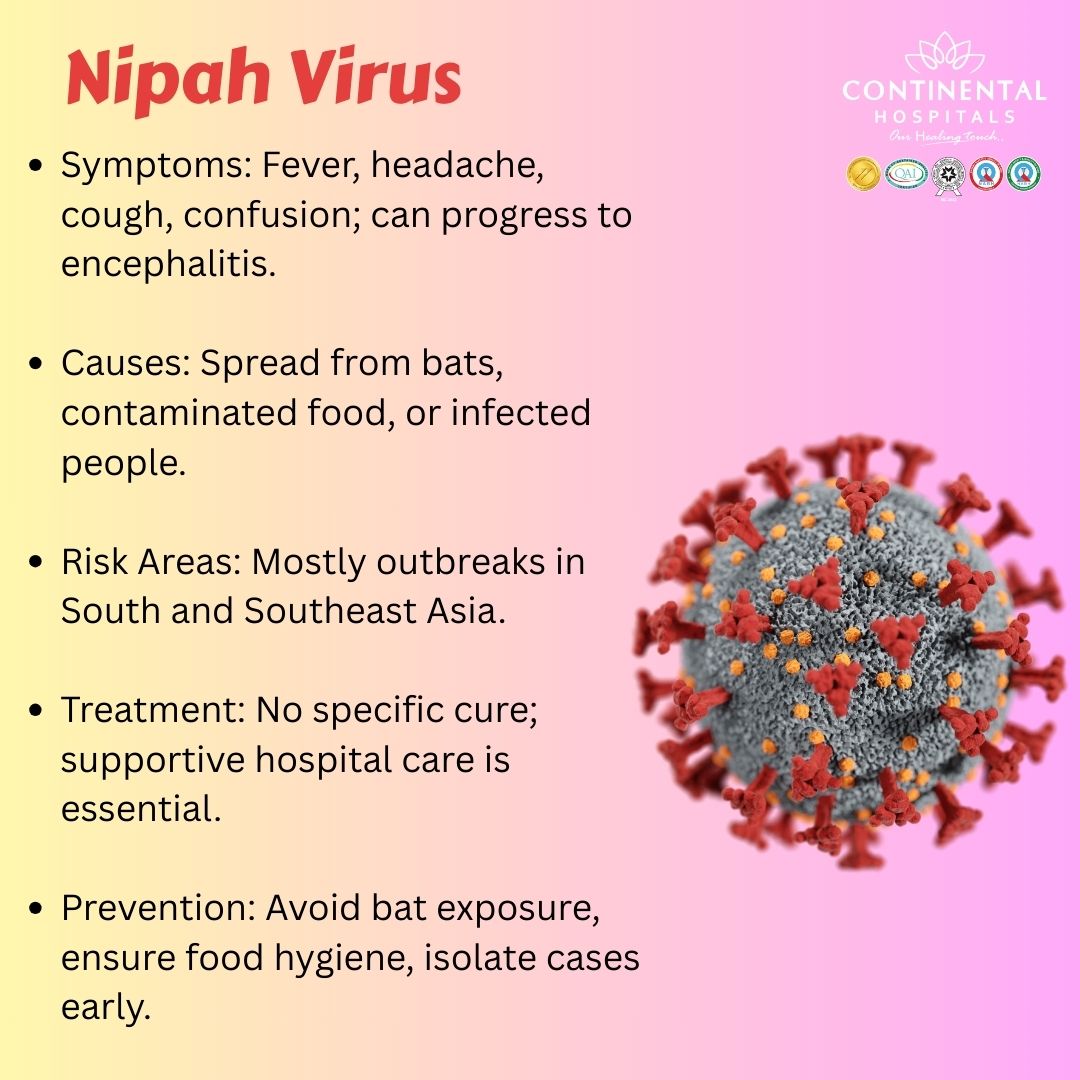
The Nipah Virus spreads through specific routes. Understanding these causes can help reduce the risk of infection.
Key causes include:
- Direct contact with infected fruit bats or animals such as pigs
- Eating fruits or drinking juices contaminated by bat saliva or urine
- Close contact with a person infected with Nipah Virus
- Exposure to bodily fluids such as saliva, blood, or respiratory secretions
Hospitals and caregivers must follow strict infection control practices to prevent person to person transmission during a Nipah Virus outbreak.

Nipah Virus Symptoms
Nipah Virus symptoms can range from mild to severe. In some cases, symptoms appear within a few days, while in others they may take up to two weeks.
Common Nipah Virus symptoms include:
- Fever and headache
- Muscle pain and weakness
- Vomiting and sore throat
- Dizziness and confusion
- Difficulty breathing
- Altered consciousness
In severe cases, Nipah Virus infection can lead to brain inflammation, also known as encephalitis. This can cause seizures, coma, and can be life threatening if not treated early.
If you or someone around you experiences sudden fever with neurological symptoms, seek medical help immediately. Early diagnosis can save lives.
How is Nipah Virus Diagnosed?
Diagnosis of Nipah Virus requires advanced laboratory testing. Doctors may recommend blood tests, throat swabs, urine samples, or cerebrospinal fluid tests. Early testing is essential, especially during a suspected Nipah Virus outbreak.
At well equipped hospitals, infectious disease specialists work closely with laboratory teams to confirm the diagnosis while ensuring patient isolation and safety protocols.
Nipah Virus Treatment Options
Currently, there is no specific Nipah Virus cure that completely eliminates the virus. Nipah Virus treatment focuses on supportive care and managing symptoms.
Treatment options include:
- Hospitalization in isolation units
- Supportive care such as fluids and nutrition
- Medications to reduce fever and pain
- Respiratory support if breathing becomes difficult
- Intensive care monitoring in severe cases
Early medical intervention improves survival chances. Researchers are actively studying antiviral therapies, but treatment mainly depends on timely supportive care.
Is There a Nipah Virus Vaccine?
At present, there is no approved Nipah Virus vaccine available for public use. However, ongoing research is focused on developing effective vaccines and antiviral drugs. Global health organizations continue to monitor progress in this area.
Until a vaccine becomes available, prevention and early detection remain the best defense against Nipah Virus infection.
How to Prevent Nipah Virus?
Prevention plays a vital role in controlling the spread of Nipah Virus. Simple precautions can significantly reduce risk.
Preventive measures include:
- Avoid eating fruits that may be partially eaten by bats
- Do not drink raw date palm sap or unprocessed fruit juices
- Maintain good hand hygiene
- Avoid close contact with infected individuals
- Follow hospital infection control guidelines strictly
Public awareness and community cooperation are essential in preventing future Nipah Virus outbreaks.
Why Choose Continental Hospitals for Nipah Virus Care?
Continental Hospitals is recognized as one of the best hospitals in Hyderabad, known for its commitment to patient safety and clinical excellence. The hospital is equipped with advanced diagnostic facilities, modern isolation units, and highly trained medical professionals.
Continental Hospitals holds internationally recognized accreditations that reflect its high standards in patient care, infection control, and clinical outcomes. These accreditations ensure that every patient receives care aligned with global healthcare benchmarks.
The hospital has experienced specialists in infectious diseases, internal medicine, critical care, and neurology who work together to manage complex conditions like Nipah Virus infection. Strict safety protocols, rapid response systems, and a patient focused approach make Continental Hospitals a trusted choice during infectious disease emergencies.
When Should You See a Doctor?
If you experience symptoms such as fever, confusion, severe headache, or breathing difficulty, especially after possible exposure, consult a doctor immediately. Early medical evaluation can prevent complications and reduce the risk of spreading the infection to others.
At Continental Hospitals, infectious disease specialists provide timely diagnosis and personalized treatment plans to ensure the best possible outcomes.
Conclusion
Nipah Virus is a rare but serious disease that requires awareness, early detection, and expert medical care. Understanding Nipah Virus symptoms, causes, and treatment options helps individuals take quick and responsible action. While there is no confirmed Nipah Virus cure or vaccine yet, prompt supportive treatment and preventive measures can save lives.
Consult our best general physician at Continental Hospitals, one of the best hospitals in Hyderabad, where expert care, advanced facilities, and global standards come together to protect your health.
Related Blog Topics: