• Share this:
post-title

Nootropics Explained: Benefits, Risks, and Myths

Written by - Editorial Team
Medically Reviewed by - Dr Rahul Konduri

The modern world is relentless, everyone needs focus, memory and intense mental activity. Whether a student with exams coming up, a professional with a high-pressure career or an older adult who wants to keep their mind sharp, the options for improving brain performance have exploded. Just one part of our culture - the collective desire to enhance our mental capacities - has made a class of compounds, smart drugs and cognitive enhancers, the talk of the town.

What exactly are nootropics? The term was coined in the 1970s for substances that could improve learning and memory safely - with little side effects. But today the definition has expanded, now encompassing everything from herbal extracts and the caffeine in your coffee to prescription medicines prescribed to people suffering from attention deficit hyperactivity disorder (ADHD) and sleep disorders. The promise is no less attractive: think faster, remember more, and resist mental fatigue.

As the nootropic market expands, it is also important to separate science from marketing. Some of us are turning to next generation brain boosting supplements in order to get ahead of the competition, while others are concerned about the safety and potential side effects of brain chemistry manipulation. Understanding how these substances work, what they really do and the risks associated with their use is the first step towards making safe and informed decisions about your neurological health.

What Are Nootropics and How Do They Work?

Nootropics are compounds that claim to enhance brain function, specifically in healthy people in areas of executive function, memory, creativity, or motivation. Nootropics can be divided into three categories: dietary supplements, synthetic compounds, and prescription drugs.

By changing the levels of neurotransmitters, the brain’s chemical messengers; increasing blood and oxygen flow to brain tissue; or shielding nerve cells from metabolic stress, these compounds affect brain function. People looking for the best nootropics are looking for ways to protect brain cells and increase neuroplasticity, the brain’s ability to change.

For any concerns about nootropics, brain health, memory, focus, or cognitive function, visit our Neurology Department at Continental Hospitals.

What Are the Types of Nootropic Supplements and Smart Drugs?

The best way to understand how these enhancers work in everyday life is to view them in their most basic forms:

Natural Enhancers: This category is made up of traditional plant extracts such as Bacopa monnieri, Ginkgo biloba, and Lion’s Mane mushroom, which are found in many over-the-counter nootropic supplements that support long-term memory.

Prescription Stimulants: These so-called smart drugs (for example, modafinil and methylphenidate) are powerful synthesized compounds that are prescribed for specific medical conditions but are also used off-label for intense focus.

Second Opinion

Everyday Stimulants: These are the most common natural combination of caffeine and L-theanine (found in green tea) used to increase alertness without the jitters.
What Are the Primary Advantages of Tricking Your Brain with Supplements?

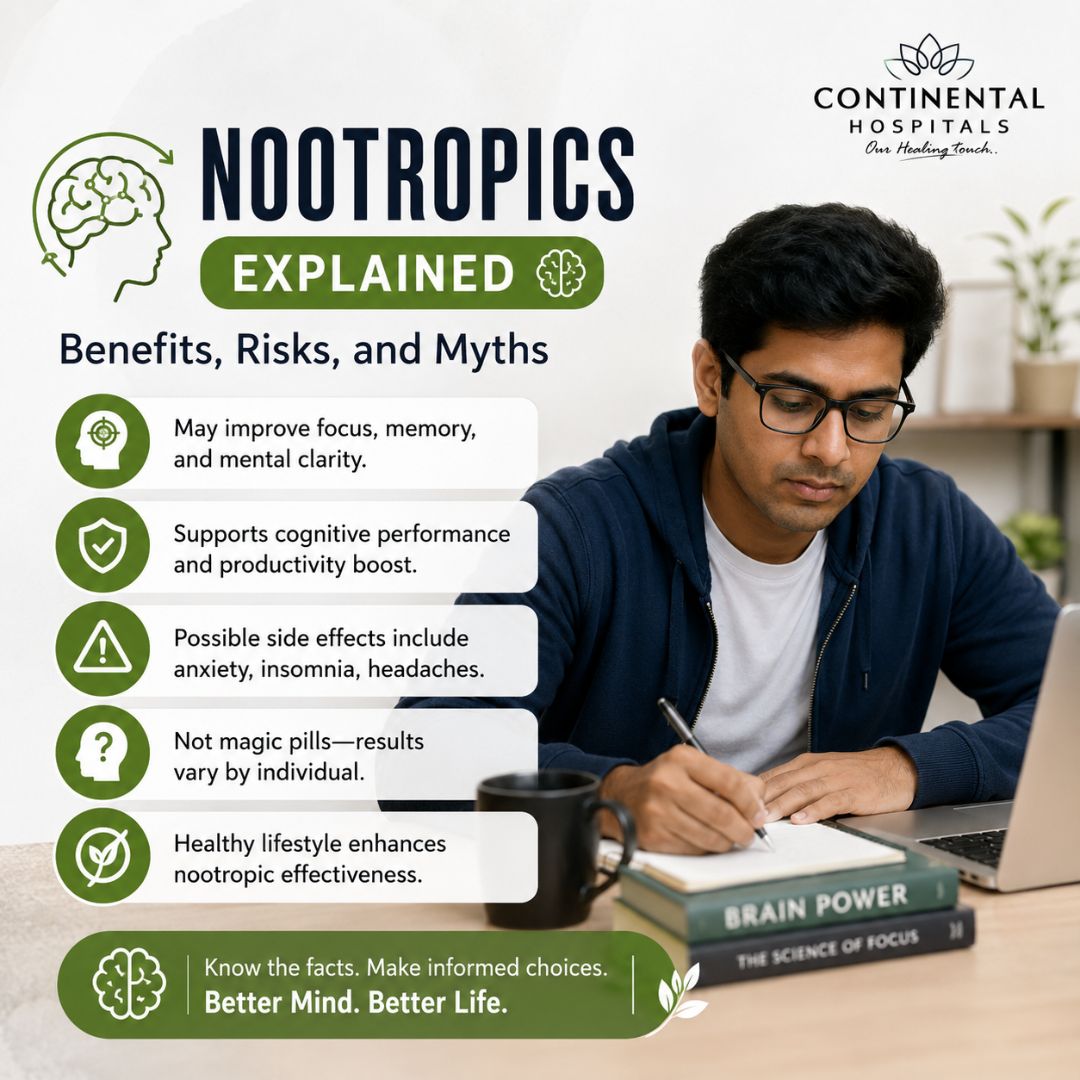
Certain cognitive enhancers can clearly bring mental benefits - but only when used correctly, under professional supervision.

Can they help with memory and learning?
A range of natural supplements helps to increase the levels of acetylcholine, the major neurotransmitter involved in learning and memory consolidation. Consistent consumption over time can ultimately help you to recall information more quickly.

Can they help you stay focused and alert at the brain?
Certain compounds support brain blood flow and help you function optimally in terms of alertness. They enable you to reduce the time it takes to react and stay deeply focused on hard, complex tasks.

What Are the Risks and Side Effects of Taking Brain Enhancers?

We all wish we could get a mental advantage - but there is also a big risk involved in taking unregulated substances that you can’t afford to take lightly.

Sleep Disruption: Many stimulants disrupt the deep sleep cycle, leading to insomnia and exhaustion.

Need an Appointment?

Digestive Problems: Nausea, abdominal cramps, and diarrhea are common side effects of low-quality dietary supplements.
Rarely, you may experience:

When Should You See a Doctor or a Nootropics Expert?

Make sure you speak to your healthcare professional before taking any new supplement, especially if you are taking other drugs. A medical professional or a neurological expert can discuss and evaluate potential drug interactions or help rule out underlying health problems such as vitamin deficiencies or thyroid issues that may be slowing your cognition.

Why Choose Continental Hospitals for Brain Health?

Choosing an established medical institution to advise you on brain health is a wise decision: you would want a safe and sound long-term solution. Continental Hospitals – the first choice for neurological health, has a distinct advantage in catering to all aspects of cognitive and neurological health.

Our hospital has:

  • Top specialists–leading neurologists and wellness experts focused on brain health.
  • High-end technology and diagnostics to evaluate your brain function accurately.
  • Multidisciplinary team consisting of nutritionists, psychologists, and physicians.
  • Customized plans designed to suit your body’s chemistry and way of life.
  • JCI Accreditation and NABH Accreditation—meeting stringent, worldwide safety standards.
  • World-class facility focused on providing optimum comfort and recovery for patients.
  • 24/7 emergency & critical care services for instant, around-the-clock medical attention.
  • High-quality patient care for a healthy long-term journey.

Conclusion

Nootropics are a glimpse into the exciting future of human performance but are not wonder drugs that will cure life without sleep, nutrition, and exercise. Natural supplements can help brain health as well as synthetic drugs, but the latter need to be handled very carefully. Rely on evidence-based medical advice instead of being driven by trends to maintain a healthy, clear, and sharp brain till your days are long.

For any questions related to nootropics, please feel free to consult our best neurologist in Hyderabad at Continental Hospitals. Get easy diagnosis, modern treatment, and complete care at Continental Hospitals.


Frequently Asked Questions

Nootropics, often referred to as 'smart drugs' or cognitive enhancers, are substances that may help improve certain aspects of brain function such as memory, focus, attention, creativity, and mental clarity. They include natural compounds, dietary supplements, herbal extracts, and prescription medications. Nootropics work through different mechanisms, including increasing blood flow to the brain, supporting neurotransmitter activity, reducing oxidative stress, and enhancing cellular energy production. While some nootropics have scientific evidence supporting their benefits, others require further research. Their effectiveness can vary depending on an individual's health, age, lifestyle, and underlying medical conditions. Nootropics should not replace healthy habits such as proper sleep, nutrition, exercise, and stress management.
Nootropics may offer several cognitive and mental performance benefits when used appropriately. Potential advantages include improved focus, enhanced memory retention, better concentration, increased mental alertness, and reduced mental fatigue. Some nootropics may also support mood, motivation, learning capacity, and productivity. Certain natural nootropics contain antioxidants that help protect brain cells from oxidative damage. Others may promote healthy blood circulation and support long-term brain health. However, benefits vary significantly between products and individuals. Scientific evidence is stronger for some compounds than others. Results may depend on dosage, duration of use, overall health status, and lifestyle factors. Consulting a healthcare professional before use is recommended.
Nootropics are not universally safe for everyone. Their safety depends on the specific substance, dosage, duration of use, and an individual's medical history. Some nootropics may cause side effects such as headaches, anxiety, insomnia, dizziness, digestive discomfort, or increased heart rate. Certain supplements can interact with prescription medications or worsen existing health conditions. Pregnant women, breastfeeding mothers, children, older adults, and individuals with neurological or psychiatric disorders should exercise extra caution. Even natural nootropics may carry risks when taken improperly. Because supplements are not always regulated to the same standards as medications, product quality can vary. It is advisable to seek medical guidance before starting any nootropic regimen.
Some nootropics may help improve memory, concentration, and cognitive performance, particularly in specific situations. Ingredients such as caffeine, L-theanine, omega-3 fatty acids, and certain herbal extracts have shown potential benefits in research studies. However, improvements are often modest and may not be noticeable in every individual. Nootropics are not miracle solutions and cannot compensate for sleep deprivation, poor nutrition, chronic stress, or underlying medical conditions. Their effectiveness depends on factors such as age, baseline cognitive function, and overall health. Sustainable cognitive performance is best supported through healthy lifestyle practices. Individuals experiencing significant memory problems should seek medical evaluation rather than relying solely on supplements.
Several myths surround nootropics. One common misconception is that they instantly make people smarter or significantly increase intelligence. Another myth is that natural nootropics are completely risk-free. Some people believe that all nootropics are scientifically proven, when in reality evidence varies widely between products. There is also a misconception that higher doses produce better results, which can increase the risk of adverse effects. Nootropics cannot replace adequate sleep, balanced nutrition, exercise, or proper medical treatment. They are not guaranteed to work for everyone. Understanding the limitations and evidence behind individual compounds is important for making informed decisions about cognitive enhancement.
The risks and side effects of nootropics vary depending on the specific ingredient and dosage. Common side effects may include headaches, nervousness, anxiety, insomnia, digestive disturbances, elevated blood pressure, and palpitations. Some substances may affect mood, cause dependency, or interact with medications. Long-term safety data is limited for many newer nootropic supplements. Excessive use may increase the risk of unwanted neurological or cardiovascular effects. Poor-quality products may contain inaccurate ingredient labels or contaminants. Individuals with pre-existing health conditions should be especially cautious. Reading labels carefully, choosing reputable brands, and consulting a healthcare professional can help minimize risks associated with nootropic use.
Natural and synthetic nootropics each have their own advantages and limitations. Natural nootropics, such as herbal extracts and nutrients, are often perceived as safer and may offer additional health benefits. Synthetic nootropics are typically designed to target specific cognitive pathways and may have stronger effects. However, natural does not automatically mean safer, and synthetic does not necessarily mean harmful. The effectiveness and safety of any nootropic depend on scientific evidence, dosage, product quality, and individual health factors. Some natural compounds have strong research support, while others lack sufficient evidence. Choosing the right option should be based on medical advice, personal needs, and an understanding of potential risks and benefits.
Anyone considering nootropics should consider consulting a healthcare professional, but certain groups should do so especially. This includes individuals with heart disease, high blood pressure, anxiety disorders, depression, epilepsy, liver disease, kidney disease, or other chronic health conditions. Pregnant and breastfeeding women should avoid using nootropics without medical supervision. People taking prescription medications may be at risk of drug interactions. Older adults and individuals with cognitive decline should seek evaluation to identify underlying causes of symptoms. A healthcare provider can assess whether a nootropic is appropriate, recommend safe options, determine suitable dosages, and monitor for side effects or potential complications.
Disclaimer: The information provided in this blog is intended for general knowledge and informational purposes only, and does not constitute medical advice. Always consult with a qualified healthcare professional for any medical concerns or before making any decisions about your health.

Get in Touch With Us

Whether you are from India or abroad, we are here to help you with your medical queries. Please fill out the form below and our team will connect with you shortly.

  • ✔ Quick response from our medical experts
  • ✔ Secure data handling & privacy
  • ✔ Easy upload for reports & documents
0 / 100
Checkboxes Section


Chat with our medical experts on WhatsApp for quick assistance and hassle-free appointment booking

Recent Posts
Language Based Image
0 / 100