
post-title

Ozempic for Weight Loss: How It Works, Benefits, Risks and Who Can Use It

Written by - Editorial Team
Medically Reviewed by - Dr Y Haarika

Ozempic is a prescription medicine containing semaglutide, a GLP 1 receptor agonist. It was developed primarily to help adults with type 2 diabetes manage blood sugar levels. Because semaglutide can also reduce appetite and food intake, it has become widely discussed in relation to weight management.

But is Ozempic actually a weight loss medicine? This is an important distinction. In the United States, Ozempic is approved for type 2 diabetes and certain cardiovascular and kidney benefits, while semaglutide is also available as Wegovy, which is specifically approved for chronic weight management in eligible people. Any use of Ozempic for weight loss should therefore be decided by a qualified doctor after reviewing the person's health, weight, medicines, and medical history.

How does Ozempic help with weight loss?

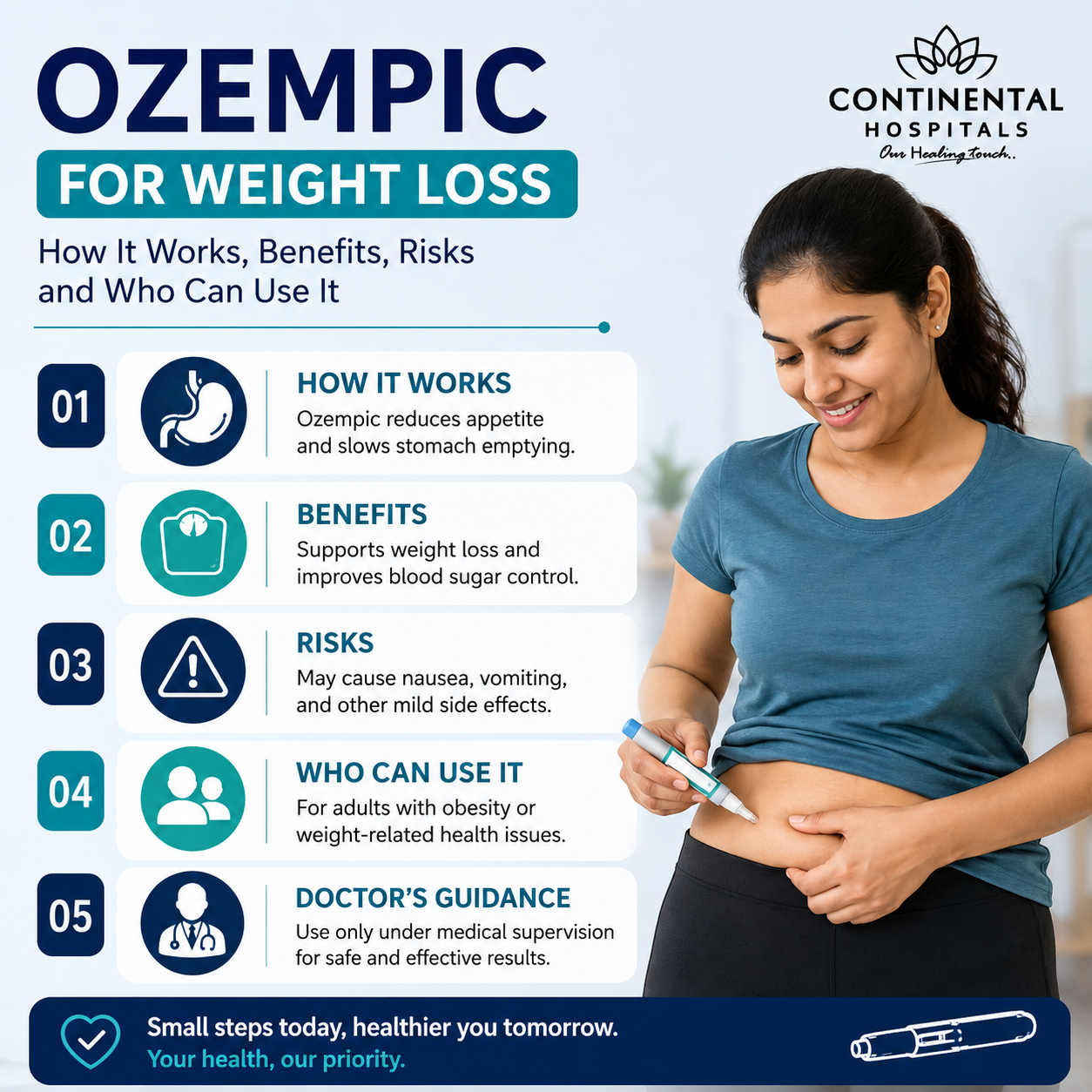
Ozempic works by mimicking a natural hormone called GLP 1. This hormone helps regulate blood sugar and influences appetite.

How can Ozempic weight loss happen?

  • It can help reduce hunger and appetite.
  • It may help a person feel full for longer.
  • It can slow stomach emptying.
  • It can support better blood sugar control in people with type 2 diabetes.
  • It can make it easier for some people to follow a reduced-calorie eating plan.

Because of these effects, semaglutide may support meaningful weight reduction when combined with appropriate nutrition and physical activity. However, it should not be considered a replacement for healthy lifestyle habits.

Visit the Endocrinology Department at Continental Hospitals for expert evaluation, personalized guidance, and comprehensive obesity management.

What are the potential Ozempic benefits for weight loss?

What benefits may people experience when semaglutide is appropriately prescribed?

  • Reduced appetite: Some people experience less hunger and fewer food cravings.
  • Better portion control: Feeling full for longer may make smaller portions easier to maintain.
  • Improved metabolic health: For people with type 2 diabetes, Ozempic can improve blood glucose control when used with diet and exercise.
  • Support for long-term weight management: Semaglutide products specifically approved for weight management are used alongside reduced-calorie eating and increased physical activity.
  • Potential improvement in weight-related health risks: Losing excess weight may help improve several obesity-related health problems when weight reduction is medically appropriate.

What are the common Ozempic side effects?

Can Ozempic cause side effects?

Yes. Digestive symptoms are among the most commonly reported problems. These may include:

Second Opinion

  • Nausea
  • Vomiting
  • Diarrhea
  • Constipation
  • Abdominal discomfort
  • Indigestion
  • Reduced appetite

These symptoms may be more noticeable when treatment is started or when the dose is increased. A doctor may gradually adjust treatment depending on individual response and tolerability.
What are the serious Ozempic risks?

Are there risks that require medical attention?

Yes. Ozempic carries important warnings and precautions. The prescribing information includes risks such as pancreatitis, gallbladder problems, kidney injury related to dehydration, serious allergic reactions, and complications involving diabetic retinopathy in certain patients.

Ozempic is also contraindicated in people with a personal or family history of medullary thyroid carcinoma or in people with multiple endocrine neoplasia syndrome type 2.

This is why Ozempic should not be started simply because it is popular for weight loss. A medical assessment is important before treatment.

Who can use Ozempic for weight management?

Is Ozempic for obesity suitable for everyone?

Need an Appointment?

No. Weight management medicines are generally considered based on factors such as the following:

  • Body weight and BMI
  • Existing weight-related health conditions
  • Blood sugar levels
  • Current medicines
  • Previous weight management attempts
  • Medical and family history
  • Possible contraindications and side effects

A doctor can determine whether a GLP 1 medicine is appropriate and whether a product specifically approved for chronic weight management may be more suitable.

Why should you not take Ozempic without medical advice?

Can Ozempic be taken without a prescription or medical supervision?

It should not be self-started. Using prescription medicines without appropriate evaluation can increase the risk of side effects, drug interactions, inappropriate dosing, and complications.

People should also avoid buying unverified or unauthorized semaglutide products. The correct medicine, dose, and treatment plan should always come from a qualified healthcare professional.

Why choose Continental Hospitals for weight management?

Why is Continental Hospitals a suitable choice for obesity and weight management care?

Continental Hospitals, Hyderabad, provides multidisciplinary tertiary and quaternary healthcare with specialists who can assess obesity and related medical conditions as part of a comprehensive treatment plan. The hospital is accredited by Joint Commission International (JCI) and the National Accreditation Board for Hospitals & Healthcare Providers (NABH), reflecting its focus on established standards of quality and patient care.

Continental Hospitals also provides advanced infrastructure and diagnostic facilities and has dedicated expertise in obesity and weight loss care.

When should you consult a doctor about weight loss?

If you are struggling with obesity, repeated weight gain, diabetes, or other weight-related health concerns, professional evaluation can help identify the safest approach.

If you are considering Ozempic for weight loss or need help managing obesity, consult our best endocrinologist in Hyderabad at Continental Hospitals, Hyderabad, for an individualized treatment plan.

Conclusion

Ozempic has gained significant attention because semaglutide can influence appetite, blood sugar, and body weight. However, Ozempic is not a medicine that everyone should use for weight loss. Its approved indications, potential benefits, side effects, and risks need to be carefully considered.

For people who may benefit from medication-based weight management, a doctor can assess whether semaglutide or another treatment is appropriate. Combining medical treatment with balanced nutrition, regular physical activity, and long-term lifestyle changes remains an important part of sustainable weight management.

Related Blogs:

  1. Ozempic and Wegovy: Can They Reduce Alcohol Cravings?
  2. Monk Fruit, Ozempic, or Mounjaro: Which Is Safer Long-Term?

Frequently Asked Questions

Ozempic contains semaglutide, a medicine that belongs to the GLP-1 receptor agonist group. It mainly helps control blood sugar in people with type 2 diabetes. It can also reduce appetite and slow the movement of food through the stomach. These effects may help some people lose weight. The amount of weight loss varies from person to person. Ozempic is not specifically approved as a weight-loss medicine. A healthcare professional may consider the medicine based on a person's overall health and medical needs. Weight loss is usually greater when treatment is combined with healthy eating and regular physical activity. It should not be used simply for cosmetic weight loss without medical guidance. Your doctor can determine whether semaglutide is appropriate for you. Regular follow-up can help monitor weight, blood sugar, side effects, and treatment response.
Ozempic contains semaglutide, which acts similarly to a natural hormone called GLP-1. GLP-1 helps regulate blood sugar and influences appetite. The medicine helps the body release insulin when blood sugar levels are elevated. It also reduces the amount of glucagon released by the pancreas. Ozempic slows stomach emptying, which can make you feel full for longer. It may also reduce hunger and food cravings in some people. These effects can contribute to reduced calorie intake and weight loss. The medicine is generally given as a once-weekly injection. The dose is usually increased gradually according to the doctor's instructions. It should be used along with appropriate diet and lifestyle measures. Medical supervision is important throughout treatment.
Ozempic is primarily prescribed for adults with type 2 diabetes when appropriate. It may be considered when blood sugar needs additional control alongside diet and exercise. It is not suitable for everyone with diabetes or excess weight. Your doctor will review your medical history before prescribing it. Certain pancreatic, thyroid, gastrointestinal, or other health conditions may affect whether it is appropriate. Your current medicines and previous treatment history also need to be considered. Ozempic should not be started without a prescription and medical assessment. People looking specifically for obesity treatment may be prescribed an approved weight-management formulation of semaglutide instead, depending on eligibility and availability. Treatment decisions should be individualized. Never use someone else's Ozempic or change the dose without medical advice. Regular monitoring helps ensure that treatment remains safe and effective.
Ozempic can provide several benefits for people who are appropriately prescribed the medicine. Its primary benefit is helping improve blood sugar control in adults with type 2 diabetes. It can also reduce appetite and may support weight loss. For some people, better blood sugar control can help reduce the risk of diabetes-related complications. Semaglutide treatment has also been studied for cardiovascular risk reduction in certain people with type 2 diabetes and established cardiovascular disease. Weight changes can vary significantly between individuals. The medicine works best as part of a broader treatment plan. Healthy food choices, physical activity, sleep, and regular medical care remain important. It is not a replacement for lifestyle changes. Your doctor can explain which benefits are relevant to your health. The potential benefits should always be weighed against possible risks and side effects.
The most common side effects of Ozempic involve the digestive system. These may include nausea, vomiting, diarrhoea, abdominal pain, and constipation. Some people experience these symptoms more strongly when starting treatment or increasing the dose. Eating smaller meals and following your doctor's dietary advice may help with certain symptoms. Most side effects are manageable, but some can become serious. Severe or persistent abdominal pain can be a warning sign of pancreatitis and requires medical attention. Ozempic may also cause low blood sugar when combined with certain diabetes medicines. Dehydration from vomiting or diarrhoea can sometimes affect kidney function. Rare but serious allergic reactions can also occur. Contact your healthcare professional if side effects are severe, persistent, or unusual. Never stop or change the medicine without discussing it with your doctor.
Ozempic itself is approved for specific uses in adults with type 2 diabetes rather than general obesity treatment. However, its active ingredient, semaglutide, is also available in a formulation specifically approved for chronic weight management in eligible people in certain countries. Eligibility depends on factors such as body mass index and related health conditions. A doctor can determine whether prescription weight-management treatment is appropriate. Semaglutide is not a quick fix for weight loss. It works best alongside a balanced eating pattern and regular physical activity. Treatment may need to continue long term to help maintain weight loss. Stopping treatment can result in weight regain for some people. The appropriate medicine, dose, and duration depend on individual circumstances. Availability and approved uses can differ between countries. Always follow locally approved prescribing guidance and your doctor's advice.
Ozempic is not appropriate for everyone. It should not be used by people with a personal or family history of medullary thyroid carcinoma or by people with Multiple Endocrine Neoplasia syndrome type 2. Anyone with a serious allergy to semaglutide or any ingredient in the medicine should also avoid it. Doctors may need to use additional caution in people with a history of pancreatitis or certain gastrointestinal conditions. Pregnancy requires special consideration because weight loss is not recommended during pregnancy. People taking insulin or medicines that increase insulin release may need careful monitoring because of low blood sugar risk. Your doctor should also know about all prescription medicines, supplements, and medical conditions you have. Do not borrow or purchase Ozempic from unverified sources. A medical assessment is important before starting treatment. Your doctor can recommend safer alternatives if Ozempic is unsuitable.
Disclaimer: The information provided in this blog is intended for general knowledge and informational purposes only, and does not constitute medical advice. Always consult with a qualified healthcare professional for any medical concerns or before making any decisions about your health.

Get in Touch With Us

Whether you are from India or abroad, we are here to help you with your medical queries. Please fill out the form below and our team will connect with you shortly.

  • ✔ Quick response from our medical experts
  • ✔ Secure data handling & privacy
  • ✔ Easy upload for reports & documents
banner_image

Chat with our medical experts on WhatsApp for quick assistance and hassle-free appointment booking

Recent Posts