.webp)

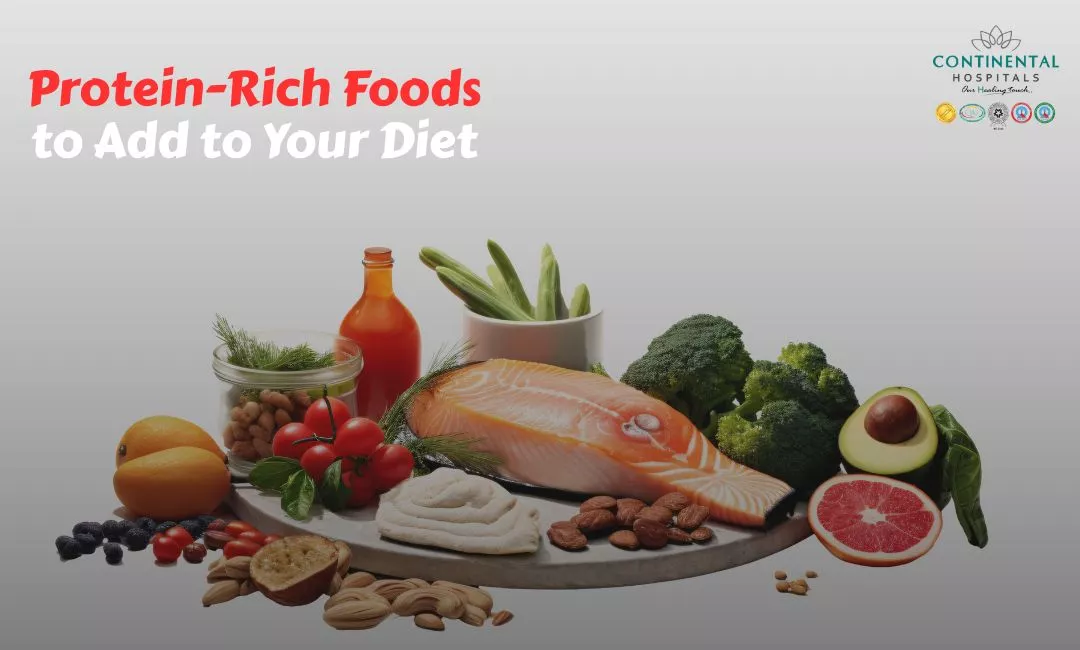
Protein is an essential nutrient that plays a key role in building muscles, repairing tissues, and maintaining overall health. Including protein foods in your daily diet can help you stay energetic, support weight management, and improve immunity. But what are the best protein foods to include in your meals? Let’s explore the top foods rich in protein and how they can benefit your health.
Why Protein Matters
Protein is made up of amino acids, which are the building blocks of the body. These are necessary for growth, muscle repair, and the production of hormones and enzymes. A diet rich in protein foods can help you:
- Maintain and build muscle mass
- Keep you full for longer, reducing unhealthy snacking
- Support recovery after exercise or illness
- Boost metabolism and support weight management
- Strengthen bones and improve bone health
Choosing the right protein foods is important to meet your body’s needs and support overall well-being.
Visit our Nutrition Department at Continental Hospitals for expert guidance to meet protein needs and boost your health today.
Best Protein Foods to Include in Your Diet
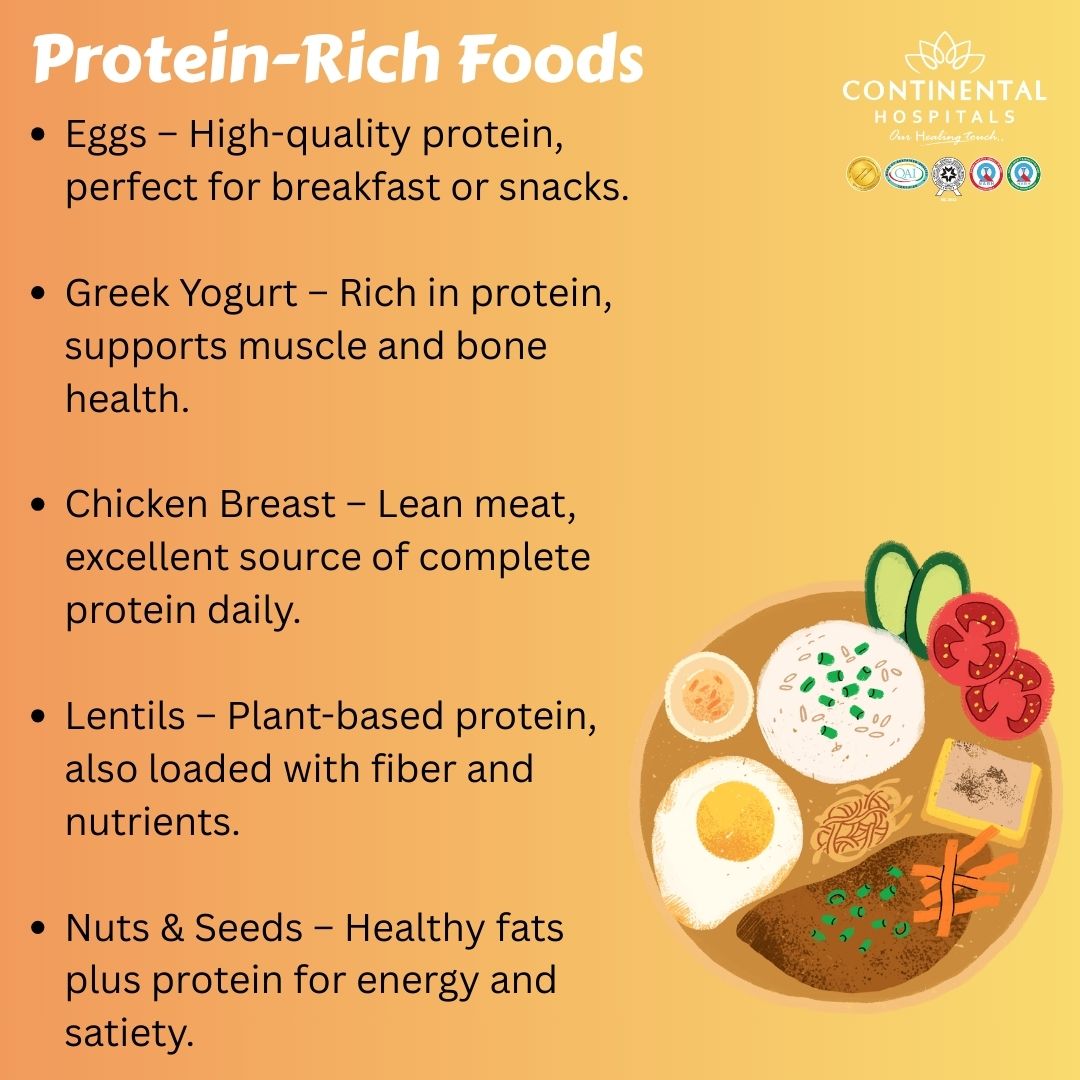
Here is a list of foods high in protein that are both nutritious and easy to include in your daily meals.
1. Eggs
Eggs are one of the best protein foods you can consume. They are rich in essential amino acids and can be cooked in various ways. Boiled eggs, scrambled eggs, or omelets are simple options that provide protein and other nutrients like vitamins B12 and D.
2. Lean Meat
Lean meats such as chicken, turkey, and lean cuts of beef are excellent sources of high protein. These foods help build muscle, provide iron, and improve overall strength. Choose grilled, baked, or roasted options for healthier meals.
3. Fish
Fish is a protein-rich food that also provides omega-3 fatty acids, which are beneficial for heart and brain health. Salmon, tuna, mackerel, and sardines are some of the best options. Include fish in your meals at least twice a week for maximum benefits.

4. Dairy Products
Milk, yogurt, and cheese are good sources of protein and calcium. They support bone health and provide essential nutrients for overall well-being. Opt for low-fat or skimmed options if you are monitoring your calorie intake.
5. Legumes
Beans, lentils, chickpeas, and peas are plant-based foods rich in protein. They are also high in fiber, which aids digestion and keeps you full for longer. Adding legumes to salads, soups, or curries can increase your protein intake.
6. Nuts and Seeds
Almonds, walnuts, chia seeds, flaxseeds, and pumpkin seeds are protein-rich and provide healthy fats. They make a great snack or can be added to smoothies, oatmeal, or salads.
7. Soy Products
Tofu, tempeh, and edamame are excellent plant-based protein foods. They are versatile and can be included in stir-fries, salads, and soups. Soy protein is also known to support heart health and reduce cholesterol levels.
8. Quinoa
Quinoa is a complete protein, which means it contains all nine essential amino acids. It is also gluten-free and rich in fiber. You can use quinoa as a base for salads, bowls, or as a substitute for rice.
Tips for a Balanced High Protein Diet
Including foods rich in protein is important, but balance is key. Here are some simple tips to ensure a healthy protein intake:
- Include a source of protein in every meal
- Combine plant and animal protein sources for variety
- Drink enough water to support protein metabolism
- Avoid overcooking protein foods to preserve nutrients
- Pair protein with vegetables and whole grains for complete nutrition
Benefits of Protein Foods for Health
Regular consumption of protein foods offers multiple health benefits, including:
- Stronger muscles and improved strength
- Better recovery from illness or physical activity
- Improved metabolism and weight management
- Enhanced immunity and reduced risk of infections
- Better bone health and reduced risk of osteoporosis
Why Choose Continental Hospitals for Nutrition and Health Guidance?
At Continental Hospitals, we provide comprehensive healthcare services, including nutrition and diet guidance. Our hospital is accredited by top healthcare organizations and follows strict standards for patient safety and care. Choosing Continental Hospitals means:
- Access to experienced doctors and specialists
- Personalized diet and nutrition plans for your health needs
- Advanced diagnostic and treatment facilities
- A trusted hospital recognized for excellence in patient care
Our internal medicine specialists and dietitians work together to guide patients on building a healthy diet with foods high in protein and other essential nutrients.
Simple Protein Food Ideas
Here are some easy ways to include protein foods in your daily diet:
- Breakfast: Scrambled eggs with whole-grain toast or Greek yogurt with seeds
- Lunch: Grilled chicken or tofu salad with quinoa and vegetables
- Snacks: Almonds, walnuts, or roasted chickpeas
- Dinner: Baked fish or lentil soup with vegetables
These small changes can help you increase your protein intake without major lifestyle adjustments.
Conclusion
Protein foods are essential for maintaining overall health, building strength, and supporting recovery. Including a mix of animal and plant-based proteins ensures you get all the necessary nutrients. Make conscious choices by including eggs, lean meat, fish, legumes, nuts, seeds, and soy products in your diet.
If you experience fatigue, muscle weakness, or other health issues related to best nutrition, consult an expert. At Continental Hospitals, our internal medicine specialists can provide personalized guidance and treatment plans to help you meet your protein needs and improve your health.
Maintaining a balanced diet with foods rich in protein is a simple and effective step towards better health. Start today and take charge of your wellness journey with the support of experts at Continental Hospitals.
Related Blog Topics: