.webp)


Rucking is emerging as one of the simplest and most effective ways to burn fat and improve overall fitness. If you have been searching for ways to lose belly fat effortlessly, rucking offers a practical and enjoyable solution. This exercise combines walking with weight carrying, making it suitable for beginners as well as fitness enthusiasts.
Rucking is more than just walking with a backpack. It is a full-body workout that engages your core, legs, and back muscles while increasing your heart rate. Unlike traditional gym exercises, rucking allows you to enjoy the outdoors while burning calories. It is low-impact, which reduces the risk of joint injuries compared to running or high-intensity workouts.
Visit our General Physician Department at Continental Hospitals for personalized, safe, and result-driven care. Book your consultation today!
What is Rucking?
Rucking involves walking briskly while carrying a weighted backpack. The weight can vary depending on your fitness level, but even a moderate weight increases the intensity of the walk. The term “ruck” comes from military training, where soldiers carry heavy packs over long distances to build endurance and strength. Today, rucking has become a popular exercise for fat loss and cardiovascular health.
Why Rucking is Effective for Fat Loss
Burns Calories Efficiently
Rucking increases your calorie burn compared to regular walking. Adding weight challenges your muscles and forces your body to work harder, which boosts metabolism and accelerates fat loss.
Targets Belly Fat
For those specifically wondering how to burn belly fat, rucking engages the core muscles throughout the exercise. This constant activation helps tone your abs and reduces stubborn belly fat over time.
Improves Cardiovascular Health
Rucking raises your heart rate, which strengthens the heart and lungs. It improves blood circulation and endurance, contributing to overall health and fitness.
Strengthens Muscles and Joints
Carrying a weighted backpack strengthens your legs, back, shoulders, and core. This not only supports fat loss but also enhances posture and balance.
Reduces Stress
Walking outdoors while rucking allows your mind to relax and helps reduce stress levels. A lower stress level can indirectly aid in fat loss by regulating hormones that contribute to weight gain.

Rucking Tips for Beginners
- Start with a light backpack to avoid strain.
- Wear comfortable, supportive shoes to protect your feet and joints.
- Maintain good posture by keeping your shoulders back and core engaged.
- Begin with short sessions and gradually increase distance and weight.
- Stay hydrated and listen to your body to avoid overexertion.
Ways to Incorporate Rucking into Your Routine
Daily Walks with Weight
Turn your daily walk into a rucking session by adding a backpack with some weight. Even small increments in weight make your walk more challenging and effective for fat loss.
Weekend Nature Hikes
Combine fat loss with adventure by rucking on trails or hills. This not only burns more calories but also strengthens your legs and enhances stamina.
Interval Rucking
Mix faster-paced rucking with normal walking. This helps in burning more calories in less time and improves cardiovascular endurance.
Group Rucking
Join a rucking group to stay motivated. Exercising with others keeps you accountable and makes the activity more enjoyable.
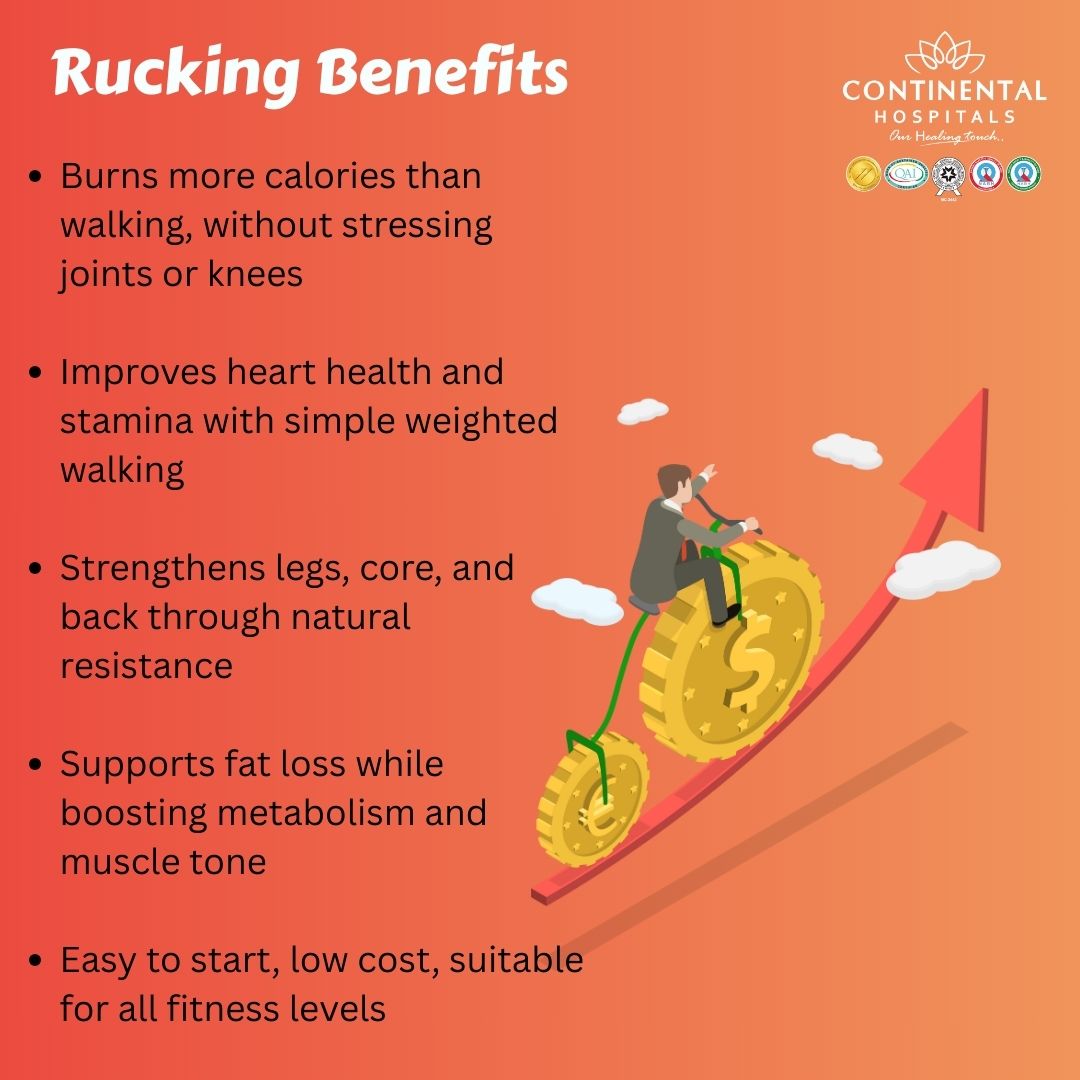
Rucking Benefits at a Glance
- Burns calories faster than regular walking
- Helps reduce belly fat
- Strengthens core, back, and leg muscles
- Improves posture and balance
- Boosts cardiovascular health
- Reduces stress and improves mental well-being
Rucking for Fat Loss: How to Make it Work
To maximize rucking for fat loss, consistency is key. Incorporate rucking sessions at least three to four times a week. Start with lighter weights and shorter distances, then gradually increase both as your fitness improves. Pairing rucking with a balanced diet enhances fat loss results. Focus on nutrient-rich foods that support energy and recovery.
Common Mistakes to Avoid While Rucking
- Carrying too heavy a backpack too soon
- Slouching or leaning forward while walking
- Ignoring proper footwear and support
- Skipping warm-ups or stretches
- Rucking on rough terrain without experience
Why Choose Continental Hospitals for Fitness and Health Guidance?
Continental Hospitals in Hyderabad is recognized as one of the best hospitals in the region for comprehensive healthcare. Accredited with high-quality standards, the hospital provides personalized care and expert advice for all health needs. If you are starting a fitness journey like rucking and want guidance on safe practices, nutrition, or dealing with any underlying conditions, consulting a specialist is the right step. The hospital’s team of experienced physicians ensures that every patient receives accurate, evidence-based guidance.
Conclusion
Rucking is a simple yet powerful way to lose belly fat, improve fitness, and boost overall health. It is accessible, low-impact, and suitable for beginners. By incorporating rucking into your routine, you can burn calories, strengthen muscles, and reduce stress, all while enjoying the outdoors.
Start rucking today to enjoy a healthier, more active lifestyle. Rucking is not just exercise; it is an easy and sustainable path to fat loss and improved wellness.
consult our best general physician at Continental Hospitals can help you achieve your goals effectively. Our accredited hospital ensures personalized, safe, and result-driven care.
Related Blog Topics: