.webp)

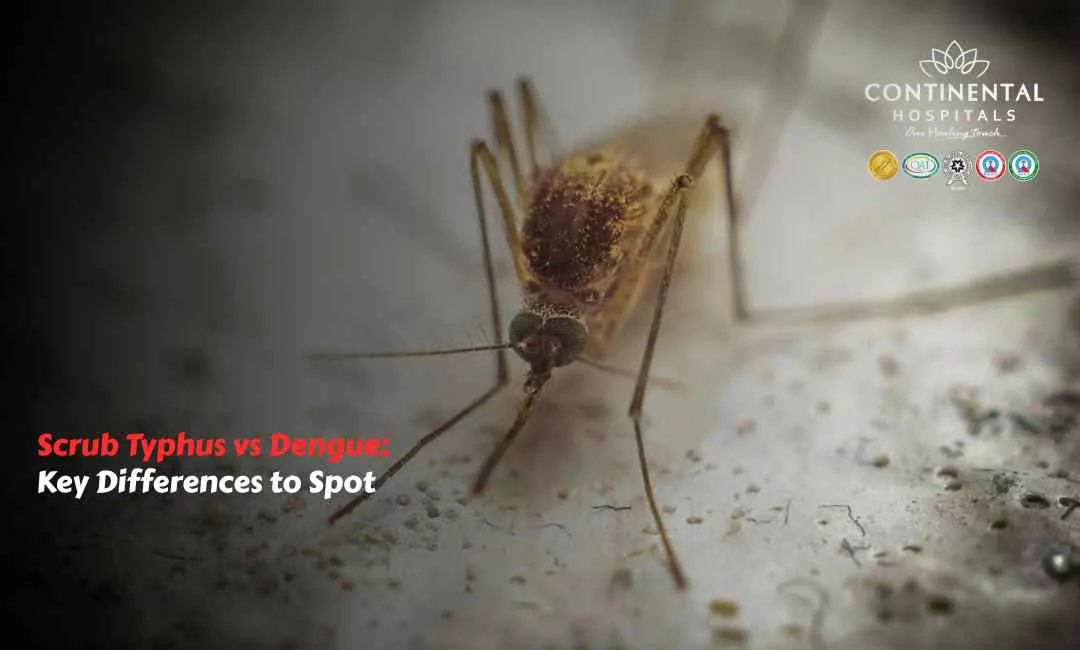
Scrub typhus and dengue are two common tropical infections in India, especially during and after the monsoon season. Both cause sudden high fever and severe body weakness, making it difficult for people to understand which illness they might be dealing with. Since early diagnosis can prevent complications, knowing the key differences can help patients, families, and even healthcare workers recognise warning signs faster.
What Causes Scrub Typhus and Dengue?
Understanding the cause helps you see why symptoms develop differently.
Scrub Typhus
Scrub typhus is caused by a bacterium called Orientia tsutsugamushi. It spreads through the bite of infected mites found in grassy, bushy, and rural areas. Many people call it mite bite fever because the fever begins after a chigger bite.
Dengue
Dengue is a viral infection caused by the dengue virus and spreads through Aedes mosquitoes. These mosquitoes breed in stagnant water commonly found around homes in cities and towns. It is often known as mosquito fever in India.
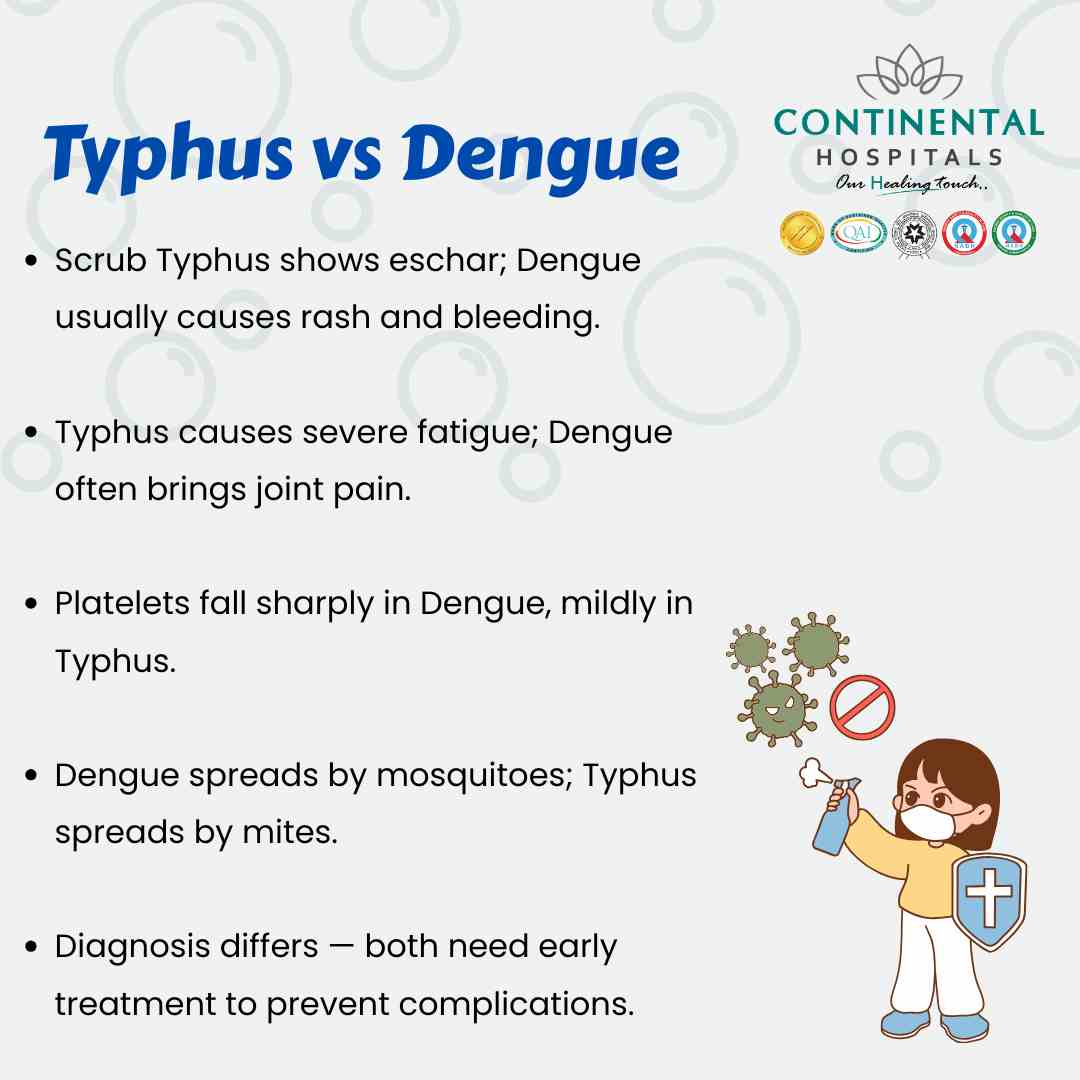
Scrub Typhus vs Dengue: Key Differences to Spot
While both diseases present with fever and body pain, several clinical differences help in quick identification.
1. Mode of Transmission
Scrub Typhus
- Spread through infected mite bite
- More common in rural and forested regions
Dengue
- Spread by Aedes mosquito bite
- More common in urban and semi-urban areas
2. Fever Pattern
Scrub Typhus

- High fever that develops gradually
- Persistent fever with chills
Dengue
- Sudden high-grade fever
- Often comes with intense headache and behind-the-eye pain
3. Eschar vs Rash
This is one of the most important diagnostic points.
Scrub Typhus
- Often forms an eschar at the bite site
- An eschar is a black, scab-like patch on the skin
- It is painless and may go unnoticed but is a strong indicator for diagnosis
Dengue
- Typically presents with a widespread red rash
- Rash may appear on arms, legs, or chest
- No eschar formation
4. Platelet Count
Scrub Typhus
- Platelet count may drop mildly
- Not as rapid or severe as dengue
Dengue
- Significant platelet drop is a hallmark
- Low platelets increase risk of bleeding
- Doctors monitor platelets closely to prevent complications
5. Additional Symptoms
Scrub Typhus
• Swollen lymph nodes
• Severe weakness
• Breathing difficulty in advanced stages
• More fatigue than pain
Dengue
- Severe joint and muscle pain
- Nausea and vomiting
- Eye pain
- Bleeding gums or nose in complicated cases
Why Identification is Important?
Early identification helps prevent organ damage, shock, and ICU-level complications. Many patients confuse these illnesses because both involve fever and weakness, but scrub typhus needs antibiotics while dengue requires supportive care. Knowing the differences avoids delay in treatment.
Diagnosis of Scrub Typhus vs Dengue in India
Doctors use clinical signs and special tests to confirm the infection.
Scrub Typhus
- Eschar examination
- IgM antibody test
- PCR testing in selected cases
Dengue
- NS1 antigen test
- IgM and IgG dengue antibody tests
- Platelet count and blood tests to monitor severity
Accurate fever diagnosis in India is essential because multiple tropical infections mimic each other, including malaria, typhus vs dengue, chikungunya, and leptospirosis.
Key Points to Remember
- Eschar vs rash is one of the clearest differences between scrub typhus and dengue
- Dengue is more likely to cause rapid platelet drop
- Scrub typhus comes from a mite bite and dengue from a mosquito bite
- Severe body pain is more common in dengue
- Delayed treatment in scrub typhus can lead to complications if antibiotics are not started on time
Prevention Tips for Scrub Typhus and Dengue
Scrub Typhus
- Avoid sitting or lying on grass in rural areas
- Wear fully covered clothing
- Use insect repellents during farm or field visits
Dengue
- Do not allow water to collect in containers around the home
- Use mosquito repellents
- Keep windows and doors screened
- Wear long sleeves during mosquito-active hours
Why Choose Continental Hospitals for Fever Diagnosis and Treatment?
Continental Hospitals is one of the leading multi super specialty hospitals in India with internationally recognised clinical standards. The hospital is supported by modern diagnostic laboratories, infectious disease specialists, emergency medicine experts, and advanced monitoring systems for tropical fever management. The hospital follows strict clinical quality systems and holds respected healthcare accreditations that ensure safe, reliable, and evidence based care for every patient.
Patients receive accurate testing for dengue, scrub typhus, malaria, typhoid, and other seasonal infections using fast reporting systems. The clinical team focuses on early detection, continuous monitoring, and personalised treatment plans that improve recovery and reduce complications.
With a patient centric approach, multidisciplinary care, and high quality infection control practices, Continental Hospitals remains a trusted centre for fever diagnosis in Hyderabad.
When to See a Doctor?
You should seek immediate medical help if you notice
- High fever lasting more than two days
- Severe headache and body pain
- Appearance of a skin rash or a black patch
- Sudden weakness or dizziness
- Bleeding signs
- Falling platelet count
Delaying treatment can increase the risk of complications in both infections.
Conclusion
Scrub typhus vs dengue may appear similar in the early stages, but certain signs such as eschar vs rash, dengue platelet drop patterns, and transmission differences help in quick identification. Both are common tropical diseases in India, and early diagnosis ensures better recovery. If you or your family member is suffering from unexplained fever, skin rash, black patch on the skin, or sudden weakness, it is important to get a prompt evaluation from experts.
For accurate diagnosis and specialised care, you can consult our best infectious disease specialists at Continental Hospitals, Hyderabad. The team provides comprehensive evaluation and advanced treatment for all types of fevers and tropical infections.