.webp)


Waking up in the middle of the night due to a sharp or dull ache in your shoulder can be incredibly frustrating. It disrupts your sleep cycle and leaves you feeling exhausted the next day. Shoulder pain at night is a common complaint, but understanding why it happens and how to manage it can help you regain control over your rest and your health.
Why Does Your Shoulder Hurt More at Night?
Many people notice that shoulder pain becomes more intense when they lie down. During the day, gravity helps pull the humerus (upper arm bone) down, creating a bit of space in the shoulder joint. When you lie flat, that gravitational advantage disappears. Additionally, the lack of movement at night can cause the joint to stiffen, making inflammation feel more pronounced.
If you find yourself frequently shifting positions to avoid shoulder pain while sleeping, you are not alone. This discomfort is often a signal from your body that a specific structure within the joint is under stress.
Don’t let persistent shoulder pain limit your life. Visit our Best Orthopedic Specialists in Hyderabad at Continental Hospitals and consult experts to restore pain-free movement today.
What causes shoulder pain at night?
Understanding the root cause is the first step toward effective shoulder pain relief. Here are the most frequent reasons people experience discomfort during the hours of rest.
1. Rotator Cuff Tendonitis or Tears
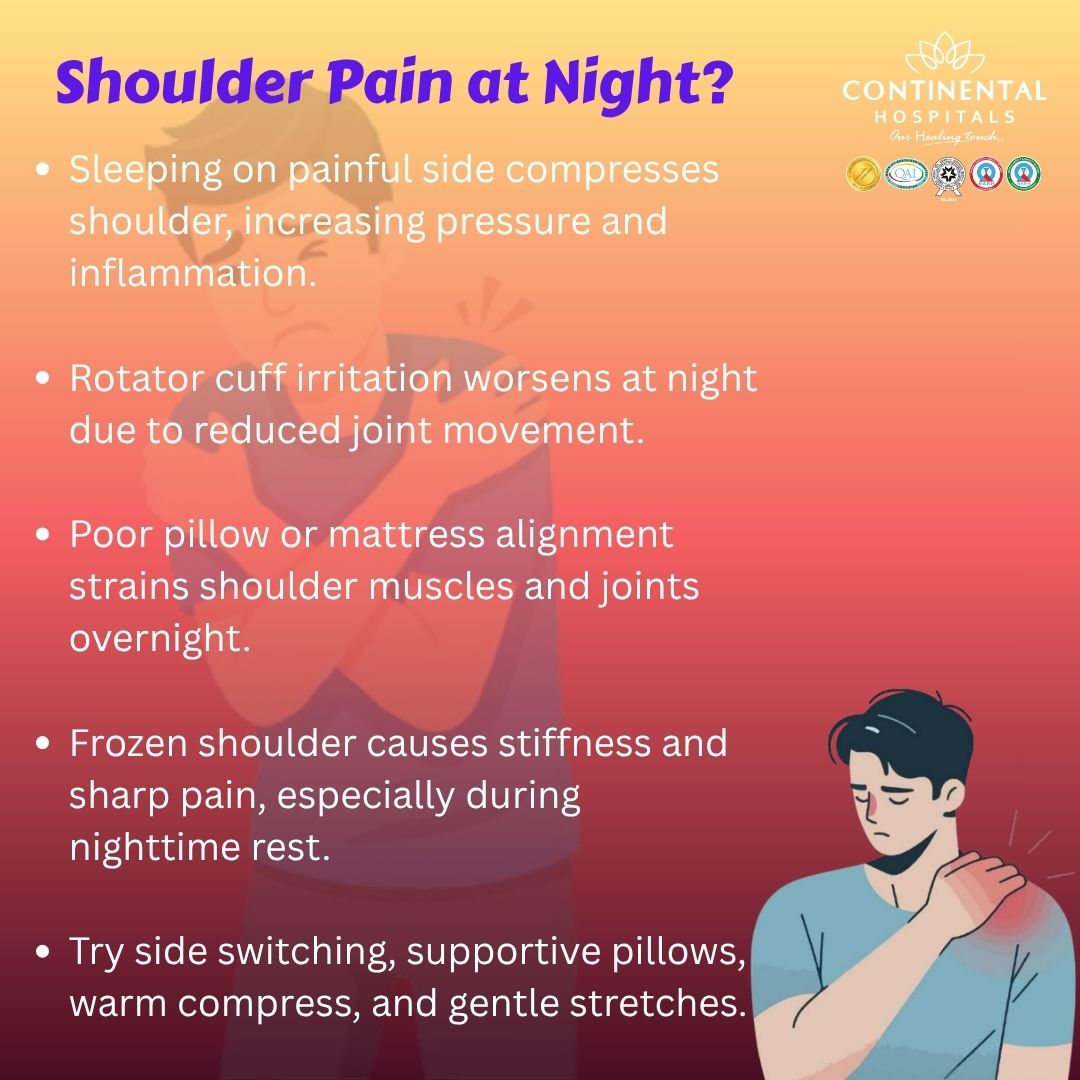
The rotator cuff is a group of muscles and tendons that keep your arm bone centered in your shoulder socket. Overuse or age can lead to inflammation or small tears. When you lie on your side, you may be putting direct pressure on these tendons, leading to sharp night shoulder pain causes.
2. Shoulder Bursitis
Bursae are small, fluid-filled sacs that act as cushions between bones and soft tissues. When these become inflamed, it is called bursitis. Lying down can compress these sacs, resulting in a persistent, throbbing ache that makes it difficult to find a comfortable sleeping position.
3. Frozen Shoulder
Also known as adhesive capsulitis, this condition involves the thickening and tightening of the shoulder capsule. The pain is often worse in the early stages and is notoriously painful at night, limiting your range of motion significantly.
4. Osteoarthritis
Wear and tear of the cartilage in the shoulder joint can cause bones to rub against each other. This often results in a deep, grinding sensation and shoulder pain that flares up after a long day of activity once the body tries to rest.

How can I relieve shoulder pain at home?
While professional consultation is necessary for long-term recovery, you can try these methods for shoulder pain relief at home to improve your sleep quality tonight.
- Adjust Your Sleeping Posture: Avoid sleeping directly on the affected side. If you are a back sleeper, place a small pillow under your painful arm to keep the joint supported and neutral.
- Use Heat or Cold Therapy: Applying an ice pack for 15 minutes before bed can reduce inflammation. Alternatively, a warm compress can help relax tight muscles if the pain is due to stiffness.
- Gentle Movement: Avoid complete immobilization. Moving your arm through its comfortable range of motion during the day prevents the joint from "freezing" up.
- Supportive Pillows: Use a body pillow to prevent your body from rolling onto the sore shoulder during the night.
What are the most effective exercises for shoulder pain relief?
Incorporating shoulder pain exercises into your daily routine can strengthen the supporting muscles and improve flexibility.
- Pendulum Stretch: Lean forward and support yourself with your good arm on a table. Let the painful arm hang down and gently swing it in small circles. This creates space in the joint without putting weight on it.
- Across-the-Chest Stretch: Gently pull your affected arm across your chest as far as possible without pain. Hold for 30 seconds to help with shoulder pain relief.
- Doorway Stretch: Stand in a doorway and place your arms on the frame at shoulder height. Lean forward slightly to stretch the front of the shoulders and chest.
Always perform shoulder pain relief exercises slowly. If you feel sharp pain, stop immediately and consult a professional.
Why Choose Continental Hospitals for Shoulder Care?
When home remedies are not enough, choosing the right healthcare partner is vital for a full recovery. Continental Hospitals is recognized as the best hospital in Hyderabad for orthopedic and joint care.
Our facility is designed to provide a healing environment backed by global standards of medical excellence. We pride ourselves on a patient-centric approach that ensures every individual receives a customized treatment plan tailored to their specific lifestyle and recovery goals.
World-Class Accreditations
Continental Hospitals stands out because of its commitment to quality. We hold prestigious accreditations, including JCI (Joint Commission International) and NABH (National Accreditation Board for Hospitals & Healthcare Providers). These certifications are a testament to our adherence to the highest international safety and clinical protocols. When you choose us, you are choosing a facility that meets the same rigorous standards as the top hospitals in the world.
Advanced Diagnostics and Treatment
We utilize the latest imaging technology to accurately diagnose the cause of your shoulder pain. Whether you require non-invasive physical therapy, advanced arthroscopic surgery, or regenerative medicine, our team is equipped with the tools to get you back to your pain-free life.
When to See a Doctor?
It is important to know when shoulder pain requires medical intervention. You should seek help if you experience it.
- Inability to lift your arm or carry objects
- Pain that persists despite rest and home care
- Visible deformity or swelling in the joint area
- Numbness or tingling that radiates down the arm
- Pain that prevents you from sleeping for several consecutive nights
Ignoring the early signs of shoulder issues can lead to chronic conditions that are harder to treat later. Early intervention is the key to maintaining joint longevity.
Conclusion
Shoulder pain at night does not have to be a permanent part of your life. By understanding the causes, practicing proper sleep hygiene, and engaging in regular shoulder pain exercises, you can significantly reduce your discomfort. However, persistent pain needs the expertise of a specialist to ensure there is no underlying structural damage.
If you suffer from persistent shoulder discomfort, do not let it affect your quality of life any longer. At Continental Hospitals, consult our best orthopedic doctor in Hyderabad, who is dedicated to helping you move freely again.
Related Blog Topics: