.webp)

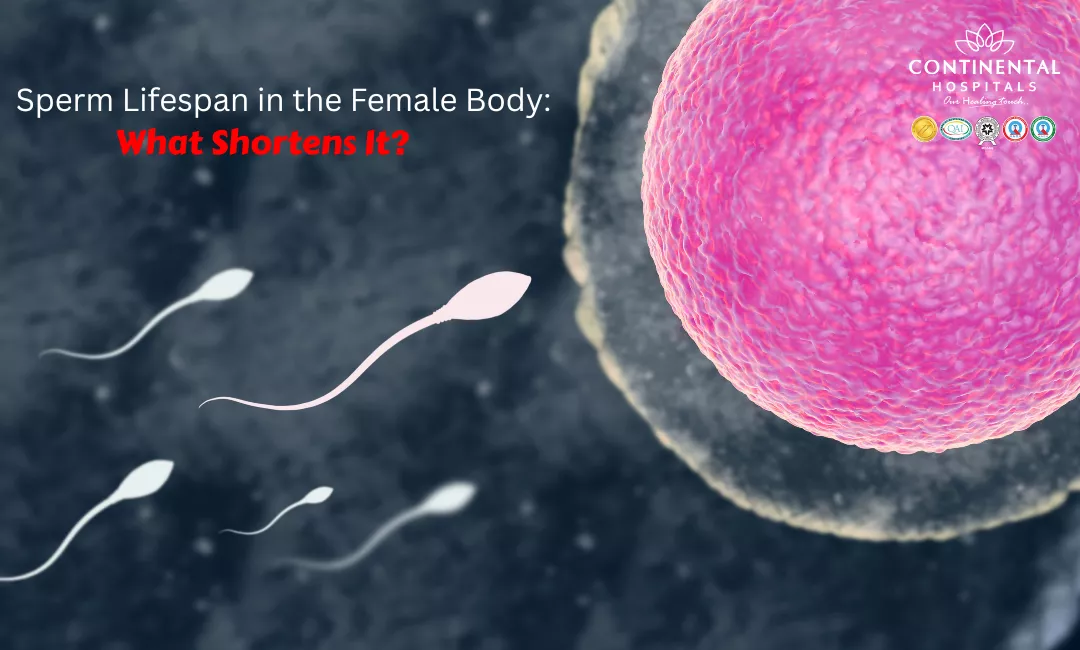
Understanding sperm lifespan in the female body is important for couples trying to conceive. Many people ask, how long sperm survive after ejaculation? The answer depends on several biological and environmental factors. While sperm may live only a short time outside the body, inside the female reproductive tract they can survive for several days under the right conditions.
Struggling to conceive or irregular cycles? visit our Continental Fertility Centre at Continental Hospitals, Hyderabad for expert diagnosis and advanced care.
This is why pregnancy can occur even if intercourse happens a few days before ovulation. Sperm longevity in fallopian tubes allows them to wait for the egg to be released.
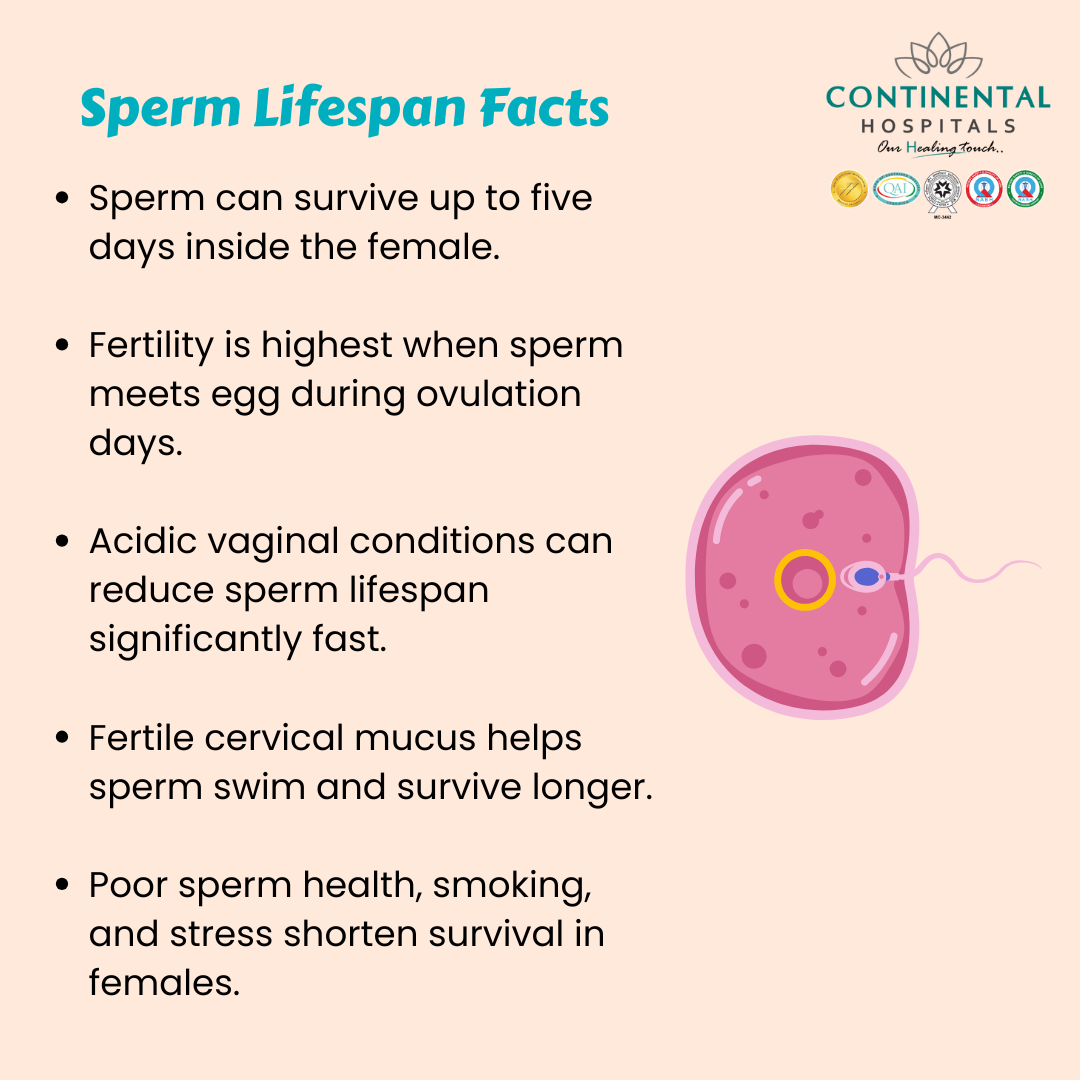
Sperm Survival in Vaginal Environment
The vaginal environment is naturally acidic. This acidity helps protect against infections but may reduce sperm lifespan. Sperm survival in vaginal environment improves during ovulation because cervical mucus becomes more alkaline and supportive.
Key factors affecting sperm lifespan in the vagina include:
• Vaginal pH levels
• Presence of healthy cervical mucus
• Timing within menstrual cycle
• Overall sperm health
If cervical mucus is thick and sticky, sperm movement becomes difficult. During ovulation, sperm lifespan in cervical mucus increases because it becomes clear, slippery, and stretchy.
Sperm Lifespan and Fertility Window
The sperm lifespan and fertility window are closely connected. The fertility window usually includes the five days before ovulation and the day of ovulation itself. Since sperm can survive up to five days in the female body, intercourse during this period increases sperm lifespan and pregnancy chances.

Sperm lifespan during menstrual cycle changes based on hormonal fluctuations. Before ovulation, estrogen levels rise and improve cervical mucus quality. After ovulation, progesterone increases and mucus thickens, reducing sperm survival.
Sperm lifespan after ovulation is usually shorter. Once the egg is released, it survives for about one day. If fertilization does not occur within this time, conception becomes unlikely for that cycle.
Factors Affecting Sperm Lifespan
Several factors affecting sperm lifespan determine whether fertilization is possible.
Biological factors include:
• Quality and motility of sperm
• Hormonal balance in women
• Cervical mucus consistency
• Reproductive tract health
Lifestyle factors also play a role. Short sperm lifespan reasons may include:
• Smoking
• Excess alcohol consumption
• Poor diet
• Chronic stress
• Untreated infections
Poor sperm health reduces the ability of sperm to swim effectively and survive longer in the reproductive tract.
Sperm Survival in Uterus and Fallopian Tubes
After passing through the cervix, sperm enter the uterus. Sperm survival in uterus depends on immune response and uterine environment. From there, sperm move toward the fallopian tubes, where fertilization typically occurs.
Sperm longevity in fallopian tubes allows sperm to remain viable while waiting for ovulation. The fallopian tubes provide a supportive environment during the fertile period. If ovulation occurs while sperm are present, fertilization becomes possible.
How to Increase Sperm Survival?
Couples often ask how to increase sperm survival naturally. Improving overall reproductive health is the key.
Sperm health and longevity tips include:
• Maintain healthy body weight
• Eat antioxidant rich foods
• Avoid smoking and tobacco
• Reduce stress through relaxation techniques
• Stay physically active
• Treat infections promptly
Women can also support sperm survival by tracking ovulation accurately and timing intercourse during the fertility window.
Medical evaluation may be necessary if pregnancy does not occur despite regular attempts.
Sperm Lifespan and Conception Chances
Sperm lifespan and conception chances are directly related. When sperm survive longer inside the reproductive tract, the likelihood of meeting the egg increases. This is especially important for couples who cannot precisely predict ovulation day.
Sperm lifespan and pregnancy chances improve when both partners maintain reproductive health. Timely ovulation tracking and lifestyle changes can significantly enhance outcomes.
However, if sperm survival is consistently low or there are hormonal or structural concerns, medical consultation is recommended.
When Should You See a Fertility Specialist?
Consider consulting a specialist if:
• Pregnancy has not occurred after regular attempts
• Menstrual cycles are irregular
• There is known sperm quality issue
• There is history of reproductive disorders
• There are repeated early pregnancy losses
Early diagnosis helps identify short sperm lifespan reasons and underlying fertility issues.
Why Choose Continental Hospitals for Fertility Care?
Choosing the right hospital plays a crucial role in fertility success. Continental Hospitals is recognized as one of the best hospital in Hyderabad for advanced fertility evaluation and treatment.
Our Department of Reproductive Medicine and Fertility offers:
• Comprehensive fertility assessments for couples
• Advanced semen analysis and sperm health testing
• Ovulation tracking and hormonal evaluation
• Personalized fertility treatment plans
• Multidisciplinary expert care
Continental Hospitals is accredited by NABH and JCI, reflecting commitment to global standards of quality, safety, and patient centered care. These accreditations ensure evidence based protocols and advanced medical infrastructure for fertility treatment.
Our experienced fertility specialists combine clinical expertise with compassionate guidance to support couples at every stage of their parenthood journey.
Key Takeaways
• Sperm lifespan in female body can extend up to five days
• Sperm survival in vaginal environment improves during ovulation
• Sperm lifespan in cervical mucus depends on hormonal changes
• Sperm lifespan after ovulation is shorter
• Healthy lifestyle improves sperm health and longevity
• Fertility window timing increases conception chances
Understanding sperm survival gives couples clarity and confidence. It removes confusion and helps make informed decisions.
Conclusion
Sperm lifespan in the female body plays a vital role in natural conception. While sperm may survive several days inside the uterus and fallopian tubes, their longevity depends on many biological and lifestyle factors. Knowing how long sperm survive after ejaculation, understanding sperm lifespan during menstrual cycle, and recognizing factors affecting sperm lifespan can improve planning for pregnancy.
If you suffer from difficulty conceiving, irregular cycles, or concerns about sperm health, consult our best Reproductive Medicine specialists at Continental Hospitals, Hyderabad. Our team provides accurate diagnosis, advanced fertility treatments, and compassionate care to help you achieve your dream of parenthood with confidence.
Related Blog Topics