.webp)


Alcohol is one of the most commonly consumed beverages across the world. Many people enjoy it socially, during celebrations, or to relax after a long day. But have you ever wondered why alcohol hits fast sometimes? And why do you wake up with a pounding headache after drinking? Understanding how alcohol affects the body can help you make safer choices and protect your health.
What Happens When You Drink Alcohol?
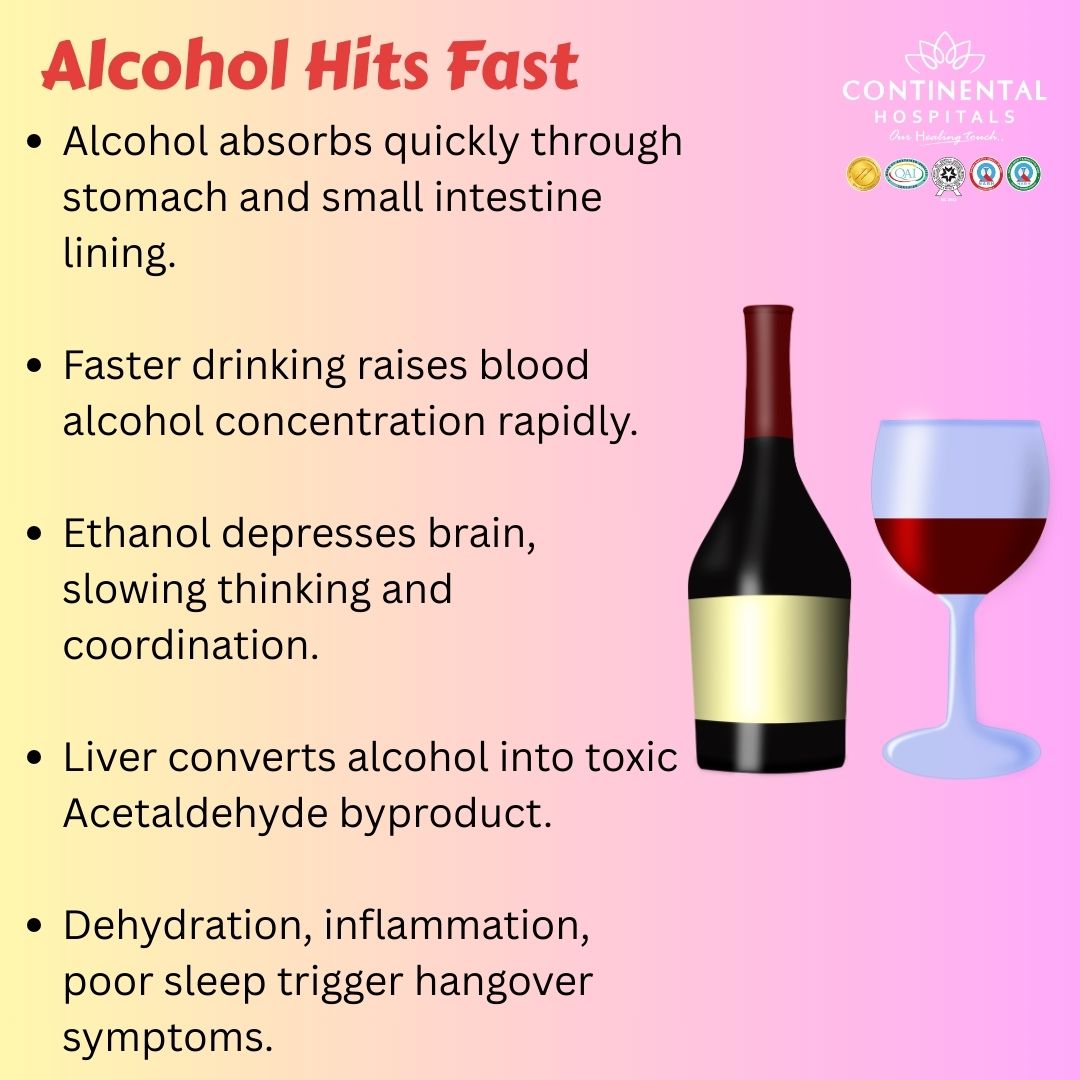
The moment you take a sip of alcohol, it starts entering your bloodstream. Unlike many foods, alcohol does not need full digestion. About twenty percent is absorbed directly through the stomach lining, and the rest enters through the small intestine. From there, it travels quickly to the brain.
This is the main reason why alcohol hits fast. Within minutes, it begins affecting brain cells and nerve signals. It slows down communication between brain cells and changes how your body functions.
Visit our Gastroenterology Department at Continental Hospitals for expert care, advanced treatment, and complete support for alcohol-related health problems.
Effects of alcohol on body
Here are some key effects of alcohol on body systems:
• Brain slows down reaction time and judgment
• Heart rate may increase
• Blood vessels expand causing warmth and redness
• Liver works harder to break down toxins
• Kidneys produce more urine leading to dehydration
• Stomach lining becomes irritated
These changes explain why you may feel relaxed at first but later experience discomfort.
Why Alcohol Hits Fast?
Many factors decide why alcohol hits fast in some people and slower in others.

1. Empty Stomach
If you drink alcohol without eating, it enters your bloodstream much faster. Food slows down absorption. Drinking on an empty stomach can lead to sudden intoxication.
2. Body Weight and Composition
People with lower body weight or less muscle mass may feel the effects of alcohol more quickly. Muscle contains more water, which helps dilute alcohol in the bloodstream.
3. Gender Differences
Women often metabolize alcohol differently than men. Hormonal differences and body composition can lead to higher blood alcohol levels even with smaller amounts.
4. Speed of Drinking
Drinking multiple drinks in a short time overwhelms the liver. The liver can process only a limited amount of alcohol per hour. Excess alcohol circulates in the bloodstream, increasing intoxication.
5. Type of Drink
Carbonated drinks can make alcohol absorb faster. Mixing alcohol with energy drinks may also mask the feeling of intoxication, leading to overconsumption.
Understanding why alcohol hits fast helps reduce the risk of accidents, falls, or alcohol poisoning.
What Causes Hangovers?
A hangover is your body’s reaction to excessive alcohol consumption. Hangover symptoms usually appear several hours after drinking, often the next morning.
So what causes hangovers?
1. Dehydration
Alcohol increases urine production. This leads to fluid loss and electrolyte imbalance. Dehydration is one of the main reasons for headache after drinking.
2. Toxic Byproducts
When the liver breaks down alcohol, it produces a toxic compound called acetaldehyde. This substance is more harmful than alcohol itself and contributes to nausea, sweating, and weakness.
3. Inflammation
Alcohol triggers inflammation in the body. It irritates the stomach lining and can cause gastritis. This leads to nausea, vomiting, and abdominal pain.
4. Blood Sugar Drop
Alcohol affects glucose production in the liver. Low blood sugar can cause fatigue, dizziness, and shakiness.
5. Poor Sleep
Many people think alcohol helps them sleep. In reality, alcohol disrupts deep sleep cycles. You may fall asleep quickly but wake up feeling tired and unfocused.
These factors together explain what causes hangovers and why the experience can feel overwhelming.
Common Hangover Symptoms
Hangover symptoms vary from person to person. Some common complaints include:
• Headache after drinking
• Dry mouth and excessive thirst
• Nausea or vomiting
• Body aches and muscle pain
• Fatigue and weakness
• Sensitivity to light and sound
• Difficulty concentrating
• Irritability or low mood
Severe hangover symptoms may indicate alcohol poisoning, which requires immediate medical care.
How Alcohol Affects the Liver
The liver plays a crucial role in breaking down alcohol. Frequent or heavy drinking forces the liver to work continuously. Over time, this can lead to:
• Fatty liver disease
• Alcoholic hepatitis
• Liver cirrhosis
• Increased risk of liver failure
Early stages may not show symptoms. That is why regular health checkups are important if you consume alcohol frequently.
At Continental Hospitals, our Gastroenterology and Hepatology specialists provide advanced evaluation for liver health using modern diagnostic tools.
Can You Prevent a Hangover?
While the only guaranteed way to avoid a hangover is to avoid alcohol, certain steps may reduce the severity.
• Eat a balanced meal before drinking
• Drink water between alcoholic beverages
• Avoid mixing different types of alcohol
• Limit the quantity consumed
• Get adequate sleep
These simple precautions may lower the risk of intense hangover symptoms.
When Should You See a Doctor?
Occasional hangover symptoms may improve with rest and hydration. However, medical attention is necessary if you experience:
• Persistent vomiting
• Confusion or unconsciousness
• Seizures
• Slow or irregular breathing
• Severe abdominal pain
These may indicate alcohol poisoning or serious complications.
If you suffer from repeated headache after drinking, stomach pain, or signs of liver damage, consult a specialist immediately.
Why Choose Continental Hospitals?
Continental Hospitals is recognized as the best hospital in Hyderabad for comprehensive and patient focused care. Our commitment to clinical excellence is supported by national and international accreditations such as NABH and JCI. These accreditations reflect strict standards in patient safety, quality treatment protocols, and advanced healthcare infrastructure.
Our Internal Medicine, Gastroenterology, Hepatology, and Emergency Medicine departments work together to manage alcohol related complications effectively. We use state of the art diagnostic facilities, modern intensive care units, and evidence based treatment protocols.
Patients choose Continental Hospitals because of:
• Highly experienced super specialists
• Advanced laboratory and imaging services
• Multidisciplinary team approach
• Focus on preventive health and early detection
• Ethical and transparent medical practices
We believe in educating patients about the effects of alcohol on body systems so they can make informed decisions.
Understanding Moderation and Responsibility
Alcohol affects every organ system. While moderate and occasional consumption may not cause serious harm for some individuals, excessive use can lead to short term discomfort and long term damage.
If you find it difficult to control alcohol intake or experience frequent hangover symptoms, it may be time to seek professional guidance. Early intervention can prevent serious liver disease, heart problems, and neurological complications.
Conclusion
Why alcohol hits fast depends on several factors such as empty stomach, body composition, and speed of drinking. What causes hangovers is a combination of dehydration, toxic byproducts, inflammation, and sleep disruption. Hangover symptoms like headache after drinking, nausea, and fatigue are warning signals from your body.
Understanding the effects of alcohol on body systems helps you make safer choices. If you suffer from persistent symptoms, liver concerns, or repeated complications after consuming alcohol, do not ignore them.
Consult our best gastroenterology specialists at Continental Hospitals, the best hospital in Hyderabad. Our accredited facilities, experienced doctors, and comprehensive care ensure accurate diagnosis and advanced treatment for alcohol related health problems. Your health and safety should always come first.
Related Blog Topics: