.webp)

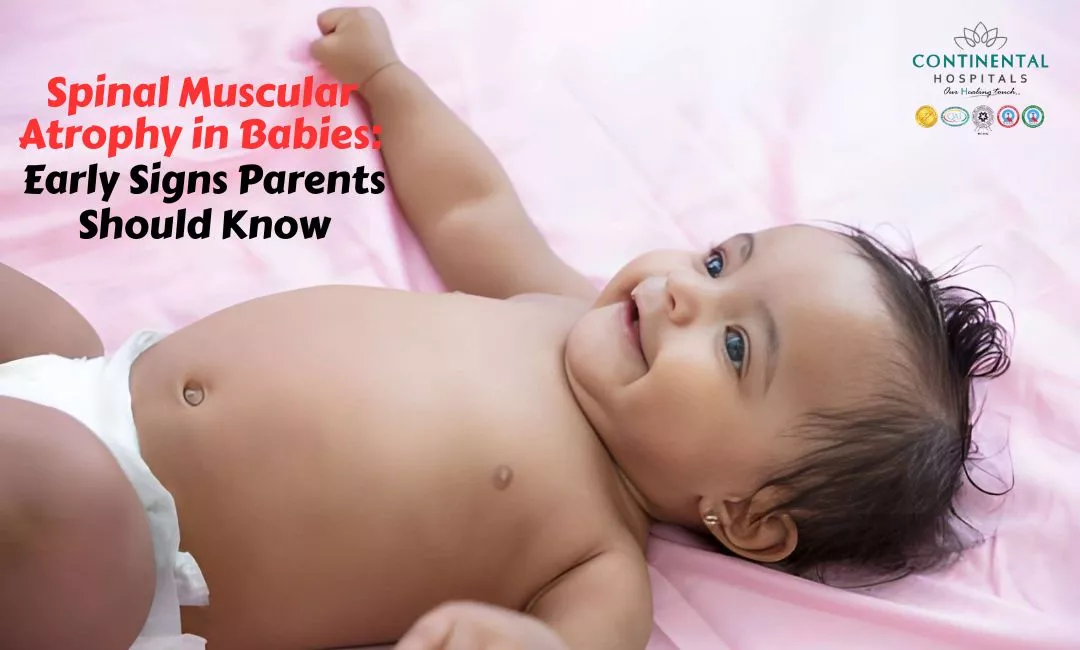
When a baby does not lift their head, move their arms freely, or kick strongly, parents often think the child is simply developing slowly. But sometimes, these signs may point to a serious health condition called sma.
Spinal muscular atrophy in babies is a rare but serious genetic disorder in babies that affects the nerves controlling muscle movement. Early diagnosis and timely treatment can make a big difference in a child’s life. Understanding sma symptoms in babies helps parents take quick action and seek expert medical care.
At Continental Hospitals, the best hospital in Hyderabad, our expert pediatric neurology team provides advanced diagnosis and comprehensive care for sma in infants.
What Is sma?
Sma, also known as spinal muscular atrophy, is a genetic disorder in babies that affects motor neurons. These are special nerve cells in the spinal cord that control voluntary muscle movements like breathing, swallowing, sitting, and crawling.
When these motor neurons do not function properly, the muscles become weak and shrink over time. This leads to muscle weakness in babies and delays in normal development.
Spinal muscular atrophy in babies happens due to changes in a gene called SMN1. This gene is responsible for producing a protein essential for muscle function. Without enough of this protein, muscles become weaker.
Visit Our best neuro doctor hyderabad at Continental Hospitals, Hyderabad. Our expert pediatric neurologists provide advanced SMA diagnosis and personalized care plans.
Why Is Early Detection of sma Important?
Can early diagnosis change a baby’s future? Yes.
Sma in infants progresses quickly, especially in severe forms. Early treatment can help protect motor neurons before too much damage occurs. This improves survival, breathing ability, and overall development.

Recognizing sma symptoms in babies early allows doctors to start advanced therapies at the right time.
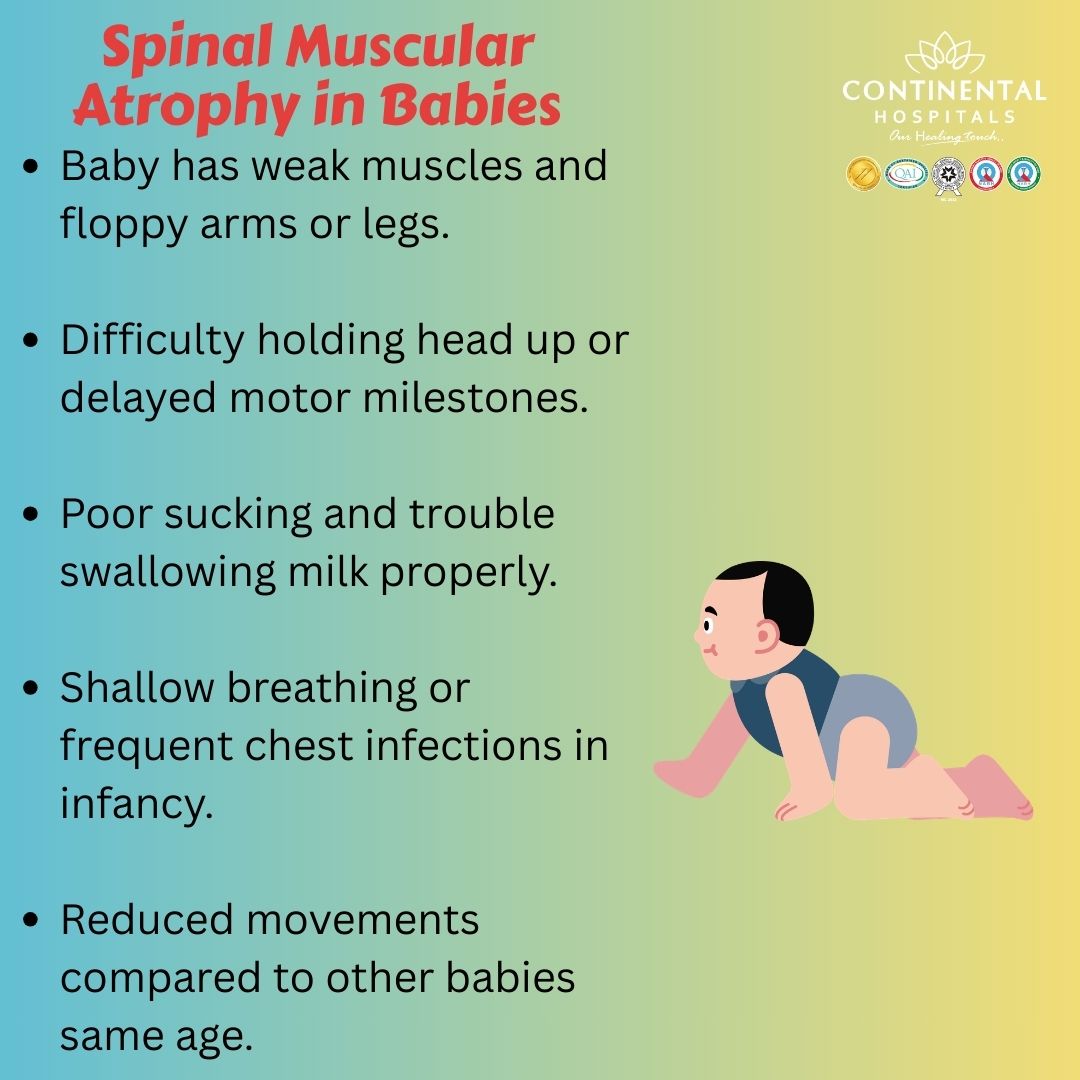
What are the early signs of spinal muscular atrophy (SMA) in babies?
Parents should watch for these important warning signs:
1. Muscle weakness in babies
The baby may appear floppy when held. Arms and legs may feel loose instead of firm.
2. Weak neck control in baby
By three to four months, most babies begin to hold their head steady. Babies with SMA in infancy may struggle with head control.
3. Poor sucking or swallowing
Feeding difficulties can be an early sign of spinal muscular atrophy in babies.
4. Limited movement
The baby may not kick or move arms as actively as other infants of the same age.
5. Breathing difficulties
Weak chest muscles may cause shallow breathing or frequent respiratory infections.
6. Delayed motor milestones
Rolling over, sitting, or crawling may be delayed.
If you notice muscle weakness in babies along with weak neck control in baby, consult a pediatric specialist immediately.
What are the types of spinal muscular atrophy (SMA) in infants?
Sma is classified based on the age at which symptoms begin and the severity.
Type 1
This is the most severe form of spinal muscular atrophy in babies. Symptoms appear within the first six months. Babies may have severe muscle weakness and breathing difficulties.
Type 2
Symptoms appear between six and eighteen months. Children may sit but cannot stand without support.
Type 3 and Type 4
These are milder forms and usually appear later in childhood or adulthood.
Among these, SMA type 1 is the most common and serious in infants.
What causes spinal muscular atrophy in babies?
Spinal muscular atrophy in babies is inherited from parents. It is an autosomal recessive condition. This means both parents must carry the faulty gene for the baby to develop sma.
Parents may not show any symptoms but can still pass the gene to their child. Genetic testing helps identify carriers and confirm diagnosis.
How Is SMA Diagnosed?
Doctors use several methods to diagnose sma in infants:
• Physical examination to assess muscle tone
• Review of developmental milestones
• Genetic testing to confirm SMN1 gene mutation
• Electromyography in selected cases
Early and accurate diagnosis is critical in managing spinal muscular atrophy in babies.
At Continental Hospitals, we offer advanced genetic testing facilities and multidisciplinary evaluation for early detection of sma.
What are the types of SMA in infants?
Is there hope for babies diagnosed with sma? Yes.
Medical science has made significant progress in treating spinal muscular atrophy in babies.
1. Gene therapy
This treatment replaces the faulty gene with a working one, helping the body produce the needed protein.
2. SMN enhancing medications
These medicines increase the production of SMN protein, improving muscle function.
3. Supportive care
Respiratory support
Nutritional management
Physiotherapy
Occupational therapy
Early treatment improves outcomes in SMA in infants and supports better quality of life.
When Should Parents See a Doctor?
Consult a pediatric neurologist if your baby shows:
• Persistent muscle weakness in babies
• Weak neck control in baby beyond four months
• Feeding difficulties
• Reduced movement
• Delayed milestones
Prompt medical attention ensures timely intervention for spinal muscular atrophy in babies.
Living With sma
Managing sma requires long term care and regular follow ups. With modern treatments, many children with sma in infants are living longer and healthier lives.
Early physiotherapy helps strengthen muscles. Respiratory monitoring prevents complications. Nutritional guidance supports growth.
Families benefit from counseling and support groups that help them cope emotionally and practically.
Why Choose Continental Hospitals for sma Treatment?
Continental Hospitals is recognized as the best hospital in Hyderabad for advanced pediatric neurological care.
Here is why families trust us:
• NABH and JCI accredited hospital ensuring international standards of patient safety and quality care
• Experienced pediatric neurologists and genetic specialists
• Advanced diagnostic laboratories for accurate genetic testing
• Comprehensive neonatal and pediatric intensive care units
• Multidisciplinary approach including neurology, pulmonology, physiotherapy, and nutrition
• Evidence based treatment protocols
• Compassionate and child focused care
Our commitment to clinical excellence and internationally recognized accreditations ensure that every child receives safe, advanced, and personalized treatment for spinal muscular atrophy in babies.
Frequently Asked Question
Can sma be cured completely?
SMA cannot be fully cured, but early treatment can significantly improve muscle strength, breathing ability, and survival outcomes.
Can genetic testing prevent sma?
Genetic counseling and carrier testing help parents understand risks before planning a pregnancy.
Is every floppy baby affected by sma?
No. Many conditions can cause muscle weakness in babies. Only a detailed medical evaluation can confirm the diagnosis.
Conclusion
Sma is a serious genetic disorder in babies that affects muscle strength and movement. Early recognition of sma symptoms in babies such as muscle weakness in babies and weak neck control in baby can save lives.
Spinal muscular atrophy in babies requires immediate medical attention and expert care. With advances in gene therapy and supportive treatments, children diagnosed with sma in infants now have greater hope than ever before.
If your baby shows signs of muscle weakness or delayed milestones, do not ignore them.
Consult our Best Neurologist in Hyderabad at Continental Hospitals, the best hospital in Hyderabad. Our experienced pediatric neurologists specialize in diagnosing and managing sma with advanced genetic testing and comprehensive treatment plans.
Early action can change your child’s future. Book an appointment with our pediatric neurology specialists today and give your baby the best chance at a stronger, healthier life.
Related Blog Topics:
What Is Spinal Muscular Atrophy (SMA)? Causes, Symptoms and Treatment