.webp)


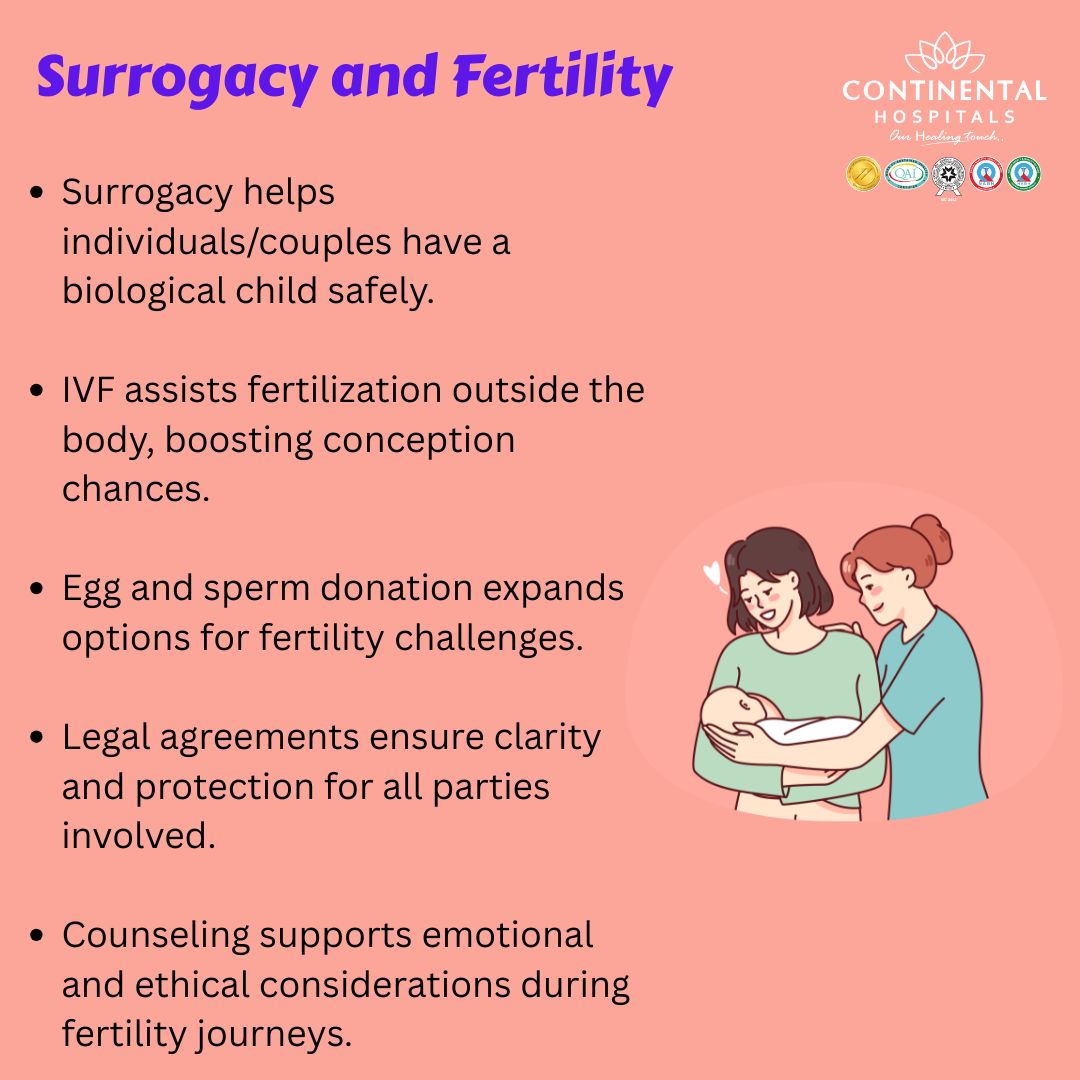
Surrogacy and fertility care have become powerful pathways for individuals and couples who are struggling with infertility, medical conditions, or complex reproductive challenges. Many people who are trying to conceive face emotional, physical, and mental stress, especially when natural conception is not possible. With modern fertility treatment options like IVF, gestational surrogacy, and advanced reproductive medicine, parenthood is now achievable for many who once believed it was out of reach.
At Continental Hospitals, Hyderabad, patients receive advanced, ethical, and compassionate care that supports every stage of the surrogacy journey and fertility treatment process. This guide will help you understand what surrogacy is, how fertility treatments work, and how to choose the right medical support system for your journey.
Visit our Fertility Department at Continental Hospitals, Hyderabad, and consult our expert fertility specialist for safe, ethical surrogacy care.
Understanding Surrogacy and Fertility
What is surrogacy?
Surrogacy is a fertility option where a surrogate mother carries and delivers a baby for another individual or couple. It is often chosen when pregnancy is medically unsafe or impossible for the intended mother.
Surrogacy and fertility services are commonly used by:
- Women with uterine or medical complications
- Couples facing repeated IVF failure
- Individuals with genetic conditions
- Same-sex couples
- Single parents planning pregnancy
- Couples with long-term infertility
Surrogacy and fertility solutions are not only medical treatments, they are structured, ethical, and carefully regulated processes guided by medical experts.
Types of Surrogacy
1. Gestational Surrogacy
This is the most common and medically preferred method.
In gestational surrogacy:

- The surrogate mother has no genetic link to the baby
- IVF is used to create embryos
- The embryo is transferred to the surrogate’s uterus
- The baby is biologically related to the intended parents or donors
2. Traditional Surrogacy
The surrogate provides her own egg, making her genetically related to the baby.
This method is rarely used today due to ethical and legal complexities.
Fertility Treatment Options Alongside Surrogacy
Surrogacy and fertility care work together to create a complete reproductive solution. Fertility treatment options include:
IVF (In Vitro Fertilization)
Eggs and sperm are fertilized in a laboratory and embryos are transferred into the uterus.
Gen 5 fertility technologies
Advanced embryo selection, genetic screening, and laboratory innovations for higher success rates.
Hormonal fertility treatment
Supports ovulation, egg production, and uterine preparation.
Assisted reproductive techniques
Used when natural conception is not possible.
These fertility treatment methods improve pregnancy success and support safe outcomes for both the baby and the surrogate mother.
The Surrogacy Process Step by Step
Here is a simple and clear structure of the surrogacy process:
- Medical evaluation of intended parents
- Fertility testing and IVF planning
- Selection of a healthy surrogate mother
- Legal and ethical clearances
- IVF embryo creation
- Embryo transfer to surrogate
- Pregnancy monitoring
- Delivery and postnatal care
This structured approach ensures safety, transparency, and emotional support throughout the surrogacy journey.
Key Benefits of Surrogacy and Fertility Care
- Provides a safe path to pregnancy
- Helps people with infertility challenges
- Offers hope after repeated treatment failures
- Creates family-building options for diverse family structures
- Supports complex medical fertility cases
Surrogacy and fertility services are designed not just for conception, but for long-term physical and emotional well-being.
Important Things to Know Before Choosing Surrogacy
- Medical eligibility is essential
- Legal guidelines must be followed
- Ethical medical standards matter
- Psychological counselling is important
- Hospital infrastructure plays a major role
- Fertility lab quality impacts success
- Long-term care planning is required
Choosing the right hospital and medical team defines the success of your pregnancy and fertility journey.
Why Choose Continental Hospitals for Surrogacy and Fertility Care?
Continental Hospitals is recognized as one of the best hospitals in Hyderabad for advanced reproductive medicine and fertility care.
Key strengths include:
- NABH-accredited hospital systems
- International quality standards
- Advanced fertility laboratories
- Ethical clinical protocols
- Multidisciplinary medical teams
- Advanced IVF and embryo technologies
- High-end pregnancy monitoring facilities
- Dedicated fertility and surrogacy specialists
- Personalized treatment planning
- Strong legal and ethical compliance systems
Continental Hospitals combines technology, compassion, and clinical excellence to create safe and successful surrogacy and fertility outcomes.
Comprehensive Fertility Support Services
At Continental Hospitals, surrogacy and fertility care is not just about pregnancy. It includes:
- Fertility diagnosis
- IVF treatment planning
- Genetic screening
- Gestational surrogacy management
- Pregnancy care
- High-risk pregnancy monitoring
- Neonatal care
- Emotional and psychological support
- Post-delivery medical follow-up
Every step is medically structured and ethically guided.
Who Should Consider Surrogacy and Fertility Treatment?
You may benefit from surrogacy and fertility services if you are:
- Trying to conceive for a long time without success
- Diagnosed with infertility
- Facing medical pregnancy risks
- Experiencing repeated IVF failure
- Unable to carry a pregnancy
- Seeking gestational surrogacy options
- Planning parenthood through assisted reproduction
Early consultation improves outcomes and treatment success.
Frequently Asked Questions
Is surrogacy safe?
Yes, when managed in a certified medical environment with proper fertility treatment protocols.
Is IVF always required?
Yes, IVF is essential for gestational surrogacy.
Can fertility treatment work without surrogacy?
In many cases, yes. Fertility treatment alone may support natural pregnancy.
How long does the surrogacy journey take?
It varies based on medical readiness, treatment response, and pregnancy outcomes.
Conclusion
Surrogacy and fertility care offer hope, science, and solutions for individuals and couples dreaming of parenthood. With structured medical systems, ethical practices, and advanced fertility treatment technologies, modern reproductive medicine makes pregnancy possible even in complex cases.
At Continental Hospitals, Hyderabad, surrogacy and fertility services are delivered with clinical excellence, compassion, and global medical standards. From diagnosis to pregnancy and postnatal care, every stage is guided by specialists who understand the emotional and medical needs of each family.
Choosing the right hospital is not just about treatment. It is about trust, safety, expertise, and long-term care. With the right support system, your journey to parenthood becomes a path of confidence, clarity, and hope.
Consult our Best Fertility Specialist at Continental Hospitals, Hyderabad to understand the safest and most effective options for surrogacy and fertility care.
Related Blog Topics: