.webp)

Mental health is important as much as physical well-being. One of the mental health conditions that affect millions around the world is bipolar disorder. As people often think of it as odd mood changes, people may misunderstand this condition. This is a serious mental health condition that involves one's emotions, energy, thinking patterns, sleeping, and daily activities.
Patients with bipolar disorder may experience extreme highs (manic or hypomanic episodes) and emotional lows (depression). These mood swings can impact their relationships, work, and educational performance and affect their overall quality of life. The good news is that bipolar disorder can be effectively treated with correct medical diagnosis, treatment, therapy, and lifestyle management.
Patients are provided with cardiac care from experienced mental health specialists and world-class psychiatric care at Continental Hospitals, where the treatment is patient-centric, internationally recognized, and with world-class infrastructure and compassionate care, making it one of the best mental health hospitals in Hyderabad for the treatment of patients.
What Is Bipolar Disorder?
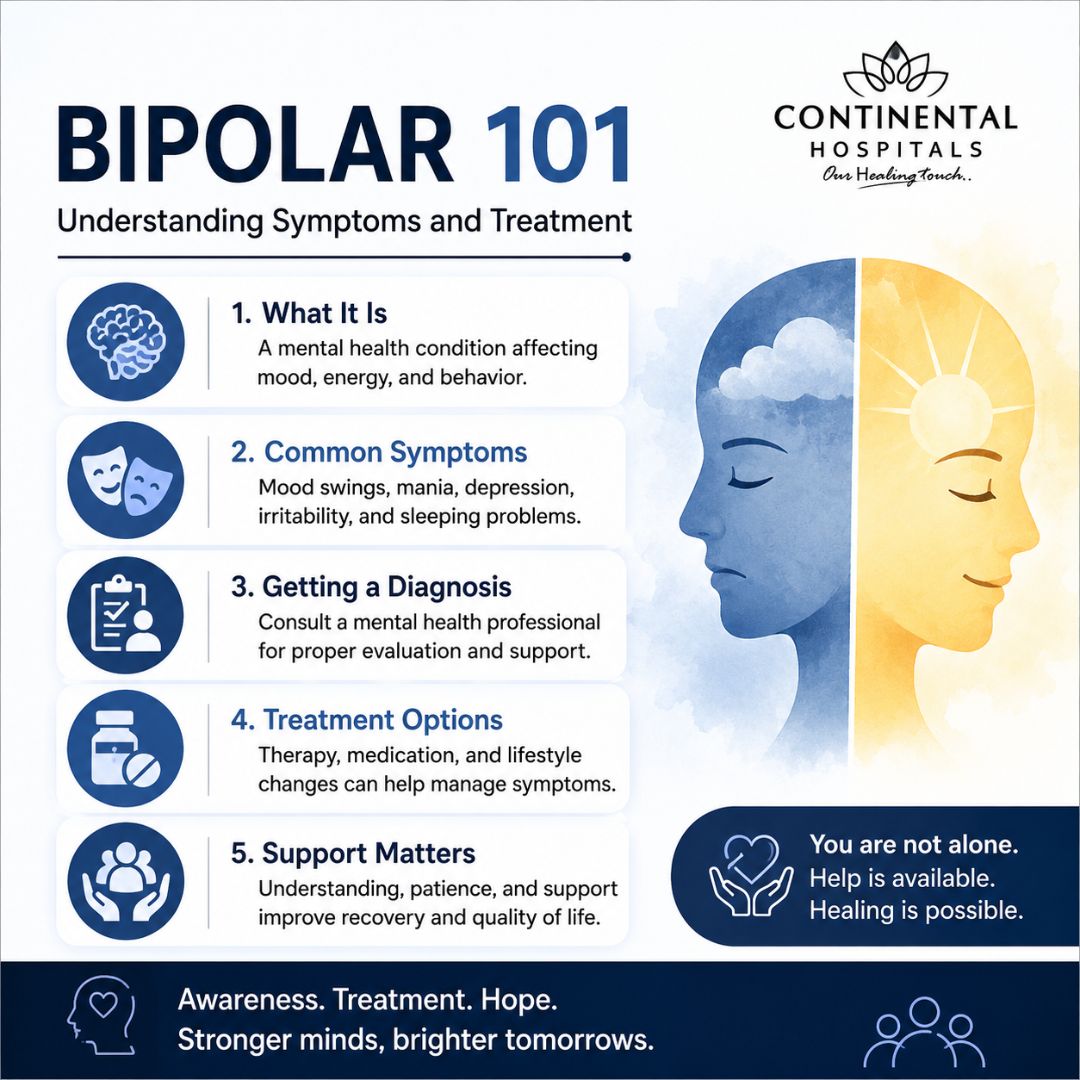
Bipolar disorder affects one’s mood, behavior, energy, concentration, and activity levels in abnormal ways. A person with bipolar disorder may be very energetic, very excited, or very restless during one phase and very sad, hopeless, or very tired during another.
These emotional changes are far more extreme than normal mood swings. They can last for days, weeks, or even months and can affect daily life.
In plain English, bipolar disorder is a brain condition that has trouble regulating mood.
Visit the Best Psychiatry Hospital in Hyderabad at Continental Hospitals for compassionate mental health support, personalized treatment plans, and expert psychiatric care focused on emotional well-being and recovery.
What Are The Types Of Bipolar Disorder?
Bipolar I Disorder
Severe manic episodes that can require hospitalization. Depressive episodes are common.
Bipolar II Disorder
Depressive episodes and hypomania. Hypomania is a milder form of mania.

Cyclothymic Disorder
Repeated mood swings that are less severe but long-lasting.
Other Types
Certain medical conditions, drugs, or substance use can cause people to develop bipolar symptoms.
What Are the Common Symptoms of Bipolar Disorder?
Early identification of the symptoms of bipolar disorder can help patients to obtain the necessary treatment and help as soon as possible.
Manic Symptoms
A maniacal episode can be accompanied by the following symptoms:
• Excessive happiness or exhilaration
• High activity level and energy
• Fast talking
• Little need for sleep
• Racing thoughts
• Impulsive actions
• Inappropriate confidence
• Unwise decisions
• Lack of concentration
• Irritability, anger or aggression
Bipolar Depression Symptoms
Bipolar depression can seriously affect one's physical and emotional well-being. Some typical bipolar depression symptoms include:
• Depression feeling sadness for a prolonged period
• Lack of energy
• Loss of interest in various pleasurable activities
• Changes in sleep patterns
• Feelings of despair
• Concentration difficulties
• Changes in eating appetite
• Fatigue
• Thinking about suicide (in severe cases)
Being familiar with the common signs of bipolar disorder can help relatives or loved ones to encourage a medical consultation before complications arise.
What Is the Brain-Baffling Antidepression Disorder?
The cause of bipolar disorder is still a mystery. Some experts think that a combination of factors may cause the brain baffling antidepressant disorder.
Genetics
The risk of bipolar disorder is higher in patients with a family history.
Brain Chemistry
The level of chemicals in the brain can play a role in mood regulation.
Wardrobe
Severe emotional trauma, major life changes, or emotional stress can trigger manic and depressive episodes.
Sleep Deterioration
Inconvenient sleep cycles can increase the symptoms of bipolar disorder.
Alcohol and Drugs
Alcohol and drug abuse can worsen the elderly division of the brain baffling antidepressant disorders.
How Is Bipolar Disorder Diagnosed?
You must get a rigorous mental health assessment to diagnose bipolar disorder. A psychiatrist will examine your symptoms, past medical history, family history, behavior, and emotional changes.
Diagnosis may include:
• Thorough psychiatric interview
• Mood symptom profile assessment
• Physical health examination
• Psychological testing
• Screening for other psychiatric illnesses
It is important to get diagnosed early, as untreated bipolar disorder can damage your personal relationships, career, and physical health.
What Are the Treatment Options for Bipolar Disorder?
Treatment for bipolar disorder is all about symptom control, reducing risk of relapse, and improving the overall quality of life.
Bipolar Disorder Medications
Your doctor may recommend various mood stabilizers, antidepressants, antipsychotic medications, and anti-anxiety medicines.
You should never take these medicines on your own. Misusing them can worsen your bipolar symptoms.
Psychotherapy and Counseling
Therapy is a very important part of bipolar treatment.
Cognitive Behavioral Therapy
CBT helps patients recognize maladaptive thinking patterns and improve problem-solving skills.
Family Therapy
Involving families helps promote better communication and emotional support.
Psychoeducation
Patients learn about factors that can trigger symptoms, early warning signs, and symptom control.
Lifestyle Changes That Reduce Episodes of Bipolar Disorder
Healthful habits can improve medical therapy and reduce the frequency and intensity of mood episodes.
Set a Regular Sleep Schedule
Getting enough sleep helps in preventing mood fluctuations.
Exercise
Physical movement takes care of mental health and reduces stress.
Avoid the Use of Alcoholic Drinks and Drugs
Drug use can intensify bipolar disorder symptoms.
Reduce Stress
Relaxation techniques and meditation lead to emotional stability.
Obey Medication Area
Keeping up with follow-up appointments and prescription medication is essential.
What Is the Result If You Do Not Treat Bipolar Disorder?
If bipolar disorder is undetected and untreated, this can lead to:
• Problems in relationships
• Negligence at work
• Economic issues
• Isolation from peers
• Substance use problems
• Self-harm in accordance with depression
• Suicidal ideation
Early medical intervention can improve long-term outcome.
How Is a Person with Bipolar Disorder Helped in Duelling With the Disease by Their Family?
The family’s contribution is vital to assist a person in duelling with bipolar disorder.
Ways to help include:
• Enforcing medication compliance
• Understanding mood swings
• Not being critical and judgmental
• Watching for warning signs
• Providing emotional solace
• Maintaining regular habits
Mental health recovery is easier when people feel they are understood and supported.
Why Choose Continental Hospitals to Treat Bipolar Disorder?
Continental Hospitals specializes in mental health and psychiatric services for patients. We use an interdisciplinary approach to treatment.
State-of-the-art mental health services
The hospital offers modern psychiatric assessment and evidence-based treatments for bipolar disorder and other mental illnesses.
Highly Qualified Mental Health Specialists
Mental health specialists have the expertise to diagnose and effectively treat bipolar disorder.
Individualized Treatment Approach
Treatment plans are customized for each patient in accordance with symptom severity, emotional health, and lifestyle requirements.
Careers to International Standards
Continental Hospitals provides world-class infrastructure and patient safety standards for healthcare delivery.
Accredited Healthcare Institutions
Continental Hospitals follows international quality standards and protocols for healthcare delivery, ensuring the highest level of patient safety.
Patient-Centered Comprehensive Mental Health Care
Treatment is an all-inclusive concept with treatments such as medications, counseling, behavioral therapy, support for patients' families, and long-term follow-up.
When Do You Need to Seek a Doctor for Bipolar Disorder?
You need to see a mental health specialist if you see the following:
- You have significant changes in your moods
- You're sad for extended periods of time
- You have moments of intense excitement or impulsiveness
- You’ve noticed changes in your sleep or appetite
- You can’t control your emotions
- You’ve had thoughts of harming yourself
Early intervention can reduce complications and stabilize emotions.
Conclusion
Bipolar disorder is an incurable mental health problem, and the early diagnosis and treatment of bipolar disorder ensures that it is a manageable condition. Learning everything you need to know about bipolar disorder symptoms, emotional triggers, and treatment can help patients living with bipolar disorder lead a healthier, more stable life. Having mental health awareness and family support are vital elements for ultimate recovery.
If you or your loved ones face bipolar disorder, don't panic, and consult our best psychiatrist in Hyderabad at Continental Hospitals. The hospital offers specialized treatment for mental illnesses, professional psychiatric care, and customized therapy programs to help patients find emotional well-being and overall quality of life.
Related Blog Topics: