.webp)


Did you know why when the weather changes, a wave of fever, cough, and sneezing enters the town? Seasonal change in weather also coincides with a sudden increase in upper respiratory tract infections. You can understand the cause of this increase from a biological and environmental point of view, which can help you to better protect yourself and your family.
The reason for the link between flu transmission and seasons has to do with a combination of environmental changes, changes in human behavior, and changes in our immune system. When the temperature of the environment changes or drops sharply, our bodies must adapt quickly, which may compromise our defenses against invading viruses, sometimes leaving us vulnerable. To take preventive actions and seek timely medical attention if needed, you need to know what is going wrong.
As the leading healthcare provider in Hyderabad, Continental Hospitals strives to serve the city by sharing knowledge of evidence-based medicine to keep all healthy and well-informed. This comprehensive guide explains why winterization drives seasonal cases of cold and flu, how your body responds to such changes, and what you can do to stay healthy.
What Causes the Seasonal Surge of Cold and Flu During Weather Shifts?
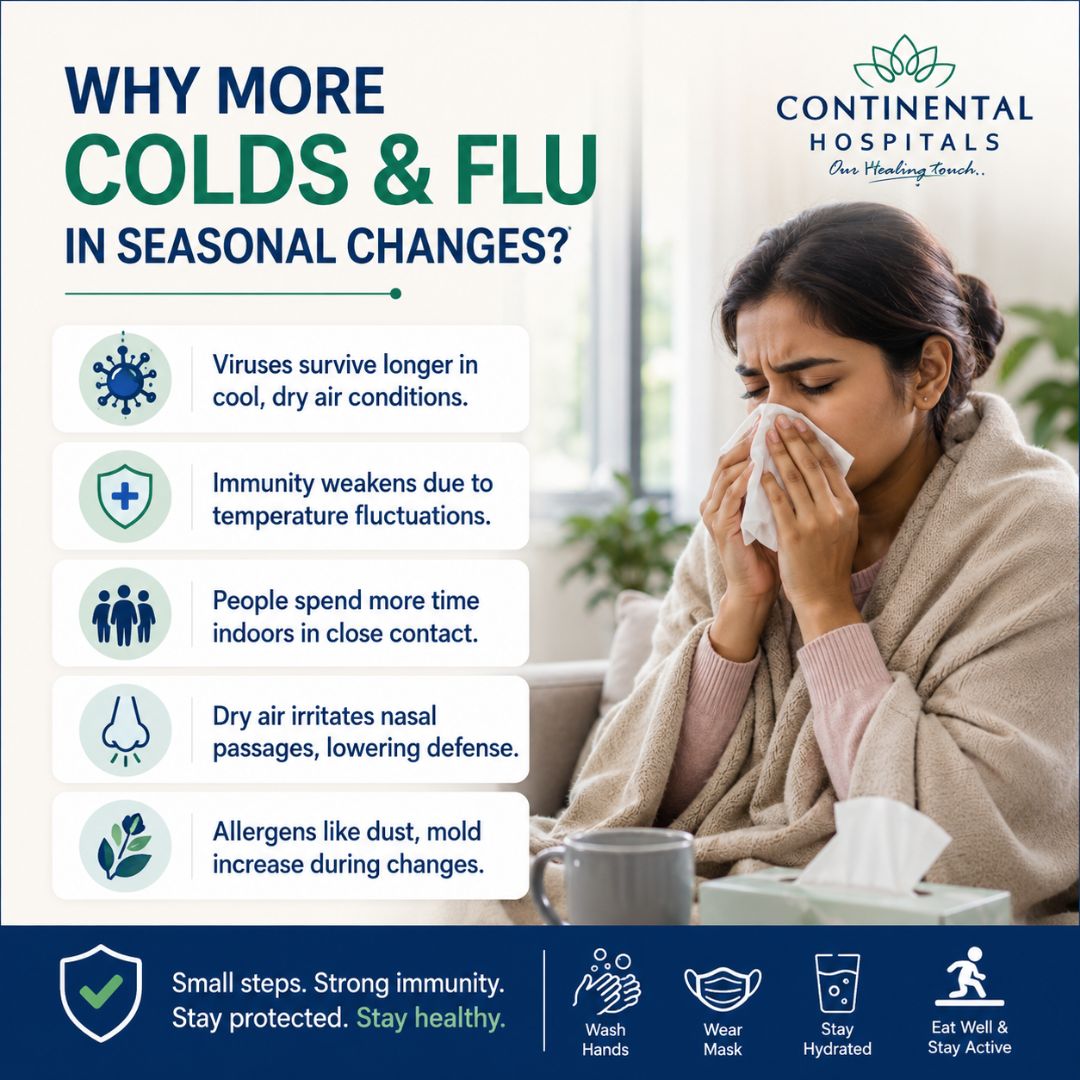
You don’t get respiratory illnesses just because it’s cold – there’s more to it than that. Several environmental and behavioral factors, as proven by science, help create the conditions for viral spread.
Low Humidity Protects Respiratory Viruses: The minuscule living creatures that cause colds and flu – the influenza virus as well as rhinovirus – survive longer and are more infective when they’re in low humidity, cold dry air. Your viral particles will sometimes float in the air for longer after you’ve coughed or sneezed when the air outside is dry and cold – drifting further from you and increasing the chance of inhalation.
Cold Induces Nasal Blood Vessel Constriction: When you breathe cold air, the blood vessels in your nose constrict to keep your face warm. This reduces the flow of blood that brings nutrients and white blood cells to the lining of your nasal passages, slowing your local immune defense against a cold and flu virus.
Cold Weather Means Staying Indoors A Lot: When you’re faced with poor, sudden changes in the weather and a cooling of the seasons, people often tend to stay indoors more, in closed rooms with poor air circulation. The proximity it creates between people makes it much easier for a cold or flu virus to spread through the respiratory droplets you exhale.
Low Levels of Vitamin D: You’ll notice less sunshine once the days' mean hours get shorter and the weather changes. Vitamin D is critical to your immune system because it helps to regulate the production of antimicrobial peptides that serve as your first line of defense against infections, but low levels of vitamin D can reduce your resistance to sickness.
Seasonal Time Change Disturbs Your Biological Clock: Changes in temperature, weather, and daylight hours could sometimes affect your circadian rhythm and alter your sleep pattern. A lack of proper sleep, particularly the deep sleep that’s required to restore your senses, can also negatively impact your immune system, making it difficult for your body to fight against the flu and everyday cold viruses.

If your cold, flu, fever, cough, or breathing difficulties persist for several days, don’t ignore the symptoms. Visit our General Physician Department at Continental Hospitals for expert evaluation, accurate diagnosis, and personalized treatment to help you recover faster and prevent complications.
How Do the Cold and Flu Viruses Enter and Affect Your Body?
Understanding what a sickness does physically to your body can help you catch it early and seek proper medical assessment before it becomes a problem.
Upper Respiratory Tract Infection: The virus goes in through your eyes, nose, or mouth. It burrows into the cells that line your breathing passages and uses them to make more viruses. That creates local inflammation, a blocked nose, and a sore throat.
An Immune System Response: Your body sends out inflammation-promoting proteins called cytokines to try to kill the virus. But these proteins also cause many symptoms of the flu season, including body aches, headaches, and fatigue.
A fever is a response: your brain cranks up your body temperature to make a more virulent environment and so slow the virus down. When your temperature goes up, your body needs more energy and also can get dehydrated, so you need to stay hydrated.
Increasing Mucus: Your respiratory tract starts to increase mucus production and then works to wash out the viral particles. That is why you get a runny nose and productive cough when you're sick.
Why Choose Continental Hospitals for Your Family’s Healthcare Needs?
Handling seasonal illnesses and complicated health problems requires a highly accredited health care institution in order to receive world-standard medical care.
International Accreditations for Patient Safety: Continental Hospitals is accredited by the Joint Commission International (JCI), which was obtained in the very first year of attempting to receive the Gold Seal globally. The facility is accredited by the National Accreditation Board for Hospitals & Healthcare Providers (NABH) as well, meeting the highest safety and treatment standards upheld by India.
State-of-the-Art Clinical Infrastructures: Continental Hospitals was constructed as India’s first LEED-qualified green super-specialty hospital with an 18-floor structure for advanced patient care, with natural ventilation, top-quality infection control, and patient privacy. Includes 16 modular operating theaters and a 90-single-room intensive care unit bed critical care infrastructure.
Complete Multi-Specialty Care: Continental Hospitals provides a combined diagnostic and therapeutic experience through dedicated centers of excellence in internal medicine, pulmonology, pediatrics, and critical care. From preventative health check lounges to dedicated Level 3 NICU and PICU units for children, patients of all ages receive specialized comprehensive medical care.
Conclusion
A cold and flu infection can be expected during seasonal changes; however, it can be prevented with good preventive habits, a well-monitored lifestyle, and timely clinical help. Modifying your lifestyle to keep your immune system in shape will reduce the chances of infection during seasonal changes and flu changes.
If you have a fever for a long time, severe difficulty in breathing, or a cold and flu that does not improve after a number of days, please consult our best general physician in Gachhibowli at Continental Hospitals for a correct diagnosis and a successful treatment plan.
Related Blog Topics: