.webp)


Recurrent cough and cold are among the most common reasons parents worry about their child’s health. It is normal for children to catch colds often, especially in early childhood. However, when cough and cold symptoms keep coming back, last longer than expected, or affect a child’s daily life, they may signal an underlying problem that needs medical attention.
Why do children get frequent cough and cold?
Children’s immune systems are still developing. Infants and young children can have several episodes of cough and cold each year, especially when they start school or daycare. Exposure to other children, viruses, pollution, and changing weather all play a role.
Common reasons include
- Viral infections like common cold and flu
- Exposure to dust, smoke, and air pollution
- Seasonal allergies
- Enlarged adenoids or tonsils
- Incomplete recovery from a previous infection
In many cases, these episodes are mild and improve with home care. But if they occur too often or become severe, medical evaluation is important.
What is considered recurrent cough and cold?
Parents often ask, “Is this normal or should I be worried?” These general points can help.
A cough or cold may be considered recurrent if
- Your child has cough and cold episodes more than once every month
- Confirmed infections occur more than six to eight times a year
- Symptoms last longer than ten to fourteen days each time
- The cough never fully goes away between episodes
If you notice these patterns, it is wise to consult a pediatrician for further evaluation.
Common causes of recurrent cough and cold in children
Understanding the cause helps in choosing the right treatment.

Repeated viral infections
Young children may catch multiple viruses back to back. This is common but should still be monitored.
Allergies
Dust mites, pollen, pet dander, and mold can cause chronic runny nose, sneezing, and cough, especially at night or early morning.
Asthma or reactive airway disease
A cough that worsens at night, during exercise, or with cold air may be related to asthma, even if wheezing is not obvious.
Sinus infections
Blocked or infected sinuses can cause persistent nasal congestion, thick discharge, and cough due to post-nasal drip.
Enlarged adenoids or tonsils
These can block airways, cause mouth breathing, snoring, and repeated infections.
Weakened immunity
Poor nutrition, frequent antibiotic use, or certain medical conditions can affect immunity.
Symptoms parents should watch closely
While mild cough and cold usually settle on their own, certain signs indicate the need for medical attention.
Consult a pediatrician if your child has
- Fever lasting more than three days
- Fast or difficult breathing
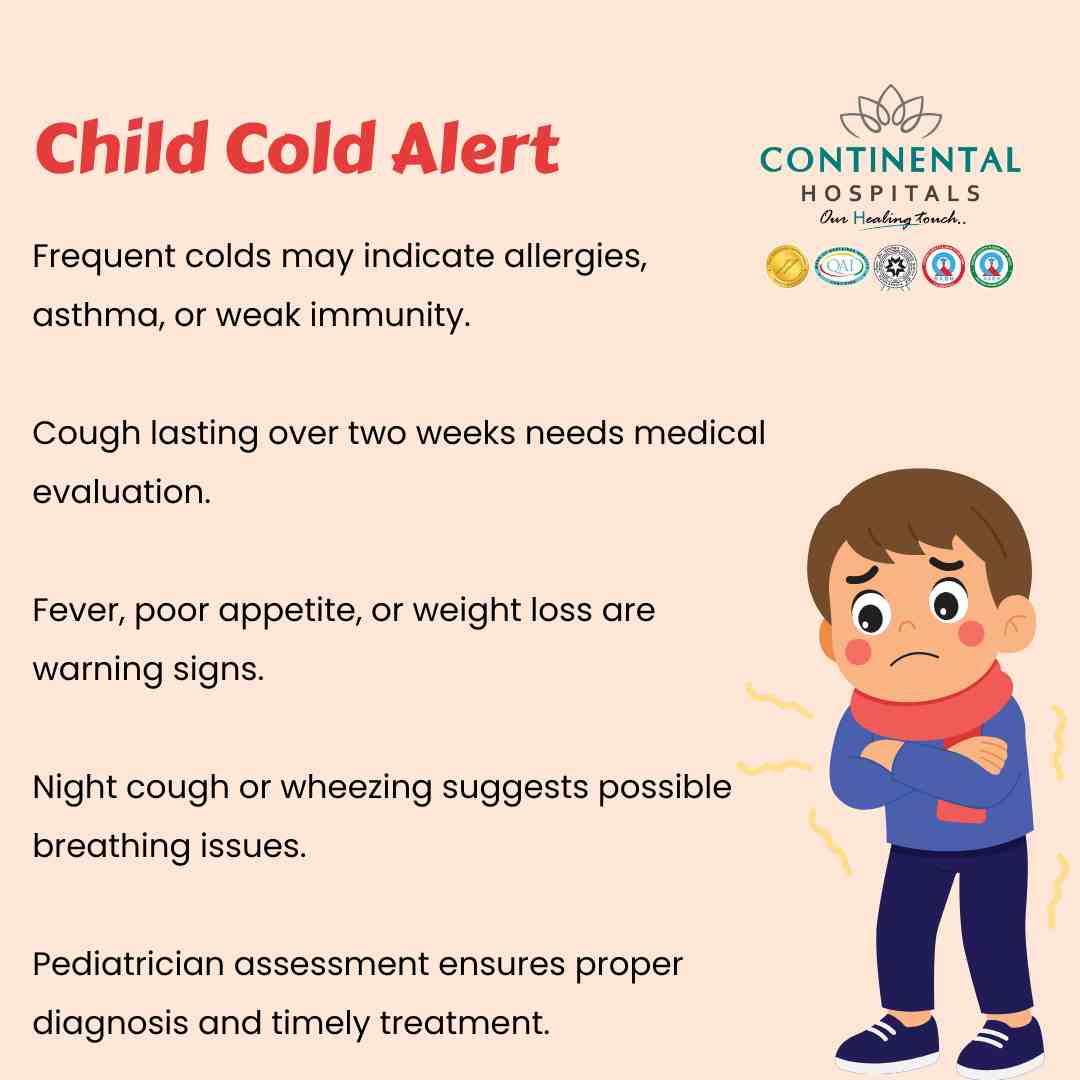
- Persistent cough for more than two weeks
- Cough that worsens at night or early morning
- Thick yellow or green nasal discharge lasting many days
- Poor appetite or weight loss
- Repeated vomiting with cough
- Extreme tiredness or irritability
These symptoms suggest that the infection may not be a simple cold.
When should you see a pediatrician?
Parents often delay consultation, hoping symptoms will settle. Early evaluation can prevent complications.
You should see a pediatrician if
- Your child gets cough and cold very frequently
- Symptoms interfere with sleep, feeding, or school attendance
- There is a history of asthma, allergies, or recurrent chest infections
- Home remedies are not helping
- You are worried as a parent
A pediatrician can identify the cause, rule out serious conditions, and guide proper treatment.
How a pediatrician evaluates recurrent cough and cold?
A detailed assessment helps find the root cause.
Evaluation may include
- Detailed medical history and growth assessment
- Physical examination of the nose, throat, chest, and ears
- Allergy evaluation if symptoms suggest it
- Chest examination to rule out asthma or infections
- Selective tests only if needed, not routinely
The goal is not just symptom relief but long-term control and prevention.
Treatment and management options
Treatment depends on the underlying cause and is tailored to each child.
Management may include
- Supportive care for viral infections
- Allergy control measures at home
- Medications to reduce airway inflammation if needed
- Advice on nutrition and immunity support
- Avoidance of triggers like smoke and dust
Parents are also guided on what not to do, including unnecessary antibiotic use.
How parents can reduce frequent cough and cold?
Simple preventive steps can make a big difference.
Helpful measures include
- Ensuring complete vaccinations
- Encouraging regular handwashing
- Keeping children away from smoke and pollution
- Maintaining good nutrition and sleep routines
- Keeping living spaces clean and dust-free
Consistency in these habits helps strengthen a child’s immunity.
Why choose Continental Hospitals for pediatric care?
Continental Hospitals is recognized as one of the best hospital in Hyderabad, offering comprehensive pediatric services under one roof. The pediatric department focuses on child-friendly, evidence-based care for both common and complex conditions.
What makes Continental Hospitals a trusted choice
- Experienced pediatricians trained in managing recurrent respiratory conditions
- Advanced diagnostic facilities with child-safe protocols
- Multidisciplinary care involving pediatric pulmonology and allergy specialists when required
- International healthcare standards with strong infection control practices
- NABH and JCI-accredited hospital ensuring quality and patient safety
Parents receive clear guidance, reassurance, and long-term care plans tailored to each child’s needs.
Conclusion
Recurrent cough and cold in children are common, but they should never be ignored when they become frequent, prolonged, or severe. Early consultation with a pediatrician helps identify the cause, prevents complications, and ensures healthy growth and development.
If your child is experiencing recurrent cough and cold or breathing-related concerns, consult our best Pediatrician at Continental Hospitals, Hyderabad.