.webp)


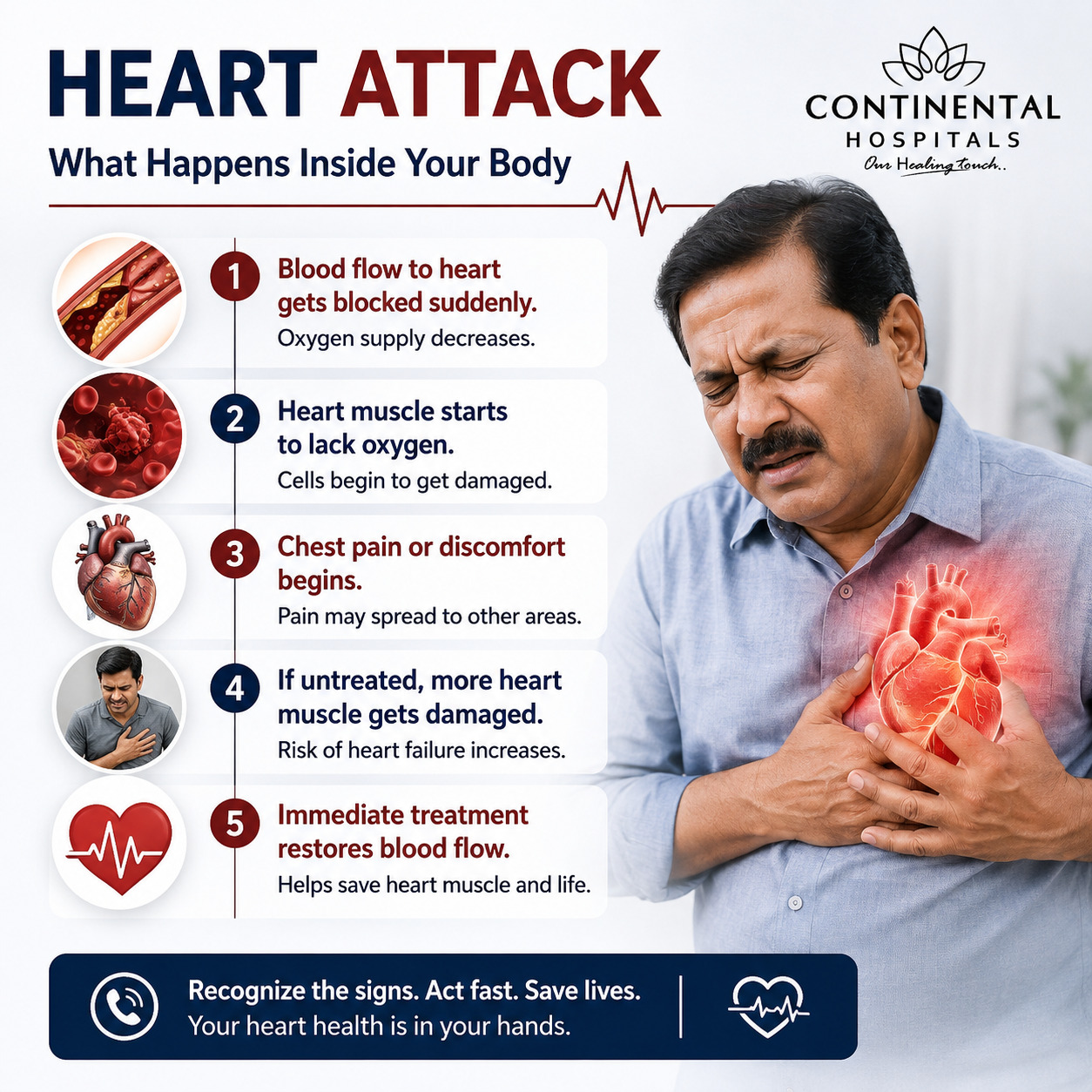
What happens during a heart attack begins when blood flow to part of the heart muscle is suddenly reduced or blocked. Your heart needs a constant flow of blood that is rich in oxygen. The blood comes through the coronary arteries. When a coronary artery is blocked, part of the heart muscle does not get enough oxygen. The heart muscle cells can begin to die if blood flow is not quickly restored. That is why a heart attack is a medical emergency and needs immediate treatment.
What happens during a heart attack varies between individuals. Some people develop sudden chest pressure or pain; others develop shortness of breath, sweat, nausea, dizziness, unusually extreme tiredness, or pain that lingers in the arm, jaw, back, or neck. Some heart attacks can even happen with mild or less typical symptoms.
What's going on inside the heart when the heart attacks?
Plaque inside a coronary artery contains a mixture of cholesterol, fat, and other substances. Over time, this plaque can narrow the artery, but sometimes the plaque might also break open a bit. When this happens, a blood clot can start to form inside the artery, and if it blocks blood flow, the oxygen supply to the heart muscle is compromised.
Visit our best Heart Specialist Hospital in Hyderabad for advanced heart care and support at every stage of your recovery.
What happens if there isn't enough oxygen for the heart muscle?
As blood flow continues to be cut off, the heart muscle won't get enough oxygen and starts to suffer damage. The longer the artery stays blocked, the more damage is likely to occur. Rapid medical treatment is therefore essential to restore blood flow and minimize the extent of heart muscle damage.
What are the warning signs of a heart attack?
There are several warning signs that may occur during the type it can be accompanied by. Important symptoms can be the following:
- Chest pressure, squeezing, tightness, heaviness or discomfort
- Pain that travels to the arm, shoulder, back, neck or jaw
- Shortness of breath
- Cold sweat
- Nausea or vomiting
- Dizziness or light-headedness
- Unusual weakness or fatigue
- A rapid or irregular heartbeat
What occurs during a heart attack does not always occur in the same way. Symptoms may vary between patients, and some patients may have mild symptoms or no obvious symptoms).
What happens when it affects the heart's ability to pump?
What occurs during a heart attack may impair the heart's ability to pump blood. If a large amount of heart muscle is affected, the heart might struggle to provide adequate circulation. In some cases, this may contribute to heart failure when damage is extensive or if treatment is delayed.

What are the possible heart attack complications?
Heart attack complications can be temporary to serious and life-threatening. They can include:
- Aberrant heart rhythms called arrhythmias
- Less effective pumping by the heart
- Heart failure
- Severe cases of cardiogenic shock
- Problems with heart valves or heart muscle
- Subsequent heart attacks or other cardiovascular complications
The risk depends on the size and location of the stoppage, how much heart muscle is involved, and how quickly treatment can be started.
What should you do if heart attack symptoms develop?
Every delay in care during a heart attack can worsen what can happen. If you or anyone in your care develop symptoms that could be due to a heart attack, get medical care right away. Do not wait for symptoms to pass or try to diagnose the problem at home. Emergency medical teams can begin assessment and treatment while transporting patients to their hospital.
Why is early treatment necessary?
It's designed to reduce permanent damage and to improve blood supply to the heart as fast as possible. Doctors may conduct an electrocardiogram and blood tests including cardiac troponin tests and/or other investigations, to determine the best method to treat the heart.
Why is Continental Hospital the center for heart treatment?
Why is Continental Hospital one of the leading heart hospitals in Hyderabad for advanced cardiac and emergency treatment? Continental Hospital is a JCI and NABH accredited multispecialty hospital with tertiary/quaternary care services. Its emergency services are running with multidisciplinary teams and advanced critical care facilities for patients who require urgent treatment.
What does Continental Hospital accreditation imply? Continental Hospital has received many accreditations and recognitions, such as JCI, NABH, NABH Nursing, NABL, and QAI, as listed at Continental Hospitals. These accreditations and recognitions indicate the hospital’s commitment to healthcare excellence, patient safety, adherence to clinical standards, and continuous improvement.
When should you see a heart doctor?
When should you see a doctor for heart attack symptoms? Any unexplained chest pressure, breathing difficulty, sudden sweating, dizziness, or feeling of discomfort radiating into the arm, jaw, back, and neck should be taken seriously, especially if your symptoms appear suddenly or last a long time.
If you or any close one has symptoms that might be related to a heart attack, seek emergency medical help immediately. For any ongoing heart issues or recovery after a heart attack, see the best cardiologist in Hyderabad to help with the evaluation, treatment, and follow-up care.
Conclusion
What happens in a heart attack is the loss of oxygen-rich blood supply to part of the heart, often due to a blocked coronary artery. If not treated timely, the heart muscle can be damaged permanently and may result in serious heart attack complications and heart failure. Recognizing the signs of a heart attack and seeking immediate medical care can help significantly.
If you are searching for the best hospital in Hyderabad for comprehensive cardiac and emergency care, Continental Hospitals offers multidisciplinary medical services and best-in-class infrastructure and care backed by JCI and NABH accreditation.
Related Blogs: