
Blood donation is a very easy process that can actually change somebody's life. People require blood on a regular basis for their surgeries, road traffic accidents, cancer treatment, childbirth complications, and various medical emergencies. By donating blood, you are actually providing a life-saving material to the one who needs it. But do you want to know what exactly goes on in your body once you have donated blood?
Blood donation is basically the process of taking a little quantity of blood from a healthy individual under the guidance of professionals. Your body will start restoring the fluid that is lost along with producing new blood. Blood donation not only helps the patients but also gives you a chance to check your overall health status. However, keep in mind that blood donation is primarily meant for helping other people.
Seven Advantages of Blood Donation?
Why is it crucial for everyone to donate blood in order to benefit both individual people and the community? Take a look at these seven benefits.
1. What Is the Significance of Blood Donation in Saving Lives?
One of the most essential blood donation benefits lies in its ability to save the lives of those who need a blood transfusion. Blood donation helps people going through some serious surgical operation, chemotherapy, and other types of emergency treatments.
It should be noted that donated blood can be divided into several components (red blood cells, plasma, and platelets), depending on the process of separation. That way, one blood donation may help several patients.
2. Can Blood Donation Improve Your Health Status?
When it comes to blood donation, before giving your blood, some preliminary tests will be conducted, which will include checking your hemoglobin levels, blood pressure, pulse rate and your eligibility to give blood.
These tests do not serve as a full medical check-up and cannot substitute medical examinations.
Visit the General Medicine Department at Continental Hospitals, Hyderabad, for expert medical care and guidance.
3. Is Blood Donation Good for Maintaining Normal Iron Levels?
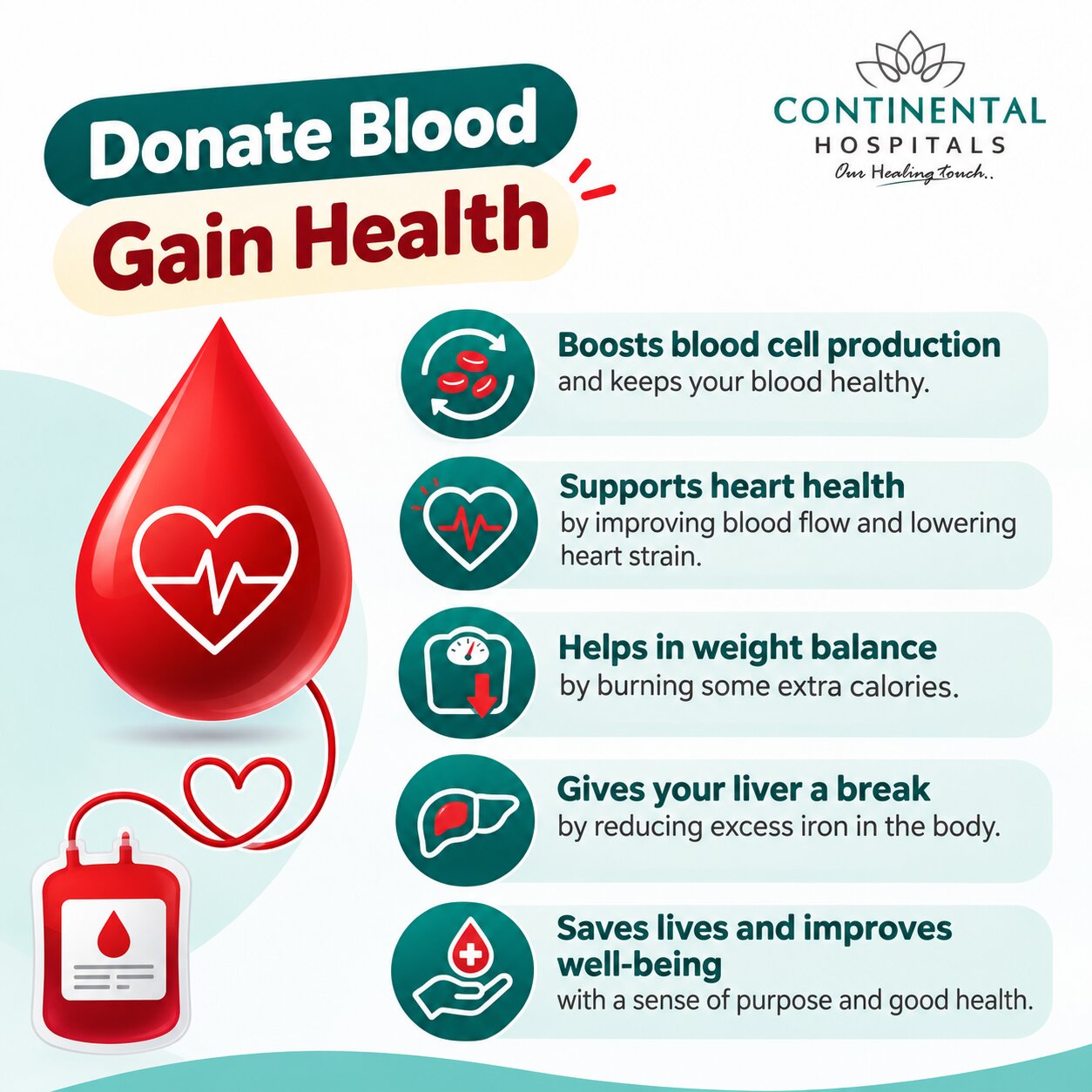
How is iron affected by blood donation? The process involves removal of some amount of red blood cells, which in turn leads to depletion of iron. The body uses iron to make new hemoglobin and red blood cells.

In cases where individuals have too much iron because of some medical conditions, the doctor may suggest the removal of blood as a treatment method. Yet, the blood donation itself cannot be viewed as the means of lowering the iron level without consulting a physician. It can also cause iron deficiency.
4. Is Blood Donation Helpful for Having a Healthy Heart?
Is there any relationship between blood donation and having a healthy heart? There have been studies that looked into the connection between regular blood donation and its impact on cardiovascular system. However, there is no sufficient evidence to recommend blood donation as prevention from heart disease.
It is important to keep a proper diet, exercise, control blood pressure, and not smoke to maintain a healthy heart.
5. How Is Blood Donation Important in Case of Medical Emergencies?
Hospitals require a blood supply in order to be prepared for any emergency situation. Accident victims, complicated surgeries, and people losing a lot of blood at once may need a transfusion of blood at once.
Blood donors will make it possible to get access to blood and receive timely medical aid.
6. Will Blood Donation Lead to a Healthier Way of Living?
The process of becoming a regular blood donor will make you think more about your overall well-being. You will start to care more about your hydration, diet, sleep, and healthy living.
7. Does Blood Donation Have a Positive Influence on Community?
Blood donation brings people together because of the same purpose. Voluntary donors will provide an assured source of blood for those patients who may not get any immediate assistance otherwise.
Community blood drives will help people realize the importance of helping each other in case of a medical emergency.
What Happens to Your Body When Donating Blood?
How does your body react to donating blood? The procedure usually takes place in these phases:
1. Registration: Personal information and medical background are taken down.
2. Health Assessment: Your hemoglobin level, blood pressure, and pulse rate are checked by healthcare workers.
3. Blood Drawing: Blood is withdrawn using new and sterile instruments.
4. Rest Period: It is necessary for you to rest and drink fluids.
5. Regeneration: Your body regenerates plasma quite quickly, but it takes weeks for red blood cells to recuperate.
This procedure is normally harmless for eligible donors, who undergo it under the supervision of trained medical personnel.
Who Can Give Blood and Who Can’t?
Is it possible for anyone to give blood? No. The eligibility of blood donation varies according to your age, weight, hemoglobin, past health records, and local blood donation requirements.
The following people may need to delay their blood donation or shouldn’t consider giving blood at all:
- Those who have a low hemoglobin count or anemia.
- Individuals who have a fever or an ongoing infection.
- Women who are pregnant or have recently delivered.
- Patients with some kinds of chronic diseases.
- People on medicines that can interfere with the process of blood donation.
- Those who gave blood very recently.
Make sure to take a medical examination before giving blood.
How to Look After Yourself After Blood Donation?
- Have lots of water.
- Consume nutritious food with lots of iron.
- Do not indulge in vigorous physical activity for the rest of the day.
- Keep the dressing as recommended by the health professional.
- Do not smoke soon after blood donation.
- If feeling dizzy, remain sitting or lying down.
- In case of any problem, contact the health professionals.
Why Select Continental Hospitals for Blood and Medical Services?
What are the reasons for selecting a properly equipped hospital for the provision of blood-related medical service? Blood transfusion, blood disorders, and other medical emergencies need proper assessment, proper clinical procedures, and professional health-care providers.
Hyderabad-based Continental Hospitals offer all kinds of medical services with the help of skilled and knowledgeable specialists along with up-to-date diagnostic and medical services. Continental Hospitals are internationally recognized and accredited healthcare hospitals, as they have got Joint Commission International (JCI) and NABH (National Accreditation Board for Hospitals and Healthcare Providers).
Continental Hospitals practice evidence-based medicine and a patient-centered approach and hence support those patients who need blood-related services.
Conclusion
Blood donation is an effective measure to support the patients who rely on the transfusion of their bodies in emergencies, surgeries, and medical procedures. Also, blood donation comprises basic health checks and promotes awareness towards maintaining your health. While blood donation must not be seen as a solution to improve your cardiovascular health or decrease iron content in the body, there is no denying the significance of blood donation in saving lives.
In case of anemia, unexplained tiredness, or any other issues related to your blood, consult our best general physician in Hyderabad at Continental Hospitals, Hyderabad. In case you want to donate blood, make sure you qualify for it and have medical guidance for before and after the blood donation.
Related Blogs: