Every year, World Pneumonia Day is celebrated on 12 November to increase awareness about the pneumonia disease, its causes, symptoms, prevention measures, and treatment. This day draws attention to the issue of protecting people from such a lung infection as pneumonia, especially the youngest, elderly, and people with weak immune systems. This year's World Pneumonia Day 2026 will be dedicated to the topic "A New Era of Pneumonia Control".
Pneumonia is an infection of lungs resulting in inflammation of either one or both lungs' air sacs which may be filled with liquid or pus, making breathing hard and decreasing the amount of oxygen that goes into the bloodstream. Pneumonia may affect people of different ages, and without timely treatment, it may cause serious health issues. On this pneumonia day, it is important to learn how to prevent such an illness.
What is pneumonia, and how does it affect the lungs?
How does pneumonia affect normal breathing? Our lungs normally have small air pockets called alveoli, which function to exchange oxygen in the bloodstream. In pneumonia, the air pockets swell and become filled with fluid or pus.
This results in:
- Breathing problems.
- Lower oxygen content in the body.
- Coughing.
- Chest pains.
- Fever and shivers.
- Weakness and fatigue.
Pneumonia can be serious or not based on how severe it is and the person affected.
Visit the Pulmonology Department at Continental Hospitals, Hyderabad, for expert diagnosis and comprehensive respiratory care.
What Are the Common Causes of Pneumonia?
What are the causes that lead to pneumonia development? It occurs when microorganisms invade the lungs, which results in an infection.
The common causes of pneumonia include:
1. Bacterial infections: Streptococcus pneumoniae is one of the bacteria that cause pneumonia.
2. Viral infections: There are different viruses like influenza and RSV that can cause pneumonia.
3. Fungal infections: Some types of fungal infections may infect the lungs, especially if people have a compromised immunity.
4. Aspiration: It is possible to inhale food, fluids, saliva, or vomit into the lungs.

Pneumonia can be transmitted through respiratory droplets and close contact due to the microorganism causing the disease.
What are the early signs of pneumonia?
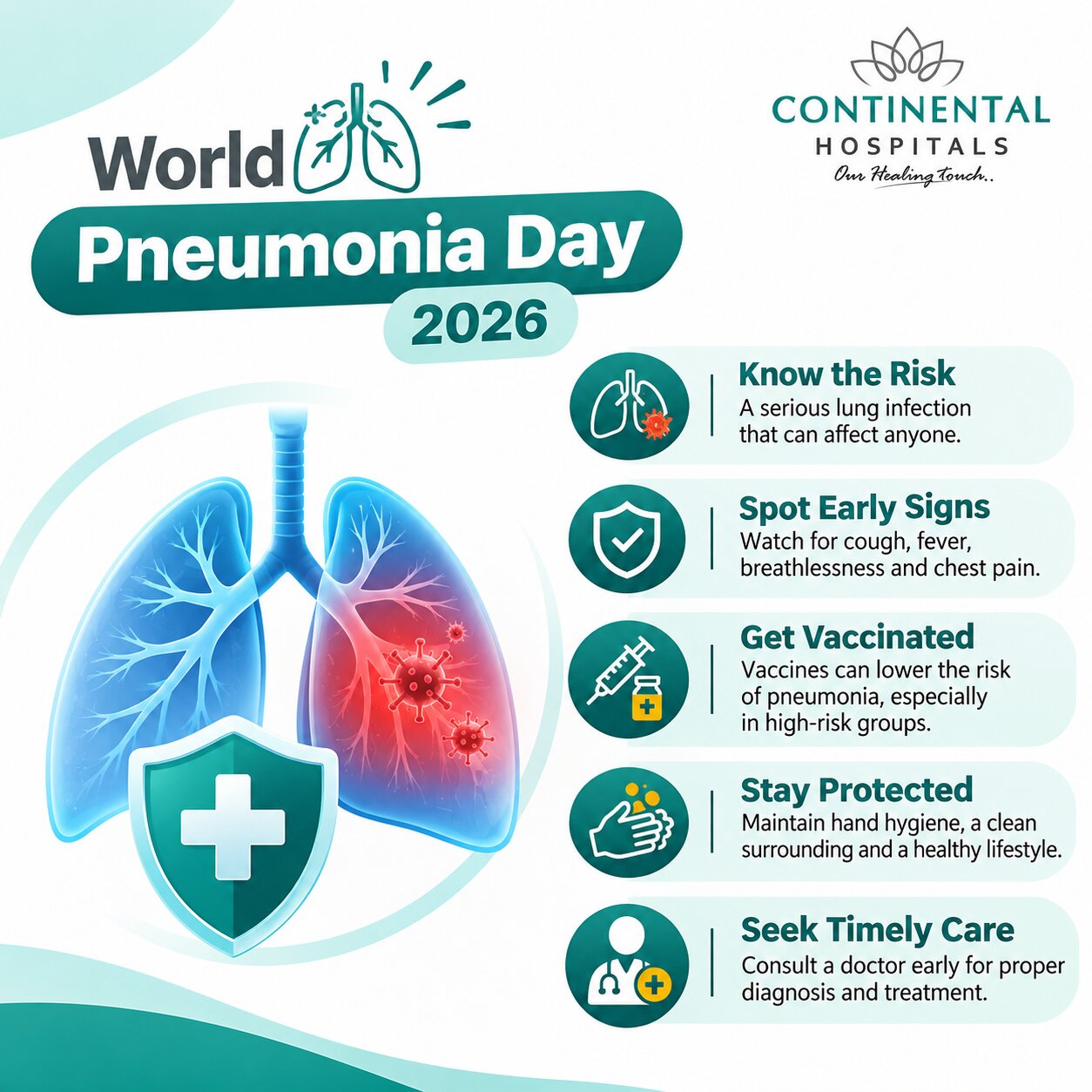
How can you tell whether you have pneumonia when you don’t know yet that you have one? Symptoms can either appear suddenly or over time depending on each person.
Some symptoms of pneumonia include:
- A constant cough, which sometimes produces mucus.
- Fever and shivers.
- Pain when breathing and coughing.
- Difficulty breathing.
- Fast breathing.
- Feelings of tiredness and weakness.
- Lack of appetite.
- Confusion, especially to older people.
For children, pneumonia can cause rapid breathing, indrawing of the chest, problems with feeding, fever, and excessive sleeping.
Any difficulty in breathing in children needs medical help.
Who Are at a Greater Risk of Suffering from Pneumonia?
Is everybody exposed to the same risk of developing pneumonia? Not really. Some people face a greater risk of contracting pneumonia than others. The high-risk group includes:
- Infants younger than five years of age.
- Seniors over the age of 65 years.
- People with diabetes and heart problems.
- People with chronic lung diseases.
- People with weak immune systems.
- Smokers.
- Excessive alcohol drinkers.
- Patients admitted in hospitals, especially those on ventilators.
How to Prevent Pneumonia?
What can be done to prevent pneumonia? There are certain actions that must be taken into account to prevent the development of pneumonia.
Among these, we should distinguish:
1. Vaccination against pneumococcal, influenza, coronavirus disease, and other diseases recommended by the doctor for the prevention of certain respiratory infections.
2. Hand hygiene through frequent washing with soap and water.
3. Stop smoking, since it is harmful to your lungs.
4. Eat healthy food.
5. Respiratory hygiene, which consists of covering your mouth and nose when you are coughing or sneezing.
6. Management of diabetes, asthma, or any other diseases.
7. Consulting a doctor when you feel persistent cough or breath problems.
How Is Pneumonia Diagnosed and Treated?
How is pneumonia diagnosed? A medical examination, involving analysis of respiration, body temperature, and oxygen level, often starts with diagnosis.
The following tests could be prescribed according to the patient's symptoms:
- chest X-ray to determine lungs' inflammation.
- blood tests to determine an infection.
- sputum test when needed.
- pulse oximetry to measure oxygen level.
- additional tests when the case is complicated.
Pneumonia treatment is dependent upon the type of pneumonia and its severity. Pneumonia caused by bacteria needs antibiotic therapy, whereas the one caused by a virus could need supportive therapy along with special antiviral drugs in some cases. Severe cases need oxygen and hospital treatments.
Antibiotics must be taken strictly under a doctor's prescription.
Why Should You Choose Continental Hospitals for Treatment of Pneumonia?
What makes choosing the right hospital essential when one suffers from pneumonia? Timely diagnosis, treatment, and monitoring can help prevent the complication.
Continental Hospitals in Hyderabad offers full-scale respiratory and critical care along with the presence of specialists, state-of-the-art diagnostics, and multidisciplinary medicine.
The hospital enjoys reputable accreditations within the healthcare sector, which include Joint Commission International (JCI), NABH (National Accreditation Board for Hospitals and Healthcare Providers), and QAI (Quality and Accreditation Institute).
Thanks to the modern medical infrastructure and coordination among specialists, the Continental Hospitals concentrate on timely diagnosis, proper pneumonia treatment and personalized approach towards the patient.
Conclusion
Theme World Pneumonia Day 2026 focuses on the fact that pneumonia is a treatable and preventable disease, provided that it is diagnosed at an early stage. The theme of "A New Era of Pneumonia Control" emphasizes the importance of vaccinations, education, early detection, and good medical facilities.
Please remember:
- Diagnosis of pneumonia should be made on time.
- Vaccinations according to schedule.
- Hygiene and healthy lifestyle.
- Protection of children and older people from respiratory diseases.
- Consult a doctor on the occurrence of cough, fever, or difficulty breathing.
If you have a constant cough, fever, chest pain, or difficulty breathing, please consult our best pulmonologist in Hyderabad at Continental Hospitals, Hyderabad.