post-title

What Is Type 5 Diabetes? Understanding Its Causes, Symptoms and Risk Factors

Written by - Editorial Team
Medically Reviewed by - Dr Y Haarika

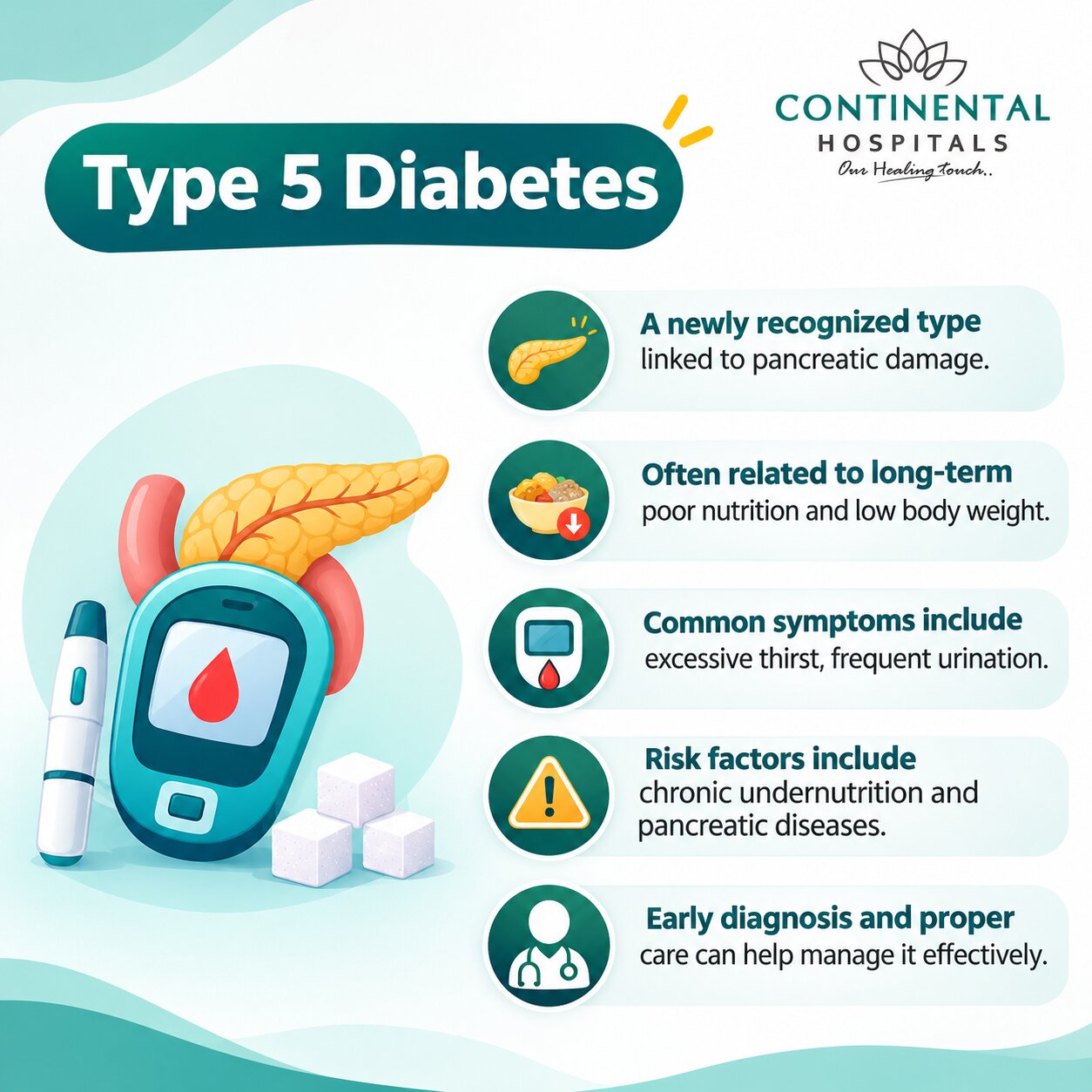
What is Type 5 diabetes, and how does it differ from other types of diabetes? Type 5 diabetes is one of the types of diabetes that occurs due to malnutrition over a long period of time, especially in childhood or adolescence. It is related to poor nutrition and problems in the development of the pancreas and the insufficient production of insulin in the body. Insulin is a hormone that regulates blood glucose by making glucose enter the cells of the body and providing it with energy.

It should be noted that Type 5 diabetes differs from Type 1 and Type 2 diabetes, which develop due to insulin resistance and an autoimmune response to insulin-producing cells in the body.

What Are the Causes of Type 5 Diabetes?

Why do people develop Type 5 diabetes? One of the major reasons is chronic undernutrition, especially during periods of critical growth and development. Childhood undernutrition affects the proper development of the pancreas.

Major causes of type 5 diabetes include:

1. Chronic malnutrition: Insufficient nourishment for a long period of time might have an impact on the development of the pancreas.
2. Malnutrition in childhood: Lack of necessary nutrients in early age may reduce the capacity to produce insulin.
3. Malnutrition of pregnant woman: Poor nutrition of a pregnant woman may affect the development of the baby.
4. Food insecurity: Limited access to good nourishment increases the risk of developing nutritional deficiencies.
5. Chronic infections: Frequent infections during childhood may affect proper nutrition and growth.

These factors affect the production of insulin, however, not all people with malnutrition suffer from diabetes. 
International Diabetes Federation+1

Visit the Endocrinology Department at Continental Hospitals, Hyderabad, for expert diabetes and hormonal care.

What Are the Symptoms of Type 5 Diabetes?

How can you know that you have Type 5 diabetes? The symptoms are almost the same as other types of diabetes as the blood sugar level increases.

Type 5 diabetes symptoms include:

Second Opinion

1. Need to urinate frequently: This is one of the most common symptoms of type 5 diabetes.
2. Excessive thirst: Due to high levels of blood sugar, you may feel thirsty.
3. Weight loss: Sometimes, people with type 5 diabetes are usually thin.
4. Feeling tired all the time: Reduced energy level due to high blood sugar.
5. Increase hunger: Your appetite can be increased.
6. Poor vision: Sometimes, the level of blood sugar may affect vision.
7. Slow healing of wounds and cuts: Blood sugar levels may affect the healing process.

These are some symptoms of type 5 diabetes, but they are still not confirmed by these symptoms.
Whom Do Type 5 Diabetics Typically Include?

Is it possible for someone to have diabetes even with a low body weight? Indeed. Unlike the common notion that diabetes is caused mostly due to obesity, Type 5 diabetes is connected with malnutrition.

Key factors leading to type 5 diabetes:

  • Malnutrition in childhood or youth
  • Being underweight or having a low body mass index
  • Maternal malnutrition while pregnant
  • Inability to obtain good nutrition
  • Nutritional deficiencies for a long time

Food insecurity in the environment where one was raised.

This disease is especially known among developing countries, including some regions of South Asia and Africa.
PubMed+1

How Is Type 5 Diabetes Diagnosed?

What is the method to diagnose Type 5 diabetes? It involves thorough medical examinations because the signs are similar to those of Type 1 and Type 2 diabetes.

Need an Appointment?

A doctor might order:

  • Blood Glucose Test: To see if there are high blood sugar levels in the blood.
  • HbA1c test: It measures the average level of blood sugar over the past few months.
  • C-Peptide test: To help determine the amount of insulin produced by the pancreas.
  • Autoantibody Tests: To confirm or exclude autoimmune Type 1 diabetes.
  • Nutritional assessment: It evaluates body mass index, growth history, and prior nutritional deficiencies.

Doctors also take into account the medical history and other factors that may cause diabetes. The diagnostic criteria for Type 5 diabetes have yet to be defined properly.
International Diabetes Federation+1

Can Type 5 Diabetes Be Cured?

Is type 5 diabetes treatable? Yes. The treatment includes proper regulation of blood sugar levels, improved nutrition, and the prevention of complications.

Depending on the individual's condition, the treatment can include:

1. Nutritional treatment: This includes a well-balanced and sufficient diet that has enough calories, proteins, and minerals.
2. Checking blood sugar levels: Proper testing of blood sugar levels to know how to control them.
3. Medication: The doctor may give proper medications according to the level of insulin and condition of the patient.
4. Insulin: Some individuals will require taking insulin according to their condition.
5. Regular monitoring: This ensures the doctors monitor the treatment process and help in case there are any complications.

Each individual will have a different treatment program. As the research is still ongoing, it is advisable to seek treatment from a professional diabetes specialist.
International Diabetes Federation+1

Why Should You Select Continental Hospitals for Diabetic Treatment?

Why is it essential to seek special care for Type 5 diabetes patients? This is because various types of diabetes require distinctive methods of diagnosis and treatment. Knowing which kind a person is suffering from will enable physicians to provide proper nutritional and glucose control as well as care.

Continental Hospitals in Hyderabad provides all sorts of services related to diabetes under the guidance of specialist doctors, high-tech diagnostic tools, and multi-faceted medical knowledge.

Continental Hospitals is accredited by international healthcare institutions such as Joint Commission International, NABH (National Accreditation Board for Hospitals & Healthcare Providers), and QAI (Quality and Accreditation Institute).

Continental Hospitals takes an individualistic approach towards diabetic patients due to its modern medical infrastructure and credentials in healthcare quality and safety.

Conclusion

Type 5 diabetes is a significant type of diabetes that is caused by chronic undernutrition, especially during childhood.

Unlike Type 1 and Type 2 diabetes, it is caused by an inability to produce insulin due to nutritional deficiencies.

It is crucial to be aware of the symptoms of type 5 diabetes and the causes and seek immediate medical assistance to avoid any health problems.

In case you experience frequent urination, unusual weight loss, thirstiness, tiredness, and other symptoms of high blood sugar levels, you should consult our best endocrinologist in Hyderabad at Continental Hospitals, Hyderabad.

Related Blogs:

  1. Why People with Type 2 Diabetes Are at Higher Risk of Severe Dengue
  2. Can Type 2 Diabetes Be Reversed? What Experts Say

Frequently Asked Questions

Type 5 diabetes is a form of diabetes associated with long-term undernutrition. It was previously known as malnutrition-related diabetes mellitus (MRDM). The condition affects the body's ability to produce sufficient insulin. Insulin is a hormone that helps control blood sugar levels. Prolonged nutritional deficiencies during childhood may affect pancreatic development. This can reduce the pancreas's ability to produce insulin. Type 5 diabetes is commonly identified in lean or underweight individuals. It is more frequently reported in low and middle-income countries. Young adults may develop the condition after experiencing nutritional deprivation earlier in life. The International Diabetes Federation recognised Type 5 diabetes in 2025. It is different from Type 1 and Type 2 diabetes. Early diagnosis helps patients receive appropriate treatment. Medical evaluation is important for effective blood sugar management.
The primary cause of Type 5 diabetes is prolonged undernutrition. Nutritional deficiencies during early childhood can affect pancreatic development. The pancreas plays an important role in producing insulin. Insufficient insulin production can result in elevated blood sugar levels. Poor maternal nutrition during pregnancy may contribute to early developmental problems. Inadequate protein intake during childhood may also affect pancreatic function. Repeated infections can worsen nutritional deficiencies. Long-term food insecurity may increase the risk of undernutrition. Poor access to balanced meals can affect overall growth and development. These factors may contribute to impaired insulin production. Unlike Type 1 diabetes, the condition is not primarily caused by an autoimmune reaction. It is also different from Type 2 diabetes, which commonly involves insulin resistance. Understanding nutritional history helps doctors assess possible causes.
Type 5 diabetes can cause symptoms similar to other forms of diabetes. Increased thirst is one of the common warning signs. People may experience frequent urination throughout the day and night. Unexplained weight loss can also occur. Persistent tiredness and weakness may affect daily activities. Some individuals experience increased hunger despite eating regularly. Blurred vision may develop when blood sugar levels remain high. Slow healing of wounds can also be noticed. People may experience dehydration due to frequent urination. Symptoms can develop gradually and may initially go unnoticed. Being underweight with persistent high blood sugar levels requires medical attention. Symptoms alone cannot confirm Type 5 diabetes. Blood glucose testing and specialist evaluation are necessary for diagnosis.
People with a history of prolonged undernutrition may have a higher risk of Type 5 diabetes. Individuals who experienced nutritional deficiencies during childhood may be particularly vulnerable. Poor maternal nutrition during pregnancy may affect the developing pancreas. Children who experience long-term protein and calorie deficiencies may also be at risk. Repeated infections during early life can contribute to poor nutritional health. People living in areas affected by food insecurity may face greater nutritional challenges. Adolescents and young adults with a history of undernutrition are commonly associated with this condition. Individuals who remain underweight despite adequate food intake may require medical assessment. A low body mass index alone does not confirm Type 5 diabetes. Family and nutritional history can help doctors understand individual risk factors. People with unexplained high blood sugar should undergo appropriate testing. Early medical assessment can help identify the condition.
Diagnosing Type 5 diabetes requires a detailed medical evaluation. Doctors first assess the patient's symptoms and nutritional history. A history of prolonged undernutrition may provide important clues. Blood glucose tests help identify elevated sugar levels. HbA1c testing may be used to understand average blood sugar levels. Doctors may also assess body weight and body mass index. Tests measuring C-peptide can help evaluate the body's insulin production. Autoantibody tests may help distinguish Type 5 diabetes from autoimmune Type 1 diabetes. Other investigations may be required to exclude different causes of diabetes. The patient's age and previous nutritional status are also considered. There is still ongoing work to establish standardised diagnostic criteria. No single test currently confirms every case of Type 5 diabetes. An endocrinologist should interpret the results and recommend appropriate treatment.
Treatment for Type 5 diabetes focuses on controlling blood sugar and improving nutritional health. The treatment plan depends on the patient's insulin production and nutritional condition. Doctors may recommend a balanced diet with sufficient calories and protein. Correcting vitamin and mineral deficiencies may also be important. Some patients may require insulin therapy to control blood glucose. Selected oral diabetes medications may be considered under medical supervision. Regular blood sugar monitoring helps evaluate treatment effectiveness. Nutritional support is an important part of long-term management. Patients should avoid skipping meals or following restrictive diets without medical advice. Doctors may recommend regular follow-up appointments to monitor progress. Treatment should be personalised according to individual health requirements. Since research is still developing, management recommendations may evolve. Specialist guidance is essential to achieve safe and effective diabetes control.
Type 5 diabetes is different from Type 1 and Type 2 diabetes in its underlying causes. Type 1 diabetes usually develops when the immune system attacks insulin-producing cells. Type 2 diabetes commonly occurs when the body develops insulin resistance. Type 5 diabetes is associated with prolonged undernutrition. Nutritional deficiencies during early life may affect pancreatic development. This can reduce the body's ability to produce sufficient insulin. People with Type 5 diabetes are often lean or underweight. Type 1 diabetes can affect people of different body weights. Type 2 diabetes is commonly associated with insulin resistance, although it can affect lean individuals too. Type 5 diabetes is generally not associated with autoimmune destruction of pancreatic cells. Its diagnosis requires consideration of nutritional history and appropriate investigations. Treatment approaches may also differ depending on insulin production and nutritional status. Correct classification helps doctors provide more suitable care.
Reducing prolonged undernutrition may help prevent factors associated with Type 5 diabetes. Good maternal nutrition is important for healthy fetal development. Children need balanced meals containing adequate calories and protein. Essential vitamins and minerals support normal growth and development. Timely treatment of childhood infections can help protect nutritional health. Regular growth monitoring can help identify nutritional problems early. Families should have access to affordable and nutritious food. Community nutrition programmes can support children from vulnerable backgrounds. Public health initiatives can help reduce food insecurity. Early nutritional intervention may support healthy pancreatic development. However, prevention cannot be guaranteed in every individual. People with a history of severe undernutrition may benefit from medical monitoring. Improving nutrition from pregnancy through childhood is an important preventive approach.
You should consult a doctor if you experience symptoms associated with high blood sugar. Persistent thirst and frequent urination should not be ignored. Unexplained weight loss requires medical evaluation. Continuous tiredness and weakness may also indicate an underlying health problem. Blurred vision and slow wound healing need attention. People with a history of childhood undernutrition should discuss their health concerns with a doctor. Being underweight while experiencing high blood sugar levels requires further investigation. A doctor may recommend blood glucose and HbA1c tests. Additional tests can help identify the specific type of diabetes. An endocrinologist can assess insulin production and recommend suitable treatment. Early diagnosis helps reduce the risk of complications. Seek urgent medical attention if you experience severe dehydration, vomiting, confusion or difficulty breathing. Regular follow-up helps maintain healthy blood sugar levels and overall well-being.
Disclaimer: The information provided in this blog is intended for general knowledge and informational purposes only, and does not constitute medical advice. Always consult with a qualified healthcare professional for any medical concerns or before making any decisions about your health.

Get in Touch With Us

Whether you are from India or abroad, we are here to help you with your medical queries. Please fill out the form below and our team will connect with you shortly.

  • ✔ Quick response from our medical experts
  • ✔ Secure data handling & privacy
  • ✔ Easy upload for reports & documents
banner_image

Chat with our medical experts on WhatsApp for quick assistance and hassle-free appointment booking

Recent Posts