post-title

What is Chemotherapy? Process & Side Effects

Written by - Editorial Team
Medically Reviewed by - Dr S K Gupta

Cancer is one of the toughest battles a person can face. While there are many treatment options available, one of the most well-known is chemotherapy. You might have heard this word before, especially in movies or stories about cancer. But what is chemotherapy, how does it work, and what can one expect during the treatment? In this blog, let’s simplify chemotherapy for you — its process, side effects, and when to see a doctor.

What is Chemotherapy?

Chemotherapy, often called chemo, is a treatment that uses powerful drugs to kill fast-growing cancer cells in the body. Since cancer cells grow and divide quickly, chemotherapy targets these cells and destroys them.

However, chemo can also affect some healthy cells that grow fast, like those in your hair, mouth, and stomach, which is why side effects occur during treatment.

Chemotherapy can be used alone or combined with other treatments like surgery, radiation therapy, or targeted therapies, depending on the type and stage of cancer.
Why is Chemotherapy Given?

Doctors recommend chemotherapy for different reasons, such as:

To cure cancer: In some cases, chemotherapy can completely destroy cancer cells.

To control cancer: It can stop cancer from spreading or slow its growth.

To ease symptoms: When cancer cannot be cured, chemotherapy can help reduce pain and other symptoms by shrinking tumours.

Second Opinion

Your oncologist (cancer specialist) will decide the purpose based on the type of cancer you have and how advanced it is.

From early cancer detection to advanced treatment, we're here to support you at every step. Visit our Best Cancer Specialist in Hyderabad for comprehensive, expert led cancer care.

How Does Chemotherapy Work?

To understand this better, imagine your body as a city. Cancer cells are like bad drivers speeding through streets without following any rules, causing chaos. Chemotherapy works like traffic police officers who track and stop these reckless drivers.

Chemotherapy drugs travel through the bloodstream and reach cancer cells throughout the body. They work by either killing these fast-growing cells or stopping them from multiplying.

How is Chemotherapy Given?

Chemotherapy can be given in different ways based on the type of cancer and the patient’s condition:

Intravenous (IV): The most common method, where the medicine is injected into a vein using a drip.

Oral: Chemotherapy in the form of pills or capsules.

Need an Appointment?

Injection: Given through a shot into the muscle or under the skin.

Topical: Creams or gels applied to the skin, usually for skin cancers.

Direct Placement: In some cases, chemo is placed directly into a body part like the abdomen or spinal cord.

What Happens During Chemotherapy Treatment?

Before starting, your doctor will perform tests to check your blood count, liver, and kidney function. You’ll also be guided about what to eat, drink, and avoid before each session.

During the treatment:

  • If it's an IV session, you’ll sit in a comfortable chair while the medicine slowly enters your vein through a drip.
  • The duration can be a few minutes to several hours, depending on the drug.

After the session:

  • You might feel tired or nauseous.
  • Some people prefer resting for a while at the hospital before heading home.
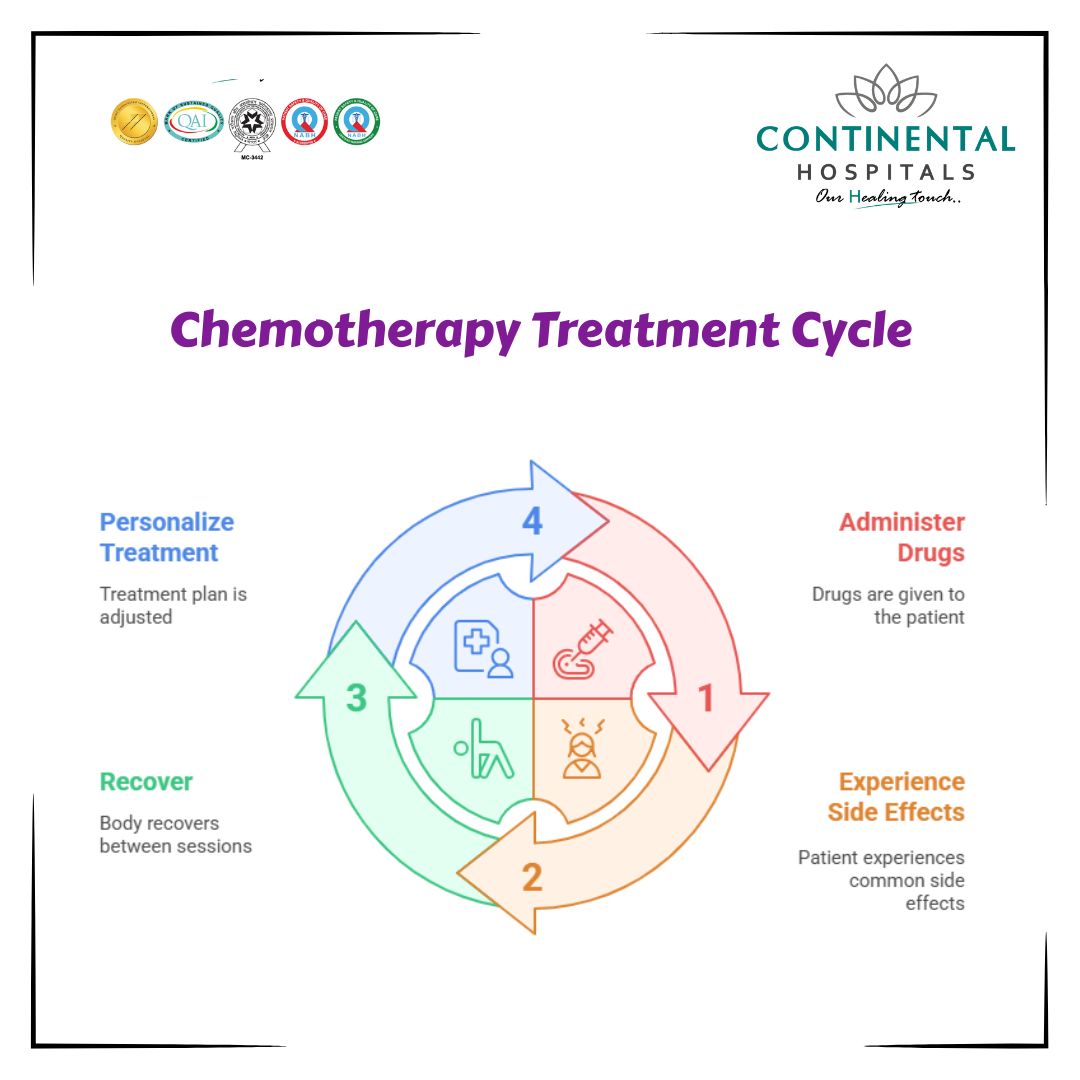
  • Chemotherapy is usually given in cycles. A cycle means a period of treatment followed by a rest period. This gives your body time to recover before the next session.

What Are the Common Side Effects of Chemotherapy?

Chemotherapy affects not only cancer cells but also some healthy cells, leading to side effects. The severity depends on the type of drugs, dosage, and your body’s reaction.

Here are the most common side effects:

  • Fatigue: Feeling extremely tired, even after resting.
  • Hair Loss: This happens because chemo affects hair roots, but hair often grows back after treatment ends.
  • Nausea and Vomiting: Though modern medicines help reduce this.
  • Loss of Appetite: Changes in taste and reduced desire to eat.
  • Mouth Sores: Painful ulcers inside the mouth.
  • Low Blood Cell Counts: Leading to infections, weakness, or bleeding.
  • Skin and Nail Changes: Dry skin or brittle nails.
  • Memory and Concentration Problems: Often called “chemo brain.”

Not everyone experiences all these side effects, and some people may have very mild symptoms.

How to Manage Chemotherapy Side Effects?

  • Rest well and stay hydrated.
  • Eat small, healthy meals rich in proteins and vitamins.
  • Use mild shampoos and avoid harsh hair treatments.
  • Rinse your mouth regularly to prevent sores.
  • Inform your doctor about any unusual symptoms immediately.
  • Most side effects disappear after the treatment ends.

When Should You See a Doctor?

If you are experiencing:

  • Persistent fever
  • Severe vomiting or diarrhea
  • Unusual bleeding or bruising
  • Difficulty breathing
  • Chest pain

…it’s important to contact your doctor right away. Early care can prevent complications.

Why Choose Continental Hospitals for Chemotherapy?

At Continental Hospitals, Hyderabad, we believe that every cancer patient deserves not just world-class medical care but also warmth, hope, and support. Here’s why so many patients trust us for their cancer treatment:

  • Highly Experienced Oncologists: Our team includes specialists trained in the latest chemotherapy techniques.
  • Advanced Technology: State-of-the-art equipment and treatment options tailored to each patient’s needs.
  • Comprehensive Cancer Care: From diagnosis to rehabilitation, our multidisciplinary team works together for your recovery.
  • Patient-Centric Approach: Focus on personalised care, comfort, and counselling to ease the emotional and physical stress of treatment.
  • Modern, Comfortable Facilities: Chemotherapy day-care lounges are designed for patient comfort and safety.

Your fight against cancer is our fight too — and at Continental Hospitals, you’ll never face it alone.

Conclusion

Chemotherapy remains one of the most effective ways to fight cancer. While it can cause side effects, modern medicine and supportive care have made this treatment much safer and more manageable than before.

Facing cancer symptoms or undergoing treatment? Visit the best oncologist in Hyderabad for expert care and advanced treatment today.

Related Blog Topics:

  1. Should Chemotherapy Patients Get Vaccinated? What Experts Say
  2. Understanding Chemotherapy: What to Expect

Frequently Asked Questions

Chemotherapy is a cancer treatment that uses powerful medicines to destroy cancer cells or stop them from growing and dividing. It is one of the most common treatments for many types of cancer. Chemotherapy may be used alone or combined with surgery, radiation therapy, immunotherapy, targeted therapy, or hormone therapy. The treatment works by targeting rapidly dividing cells, which is why it can also affect some healthy cells in the body. Depending on the type and stage of cancer, chemotherapy may be given to cure cancer, shrink tumors before surgery, reduce the risk of recurrence after treatment, or relieve symptoms in advanced cancer. Doctors carefully plan chemotherapy based on the patient's health, cancer type, and treatment goals to achieve the best possible outcomes.
Chemotherapy works by attacking cells that grow and divide quickly. Cancer cells multiply much faster than most healthy cells, making them more vulnerable to chemotherapy drugs. These medicines interfere with the cancer cells' ability to grow, divide, and survive. As damaged cancer cells die, the body naturally removes them over time. Different chemotherapy drugs work in different ways, and many treatment plans combine multiple medications for better results. Since some healthy cells, such as those in the hair follicles, digestive tract, and bone marrow, also divide rapidly, they may be temporarily affected during treatment. Doctors monitor patients closely throughout therapy and adjust treatment if needed to maximize effectiveness while minimizing side effects.
The chemotherapy process begins with a detailed medical evaluation that includes blood tests, imaging scans, and assessment of the cancer type and stage. Based on these findings, the oncologist creates a personalized treatment plan. Chemotherapy may be administered through an intravenous infusion, oral tablets, injections, or other specialized methods depending on the condition. Treatment is usually given in cycles, allowing the body time to recover between sessions. The number of cycles varies according to the cancer and treatment response. During therapy, patients undergo regular blood tests and medical reviews to monitor progress and manage any side effects. Follow up scans help evaluate how well the treatment is working and guide future care decisions.
Chemotherapy can cause side effects because it affects some healthy cells along with cancer cells. Common side effects include fatigue, nausea, vomiting, loss of appetite, hair loss, mouth sores, constipation, diarrhea, changes in taste, and increased risk of infections due to lower white blood cell counts. Some patients may also experience anemia, bruising, numbness or tingling in the hands and feet, and temporary changes in memory or concentration. Not everyone experiences the same side effects, and their severity varies from person to person. Modern supportive medications can effectively control many chemotherapy related symptoms. Most side effects gradually improve after treatment is completed.
Managing chemotherapy side effects involves a combination of medical care and healthy lifestyle habits. Patients should follow their oncologist's advice regarding medications for nausea, pain, or infection prevention. Eating small, nutritious meals, staying hydrated, and getting adequate rest can help reduce fatigue and digestive problems. Gentle physical activity, when approved by the doctor, may improve energy levels. Good oral hygiene can reduce the risk of mouth sores, while proper hand hygiene helps prevent infections. Patients should promptly report symptoms such as fever, severe vomiting, unusual bleeding, or persistent diarrhea. Regular communication with the healthcare team allows timely adjustments to treatment and supportive care for improved comfort and safety.
The duration of chemotherapy depends on several factors, including the type of cancer, its stage, the treatment goal, and the specific drugs being used. Chemotherapy is commonly given in cycles that may occur weekly, every two weeks, or every three weeks. A complete course of treatment can last from a few weeks to several months, while some patients with advanced cancers may receive chemotherapy for a longer period. Doctors continuously evaluate treatment effectiveness through physical examinations, blood tests, and imaging studies. If necessary, the treatment schedule or medications may be modified to achieve the best balance between cancer control and the patient's overall health.
Chemotherapy can cure certain types of cancer, particularly when diagnosed early or when the cancer responds well to treatment. In other cases, chemotherapy is used to shrink tumors before surgery, destroy remaining cancer cells after surgery, slow cancer growth, or relieve symptoms and improve quality of life. The chances of cure depend on the type of cancer, its stage, genetic characteristics, and the patient's overall health. Many patients receive chemotherapy as part of a comprehensive treatment plan that includes surgery, radiation therapy, immunotherapy, or targeted therapy. Your oncologist can explain the expected goals and outcomes based on your individual diagnosis.
Patients should contact their healthcare provider immediately if they develop a fever of 100.4°F (38°C) or higher, chills, difficulty breathing, severe vomiting, persistent diarrhea, uncontrolled pain, unusual bleeding, blood in urine or stool, chest pain, confusion, or signs of dehydration. These symptoms may indicate serious complications that require prompt medical attention. Patients should also report new rashes, swelling, severe mouth sores, or numbness that interferes with daily activities. Regular follow up appointments are essential throughout chemotherapy to monitor blood counts, assess treatment response, and manage side effects effectively. Early communication with the oncology team helps ensure safe and successful treatment.
Disclaimer: The information provided in this blog is intended for general knowledge and informational purposes only, and does not constitute medical advice. Always consult with a qualified healthcare professional for any medical concerns or before making any decisions about your health.

Get in Touch With Us

Whether you are from India or abroad, we are here to help you with your medical queries. Please fill out the form below and our team will connect with you shortly.

  • ✔ Quick response from our medical experts
  • ✔ Secure data handling & privacy
  • ✔ Easy upload for reports & documents
banner_image

Chat with our medical experts on WhatsApp for quick assistance and hassle-free appointment booking

Recent Posts