.webp)
High blood pressure is one of the most common health problems affecting people worldwide. Not all patients can control their blood pressure by lifestyle changes and low dose of medicines, even after being on multiple medicines regularly. As a result, some patients remain uncontrolled and have their risk of developing complications increased. This condition is known as resistant hypertension. In these cases, renal denervation may be an advanced and promising resistant hypertension treatment option.
At Continental Hospitals, we provide high blood pressure treatment options using the most advanced medical technologies and evidence-based care by our expert cardiology team. Many patients are benefiting from their blood pressure control and reduced risk of long-term complications by renal denervation treatment.
About Resistant Hypertension
Blood pressure is resistant when it remains high uncontrollably despite taking multiple blood pressure medicines with lifestyle changes. Uncontrolled blood pressure can lead to following complications:
• Heart Attack
• Stroke
• Kidney disease
• Heart failure
• Vision problems
• Damage to blood vessels
Most of the people with resistant hypertension might not notice the seriousness of their condition, as high blood pressure doesn't show any symptoms. So early diagnosis and hypertension procedure options are lifesaving to prevent any complications.
What Is Renal Denervation?
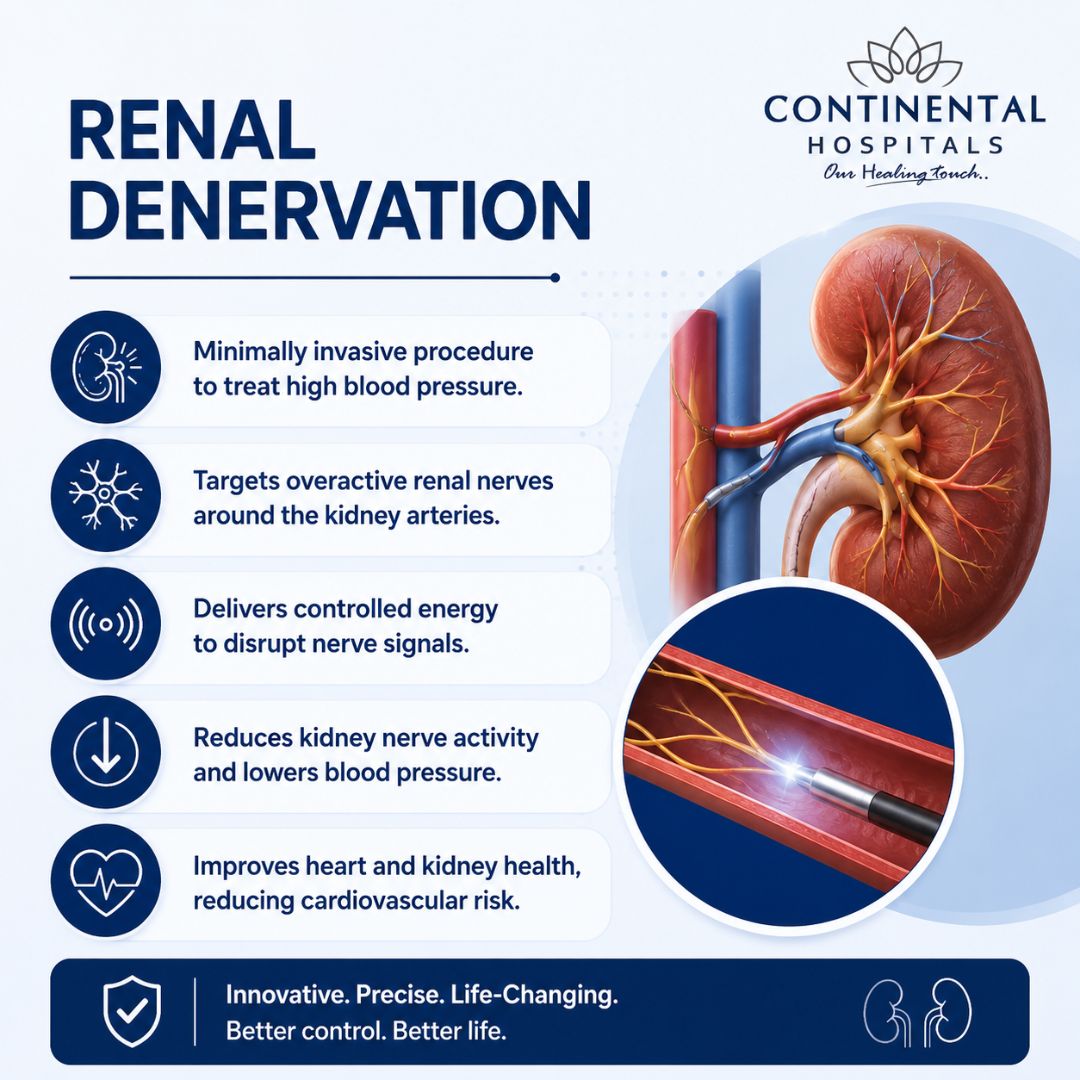
Renal denervation is a minimally invasive hypertension treatment that can lower blood pressure for patients with resistant hypertension. The renal denervation treatment is an advanced procedure that targets the overactive nerves that surround the renal arteries, which are the blood vessels that carry blood to the kidneys.
The brain plays a vital role in blood pressure control. Overactive renal nerves can relay signals that raise blood pressure. Ablation of the renal nerves interrupts these signals. Naturally lowering blood pressure over time.
Renal denervation is not a major surgical procedure. This is a catheter-based procedure that specialists perform in a hospital setting.

How Does Renal Denervation Work?
A thin, flexible tube called a catheter is used to access a blood vessel, typically in the groin area. The catheter is then advanced to the renal arteries using sophisticated imaging technology.
When the catheter reaches the target renal arteries, energy is applied to the gastrenic nerves to reduce their activity. This is known as renal nerve ablation. The procedure is aimed at reducing the overactive nerve signals that influence high blood pressure.
The renal denervation procedure is undertaken to:
• Reduce high blood pressure
• Improve blood pressure control
• Support overall cardiovascular health
• Reduce number of medications in some patients
Renal denervation therapy is completed within a short period of time, and most patients are discharged home the same day depending on their recovery and medical condition.
Which Patients Can Benefit from Renal Denervation?
Patients who may benefit from renal denervation include:
- Patients with uncontrolled high blood pressure despite taking medicine.
- Those having problems controlling blood pressure swings.
- Those suffering side effects from many blood pressure medicines.
- Patients with a high risk of heart disease and related complications.
- Patients seeking advanced therapies for high blood pressure.
Not all patients with hypertension are suitable for renal denervation. A thorough assessment is needed to evaluate the benefits for individual patients.
At Continental Hospitals, we carry out a comprehensive assessment before recommending renal denervation to our patients.
Benefits of Renal Denervation
Renal denervation has attracted worldwide attention for its potential to provide long-term control of blood pressure. Key benefits include the following:
Better Blood Pressure Control
The objective of renal denervation is to safely and successfully reduce blood pressure. Significant benefits have been recorded for large numbers of patients.
Less Invasive to Perform
Renal denervation is performed using a catheter-based technique. You can expect faster recovery and less pain compared to open surgery.
Lower Cardiovascular Risk
The control of high blood pressure reduces the risk of heart attack, stroke, kidney damage and heart failure.
Improved Quality of Life
Patients with uncontrolled hypertension often suffer from frustration and anxiety because of their ongoing health condition. Better blood pressure control can improve patients’ quality of life.
Longer Lasting Effect
Studies have shown that renal denervation offers an opportunity for sustained blood pressure control in suitable patients over time.
What Happens Before the Procedure?
Doctors perform a detailed evaluation before renal denervation treatment, which may include the following:
• Blood pressure monitoring
• Blood tests
• Kidney function evaluation
• Cardiac evaluation
• Renal artery imaging
• Reviewing medications and medical history
This is done to ensure the safety of the patient and identify the best course of treatment.
What to Expect During Recovery
Recovery after renal denervation is generally uncomplicated for the majority of patients. The patient is closely monitored following the procedure to ensure a stable recovery.
Most patients can:
• Walk within a few hours
• Engage in light activities soon after discharge
• Continue with the recommended medications
• Attend follow-up appointments for blood pressure monitoring
Doctors may gradually reduce medications depending on the response of the blood pressure over a period of time.
Is Renal Denervation Safe?
Renal denervation is a safe and effective way to treat hypertension and is only performed by calibrated specialists. With improvements in medical technology and the ability to image the arteries, the procedure is now safer and more precise.
As with all medical treatments, risks exist; however, complications are very rare when the appropriate selection of patients and the expertise of the treating physicians are combined.
At Continental Hospitals our standard 1st priority is the safety of the patient during the entire process of renal denervation treatment.
Continental Hospitals: Where Renal Denervation Treatment is Delivered with Excellence?
Continental Hospitals is regarded as the best hospital in Hyderabad for advanced cardiac and vascular care. Our pursuit of excellence, innovation, and patient-centered treatment makes us a trusted choice for the treatment of high blood pressure.
Advanced Cardiology Care
Our leading cardiologists and interventional specialists offer thorough assessment and individualized treatment plans for resistant hypertension.
Cutting Edge Technology
Continental Hospitals is equipped with state-of-the-art catheterization laboratories and modern diagnostic systems that enable precise renal denervation treatment.
Treatments Based on Global Standards
The hospital adheres to internationally recognized clinical protocols and evidence-based treatment methods for providing best possible care to patients.
Acclaimed Accreditations
Continental Hospitals is well known for its world-class infrastructure and internationally accredited services that demonstrate our dedication to patient safety, high quality healthcare and clinical excellence.
Multidisciplinary Support
Patients have the advantage of coordinated care delivered under one roof by our leading cardiologists, nephrologists, critical care specialists, and rehabilitation experts.
Patient-Centric Care
We strive to offer empathetic healthcare through open communication, individual attention, and 24x7 support during the course of treatment.
Lifestyle Changes Have Significance
Once renal denervation treatment is complete, maintaining good health in life is still vital for lasting heart health. Doctors may advise:
• Eating less salt
• Exercising regularly
• Maintaining healthy body weight
• Reducing stress
• Refraining from alcohol use and smoking
• Taking prescribed medications
Incorporating some healthy changes in your daily life along with renal denervation can enhance your health benefits.
Conclusion
Renal denervation is changing the treatment of resistant hypertension. By acting by way of a minimally invasive method on the overactive renal nerves, this innovative hypertension technique offers new and exciting possibilities for patients suffering from uncontrolled blood pressure.
If you or a family member is having high blood pressure that doesn't respond to medications, a second opinion with a specialist may help to assess whether treatment with renal denervation may be an option.
Consult our best cardiologist in Hyderabad at Continental Hospitals for advanced high blood pressure treatment and tailored cardiac care. Early treatment can protect your vulnerable heart, kidneys, and future health.