.webp)

Spinal muscular atrophy SMA is a rare genetic disorder that affects muscle strength and movement. It mainly impacts infants and children, but it can also affect teenagers and adults. SMA happens when certain nerve cells in the spinal cord do not work properly. These nerve cells control voluntary muscles such as those used for breathing, swallowing, sitting, and walking.
When these nerve cells weaken or die, muscles become weak and shrink over time. Early diagnosis and the right spinal muscular atrophy treatment can improve quality of life and outcomes. At Continental Hospitals, the best hospital in Hyderabad, we provide comprehensive care for children and adults living with sma disease.
What Is Spinal Muscular Atrophy (SMA)?
Spinal muscular atrophy is a genetic condition that affects motor neurons. Motor neurons are special nerve cells in the spinal cord that send signals from the brain to the muscles. When these signals are disrupted, muscles do not receive the message to move.
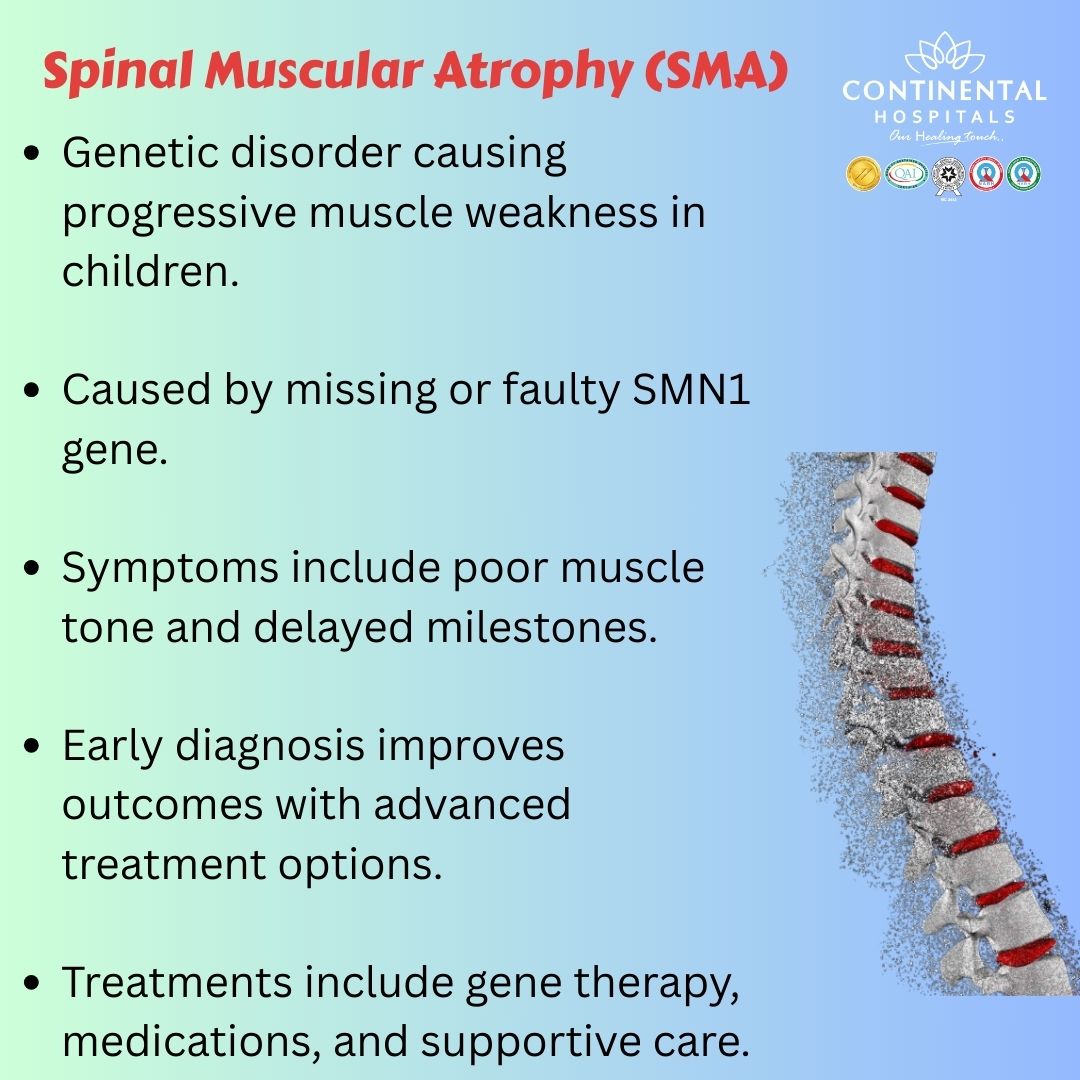
SMA is caused by a change in a gene called SMN1. This gene produces a protein that keeps motor neurons healthy. Without enough of this protein, motor neurons begin to degenerate, leading to muscle weakness.
SMA is inherited in an autosomal recessive pattern. This means a child must receive the faulty gene from both parents to develop the condition. Parents who carry one copy of the gene usually do not show symptoms.
If you or your child notice spinal muscular atrophy symptoms, visit the best neuro doctor hyderabad at Continental Hospitals, Hyderabad, for expert diagnosis and advanced care.
What are the types of Spinal Muscular Atrophy (SMA)?
There are different types of spinal muscular atrophy based on the age at which symptoms begin and how severe they are.
SMA Type 1
SMA type 1 is the most severe and most common form. Symptoms usually appear within the first six months of life. Babies may have poor muscle tone, difficulty holding up their head, trouble swallowing, and breathing problems. Early medical care is essential in SMA type 1 to support breathing and nutrition.
SMA Type 2
Symptoms usually begin between six and eighteen months of age. Children with this type can sit but may not be able to stand or walk without support. Muscle weakness mainly affects the legs.

SMA Type 3
This form appears in late childhood or adolescence. Individuals may be able to walk but may lose this ability later in life due to progressive muscle weakness.
SMA Type 4
This is a rare and mild form that starts in adulthood. Muscle weakness is usually gradual and less severe compared to other types.
What causes Spinal Muscular Atrophy (SMA)?
The main cause of sma disease is a mutation in the SMN1 gene. This mutation reduces the production of survival motor neuron protein, which is essential for motor neuron health.
Risk factors include:
• Family history of spinal muscular atrophy
• Both parents carrying the faulty SMN1 gene
• Genetic mutations passed from generation to generation
Genetic counseling and carrier testing can help families understand their risk.
What are the symptoms of Spinal Muscular Atrophy (SMA)?
Spinal muscular atrophy symptoms vary depending on the type and severity. However, common signs include:
• Muscle weakness and reduced muscle tone
• Delayed motor milestones such as sitting or walking
• Difficulty swallowing
• Breathing problems
• Poor head control in infants
• Tremors in fingers
• Scoliosis or curvature of the spine
In infants with sma type 1, symptoms may be noticeable soon after birth. Early identification of spinal muscular atrophy symptoms allows timely intervention.
If you notice unusual muscle weakness or delayed development in your child, consult a specialist immediately.
How Is SMA Diagnosed?
Diagnosis usually begins with a detailed medical history and physical examination. Doctors look for muscle weakness, poor reflexes, and developmental delays.
The following tests help confirm spinal muscular atrophy:
• Genetic testing to detect SMN1 gene mutation
• Blood tests
• Electromyography to check nerve and muscle activity
• Newborn screening in some cases
Early diagnosis improves the chances of starting spinal muscular atrophy treatment at the right time.
What is the treatment for spinal muscular atrophy (SMA)?
Although there is no complete cure for sma disease, advanced medical therapies can significantly improve outcomes. Treatment focuses on slowing disease progression, improving muscle function, and managing symptoms.
What Are Disease-Modifying Therapies for Spinal Muscular Atrophy (SMA)?
Modern medicines help increase the production of the survival motor neuron protein. These therapies have changed the outlook for many children with sma type 1 and other forms of spinal muscular atrophy.
Gene Therapy
Gene therapy works by introducing a healthy copy of the SMN1 gene into the body. This helps restore protein production and supports motor neuron survival.
Supportive Care
Supportive treatment plays a key role in managing spinal muscular atrophy symptoms.
• Respiratory support to assist breathing
• Nutritional support for swallowing difficulties
• Physical therapy to maintain mobility
• Occupational therapy to improve daily functioning
• Orthopedic care for spine and joint issues
A multidisciplinary team approach ensures better long-term care.
Living with SMA
Living with spinal muscular atrophy requires emotional strength and medical support. With proper spinal muscular atrophy treatment, many children and adults can lead meaningful lives.
Support from neurologists, pediatricians, physiotherapists, pulmonologists, and rehabilitation experts is essential. Regular monitoring helps track disease progression and adjust treatment plans accordingly.
Early newborn screening programs are helping identify sma disease at birth, allowing treatment before symptoms appear.
Why Choose Continental Hospitals for SMA Care?
Continental Hospitals is recognized as the best hospital in Hyderabad for advanced neurological and pediatric care. Our hospital follows international standards and holds prestigious accreditations such as NABH and JCI. These accreditations reflect our commitment to patient safety, quality treatment, and clinical excellence.
We offer:
• Expert neurologists specializing in spinal muscular atrophy
• Dedicated pediatric neurology team
• Advanced genetic testing facilities
• State of the art intensive care units
• Comprehensive rehabilitation services
• Multidisciplinary care under one roof
Our specialists provide personalized spinal muscular atrophy treatment plans based on each patient’s condition. Early diagnosis, advanced therapies, and compassionate care make a significant difference in managing sma disease.
Continental Hospitals combines medical expertise with modern technology to deliver accurate diagnosis and evidence based treatment. We ensure safe practices, infection control standards, and patient focused care in every department.
When Should You See a Doctor?
- Do you notice delayed motor development in your child?
Is your baby unable to hold their head or sit without support?
Are there signs of muscle weakness or breathing difficulty?
These may be early spinal muscular atrophy symptoms. Do not ignore them. Early medical evaluation can change outcomes significantly.
Conclusion
Spinal muscular atrophy SMA is a serious genetic disorder that affects muscle strength and movement. It occurs due to a mutation in the SMN1 gene and leads to progressive muscle weakness. The severity ranges from sma type 1 in infants to milder adult onset forms.
Although there is no complete cure for sma disease, modern spinal muscular atrophy treatment options such as disease modifying therapy and gene therapy have improved survival and quality of life. Early diagnosis and comprehensive care are crucial.
If you or your child experience spinal muscular atrophy symptoms, consult our Best Neurologist in Hyderabad at Continental Hospitals, the best hospital in Hyderabad. Our experienced doctors provide advanced diagnosis, personalized treatment, and compassionate care to help patients live better and stronger lives.