.webp)


Starting your day with the right food can make a big difference to your energy levels, digestion, and overall health. Many people rush through their mornings and eat whatever is available without realizing that certain empty-stomach food choices can irritate the digestive system, trigger acidity, or cause sudden changes in blood sugar levels. Knowing What Not to Eat on an Empty Stomach helps you make smarter food choices that support better health.
Choosing healthy empty-stomach foods is just as important as avoiding harmful ones. While some foods provide lasting energy and improve digestion, others may lead to discomfort, bloating, heartburn, or stomach pain. This guide explains the foods to avoid on an empty stomach, why they can affect your body, and what healthier alternatives you should choose for a better start to your day.
Why does eating on an empty stomach matter?
After several hours of fasting during sleep, your stomach is more sensitive. The digestive system is ready to absorb nutrients, but it is also more vulnerable to foods that are highly acidic, sugary, spicy, or difficult to digest.
Making the right empty-stomach food choices can help:
- Improve digestion
- Maintain stable blood sugar levels
- Prevent acidity and heartburn
- Support better metabolism
- Keep you energized throughout the morning
If your digestive symptoms persist despite healthy eating habits, visit the gastroenterology doctor in Hyderabad at Continental Hospitals for expert diagnosis, advanced treatment, and compassionate care that helps you find lasting relief.
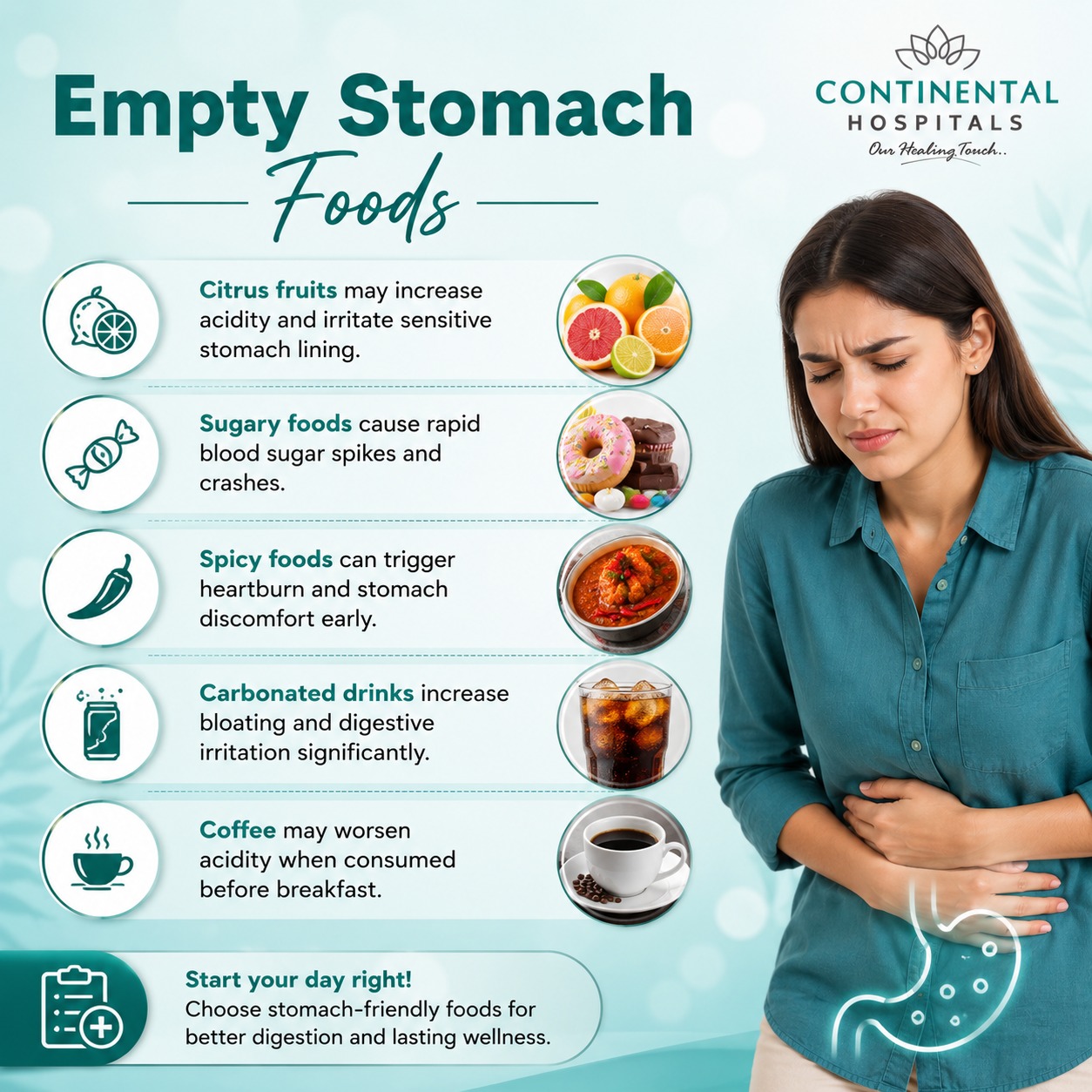
Which foods should you avoid on an empty stomach?
1. Should you avoid citrus fruits first thing in the morning?
Yes. Oranges, lemons, grapefruits, and other citrus fruits contain natural acids that may irritate an empty stomach.
They may cause:
- Heartburn
- Acid reflux
- Stomach irritation
- Burning sensation
Instead, eat citrus fruits after a balanced breakfast.

2. Is drinking coffee on an empty stomach a good idea?
Many people begin their day with coffee, but drinking it before eating can increase stomach acid production.
Possible effects include:
- Acidity
- Indigestion
- Nausea
- Stomach discomfort
- Increased anxiety in sensitive people
Have a light breakfast before enjoying your morning coffee.
3. Why should sugary foods be avoided before breakfast?
Sugary cereals, sweets, pastries, and sweetened drinks cause a rapid rise in blood sugar followed by a quick drop.
This may lead to:
- Fatigue
- Hunger soon after eating
- Mood changes
- Poor concentration
Healthy empty-stomach foods should provide steady energy instead of sugar spikes.
4. Can spicy foods upset an empty stomach?
Yes. Spicy foods can irritate the stomach lining when eaten without other food.
Possible symptoms include:
- Burning sensation
- Acidity
- Stomach cramps
- Digestive discomfort
It is better to enjoy spicy meals later in the day after eating other foods.
5. Are carbonated drinks harmful on an empty stomach?
Soft drinks and fizzy beverages contain gas and sugar that may affect digestion.
They can cause:
- Bloating
- Gas
- Acid reflux
- Stomach discomfort
Choose plain water or warm water instead.
6. Should you avoid fried foods before breakfast?
Fried foods are rich in unhealthy fats and take longer to digest.
Eating them on an empty stomach may cause the following:
- Indigestion
- Heaviness
- Slow digestion
- Nausea
Choose lighter meals that are easier to digest.
7. Is yogurt suitable on an empty stomach?
Although yogurt is healthy, eating it alone on an empty stomach may reduce some of its digestive benefits because stomach acid can affect the beneficial bacteria.
You can combine yogurt with fruits, oats, or nuts after breakfast for better nutrition.
8. Can raw vegetables cause discomfort?
Raw vegetables contain large amounts of fiber, which may be difficult to digest first thing in the morning.
Some people experience:
- Bloating
- Gas
- Abdominal discomfort
Lightly cooked vegetables are often a better morning option.
9. Are bananas safe on an empty stomach?
Bananas are nutritious, but eating only bananas on an empty stomach may temporarily increase magnesium levels and cause a quick rise in natural sugars.
Pair bananas with nuts or oats for a more balanced breakfast.
10. Should processed snacks be avoided?
Yes. Chips, packaged snacks, and processed foods offer little nutrition and may contain excess salt, unhealthy fats, and preservatives.
These foods do not provide the balanced nutrition your body needs after overnight fasting.
What are the best alternatives to empty-stomach foods that should be avoided?
Choose foods that are gentle on the digestive system.
Healthy morning options include:
- Oatmeal
- Whole grain toast
- Boiled eggs
- Fresh fruits with nuts
- Idli
- Upma
- Poha
- Dalia
- Plain curd after breakfast
- Warm water
- Coconut water
- Sprouts with vegetables
- Dry fruits in moderation
These foods provide energy, support digestion, and help you stay full longer.
What are the warning signs that your breakfast habits are affecting your health?
Watch for symptoms such as:
- Frequent acidity
- Heartburn
- Stomach pain
- Nausea
- Bloating
- Gas
- Poor digestion
- Frequent hunger
- Fatigue after breakfast
If these symptoms continue despite changing your eating habits, consult a doctor for evaluation.
How can you build a healthier empty stomach diet?
Simple daily habits can improve your digestive health.
Follow these tips:
- Drink water after waking up.
- Never skip breakfast.
- Eat balanced meals with protein, fiber, and healthy fats.
- Limit processed foods.
- Avoid excessive sugar.
- Eat slowly.
- Choose freshly prepared meals.
- Maintain regular meal timings.
A healthy, empty-stomach diet supports better digestion and long-term wellness.
Why choose Continental Hospitals?
Continental Hospitals is recognized as one of the best hospitals in Hyderabad, offering comprehensive digestive health services with advanced diagnostic technology and experienced specialists. The hospital is accredited by JCI, NABH, and NABL, reflecting its commitment to international standards of patient safety, clinical excellence, and quality healthcare.
Our expert gastroenterologists, nutrition specialists, and multidisciplinary care teams work together to identify digestive disorders, provide personalized dietary guidance, and treat a wide range of gastrointestinal conditions. With modern infrastructure, evidence-based treatment, and compassionate care, Continental Hospitals helps patients achieve better digestive health and overall well-being.
When should you consult a doctor?
Do you experience frequent acidity, stomach pain, indigestion, bloating, or heartburn after eating? Do these symptoms continue even after changing your diet?
Persistent digestive symptoms should never be ignored. Consult an experienced gastroenterologist for a complete evaluation, accurate diagnosis, and personalized treatment plan to prevent complications and improve your digestive health.
Conclusion
Choosing the right empty-stomach foods can have a significant impact on your digestive health, energy levels, and overall well-being. Understanding the Foods to Avoid on an Empty Stomach helps reduce the risk of acidity, bloating, indigestion, and discomfort. Instead of sugary, spicy, acidic, or heavily processed foods, choose balanced and nutritious meals that nourish your body from the beginning of the day. If digestive symptoms persist despite healthy eating habits, seek expert medical advice. Early diagnosis and timely treatment can help you maintain a healthy digestive system and enjoy a better quality of life.
If digestive discomfort continues despite healthy eating habits, seek timely medical advice from the Top Gastroenterologists in Hyderabad at Continental Hospitals for comprehensive care and lasting relief.
Related Blogs: