• Share this:
post-title

Why Even Moderate Alcohol Intake Increases Cancer Risk

Written by - Editorial Team
Medically Reviewed by - Dr. Kiran Kumar Matta

When we think of alcohol, we often associate it with social gatherings, relaxation, or even health benefits when consumed in moderation. However, recent studies show that even small amounts of alcohol can increase the risk of cancer. While heavy drinking is well known to be harmful, many people don’t realize that moderate drinking can also contribute to serious health problems, including cancer.

In this blog, we will explore how alcohol increases cancer risk, why even moderate consumption can be harmful, and what you can do to reduce your risk.

How does alcohol increase the risk of cancer?

Alcohol affects the body in several ways that can lead to cancer. Here’s how:

1. Damage to DNA
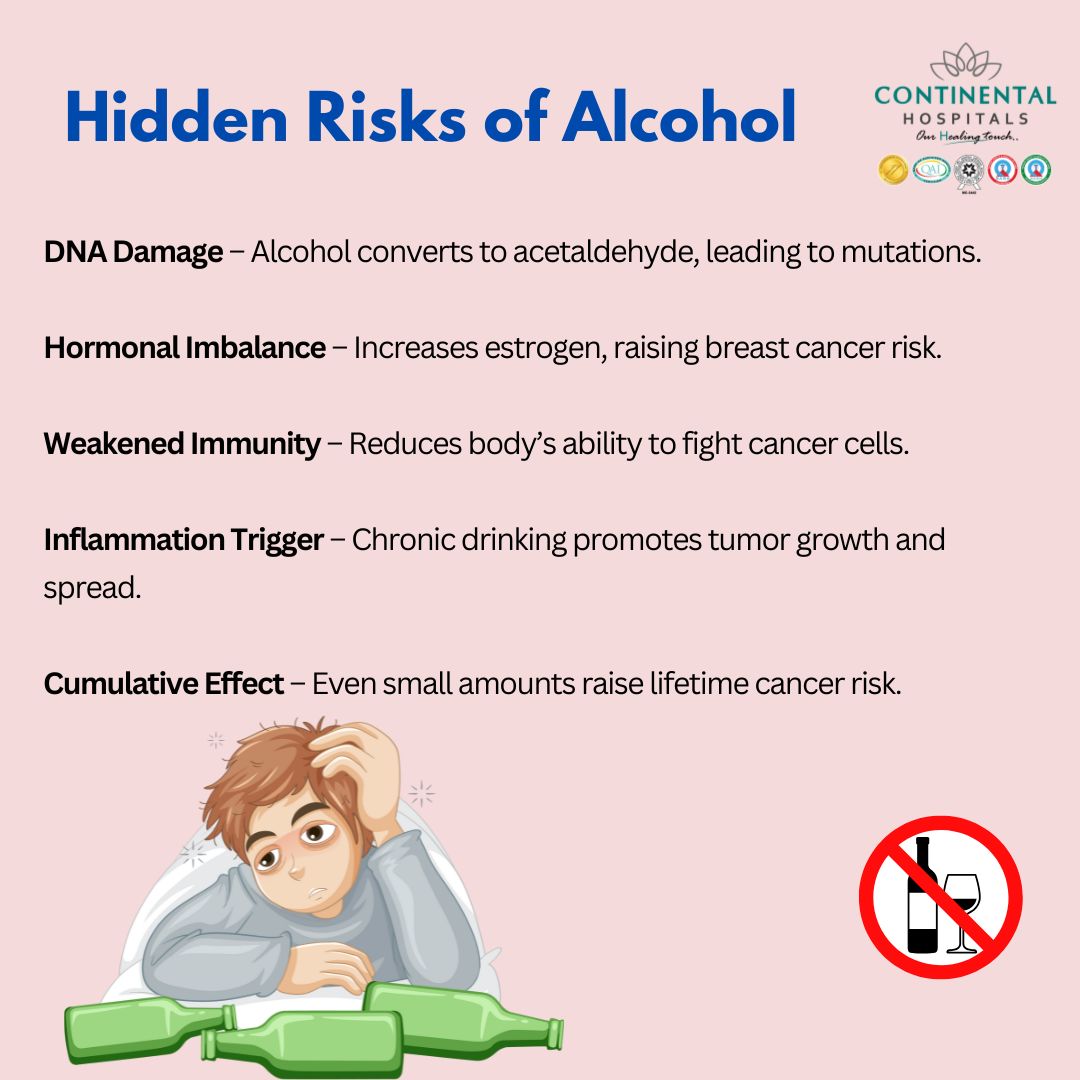
When you drink alcohol, your body breaks it down into a toxic chemical called acetaldehyde. This substance can damage the DNA in your cells. DNA is like an instruction manual for your cells, telling them how to grow and function. When DNA is damaged, cells can start growing uncontrollably, leading to cancer.

2. Increased Production of Harmful Chemicals
Alcohol increases the production of reactive oxygen species (ROS), which can damage cells and make them more vulnerable to cancer. This oxidative stress leads to inflammation and weakens the body’s ability to repair itself.

3. Changes in Hormone Levels
Alcohol consumption can increase levels of estrogen and other hormones in the body. High estrogen levels have been linked to a greater risk of breast cancer.

4. Weakening of the Immune System
Your immune system plays a vital role in detecting and destroying cancerous cells. Alcohol weakens the immune system, making it harder for the body to fight off cancer cells in their early stages.
5. Nutritional Deficiencies

Alcohol interferes with the body's ability to absorb essential nutrients like vitamins A, C, D, and E, as well as folate. A deficiency in these nutrients can increase the risk of cancer by weakening the body's natural defense mechanisms.

Second Opinion

What types of cancer are linked to alcohol consumption?

Research has established strong links between alcohol and various cancers. Even moderate drinking can increase the risk of the following:

1. Mouth and Throat Cancer
Alcohol irritates the lining of the mouth and throat, increasing the risk of cancer. People who drink and smoke have an even higher risk.

2. Esophageal Cancer
Acetaldehyde, the toxic byproduct of alcohol, is particularly harmful to the esophagus, increasing the risk of this aggressive cancer.

3. Liver Cancer
The liver breaks down alcohol, but excessive alcohol consumption leads to liver disease and cirrhosis, increasing the risk of liver cancer.

4. Breast Cancer
Even low amounts of alcohol can raise estrogen levels, which increases the risk of breast cancer. Studies show that women who drink even a few alcoholic beverages per week have a higher likelihood of developing breast cancer.

5. Colorectal Cancer
Alcohol can damage the lining of the intestines and interfere with the body's ability to absorb important nutrients, increasing the risk of colon and rectal cancer.

Does Moderate Drinking Really Increase Cancer Risk?

Many people believe that moderate drinking (one drink per day for women, two drinks per day for men) is safe or even beneficial for health. However, recent research suggests that no amount of alcohol is completely safe when it comes to cancer risk.

Need an Appointment?

Even one drink per day can increase the risk of certain cancers, especially breast and colorectal cancer. A study published in The Lancet Oncology found that nearly 100,000 cases of cancer worldwide were linked to moderate alcohol consumption.

The World Health Organization (WHO) and the American Cancer Society have made it clear: any level of alcohol consumption increases the risk of cancer.

How Can You Reduce Your Risk of Alcohol-Related Cancer?

While quitting alcohol completely is the best way to lower your cancer risk, here are some practical steps you can take:

1. Reduce Your Alcohol Intake
If quitting completely is difficult, try cutting back. Set limits on how much and how often you drink.

2. Choose Alcohol-Free Alternatives
Many non-alcoholic beverages, such as flavored sparkling water or mocktails, can be great substitutes for alcoholic drinks.

3. Focus on a Healthy Diet
A diet rich in fruits, vegetables, and whole grains can help protect your body from cancer and repair any damage caused by alcohol.

4. Stay Hydrated
Drinking more water and herbal teas can help reduce alcohol cravings and improve overall health.

5. Get Regular Screenings
If you have a history of alcohol consumption, it’s important to get regular cancer screenings to detect any issues early.

6. Seek Professional Help
If you find it hard to cut back on alcohol, speak to a healthcare provider for guidance and support. There are many resources available, including counselling and support groups, to help you reduce or quit alcohol.

When Should You See a Doctor About Alcohol-Related Cancer Risk?

If you experience any of the following symptoms, it is important to consult a doctor immediately:

  • Unexplained weight loss
  • Persistent fatigue
  • Difficulty swallowing
  • Blood in stool or urine
  • A lump or unusual swelling anywhere in the body
  • Chronic cough or hoarseness

At Continental Hospitals, our Best Cancer Specialist in Hyderabad and healthcare professionals can help assess your risk and provide guidance on cancer prevention. If you have concerns about alcohol and its effects on your health, don’t hesitate to seek medical advice.

Conclusion

Many people believe that moderate drinking is harmless, but research clearly shows that even small amounts of alcohol can increase cancer risk. Alcohol damages DNA, increases inflammation, and weakens the immune system, making it easier for cancer to develop.

Reducing or quitting alcohol lowers your cancer risk. Concerned about alcohol-related health risks? The expert team at Continental Cancer Centre, the best oncology hospital in Hyderabad, is here to help. Book an appointment today for expert guidance!

Related Blog Topics:

  1. How Smoking, Alcohol, and Obesity Affect Cancer Risk
  2. Breaking Down the Science: How Alcohol Causes Cancer

Frequently Asked Questions

Yes. Research shows that even moderate alcohol consumption can increase the risk of several types of cancer. Alcohol is broken down into acetaldehyde, a toxic chemical that can damage DNA and prevent cells from repairing themselves properly. Over time, this damage may lead to uncontrolled cell growth and cancer. Even one alcoholic drink a day has been linked to a higher risk of breast, colorectal, liver, mouth, throat, and esophageal cancers. The risk increases with the amount of alcohol consumed, but there is no completely safe level of drinking when it comes to cancer prevention. Many people believe only heavy drinking is harmful, but scientific evidence suggests that moderate drinking can also have long term health consequences. Limiting or avoiding alcohol is one of the most effective ways to reduce cancer risk.
Alcohol affects the body in several ways that contribute to cancer development. When alcohol is metabolized, it produces acetaldehyde, a harmful substance that damages DNA. Alcohol also creates oxidative stress, leading to inflammation and cell injury. It interferes with the body's ability to absorb important nutrients like folate, which helps protect healthy cells. In women, alcohol can increase estrogen levels, raising the risk of breast cancer. It also makes it easier for harmful chemicals from tobacco to enter the cells of the mouth and throat. These combined effects increase the likelihood of genetic mutations and abnormal cell growth. The longer alcohol is consumed regularly, the greater the cumulative damage and cancer risk.
Alcohol consumption has been linked to several cancers, including cancers of the mouth, throat, voice box, esophagus, liver, breast, and colon and rectum. Liver cancer risk increases because alcohol can cause chronic liver inflammation and cirrhosis. Breast cancer risk rises even with low levels of alcohol intake due to hormonal changes. Colorectal cancer has also been associated with regular drinking. People who both smoke and drink alcohol have an even higher risk of cancers affecting the mouth, throat, and esophagus. The risk varies depending on the amount and duration of alcohol use, but every reduction in alcohol intake can help lower the likelihood of developing these cancers.
No. Whether it is beer, wine, whiskey, vodka, or any other alcoholic beverage, the cancer risk comes from the alcohol itself, known as ethanol. Once consumed, ethanol is converted into acetaldehyde, which damages cells and DNA. While different drinks contain varying amounts of alcohol, the harmful effect depends on the total amount of ethanol consumed rather than the type of beverage. Some people believe red wine is safe because it contains antioxidants, but this does not eliminate the cancer risk associated with alcohol. Choosing lower alcohol options or drinking less frequently may reduce exposure, but avoiding alcohol altogether offers the greatest protection against alcohol related cancers.
Yes. Reducing or stopping alcohol consumption can lower the risk of developing alcohol related cancers over time. The body begins repairing some of the damage caused by alcohol once drinking is reduced or stopped. While past alcohol use cannot be completely erased, avoiding further exposure decreases ongoing DNA damage and inflammation. The benefits increase the longer a person remains alcohol free. Combining alcohol cessation with a healthy diet, regular exercise, maintaining a healthy weight, and avoiding tobacco provides even greater protection. If someone has been drinking regularly for many years, they should discuss the safest way to reduce alcohol intake with a healthcare professional.
Anyone who drinks alcohol can have an increased risk of cancer, but some people are more vulnerable than others. Individuals with a family history of cancer, smokers, people with liver disease, and those who consume alcohol regularly over many years face a greater risk. Women are particularly susceptible to alcohol related breast cancer, even with moderate drinking. Poor nutrition, obesity, and certain genetic factors may also increase susceptibility. Drinking alcohol together with tobacco significantly raises the risk of cancers affecting the mouth, throat, and esophagus. Understanding personal risk factors and making healthier lifestyle choices can help reduce the likelihood of developing cancer.
Early symptoms depend on the type of cancer but may include persistent mouth sores, difficulty swallowing, a lasting sore throat, unexplained weight loss, changes in bowel habits, blood in the stool, chronic abdominal pain, unusual breast lumps, persistent hoarseness, or yellowing of the skin and eyes. These symptoms do not always mean cancer, but they should never be ignored, especially in people who consume alcohol regularly. Early diagnosis greatly improves treatment outcomes. Anyone experiencing persistent or unusual symptoms should seek medical evaluation promptly rather than waiting for the symptoms to worsen.
The best way to reduce alcohol related cancer risk is to drink less or stop drinking altogether. If you choose to drink, keep your intake as low as possible and avoid binge drinking. Eat a balanced diet rich in fruits, vegetables, whole grains, and fiber, maintain a healthy weight, stay physically active, and avoid smoking or chewing tobacco. Attend regular health screenings based on your age and risk factors, including cancer screening tests recommended by your doctor. If you find it difficult to reduce alcohol consumption, seek professional medical advice or support. Small lifestyle changes made consistently can significantly lower your long term risk of cancer and improve overall health.
Disclaimer: The information provided in this blog is intended for general knowledge and informational purposes only, and does not constitute medical advice. Always consult with a qualified healthcare professional for any medical concerns or before making any decisions about your health.

Get in Touch With Us

Whether you are from India or abroad, we are here to help you with your medical queries. Please fill out the form below and our team will connect with you shortly.

  • ✔ Quick response from our medical experts
  • ✔ Secure data handling & privacy
  • ✔ Easy upload for reports & documents
0 / 100
Checkboxes Section


Chat with our medical experts on WhatsApp for quick assistance and hassle-free appointment booking

Recent Posts
Language Based Image
0 / 100