.webp)


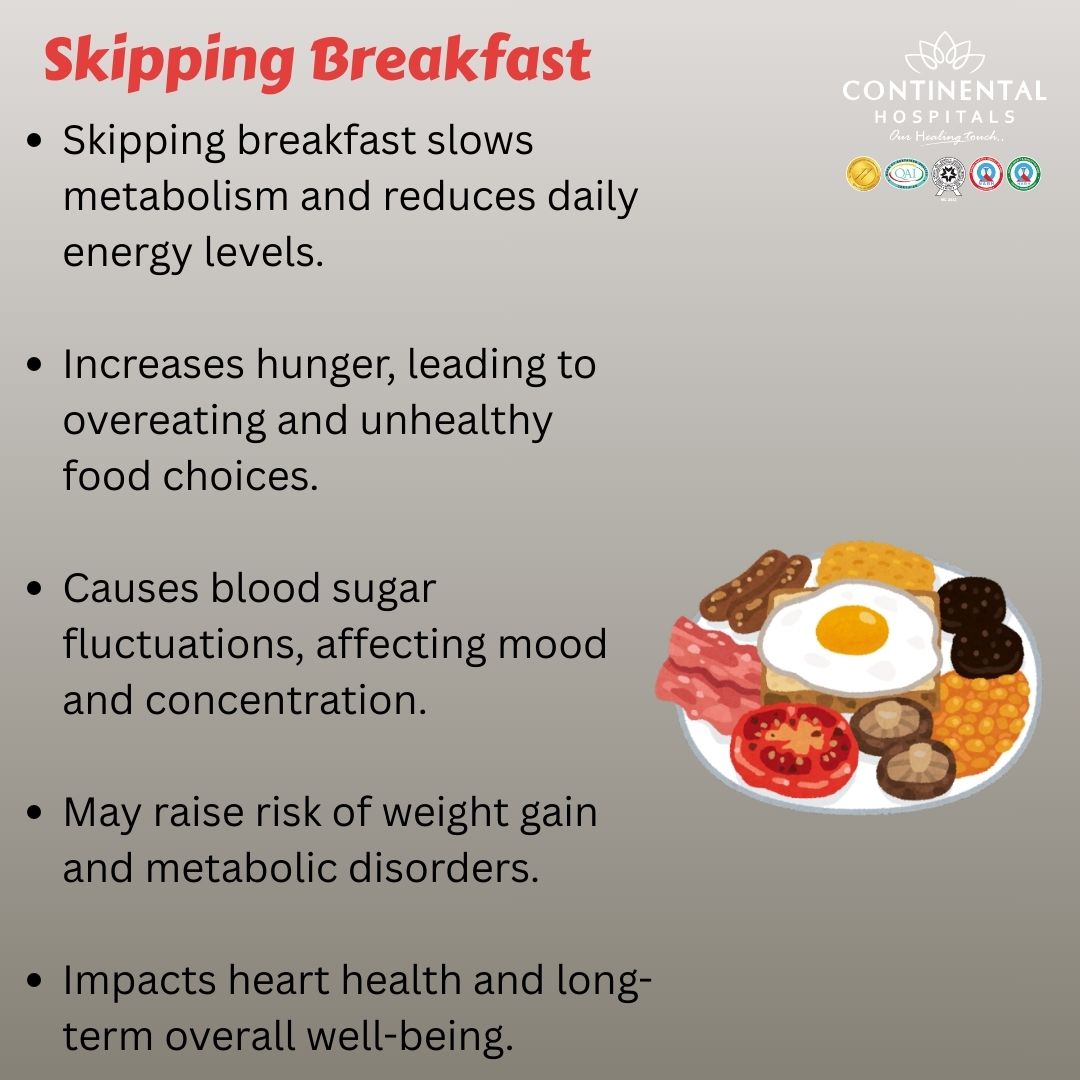
Many people skip breakfast because they feel busy, are trying to lose weight, or simply do not feel hungry in the morning. But is skipping breakfast bad for you? Research and clinical experience show that regularly choosing to skip breakfast can affect your energy levels, metabolism, mood, and long term health.
At Continental Hospitals, known as the best hospital in Hyderabad, our specialists often see patients with fatigue, digestive discomfort, weight gain, and blood sugar fluctuations that are linked to poor eating patterns. One common habit is skipping breakfast. Let us understand the effects of skipping breakfast and why this simple meal matters more than you think.
What Happens When You Skip Breakfast?
After a full night of sleep, your body has gone many hours without food. Breakfast literally means breaking the fast. When you skip breakfast, your body continues to stay in a fasting state for longer.
Here is what may happen:
• Your blood sugar levels drop
• You may feel tired and low in energy
• Concentration and memory may reduce
• Hunger hormones increase later in the day
• You are more likely to overeat at lunch or dinner
If you often skip breakfast, these changes can become a regular pattern and impact your overall health.
Suffering from fatigue, digestive issues, weight changes, or blood sugar swings from skipping breakfast? Visit our General Physician Department at Continental Hospitals for expert care.
Effects of Skipping Breakfast on Metabolism
One major effect of skipping breakfast is a slower metabolism. When you skip breakfast, your body tries to conserve energy. This can lead to:
• Reduced calorie burning during the day
• Increased fat storage
• Cravings for high sugar and high fat foods

Many people believe that skipping breakfast helps with weight loss. However, studies show that people who skip breakfast are more likely to gain weight over time. When you delay your first meal, you may feel extremely hungry later and make unhealthy food choices.
So, should you skip breakfast for weight loss? In most cases, the answer is no. Balanced meals at regular times support better metabolism and weight management.
Blood Sugar and Diabetes Risk
Is skipping breakfast bad for you if you have diabetes or prediabetes? Yes, it can be especially harmful. Skipping breakfast can cause unstable blood sugar levels.
When you skip breakfast:
• Blood sugar may drop in the morning
• You may experience sudden spikes after the next meal
• Insulin response can become irregular
Over time, this pattern increases the risk of insulin resistance and type 2 diabetes. Regular breakfast intake supports steady blood sugar levels and reduces stress on the pancreas.
Impact on Heart Health
The effects of skipping breakfast also extend to heart health. Research suggests that people who skip breakfast are at a higher risk of:
• High blood pressure
• High cholesterol
• Increased inflammation
• Heart disease
When you skip breakfast, your body may experience hormonal stress responses. These responses can raise blood pressure and increase cardiovascular strain. Over time, this raises the risk of heart related conditions.
Regular, balanced breakfast choices such as whole grains, fruits, and protein can help protect your heart.
Effects on Mental Focus and Mood
Have you ever felt irritated or unable to focus after skipping breakfast? This is not just imagination. Your brain depends on glucose for energy. When you skip breakfast, the brain does not receive a steady supply of fuel.
Common skip breakfast effects on mental performance include:
• Difficulty concentrating
• Low productivity
• Irritability
• Headaches
• Mood swings
Students and working professionals who skip breakfast often report reduced alertness. Eating a balanced breakfast improves memory, attention, and decision making throughout the day.
Digestive Health and Skipping Breakfast
Skipping breakfast can also affect your digestive system. When you do not eat in the morning:
• Stomach acid continues to be produced
• You may experience acidity or gastritis
• Bloating and irregular bowel habits may develop
Regular meal timing helps maintain a healthy digestive rhythm. People who skip breakfast frequently may suffer from constipation or discomfort due to irregular eating patterns.
At Continental Hospitals, our gastroenterology team treats many patients whose symptoms are linked to meal skipping habits.
Hormonal Balance and Long Term Health
Your body follows a natural internal clock called the circadian rhythm. Eating at consistent times supports this rhythm. Skipping breakfast can disturb hormonal balance.
Long term effects of skipping breakfast may include:
• Increased cortisol levels
• Hormonal imbalances
• Greater risk of obesity
• Increased risk of metabolic syndrome
If you are asking, is skipping breakfast bad for you in the long run? The answer is yes, especially if it becomes a daily habit without medical supervision.
Who Should Never Skip Breakfast?
While some medically supervised fasting plans exist, skipping breakfast is not suitable for everyone.
You should not skip breakfast if you:
• Have diabetes
• Are pregnant
• Have a history of acidity or ulcers
• Experience frequent headaches
• Feel dizzy or weak in the morning
• Are growing adolescents
In such cases, professional medical advice is essential before making dietary changes.
What Makes a Healthy Breakfast?
A healthy breakfast should be balanced and simple. It should include:
• Complex carbohydrates such as whole grains
• Protein like eggs, sprouts, paneer, or nuts
• Healthy fats in moderate amounts
• Fresh fruits or vegetables
Avoid high sugar processed foods. A nutritious breakfast keeps you full for longer and reduces unhealthy snacking.
Why Choose Continental Hospitals?
Continental Hospitals is widely recognized as the best hospital in Hyderabad for comprehensive and patient focused care. Our hospital is accredited by National Accreditation Board for Hospitals and Healthcare Providers and Joint Commission International. These accreditations reflect our commitment to global standards of safety, quality, and clinical excellence.
We offer:
• Experienced General Physicians and Super Specialists
• Advanced diagnostic facilities
• Multidisciplinary care approach
• Evidence based treatment protocols
• Patient education and preventive health guidance
Our team understands that lifestyle habits such as skipping breakfast can silently affect your health. We provide personalized dietary counseling and medical evaluation to address the root cause of your symptoms.
When Should You See a Doctor?
If you frequently skip breakfast and experience:
• Persistent fatigue
• Unexplained weight gain
• Acidity or stomach pain
• Blood sugar fluctuations
• Frequent headaches
• Poor concentration
It is important to consult a doctor.
Ignoring these symptoms can lead to long term health complications. Early evaluation helps prevent serious problems.
Conclusion
Skipping breakfast may seem harmless, but the long term effects of skipping breakfast can impact your metabolism, heart health, blood sugar, digestion, and mental clarity. If you are wondering, should you skip breakfast for convenience or weight loss? The healthier choice for most people is to maintain regular, balanced meals.
Your body needs consistent fuel to function at its best. Making time for breakfast is a simple yet powerful step toward better health.
If you suffer from fatigue, digestive issues, weight changes, or blood sugar concerns due to skipping breakfast, consult our best general physician at Continental Hospitals. Early medical guidance can help you restore balance and protect your long term health.
Related Blog Topics: