post-title

Abdominal Adhesions: What Causes Pain After Surgery?

Written by - Editorial Team
Medically Reviewed by - Dr Guru N Reddy

Abdominal surgery is often lifesaving and necessary, but for some patients, the recovery journey does not end when the surgical wound heals. A common issue that can arise after abdominal or pelvic surgery is the development of abdominal adhesions. These are bands of scar tissue that form inside the body and cause internal organs or tissues to stick together. While many adhesions remain harmless, they can sometimes lead to persistent pain, discomfort, and complications.

What Are Abdominal Adhesions?

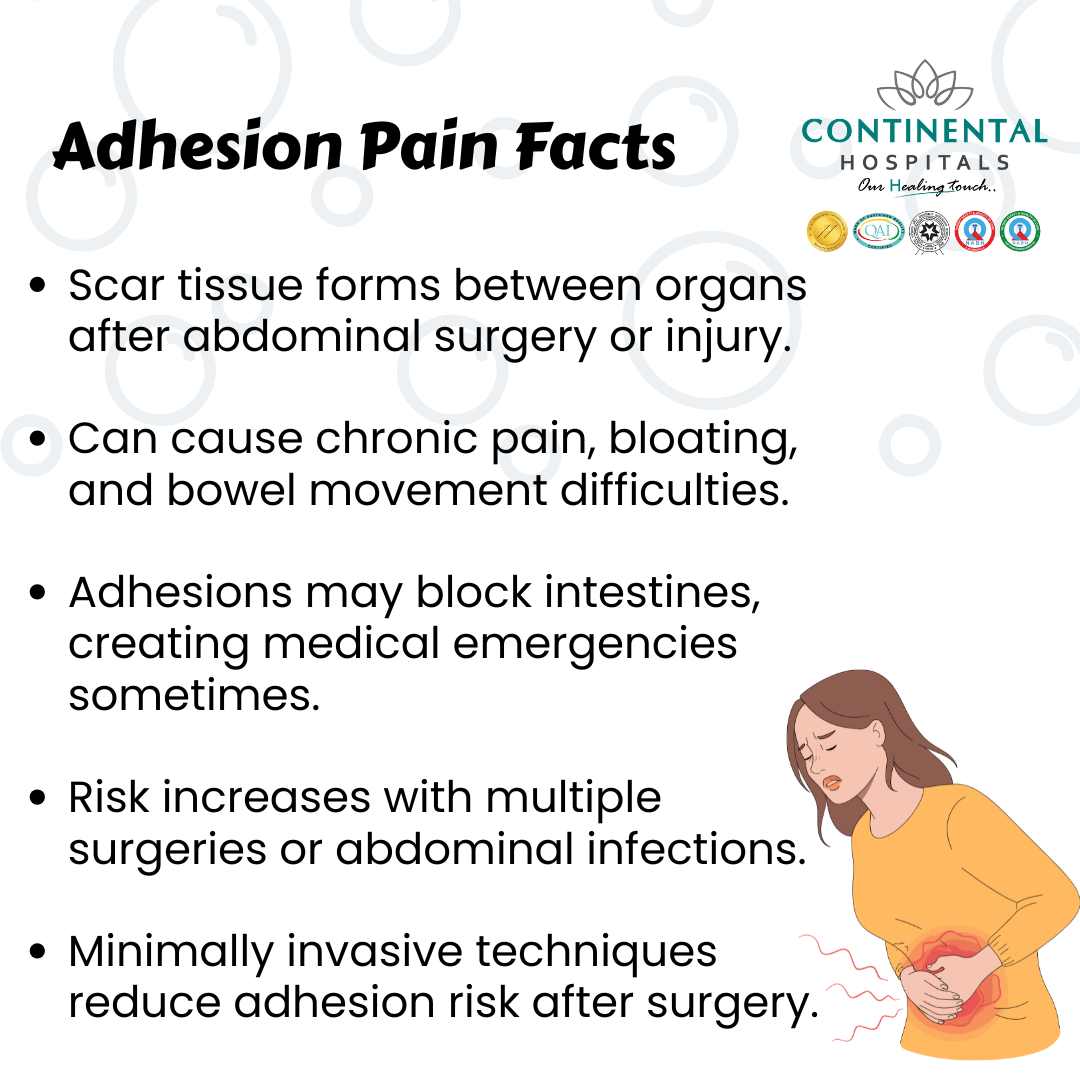
Abdominal adhesions are bands of fibrous scar tissue that develop after surgery or inflammation inside the abdominal cavity. Normally, internal organs and tissues move smoothly against each other. However, adhesions create unnatural connections between them, limiting this natural movement.

For example, loops of the intestine may stick together or attach to the abdominal wall, which can cause discomfort and complications.

Visit the gastroenterology specialist doctors at Continental Hospitals for expert diagnosis and advanced treatment of digestive and liver conditions.

Why Do Abdominal Adhesions Form After Surgery?

Scar tissue is a natural part of healing. Whenever the body undergoes surgery, an injury, or inflammation, it produces scar tissue to repair itself. However, in the abdomen, this scar tissue may extend beyond the surgical site and form adhesions.

Several reasons contribute to adhesion formation after surgery:

Surgical trauma: Cutting, stitching, or handling of tissues during procedures may trigger scar tissue.

Inflammation or infection: Conditions such as appendicitis, pelvic infections, or inflammatory bowel disease can worsen the risk.

Foreign materials: Surgical gloves, gauze fibers, or mesh may act as irritants and encourage adhesion formation.

Second Opinion

Body’s natural healing response: In some patients, excessive scar tissue develops even without complications.
How Do Abdominal Adhesions Cause Pain?

Not all adhesions are painful. Many people live with them without experiencing symptoms. However, when adhesions pull, twist, or restrict the movement of internal organs, they can lead to pain and discomfort.

Here are some ways adhesions cause problems:

Chronic abdominal pain: Continuous pulling of tissues leads to dull, aching pain.

Obstruction of the intestines: When adhesions wrap or kink the bowel, it can block food, fluids, and gas. This is a medical emergency.

Restricted movement: Adhesions can make normal stretching, bending, or digestion painful.

Need an Appointment?

Fertility issues in women: In some cases, adhesions in the pelvic region can affect reproductive organs.

What are the symptoms of abdominal adhesions?

Do you often feel unexplained abdominal discomfort after surgery? Some common symptoms include:

  • Abdominal pain that worsens after meals or physical activity
  • Bloating, gas, or fullness
  • Nausea and vomiting
  • Cramping or irregular bowel movements
  • Difficulty passing stool or gas
  • Signs of bowel obstruction such as severe pain and distension

It is important to remember that these symptoms may also overlap with other abdominal conditions. A doctor’s evaluation is necessary to identify the true cause.

How Are Abdominal Adhesions Diagnosed?

Diagnosing adhesions can be challenging because they are not always visible in standard imaging tests like X-rays or ultrasounds. Doctors may recommend:

  • CT or MRI scans to rule out other conditions.
  • Diagnostic laparoscopy, a minimally invasive procedure, to directly view adhesions.

A careful medical history and examination by an experienced specialist play a major role in identifying the condition.

What are the treatment options for abdominal adhesions?

Most adhesions do not require treatment unless they cause significant symptoms or complications. Management may include:

Lifestyle adjustments: Eating smaller meals, staying hydrated, and regular exercise may reduce discomfort.

Medications: Pain relief and medications to improve bowel function can help in milder cases.

Surgery (Adhesiolysis): In severe cases, doctors may perform surgery to cut and remove adhesions. Minimally invasive laparoscopic surgery is often preferred as it reduces the risk of new adhesions forming.

Can Abdominal Adhesions Be Prevented?

Complete prevention may not always be possible, but certain techniques reduce the risk:

  • Use of minimally invasive surgical methods
  • Gentle handling of tissues during surgery
  • Reducing exposure to foreign materials in the abdominal cavity
  • Early management of abdominal infections or inflammation

When Should You See a Doctor?

If you have had abdominal or pelvic surgery and notice persistent or worsening pain, it is time to consult a doctor. Seek immediate help if you experience:

  • Severe cramping pain
  • Inability to pass stool or gas
  • Continuous vomiting
  • Swollen or hard abdomen

These may be signs of a bowel obstruction, which requires urgent treatment.

Why Choose Continental Hospitals for Abdominal Pain and Adhesion Care?

Continental Hospitals, Hyderabad, is a JCI-accredited and NABH-accredited hospital, recognized for its excellence in patient care and safety. With state-of-the-art facilities and highly skilled gastroenterologists and surgeons, the hospital provides advanced diagnostic tools and minimally invasive treatment options for abdominal adhesions and related conditions.

At Continental Hospitals:

  • Patients benefit from world-class standards of safety and quality.
  • Expert specialists offer tailored treatment plans.
  • The hospital ensures comprehensive care, from diagnosis to recovery.
  • A patient-centric approach prioritizes comfort, faster recovery, and reduced risks.

Choosing Continental Hospitals means trusting a globally accredited healthcare institution dedicated to your well-being.

Conclusion

Abdominal adhesions are a common outcome of abdominal or pelvic surgery. While they may remain silent in some people, they can cause significant discomfort and even life-threatening complications in others. Understanding the causes, symptoms, and treatment options is essential for timely care.

If you suffer from persistent abdominal pain, bloating, or digestive problems after surgery, do not ignore the symptoms. Consulting an experienced specialist can make all the difference in diagnosis and treatment.

At Continental Hospitals, our best gastroenterologist in hyderabad are here to help you find relief and regain a healthy life. Book your appointment today with a specialist in abdominal and digestive health.

Related Blogs:

  1. How Abdominal Fat in Midlife Affects Brain Health
  2. Understanding Upper Left Abdominal Pain Under Ribs

Frequently Asked Questions

Abdominal adhesions are bands of scar tissue that form between organs or between organs and the abdominal wall after surgery, infection, inflammation, or injury. Normally, abdominal organs move freely against one another. During the healing process, scar tissue may develop and cause nearby tissues to stick together. This is a natural part of healing, but excessive scar tissue can create problems. Adhesions may develop within days or weeks after surgery, but they can also remain unnoticed for years. Many people with adhesions never experience symptoms. However, in some cases, adhesions can restrict the normal movement of the intestines or other abdominal organs. This may lead to abdominal pain, bloating, constipation, or bowel obstruction. The risk of adhesions varies depending on the type and extent of surgery performed.
Yes. Abdominal adhesions can cause pain months or even many years after an operation. Some adhesions remain harmless throughout life, while others gradually tighten and pull on nearby tissues or organs. This tension may cause intermittent or persistent abdominal pain that may worsen with movement, eating, or changes in body position. The discomfort can range from mild aching to severe cramping. Because symptoms often appear long after surgery, identifying adhesions as the cause may be challenging. Doctors usually evaluate the patient's surgical history, symptoms, and other possible digestive conditions before considering adhesions. Persistent or recurring abdominal pain after previous abdominal surgery should always be assessed by a healthcare professional.
Many abdominal adhesions cause no symptoms at all. When symptoms occur, abdominal pain is the most common complaint. People may also experience bloating, abdominal fullness, cramping, nausea, constipation, difficulty passing gas, or changes in bowel habits. Some patients notice discomfort after eating or during physical activity. In severe cases, adhesions can block part of the intestine, leading to bowel obstruction. Warning signs of bowel obstruction include severe abdominal pain, vomiting, abdominal swelling, inability to pass stool or gas, and dehydration. These symptoms require immediate medical attention. Because these symptoms overlap with many other digestive disorders, proper medical evaluation is necessary to determine the underlying cause.
Diagnosing abdominal adhesions can be difficult because they usually cannot be seen directly on routine imaging tests such as ultrasound, CT scans, or MRI. Doctors begin by reviewing the patient's medical history, especially previous abdominal or pelvic surgeries, infections, or inflammatory conditions. A physical examination helps identify areas of tenderness or signs of bowel obstruction. Imaging studies are often performed to rule out other causes of abdominal pain and to detect complications such as intestinal blockage. In certain situations, diagnostic laparoscopy may be recommended. This minimally invasive surgical procedure allows doctors to directly visualize adhesions and, if appropriate, treat them during the same procedure. Diagnosis is based on a combination of symptoms, history, and clinical findings.
Treatment depends on the severity of symptoms and whether complications are present. Mild symptoms may be managed with observation, dietary adjustments, hydration, pain management, and treatment of associated digestive issues. Surgery is not always recommended because every abdominal operation carries a risk of forming new adhesions. However, if adhesions cause repeated bowel obstruction, severe pain, or significantly affect quality of life, doctors may recommend adhesiolysis, a procedure that separates scar tissue. This may be performed using laparoscopic or open surgery depending on the patient's condition. The decision to operate is made carefully after weighing the benefits and risks. Individualized treatment provides the best chance of symptom relief while minimizing future complications.
Although abdominal adhesions cannot always be prevented, surgeons take several measures to reduce their formation. Gentle handling of tissues, minimizing unnecessary trauma, controlling bleeding, reducing infection risk, and shortening surgical time may all help lower the likelihood of adhesion development. Whenever appropriate, minimally invasive laparoscopic surgery may reduce tissue injury compared with traditional open surgery. In selected patients, surgeons may also use specialized adhesion barrier materials that help separate tissues during healing. Following post-operative instructions, maintaining good nutrition, controlling infections promptly, and attending follow-up appointments also support healthy recovery. Despite these precautions, some people may still develop adhesions because scar formation is a normal part of healing.
Seek immediate medical attention if you develop severe abdominal pain, persistent vomiting, significant abdominal swelling, inability to pass stool or gas, fever, rapid heartbeat, dizziness, or signs of dehydration after previous abdominal surgery. These symptoms may indicate an intestinal obstruction or another serious complication requiring urgent treatment. Delaying medical care can increase the risk of bowel damage, infection, or reduced blood supply to the intestine. Emergency evaluation typically includes a physical examination, blood tests, and imaging studies to determine the cause of symptoms. Early diagnosis and treatment improve outcomes and may help prevent life-threatening complications associated with bowel obstruction.
Laparoscopic surgery is generally associated with a lower risk of adhesion formation compared with traditional open surgery because it involves smaller incisions, less tissue handling, and reduced exposure of abdominal organs. However, laparoscopic surgery does not completely eliminate the possibility of adhesions. Factors such as the complexity of the operation, existing inflammation, infection, bleeding, and individual healing responses also influence adhesion development. Surgeons carefully select the most appropriate surgical technique based on the patient's condition and medical needs. Following recommended recovery instructions and attending regular follow-up appointments can further support healing after surgery and reduce the risk of complications.
Disclaimer: The information provided in this blog is intended for general knowledge and informational purposes only, and does not constitute medical advice. Always consult with a qualified healthcare professional for any medical concerns or before making any decisions about your health.

Get in Touch With Us

Whether you are from India or abroad, we are here to help you with your medical queries. Please fill out the form below and our team will connect with you shortly.

  • ✔ Quick response from our medical experts
  • ✔ Secure data handling & privacy
  • ✔ Easy upload for reports & documents
banner_image

Chat with our medical experts on WhatsApp for quick assistance and hassle-free appointment booking

Recent Posts