post-title

ACL Injury: Surgery vs Non-Surgical Treatment

Written by - Editorial Team
Medically Reviewed by - Dr Chakradhar Reddy Birudavolu

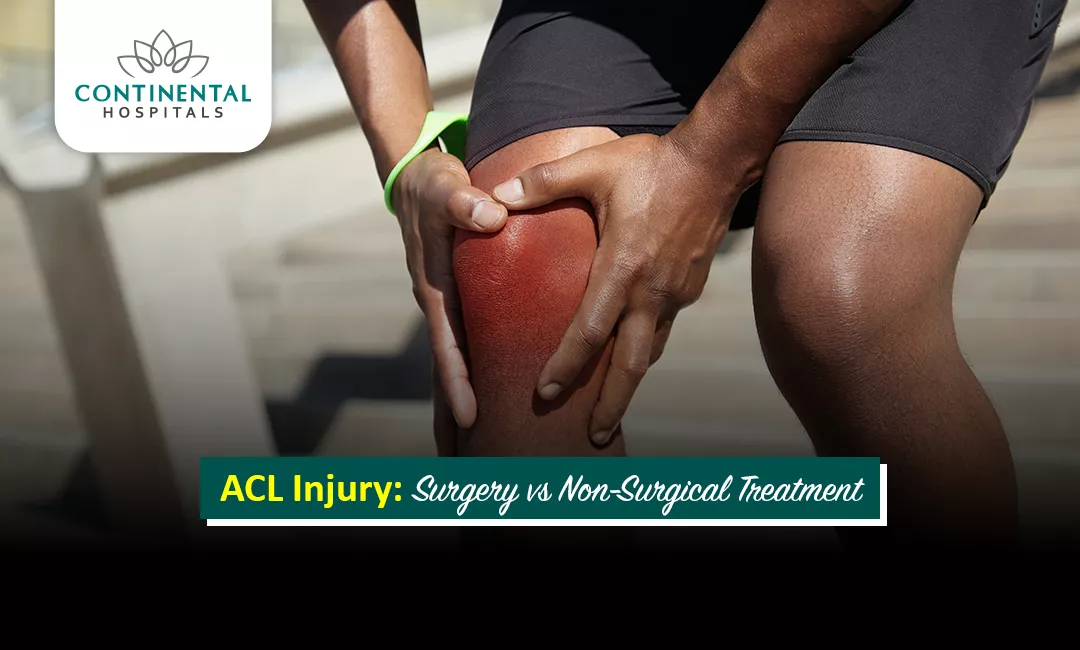
An ACL tear or sprain is a type of injury involving one of the four major ligaments in the knee – the anterior cruciate ligament (ACL). It causes a stretch, partial, or complete tearing of the ligament. As part of the knee joint, the ACL helps with stability and control during activities such as running, jumping, and rapid changes in direction. The injury occurs among active and sporting individuals due to sudden movement or accident.

The symptoms include knee pain, swelling, difficulty walking, and knee buckling, among others. The treatment methods for the condition depend on the severity of the case and may range from physical therapy and lifestyle changes to surgery. How do you choose between ACL surgery vs non-surgical treatment? This article will explain both sides of the story.

Common Symptoms of ACL Tear?

How can you tell whether your ACL is torn? There could be various symptoms, and they can either occur immediately or in a few hours after the injury. These are common ACL tear symptoms:

  • Popping sound: A popping sound usually occurs when the ligament tears.
  • Knee swelling: This symptom can arise within a few hours after the injury.
  • Severe knee pain: It will be challenging to stand or walk because of severe pain.
  • Knee instability: Walking may be uncomfortable due to knee weakness.
  • Limited motion: It may be hard to flex the knee.
  • Pain when bearing weight: Weight-bearing activities can make the injured knee hurt.

Visit the Best Orthopedic Specialists in Hyderabad at Continental Hospitals, Hyderabad, for expert bone, joint, and musculoskeletal care.

What Are the Differences between ACL Surgery and Non-Surgical Management?

Does the injury necessarily require surgical management? No. It depends on many factors such as the degree of damage, knee stability, activity level, age, and health.

The treatment goal is to relieve symptoms and restore function and the ability to resume your usual activities.

1. What Is Non-Surgical Management of ACL Injury?

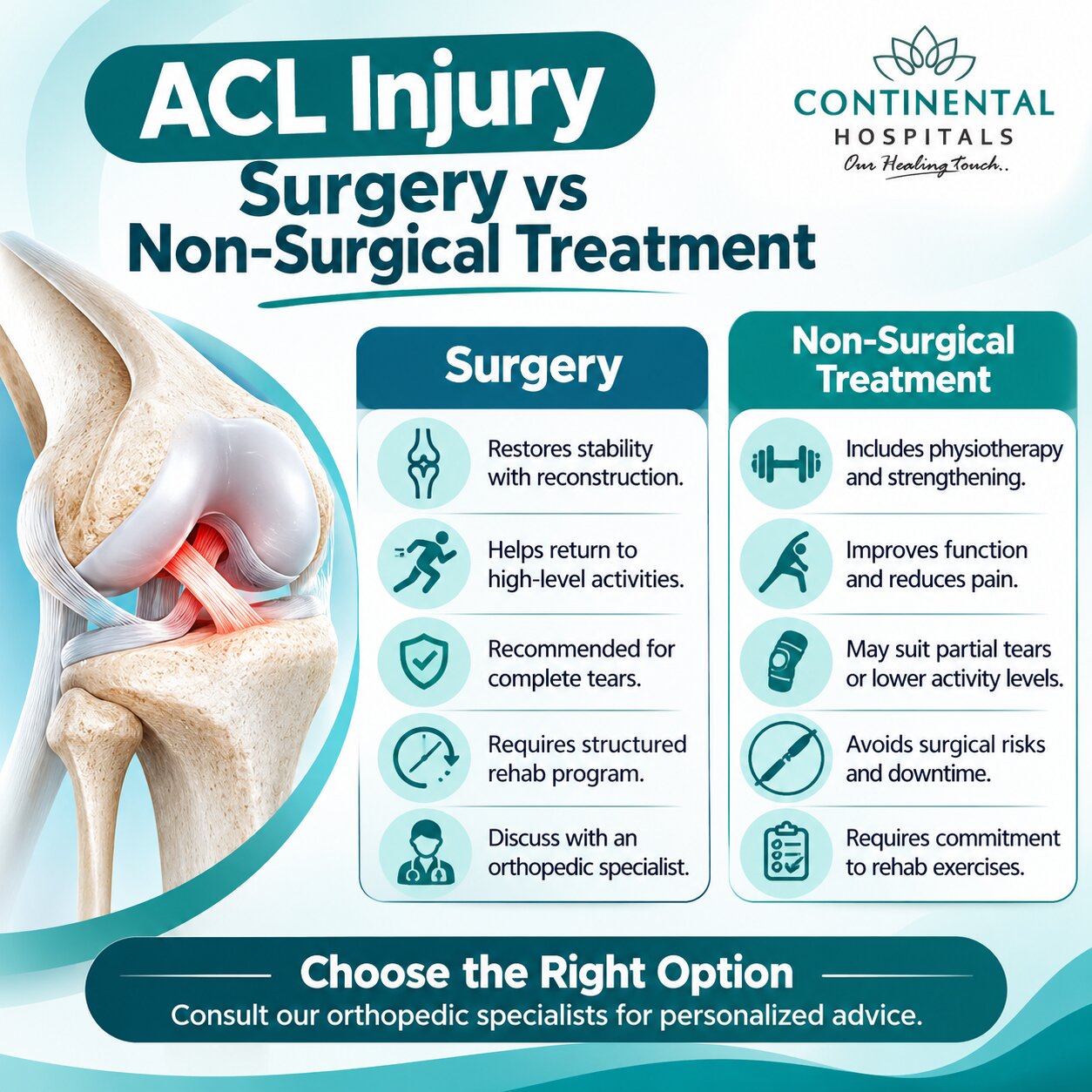
The non-surgical approach may be appropriate for patients with partial ACL injury, stable knees, lower physical activity needs, or those who are not engaged in sports activities requiring sudden turns and jumps.

The procedure may involve:

  • Rest and reduction of physical activities: avoid doing exercises that put too much stress on the injured knee.
  • Physiotherapy: Physical exercises help to build up the muscles around the knee and increase stability.
  • Knee support: a knee brace may provide additional support, if needed.
  • Pain relief: medicines may be taken to ease pain and inflammation.
  • Physical therapy: gradual exercises will help to increase mobility, coordination, and muscle tone

ACL injury without surgery may help some patients to restore the function of their knee joints.

Second Opinion

2. Under What Circumstances Is Surgery for ACL Reconstruction Indicated?

Under what circumstances is ACL reconstruction surgery indicated? Surgery may be indicated for individuals with torn ACLs, recurrent knee instability, or inability to resume participating in physical activities and sports.

The surgery involves replacing the torn ligament with a graft that comes from either the same individual or a donor. This surgery is often done through arthroscopy, a minimally invasive technique.

Surgery can help you:

  • Maintain knee stability.
  • Provide additional support during physical activity.
  • Prevent recurrent instances of your knee giving way.
  • Return to sports after undergoing rehabilitation.
  • Gain functional stability as a selected patient.

Surgery may not always be necessary or even appropriate for every ACL tear. Consultation with an orthopedic doctor is required before considering surgery.
How Long Is the ACL Injury Recovery Period?

How long does recovery take when you have an ACL injury? The recovery time will depend on the seriousness of the injury and the treatment procedure.

  • In case of non-surgical recovery: This could take weeks or months, depending on factors like stability, strength, and the success of rehabilitation.
  • After ACL reconstruction: This usually takes about 9-12 months or even longer.
  • Physiotherapy: It plays a vital role in gaining back your strength, balance, flexibility, and movement of the knees.

It is important that you follow all the doctor's advice and complete the rehabilitation period.

Need an Appointment?

Can ACL Tear Heal Without Surgery?

Is an ACL tear capable of healing naturally? While a torn ACL cannot usually reconnect and heal as other tissues do, there are people who have been able to restore good knee function with the help of well-designed physiotherapy and muscle strengthening.

Whether or not an ACL injury is treated surgically will depend on the following conditions:

  • If it is a partial or full tear.
  • If the knee is stable enough for day-to-day activities.
  • The presence of any other injuries to the knee.
  • The individual’s physical activity and goals.
  • Physiotherapy results.

A specialist should determine what treatment options are applicable.

Why Prefer Continental Hospitals for ACL Injury Management?

Why is it important to choose a good hospital for ACL injury treatment? Diagnosis, orthopedic treatment, modern surgical facilities, and rehabilitation all form an important part of knee management.

Continental Hospitals in Hyderabad offers a complete range of orthopedic services backed up by experienced professionals, advanced diagnostic capabilities, modern surgical equipment, and rehabilitation programs.

The hospital is a JCI, NABH, and QAI accredited hospital. This is because the hospital maintains high-quality health care standards.

Patients suffering from ACL injury can get personalized treatment depending upon their knee condition, functional needs, and desired outcome.

Conclusion

Is ACL surgery superior to non-surgical treatment? The answer is not universal; in some cases, non-surgical methods such as physiotherapy might be sufficient, while in other cases, ACL reconstructive surgery would be necessary to improve the stability of the knee joint.

Early detection and proper treatment will allow patients to avoid any future complications and enable a smooth transition back into their usual routine. In case you experience knee pain, swelling, instability, or difficulty walking due to an injury, contact our best orthopedic surgeon in Hyderabad at Continental Hospitals, Hyderabad.

Frequently Asked Questions

An ACL injury is damage to the anterior cruciate ligament in the knee. This ligament connects the thigh bone to the shin bone. It helps maintain knee stability during movement. ACL injuries commonly occur during sports activities. Sudden stops, jumping, and changing directions can cause this injury. A direct blow to the knee may also damage the ligament. Some people experience a popping sound when the injury occurs. Knee pain and swelling are common symptoms. The knee may feel unstable or give way while walking. Severe injuries can make it difficult to bear weight. An ACL tear can be partial or complete. Early medical evaluation helps identify the extent of the damage. An orthopaedic specialist can recommend suitable treatment based on the injury.
Some ACL injuries can be managed without surgery. This approach may be suitable for partial tears or selected complete tears. It is generally considered when the knee remains functionally stable. Patients with lower physical activity demands may also benefit. Non-surgical treatment usually begins with rest and swelling management. Physiotherapy plays an important role in recovery. Exercises help strengthen the muscles surrounding the knee. These exercises also improve balance and joint stability. A knee brace may be recommended in certain cases. Recovery time varies depending on the severity of the injury. Some patients may continue experiencing knee instability. Repeated episodes of instability can increase the risk of additional knee damage. Regular follow-up with an orthopaedic specialist is important. Treatment should be based on individual needs and activity goals.
ACL surgery may be recommended for patients with significant knee instability. It is commonly considered for complete ACL tears. People who participate in high-impact sports may need surgical treatment. Surgery may also be advised when the knee repeatedly gives way. Associated meniscus or ligament injuries can influence the decision. An orthopaedic surgeon evaluates the extent of ligament damage. Physical activity requirements are also considered. MRI scans may help assess the injury and associated damage. ACL reconstruction is the commonly performed surgical procedure. It involves replacing the damaged ligament with a tissue graft. The procedure aims to restore knee stability. Surgery is usually followed by a structured rehabilitation programme. Not every ACL tear requires an operation. A specialist can determine whether surgery is appropriate.
ACL surgery and physiotherapy are two different approaches to managing ligament injuries. ACL surgery involves reconstructing the damaged ligament. A tissue graft is used to replace the torn ligament. The procedure aims to improve knee stability. Physiotherapy focuses on strengthening the muscles around the knee. It also improves flexibility, balance, and movement. Non-surgical treatment may help selected patients regain functional stability. Surgery may be preferred for patients with persistent instability. Both treatment approaches require rehabilitation exercises. Physiotherapy is essential after ACL reconstruction. Recovery depends on injury severity and individual progress. The patient's age and activity level also influence treatment decisions. Associated knee injuries may affect the recommended approach. An orthopaedic specialist can explain the advantages and limitations of both options.
ACL recovery time varies depending on the injury and treatment approach. Non-surgical recovery may take several weeks to months. Physiotherapy is important for restoring knee strength and movement. Patients need to follow their prescribed exercise programme. Recovery after ACL reconstruction generally takes several months. Many patients require around nine to twelve months before returning to competitive sports. The exact timeline depends on individual recovery. Swelling and pain should gradually improve. Muscle strength and knee flexibility need to be restored. Balance and coordination exercises are also important. Returning to sports too early can increase the risk of another injury. Medical assessments help determine recovery progress. Patients should follow their specialist's advice before resuming physical activities.
Some people can walk with an ACL tear. However, the ability to walk does not mean the ligament is healthy. Partial ACL tears may cause mild or moderate instability. Complete tears can also allow walking in some individuals. Pain and swelling may make movement difficult. The knee may feel unstable during sudden movements. Walking on an unstable knee can increase the risk of further injury. Avoid running, jumping, and twisting activities until medically assessed. A doctor may recommend temporary support or a knee brace. Crutches may be necessary when weight-bearing is painful. An MRI scan may help confirm the extent of the injury. Treatment depends on knee stability and associated damage. Consult an orthopaedic specialist for an accurate diagnosis. Do not ignore persistent pain or repeated episodes of knee giving way.
An untreated ACL tear can lead to ongoing knee instability. Some patients may experience repeated episodes of the knee giving way. This can make walking and daily activities difficult. Sports involving sudden movements may become challenging. Repeated instability can increase the risk of meniscus injuries. Additional cartilage damage may also occur. Some patients develop persistent knee pain and swelling. Long-term joint damage may increase the risk of early osteoarthritis. However, complications do not occur in every patient. Some people can manage their injury with structured rehabilitation. Treatment decisions depend on knee stability and activity requirements. Early assessment helps identify associated injuries. An orthopaedic specialist can recommend an appropriate management plan. Timely treatment can help protect long-term knee function.
Patients can consult an orthopaedic specialist for ACL injury treatment in Hyderabad. Continental Hospitals provides orthopaedic evaluation and knee injury care. The treatment approach depends on the severity of the ligament injury. Doctors may recommend clinical examination and MRI investigations. These assessments help identify ligament damage and associated knee problems. Treatment options may include physiotherapy and non-surgical management. ACL reconstruction surgery may be considered when medically necessary. The orthopaedic team evaluates knee stability and physical activity requirements. Rehabilitation is an important part of recovery. A structured physiotherapy programme helps restore strength and mobility. Patients receive treatment recommendations based on their individual condition. Early diagnosis can help prevent further knee complications. Consult the orthopaedic team at Continental Hospitals, Hyderabad, for personalised ACL injury care.
Disclaimer: The information provided in this blog is intended for general knowledge and informational purposes only, and does not constitute medical advice. Always consult with a qualified healthcare professional for any medical concerns or before making any decisions about your health.

Get in Touch With Us

Whether you are from India or abroad, we are here to help you with your medical queries. Please fill out the form below and our team will connect with you shortly.

  • ✔ Quick response from our medical experts
  • ✔ Secure data handling & privacy
  • ✔ Easy upload for reports & documents
banner_image

Chat with our medical experts on WhatsApp for quick assistance and hassle-free appointment booking

Recent Posts