post-title

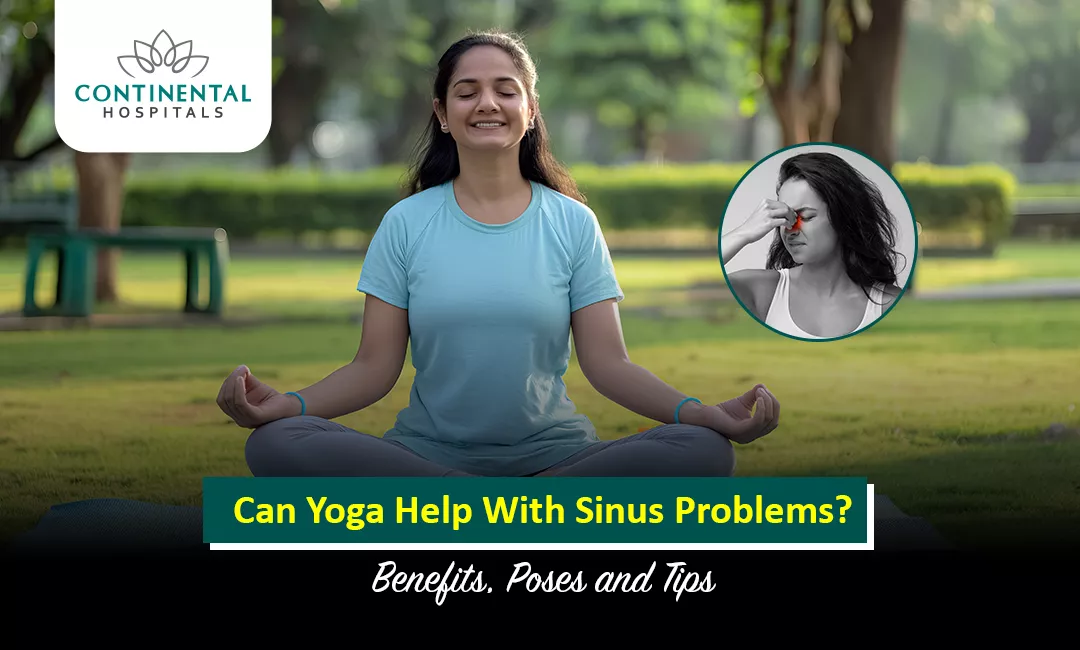
Can Yoga Help With Sinus Problems? Benefits, Poses and Tips

Written by - Editorial Team
Medically Reviewed by - Dr Dushyanth Ganesuni

Yes, gentle yoga may help some people manage sinus symptoms by encouraging relaxation, supporting comfortable breathing, and reducing the feeling of nasal congestion. Yoga for sinus relief can be used as a complementary practice along with appropriate medical care.

Sinus problems can cause a blocked or stuffy nose, facial pressure, headache, postnasal drip, and difficulty breathing comfortably. While yoga cannot cure an infection or replace treatment prescribed by a doctor, yoga for sinus problems may help improve comfort when practiced safely.

How can yoga help with sinus congestion?

Certain gentle yoga practices focus on breathing, relaxation, and controlled movement. These may help you feel more comfortable when your nose feels blocked.

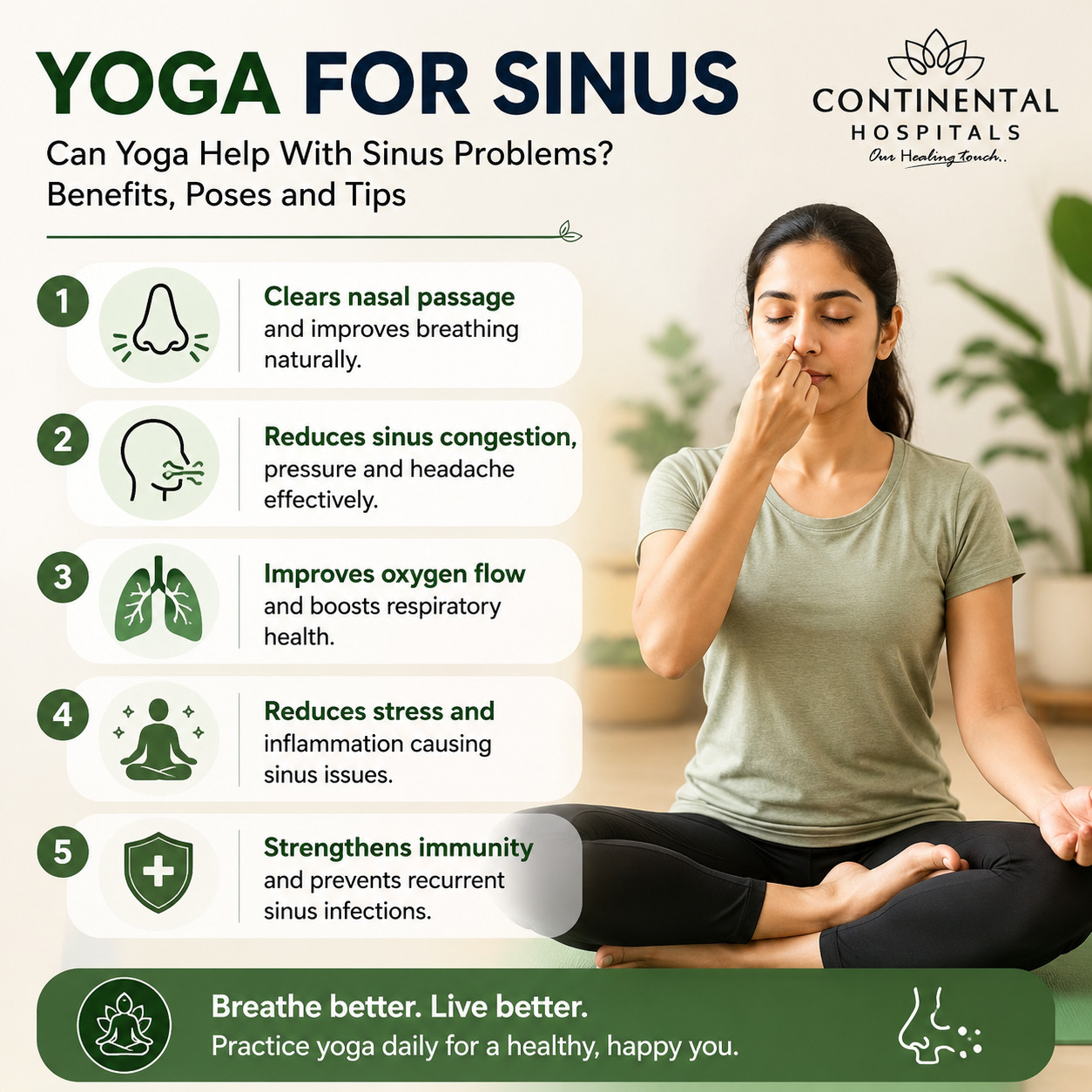
Yoga for sinus congestion may offer benefits such as:

  • Supporting relaxed and controlled breathing
  • Helping reduce stress and muscle tension
  • Encouraging better breathing awareness
  • Supporting relaxation when sinus symptoms cause discomfort
  • Helping with the feeling of nasal blockage
  • Supporting overall respiratory comfort

The benefits can vary from person to person. Yoga for sinus relief should be considered supportive care rather than a replacement for medical treatment.

Visit the ENT Specialist Department at Continental Hospitals, Hyderabad.

Which yoga poses may help with sinus symptoms?

Some gentle poses may be included in a routine for yoga for sinusitis, provided they feel comfortable and do not worsen symptoms.

1. Child's Pose

Can Child's Pose help with relaxation?

Child's Pose is a gentle resting position that can help relax the body and reduce tension. Breathe slowly and comfortably while holding the position. Avoid staying in the pose if it increases facial pressure or discomfort.

Second Opinion

2. Cat Cow Pose

Can Cat-Cow Pose support comfortable breathing?

Cat-Cow Pose involves gentle movement of the spine with coordinated breathing. It can help release physical tension and encourage mindful breathing. Move slowly rather than forcing the movement.

3. Bridge Pose

Can Bridge Pose be useful during a gentle yoga routine?

Bridge Pose can gently open the chest and encourage controlled breathing. It should be performed comfortably without holding the breath or straining.

4. Seated Breathing

Can breathing exercises support sinus relief through yoga?

Slow, comfortable breathing can help promote relaxation. Focus on breathing naturally without forcing air through a blocked nose. If nasal breathing is difficult, do not strain to maintain it.
Need an Appointment?

Can yoga provide sinus headache relief?

Gentle yoga may help when headache discomfort is associated with stress, muscle tension, or the general discomfort of congestion. Relaxation and controlled breathing may make some people feel more comfortable.

However, not every headache is caused by sinus problems. Migraine and other headache conditions can sometimes feel similar to sinus headaches. Persistent, severe, or unusual headaches should be evaluated by a doctor rather than managed only with yoga for sinus relief.

What tips should you follow when practicing yoga for sinus relief?

  • Choose gentle movements instead of intense yoga.
  • Stop if a pose increases facial pressure or a headache.
  • Keep your breathing comfortable and natural.
  • Avoid forcing nasal breathing when your nose is blocked.
  • Stay hydrated as part of your general self-care.
  • Practice in a clean and comfortable environment.
  • Do not depend on yoga alone when symptoms are severe or persistent.
  • Follow your doctor's advice if you have chronic sinusitis or another respiratory condition.

When should you see a doctor for sinus problems?

You should consider seeing an ENT specialist if sinus symptoms continue, repeatedly return, or interfere with sleep and daily activities. Medical evaluation is especially important when you have severe facial pain, persistent fever, swelling around the eyes, vision changes, breathing difficulties, or symptoms that are getting worse.

A doctor can determine whether your symptoms are related to sinusitis, allergies, nasal blockage, migraine, or another condition and recommend appropriate treatment.

Why choose Continental Hospitals for sinus care?

Continental Hospitals, Hyderabad, is a multispecialty tertiary and quaternary care hospital with JCI and NABH accreditation, reflecting its commitment to recognized standards of quality and patient safety. The hospital provides specialized medical services supported by advanced infrastructure and experienced clinical teams.

For patients looking for the best hospital in Hyderabad for persistent sinus or ENT concerns, Continental Hospitals provides access to specialist consultation and diagnostic facilities within a comprehensive healthcare setting. Its patient-centered approach focuses on appropriate evaluation and personalized care.

Should you use yoga as part of your sinus care?

Yes, gentle yoga may be a useful supportive practice for some people with sinus discomfort. It may encourage relaxation, comfortable breathing, and better awareness of the body. However, yoga for sinus problems should not replace medical evaluation or prescribed treatment.

If sinus symptoms are frequent, severe, or persistent, consulting an ENT specialist is important to identify the underlying cause and choose the right treatment.

Conclusion

Gentle yoga and breathing practices may help some people feel more relaxed and comfortable when dealing with sinus congestion or pressure. Poses such as child's pose, cat-cow pose, bridge pose, and comfortable breathing exercises can be included in a gentle routine.

However, yoga for sinusitis is a supportive approach, not a cure. Persistent sinus problems need proper medical assessment to identify the cause and prevent recurring symptoms.

If you suffer from frequent sinus congestion, facial pressure, recurring headaches, or breathing difficulties, consult our best ENT specialist in Hyderabad at Continental Hospitals, Hyderabad, for appropriate evaluation and personalized treatment.

Related Blogs:

  1. Sinus Infection? It Was Rare Cancer in a 33-Year-Old
  2. Home Remedies for Sinusitis Relief

Frequently Asked Questions

Yoga may help some people manage sinus-related discomfort. Gentle breathing exercises can encourage controlled nasal breathing. Certain practices may help improve relaxation and reduce stress. Stress can sometimes make the experience of congestion feel worse. Yoga may also support overall respiratory awareness and breathing control. Some gentle poses encourage comfortable chest and upper-body movement. However, yoga does not remove the underlying cause of sinusitis. It should not replace treatment recommended by a healthcare professional. People with allergies may still need appropriate allergy management. Acute infections may require medical evaluation and treatment. Avoid forceful breathing exercises when the nose is completely blocked. Choose gentle practices based on your comfort and health condition.
Several gentle yoga poses may be comfortable during mild congestion. Cat-Cow Pose encourages gentle movement through the spine and chest. Child’s Pose can promote relaxation and comfortable breathing. Bridge Pose may encourage gentle chest opening. Supported Forward Fold can help create a calming practice. Reclining poses may also help you relax while focusing on breathing. The goal is comfort rather than forcing sinus drainage. Move slowly and avoid positions that increase pressure in your head. Stop if you experience dizziness, pain, or worsening congestion. Breathing should remain easy and comfortable throughout the practice. Yoga poses should complement, not replace, appropriate medical care. A qualified yoga instructor can help adapt poses when needed.
Gentle breathing exercises may help you become more aware of your breathing. They can encourage slow and controlled breathing through the nose. Relaxed breathing may reduce the feeling of breathing difficulty caused by stress. Some people find breathing exercises soothing when experiencing mild congestion. However, they cannot physically remove mucus from blocked sinuses. Avoid aggressive breathing techniques when you have significant nasal blockage. Forceful breathing may feel uncomfortable or worsen irritation. Start with slow breaths that feel natural and effortless. Stop the exercise if you feel light-headed or uncomfortable. Breathing practices should be adjusted according to individual tolerance. People with respiratory conditions should seek professional guidance when appropriate. Yoga breathing is best viewed as a supportive wellness practice.
Yoga may support comfortable movement and relaxation during sinus discomfort. Some people believe certain positions help them feel less congested. However, strong evidence that yoga directly improves sinus drainage is limited. Sinus drainage mainly depends on normal sinus and nasal function. Hydration can help maintain healthy mucus consistency. Saline nasal rinsing may be recommended for certain sinus conditions. Medical treatment may be necessary when infection or inflammation is present. Yoga should not be used to force mucus out of the sinuses. Avoid prolonged inverted poses if they increase facial pressure. Gentle movements are generally more appropriate when you feel congested. Pay attention to how your body responds during each pose. Persistent or severe symptoms should be evaluated by a healthcare professional.
Gentle yoga may be comfortable for some people with mild symptoms. Your energy level should guide how much activity you perform. Rest may be more appropriate when you have fever or significant weakness. Avoid strenuous workouts when you are acutely unwell. Gentle stretching and relaxation may be easier on the body. Avoid breathing practices that require forceful inhalation or exhalation. Stop if exercise causes headache, dizziness, breathlessness, or worsening pain. Stay adequately hydrated during recovery. Yoga should not delay medical care for a suspected bacterial infection. Seek professional advice if symptoms are severe or persistent. People with recurrent sinus infections may need evaluation for underlying causes. Always choose a practice appropriate for your current health condition.
Yoga may help some people manage headaches associated with tension or stress. Relaxation techniques can help reduce muscle tension around the neck and shoulders. Slow breathing may also promote a calmer physical state. Some sinus-related headaches are actually caused by other types of headache. Therefore, identifying the underlying cause is important. Yoga cannot diagnose or treat the cause of recurring headaches. Avoid poses that increase head pressure or make pain worse. Gentle seated or restorative poses may be more comfortable. Hydration and adequate rest can also support recovery. Persistent headaches should not automatically be attributed to sinus problems. Seek medical advice when headaches are severe, frequent, or unusual. A healthcare professional can help determine the appropriate treatment.
There is no single yoga schedule suitable for everyone with sinus problems. A gentle routine can be practised according to your comfort level. Short sessions may be easier when you are experiencing congestion. Consistency may be more useful than performing intense sessions occasionally. You can begin with gentle stretching and relaxed breathing. Avoid exercising through significant fatigue or acute illness. Increase duration gradually as your symptoms and energy improve. Your routine should never worsen facial pressure or breathing discomfort. Rest days are appropriate when your body needs recovery. A qualified instructor can help develop a suitable routine. People with chronic sinus symptoms should also address the underlying cause. Yoga works best as a supportive addition to an overall care plan.
See a doctor if sinus symptoms are severe, persistent, or repeatedly returning. Medical evaluation is important when symptoms interfere with daily activities. Seek advice for significant facial pain or pressure. A high fever or worsening symptoms may also require medical attention. Breathing difficulties should not be managed with yoga alone. Recurring sinus problems may require assessment for allergies or other causes. A healthcare professional can determine whether further testing is needed. Treatment depends on whether the problem involves infection, allergy, or inflammation. Yoga can be continued as a supportive practice when medically appropriate. Do not use yoga as a substitute for prescribed treatment. Early evaluation can help prevent persistent symptoms from being overlooked. Always seek urgent care for severe or rapidly worsening symptoms.
Disclaimer: The information provided in this blog is intended for general knowledge and informational purposes only, and does not constitute medical advice. Always consult with a qualified healthcare professional for any medical concerns or before making any decisions about your health.

Get in Touch With Us

Whether you are from India or abroad, we are here to help you with your medical queries. Please fill out the form below and our team will connect with you shortly.

  • ✔ Quick response from our medical experts
  • ✔ Secure data handling & privacy
  • ✔ Easy upload for reports & documents
banner_image

Chat with our medical experts on WhatsApp for quick assistance and hassle-free appointment booking

Recent Posts