.webp)
Celiac disease is a disorder in children wherein the immune system responds to gluten, a protein found in rye, barley, and wheat. Such response damages the small intestine and prevents the body from assimilating the significant nutrients ingested through food. In turn, it may lead to nausea, problems with digestion, and lack of growth.
It is crucial to identify the first signs of celiac disease in children, as the symptoms differ from one child to another. For instance, some kids suffer from abdominal pain, bloating, or diarrhea, while others may feel tired, irritable, or experience a lack of normal numerical growth. Given that the symptoms can be similar to those of other diseases, parents are recommended to take their kids to a doctor if they notice any sustained changes in their children's health.
What Are the Common Symptoms of Celiac Disease in Children?
What symptoms of celiac disease should parents be aware of in children? Symptoms may manifest in the form of digestive disturbances and growth issues, among many others. Children exhibit symptoms at different stages of life.
Common symptoms of celiac disease include:
- Frequent diarrhea: Children may have loose stools or frequent bowel movements due to the inability of the intestines to absorb nutrients properly.
- Abdominal pain: Children may complain about experiencing stomach pain or cramping.
- Bloating and gas: The stomach may feel bloated or uncomfortable after eating.
- Constipation: Sometimes children may suffer from constipation instead of diarrhea.
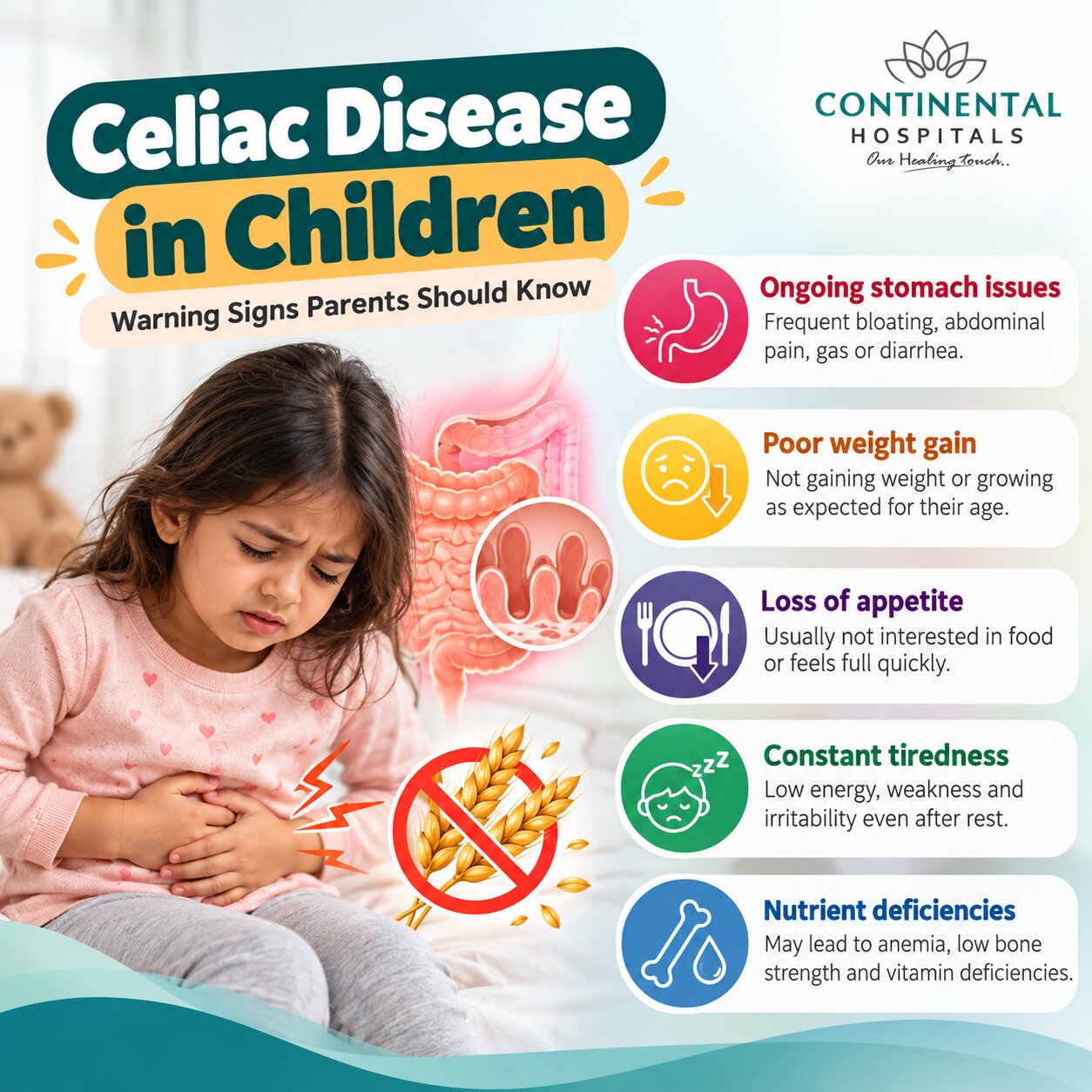
- Poor weight gain: The failure to absorb nutrients may prevent a child from gaining weight as needed.
- Slow growth: The child may also grow at a slower pace than expected.
- Tiredness and weakness: Nutrient absorption problems may result in loss of strength and fatigue.
- Irritation: Young children may display unusual irritation and behavior changes.
Visit the Pediatric Department at Continental Hospitals, Hyderabad, for expert pediatric care and personalized treatment.
How to Identify the Early Symptoms of Celiac Disease in Toddlers?
If you are looking to recognize celiac disease in toddlers, it may be somewhat difficult, as children are not able to verbalize any issue they have clearly. Hence, parents can only notice some change in food habits, bowel movements, and growth in the child.
The early symptoms can be:
- swelling or bloating of stomach
- appetite loss or trouble in eating
- recurring constipation or diarrhea
- slow weight gain or loss of weight
- constant irritability or fussiness
delayed growth as compared to age expectations.
There are cases where children can suffer from pale, serious, and foul-smelling stool. If these symptoms persist, parents can see the doctor or pediatrician to evaluate the child.

Does Celiac Disease Affect Growth and Development in Children?
Yes. Childhood celiac disease can prevent children from absorbing vital nutrients such as iron, calcium, and certain vitamins that are necessary for normal growth, bone health, and brain development.
When celiac disease is left untreated, children may experience iron deficiency anemia, poor bone health, delayed puberty, and growth issues. Other children may face problems with deficiency of concentration or tiredness.
An early diagnosis of celiac disease means that the child receives the proper treatment for nutrient absorption.
How is the diagnosis of celiac disease carried out in children?
What are the methods used by the doctors to diagnose this condition? This process usually starts with an analysis of the patient’s medical history and carrying out blood tests to look for certain specific antibodies.
After that, the doctor can perform other tests depending on his findings. For example, it may include endoscopy, where small intestine biopsies are taken.
It is also important for parents to remember that they should not remove any gluten products before the tests are conducted.
How Is Pediatric Celiac Disease Treated?
Is pediatric celiac disease treatable? In spite of the lack of a cure, it is often possible to manage the condition through adherence to a strict gluten-free diet. By eliminating gluten, further damage to the intestines can be prevented, thereby enabling healing to occur.
Some important actions include:
- Avoid foods that include wheat, barley, and rye.
- Eat naturally gluten-free foods, such as rice, fruits, vegetables, beans, eggs, and unprocessed meats.
- Read labels for any gluten-containing ingredients.
- Avoid cross-contact between gluten-free products and foods that contain gluten.
- Follow any medical recommendations regarding supplements when nutritional deficiencies are detected.
- See the doctor regularly to track growth, symptoms, and nutritional health.
A pediatrician or nutritionist can assist families with creating a nutritious diet that meets the requirements of the growing child.
Why Seek Care from Continental Hospitals for Kids’ Health?
Why is professional care really needed for cases when a child shows signs of chronic gastro symptoms or seeks opinions about celiac disease? Timely diagnosis, dietary recommendations, and periodic examinations of the child help to reveal the problem and support the well-being of the child.
Continental Hospitals in Hyderabad offers an extensive medical service backed up by qualified professionals, modern diagnostic equipment, and a multidisciplinary approach. The hospital has been accredited both nationally and internationally, for instance, by the National Accreditation Board for Hospitals and Healthcare Providers (NABH) and by Joint Commission International (JCI), which proves its commitment to the acknowledged standards of quality and patient safety level.
Parents can consult a pediatric specialist in cases of chronic gastro symptoms, growth concerns, and food-related conditions of their child.
Conclusion
Celiac disease in children can cause digestive discomfort, poor nutrient absorption, tiredness, and delayed growth. Because its symptoms may resemble other common childhood conditions, persistent warning signs should not be ignored. Early diagnosis and a strict gluten-free diet can help protect intestinal health and support normal growth.
If your child experiences repeated stomach pain, bloating, diarrhea, unexplained tiredness, or poor weight gain, consult our best pediatrician in Hyderabad at Continental Hospitals, Hyderabad, for appropriate evaluation and guidance. Timely medical care can help identify the cause of your child's symptoms and support their long-term health.
Related Blogs: