post-title

Do Wisdom Teeth Need to Be Removed? Signs You Shouldn’t Ignore

Written by - Editorial Team
Medically Reviewed by - Dr Stuti Goyal

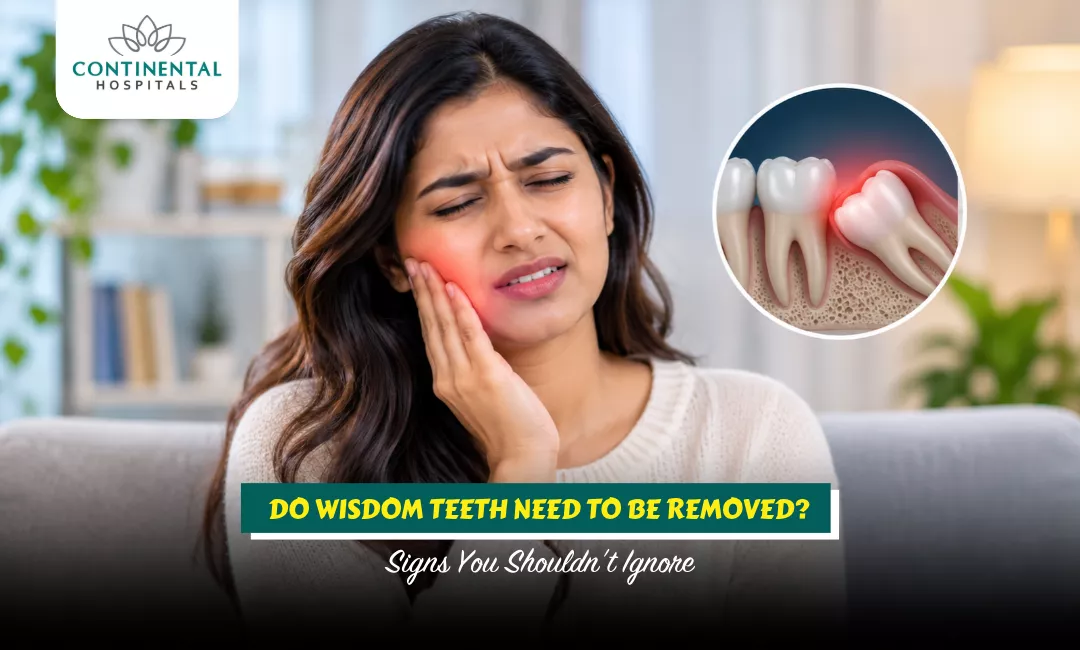
Wisdom teeth are known as the final set of permanent teeth that erupt during late teenage years or early adulthood. The number of wisdom teeth ranges from one to four and appear on the far back area of the mouth, both in the top and bottom jaw. Some people get their wisdom teeth without any issues while others suffer from pain, swelling, infection, or inability to open their mouth due to wisdom teeth.

Do all wisdom teeth require extraction? No, as long as these teeth erupt normally, remain healthy, and do not have an impact on the other teeth around them, they do not need to be extracted. However, whenever there is no room in the mouth for them or they erupt improperly, they can lead to a number of problems in the mouth.

How Can You Tell When Wisdom Teeth Should Be Removed?

Are you experiencing any signs that your wisdom teeth need removing? There are several symptoms you should be on the lookout for when it comes to the possibility of impacted, infected, or erupting wisdom teeth.

Symptoms that might show up include:

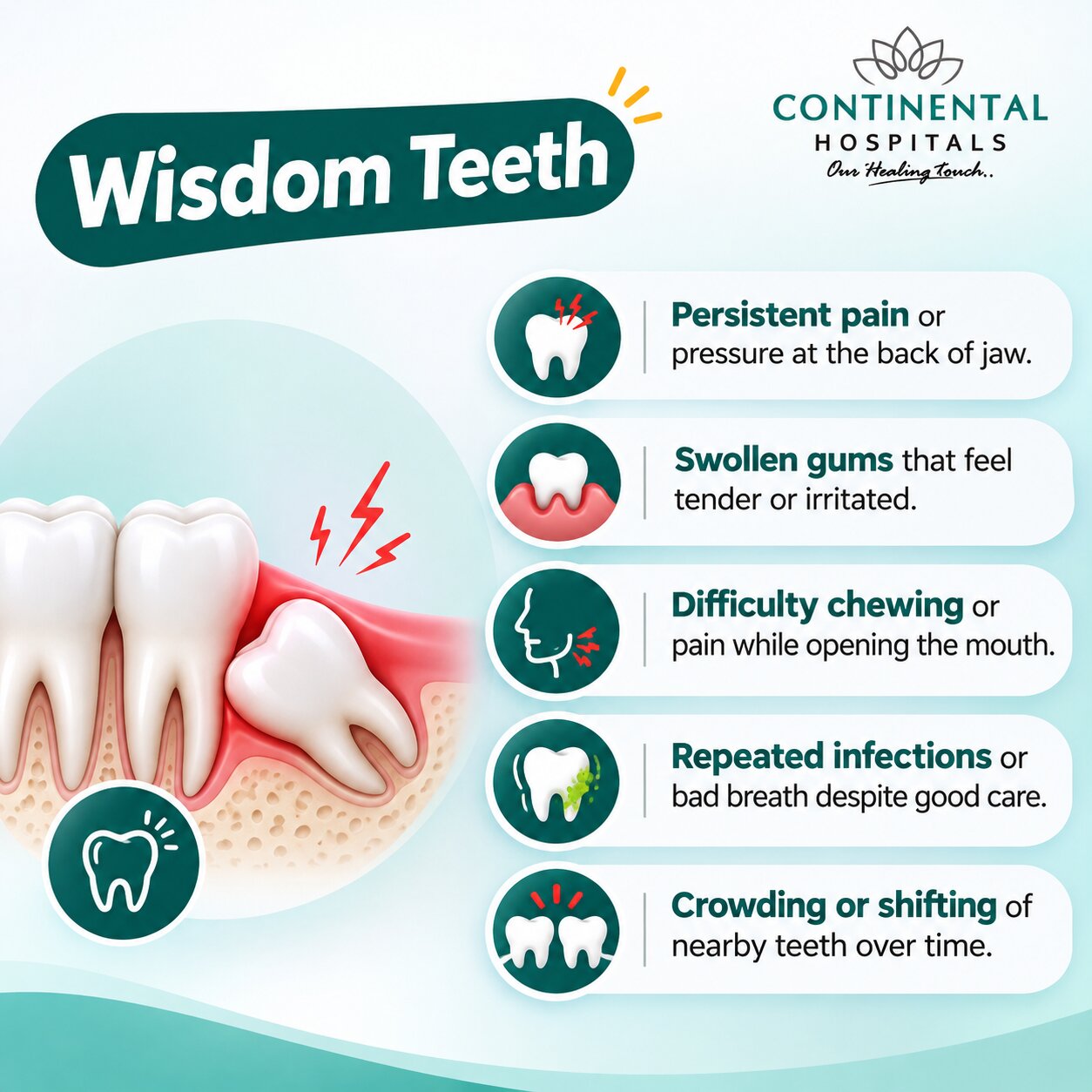
1. Pain associated with wisdom teeth: Back pain in your mouth could be caused by pressure on the area where the wisdom tooth erupts.

2. Gums around the wisdom tooth that are swollen and/or bloody: These may be signs of irritation around your partially erupted wisdom tooth.

3. Pain while opening your mouth or eating: Any kind of irritation around your wisdom teeth will cause discomfort in these areas.

4. Halitosis: Bits of food can get stuck near your wisdom teeth and lead to halitosis.

5. Jaw pain: Your jaw can ache due to a pressure build-up.

Second Opinion

6. Frequent gum infections: An infection in this area can arise due to bacteria getting stuck between partially erupted wisdom teeth.

7. Cheek swelling: This may mean the presence of swelling in your gums or other tissues surrounding the wisdom teeth.
What Are Impacted Wisdom Teeth?

When a wisdom tooth fails to develop properly, what could happen? Impacted wisdom teeth arise in situations where there is not enough room for proper development of the teeth. The tooth can be either partially or entirely trapped under the gums and/or jawbone.

Types of impacted wisdom teeth are:

  • Mesial impaction: In this case, the tooth develops in a tilted position toward the adjacent tooth.
  • Distal impaction: This means that the tooth grows in a way that it is tilted toward the back portion of the mouth.
  • Horizontal impaction: This means that the tooth develops in a lateral manner and it touches adjacent teeth.
  • Vertical impaction: The tooth grows vertically but does not come out fully.

Complications That Wisdom Teeth May Bring About

Is it possible that failing to address problematic wisdom teeth will have an adverse effect on your oral health? Indeed, depending on the location and condition of wisdom teeth, they may cause various problems.

Here are some complications that wisdom teeth may cause:

Need an Appointment?

1. Infection of the gums: The bacteria may accumulate around partially grown wisdom teeth.
2. Cavities: It is rather hard to clean the wisdom teeth in the rear parts of the mouth.
3. Damage to the surrounding teeth: The impacted wisdom tooth may exert pressure on the molar.
4. Cysts: Sometimes fluid-filled sacs appear around impacted wisdom teeth.
5. Pain and swelling: Recurrent inflammations may affect daily activity.

Dental examination is recommended in order to detect those problems early on.

Visit the Dentistry Department at Continental Hospitals, Hyderabad, for expert dental care.

How do dentists determine that wisdom teeth need extraction?

Should all wisdom teeth undergo surgery? No, before prescribing a specific course of action, the dentist or an oral surgeon will evaluate the location, condition, and overall state of the teeth.

Among others, it may involve:

  • Checking the teeth and the gum around them.
  • Evaluating such symptoms as pain, swelling, and infections.
  • Performing dental X-rays of the teeth to evaluate their location.
  • Identifying any damage to other teeth.
  • Checking if it is possible to keep the wisdom tooth clean.

If wisdom teeth are healthy, well-located, and easy to maintain, it might be enough to simply monitor their state.

What Takes Place during Wisdom Teeth Extraction?

How is wisdom teeth extraction done? This process depends on whether the tooth is already erupted or impacted.

The tooth can either be extracted with the help of local anesthesia, where the area is numbed, or In cases where the tooth is impacted, an incision will have to be made in the gum in order to extract the tooth. There are instances where the tooth will have to be broken down into smaller pieces in order to facilitate its extraction.

Post-operation guidelines include:

  • Following the dentist’s guidelines strictly.
  • Consuming soft foods in the first few days after extraction.
  • Being gentle with oral hygiene procedures.
  • Not smoking and not using straws.
  • Taking prescribed medication.
  • Going for follow-ups when necessary.

This is all dependent on the complexity of the procedure.

Why Go for Continental Hospitals for Dental and Wisdom Teeth Extraction?

Why should you consider getting the correct hospital while having your wisdom teeth removed? Correct assessment and evaluation help minimize any complication and contribute to good oral hygiene.

Continent Hospital, Hyderabad, provides complete medical as well as surgical facilities that are backed up by experienced specialists, advanced diagnostic facilities, and excellent healthcare facilities. The hospital has several national as well as international healthcare accreditations like JCI and NABH.

With an objective of providing proper evaluation and treatment according to individual cases, Continental Hospitals have adopted a multidisciplinary approach to treatment and care.

Conclusion

Removal of wisdom teeth is not necessary always, but the presence of continuous pain, swollen gums, infection, and improper growth must not be overlooked. It is possible to avoid complications through early diagnosis and preserve your adjacent teeth.

In case you experience any kind of pain due to wisdom teeth, gum infections, jaw pain, and swelling of wisdom teeth, it would be wise to consult our best dentist in Hyderabad at Continental Hospitals, Hyderabad.

Related Blogs:

  1. When a Dental Problem Triggers Head Pain
  2. Dental Implants: Success Rate and Healing Time

Frequently Asked Questions

Wisdom teeth do not always need to be removed. They can remain in place if they grow properly and do not cause any problems. However, removal may be recommended when they cause pain or swelling. Impacted wisdom teeth may grow sideways or remain trapped beneath the gums. This can create pressure on nearby teeth. Partially erupted wisdom teeth can also collect food particles and bacteria. This may increase the risk of gum infections and tooth decay. Some wisdom teeth can damage neighbouring teeth if left untreated. A dentist will examine their position and development before recommending removal. Dental X-rays may help identify hidden problems. Regular dental check-ups can help monitor wisdom teeth. Early evaluation can prevent certain complications. The decision to remove them depends on individual dental health.
Wisdom teeth problems can cause several noticeable symptoms. Pain at the back of the mouth is one common warning sign. Swelling around the gums may also develop. Some people experience redness or tenderness near the affected tooth. Difficulty opening the mouth can indicate inflammation or infection. Food may get trapped around partially erupted wisdom teeth. This can cause bad breath or an unpleasant taste. Pain may sometimes spread towards the jaw or ear. Swollen lymph nodes can also occur with an infection. Some people experience headaches or discomfort while chewing. These symptoms should not be ignored if they persist. A dental examination can identify the underlying cause. Early treatment can help prevent further complications.
Wisdom teeth usually begin to appear between the ages of 17 and 25. They are the last set of permanent teeth to develop. Most adults can develop up to four wisdom teeth. However, some people may have fewer or no wisdom teeth. Their development and eruption timing can vary between individuals. Some wisdom teeth emerge normally without causing discomfort. Others may remain partially or completely trapped beneath the gums. This condition is known as impacted wisdom teeth. The position of the jaw can influence how these teeth develop. Dental X-rays can help identify their location and growth pattern. Not everyone requires wisdom tooth removal during this age period. Regular dental check-ups help monitor their development. A dentist can recommend treatment if complications appear.
Wisdom teeth do not necessarily cause problems when left untreated. However, impacted or partially erupted teeth can lead to complications. Food particles and bacteria may collect around the affected area. This can increase the risk of tooth decay and gum infections. Some people develop a condition called pericoronitis. It causes inflammation around a partially erupted wisdom tooth. Untreated infections may sometimes spread to nearby tissues. Impacted teeth can also damage neighbouring teeth. Cysts may occasionally develop around an impacted wisdom tooth. These problems can affect surrounding bone and dental health. Not every impacted wisdom tooth requires immediate removal. A dentist can assess the risks through an examination and X-rays. Regular monitoring is important when removal is not recommended. Seek dental care if pain, swelling or infection develops.
Wisdom tooth removal is generally performed under local anaesthesia. This helps numb the treatment area during the procedure. Patients may feel pressure or movement but should not experience sharp pain. Sedation or general anaesthesia may be considered in selected cases. The procedure depends on the position and condition of the tooth. Simple extractions may take less time than surgical removal. Some swelling and discomfort are normal after the procedure. Pain can usually be managed with prescribed medication. Applying an ice pack may help reduce swelling. Following the dentist's aftercare instructions supports recovery. Eating soft foods can make chewing more comfortable. Most patients gradually recover over several days. Contact your dentist if pain becomes severe or swelling worsens.
Wisdom tooth removal usually takes around 20 to 60 minutes, depending on the case. The exact duration varies with the position of the tooth. A fully erupted wisdom tooth may be easier to remove. An impacted tooth may require a surgical extraction. The dentist first examines the tooth and reviews dental X-rays. Local anaesthesia is commonly used to numb the area. In some cases, a small incision is made in the gum. The tooth may be divided into smaller sections for easier removal. Stitches may be required after surgical extraction. Patients are usually monitored briefly after the procedure. Mild swelling and discomfort can occur during recovery. Following aftercare instructions helps support healing. Your dentist can explain the expected procedure time based on your condition.
Recovery after wisdom tooth removal usually takes a few days to a couple of weeks. The healing period depends on the complexity of the extraction. Mild pain, swelling and jaw stiffness are common initially. Swelling generally improves within the first few days. Patients should follow their dentist's medication instructions. Soft foods such as curd, mashed vegetables and soups may be easier to eat. Avoid hard, crunchy and very hot foods during early recovery. Do not use straws because suction can disturb the blood clot. Gentle saltwater rinses may be recommended after the first 24 hours. Avoid smoking during the healing period. Maintain oral hygiene without disturbing the extraction site. Contact your dentist if you develop fever, worsening pain or persistent bleeding. Complete healing of the extraction area may take longer.
You should visit a dentist if you experience persistent pain near your wisdom teeth. Swollen or bleeding gums around the back teeth also need attention. Difficulty chewing or opening your mouth should be evaluated. Bad breath or an unpleasant taste may indicate an infection. Repeated swelling around a partially erupted tooth is another warning sign. Do not ignore pain that spreads towards your jaw or ear. A dentist can examine the affected area and recommend appropriate tests. Dental X-rays may be required to check impacted teeth. Early diagnosis can help prevent complications. Some wisdom teeth may only need regular monitoring. Others may require extraction to protect surrounding teeth and gums. Seek urgent dental care if you experience facial swelling, fever or difficulty swallowing. Difficulty breathing or rapidly spreading swelling requires immediate emergency medical attention. Timely dental care helps protect your oral health.
Disclaimer: The information provided in this blog is intended for general knowledge and informational purposes only, and does not constitute medical advice. Always consult with a qualified healthcare professional for any medical concerns or before making any decisions about your health.

Get in Touch With Us

Whether you are from India or abroad, we are here to help you with your medical queries. Please fill out the form below and our team will connect with you shortly.

  • ✔ Quick response from our medical experts
  • ✔ Secure data handling & privacy
  • ✔ Easy upload for reports & documents
banner_image

Chat with our medical experts on WhatsApp for quick assistance and hassle-free appointment booking

Recent Posts