post-title

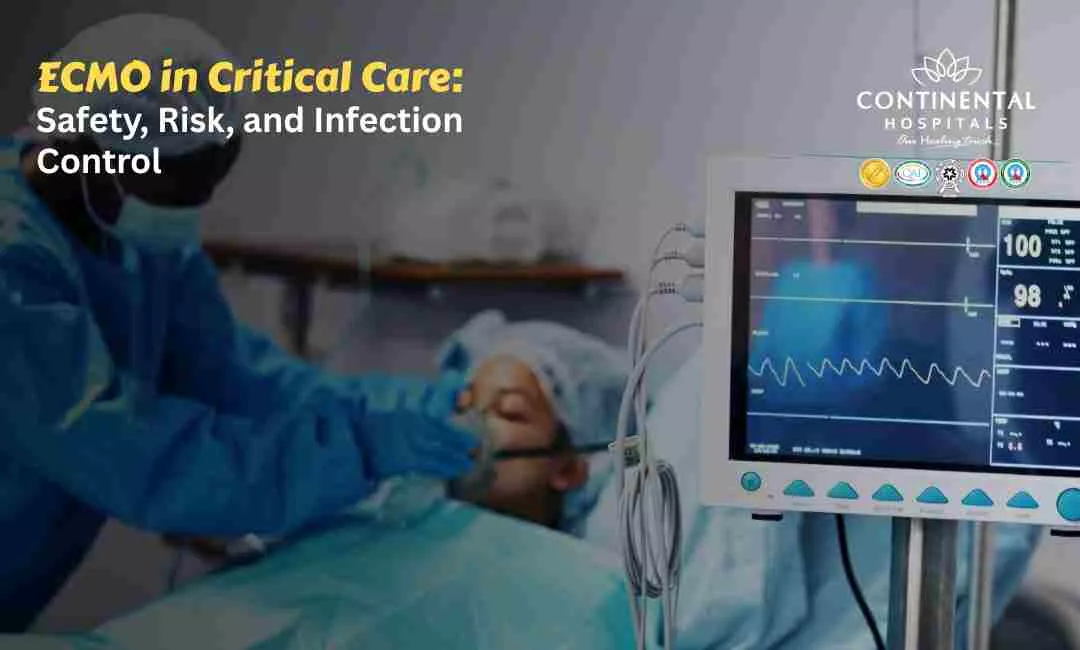
ECMO in Critical Care: Safety, Risk, and Infection Control

Written by - Editorial Team
Medically Reviewed by - Dr Abhisekh Mohanty

Extracorporeal Membrane Oxygenation, or ECMO, is an advanced life-support system used in critical care units to help patients suffering from severe cardiac or respiratory failure. When conventional treatments don't work, ECMO steps in as a bridge to recovery or further treatment. Let’s explore how ECMO works in the ICU, its safety guidelines, its risks and complications, infection control measures, and why choosing Continental Hospitals can make all the difference for patients and families.

What Is ECMO? How Does It Work in the ICU?

ECMO is a system that temporarily takes over the function of the heart and lungs. Blood is pumped outside the body to a machine that adds oxygen and removes carbon dioxide, then returns it to the patient. This allows the lungs or heart to rest and heal. Common uses include severe respiratory failure (such as ARDS) and cardiac failure from conditions like heart attack. In the ICU, ECMO patient management is a team effort, involving critical care doctors, nurses, and technicians who continually monitor and adjust the system to keep patients safe and stable.

Visit the Best Cardiology Doctors in Hyderabad to consult our expert cardiologists in Hyderabad for comprehensive heart evaluation, advanced treatment, and ongoing care.
What are the safety guidelines for ECMO?

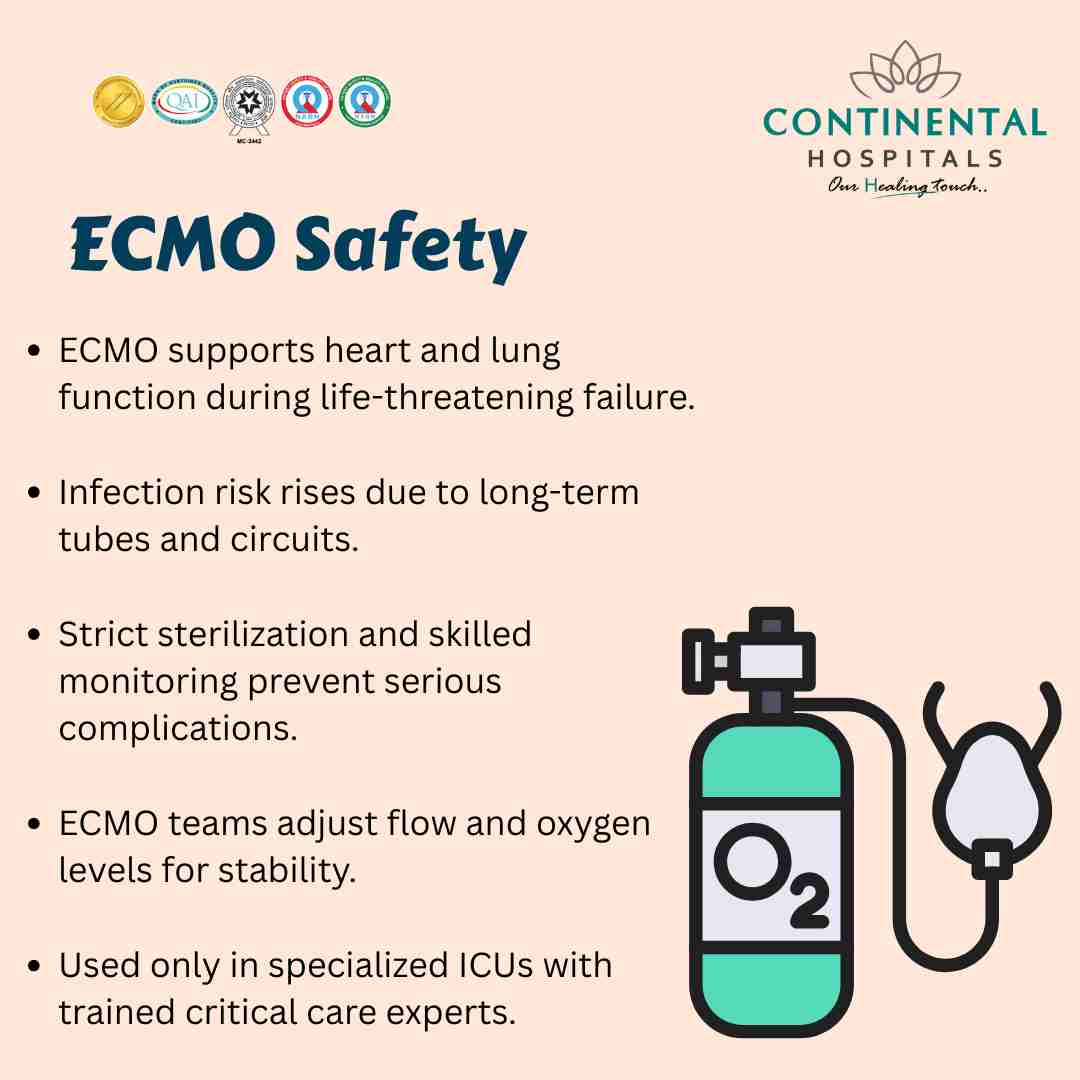
Safety is always the priority in critical care. ECMO safety guidelines are built around the following principles:

  • Meticulous placement of ECMO cannulae by skilled specialists
  • Continuous monitoring for any ECMO complications or changes in vital signs
  • Use of advanced equipment that automatically adjusts settings to optimize patient support
  • Careful regulation of anticoagulation to prevent clots and bleeding
  • Staff education for rapid response in emergencies

Strict safety guidelines help minimize risks and improve ECMO survival rates, especially in complex ICU cases.

What are the risks and complications of ECMO?

While ECMO can be life-saving, it also carries risks. Some common ECMO risks and complications include:

  • Bleeding due to anticoagulation medications
  • Infection at the cannula insertion site or from prolonged hospital stay
  • Blood clots that can block the circuit or travel to vital organs
  • Mechanical failure or technical issues with the machine
  • Organ dysfunction because of underlying disease or prolonged critical illness

Prevention of ECMO complications relies on early detection and expert management. Prompt action can protect organs and prevent further decline.

ECMO Procedure Risks: What Should Patients Know?

Patients undergoing ECMO should understand that the procedure itself can involve risks. These risks are constantly monitored and managed by an experienced ICU team. Some patients may experience:

Second Opinion

  • Cannulation-related injury to blood vessels or organs
  • Adverse reactions to medications used during ECMO
  • Changes in blood pressure or heart rhythm requiring immediate intervention

Educating families on ECMO safety guidelines and risks ensures transparency and trust in care.

What are the infection control measures for ECMO?

Infection control is crucial for ECMO patients, as their weakened immune systems and invasive catheters increase the risk of infection. ECMO infection control measures include:

  • Using sterile techniques for cannula placement and all procedures
  • Regular cleaning and disinfection of equipment and patient surroundings
  • Routine monitoring of blood cultures and wound sites for early signs of infection
  • Strict visitor policies to reduce the introduction of outside bacteria

Preventing infection preserves survival rates and supports faster recovery.

What is ECMO for respiratory failure?

ECMO for respiratory failure is commonly used when mechanical ventilation alone doesn’t provide enough oxygen. Adults with ARDS, viral pneumonia, or severe lung injury can benefit from ECMO, with ICU teams carefully balancing oxygen levels and ventilator settings for best results.

What is ECMO for cardiac failure?

During severe cardiac failure, ECMO can temporarily provide circulation while treating the underlying cardiac problem or awaiting surgery. Some children and adults with congenital heart defects or post-cardiac arrest also receive ECMO support. ECMO patient management in cardiac cases requires teamwork from cardiologists, cardiac surgeons, and intensivists.

How is ECMO used in patient management?

Successful ECMO patient management focuses on ongoing assessment and rapid response:

  • Hourly monitoring of vital signs, ECMO machine readings, and laboratory data
  • Adjusting fluid levels and medications to maintain organ function
  • Regular imaging scans to check for complications
  • Multidisciplinary rounds with doctors, nurses, infectious disease specialists, and support staff
  • Personalized rehabilitation programs post-ECMO to restore strength and mobility

How Can ECMO Complications Be Prevented?

Preventing ECMO complications is possible with these steps:

Need an Appointment?

  • Early and precise cannulation technique to avoid vascular injury
  • Timely dose adjustment of anticoagulants to balance clotting and bleeding risks
  • Routine equipment checks for mechanical issues
  • Daily assessment for signs of infection
  • Nutrition and physiotherapy support to maintain patient strength

ECMO Survival Rates: What Should You Expect?

Survival rates depend on many factors, including the patient’s age, underlying condition, and speed of intervention. While ECMO does not guarantee recovery, it provides a vital lifeline in life-threatening situations. Studies show improved outcomes when ECMO is started early and managed by experienced critical care teams.

Why Choose Continental Hospitals for ECMO?

Continental Hospitals is recognized for its commitment to quality and patient safety. Choosing Continental Hospitals for ECMO means benefiting from:

  • International accreditations (such as JCI and NABH), ensuring evidence-based safety protocols in critical care
  • Highly trained critical care teams with expertise in ECMO procedure risks and patient management
  • Advanced ICU facilities equipped with the latest ECMO technology
  • Proactive infection control measures to protect patient health
  • Multidisciplinary collaboration to optimize recovery and survival rates
  • Transparent patient communication backed by a compassionate approach

Continental Hospitals stands out for setting benchmarks in critical care, with rigorous safety standards and proven ECMO survival rates.

What are the key summary points about ECMO in critical care?

ECMO provides vital oxygen and circulation support when the heart or lungs fail.

  • Strict ECMO safety guidelines and infection control measures protect patients in the ICU.
  • ECMO risks and complications are carefully managed by critical care experts.
  • The team approach at Continental Hospitals delivers superior patient outcomes in ECMO therapy.
  • International accreditations guarantee world-class critical care standards.
  • Multidisciplinary management prevents ECMO complications and boosts recovery chances.

Conclusion

ECMO in critical care is a complex yet life-saving therapy. Success depends on expert management, safety guidelines, and robust infection control. Continental Hospitals leads the way in ECMO therapy, ensuring better patient outcomes and peace of mind for families. If you have questions or need help, reach out to our critical care specialists for personalized guidance and support.

If you or your loved one is dealing with severe heart or lung failure and want to know whether ECMO is the right step, reach out to a cardiologist who handles advanced critical care support. Getting timely guidance makes all the difference.

Schedule Your Consultation
Connect with our top cardiologists in Hyderabad for evaluation, treatment planning, and continuous support. Your heart deserves specialists who know exactly what to do when every second counts.


Frequently Asked Questions

Extracorporeal Membrane Oxygenation (ECMO) is an advanced life-support system used for patients with severe heart or lung failure when conventional treatments are no longer effective. It temporarily takes over the work of the heart, lungs, or both, allowing these organs time to recover. ECMO is commonly used for severe pneumonia, Acute Respiratory Distress Syndrome (ARDS), myocarditis, cardiogenic shock, pulmonary embolism, and certain post-cardiac surgery complications. It is also used as a bridge to heart or lung transplantation in selected patients. The treatment is delivered in a specialized intensive care unit under continuous monitoring. A multidisciplinary team including intensivists, cardiac surgeons, perfusionists, nurses, respiratory therapists, and infection control specialists manages the therapy. ECMO is not a cure but a temporary supportive treatment. Early patient selection and timely initiation significantly improve outcomes. The duration of ECMO depends on the patient's condition and response to treatment.
ECMO is considered a safe and effective treatment when performed in experienced centers with trained multidisciplinary teams. Modern ECMO technology, improved monitoring systems, and standardized protocols have significantly increased patient safety over the years. Continuous monitoring helps detect complications early and allows rapid intervention. Every patient undergoes a detailed evaluation before ECMO is started to ensure the potential benefits outweigh the risks. Strict anticoagulation monitoring, infection prevention measures, and regular equipment checks further improve safety. Although ECMO carries certain risks because it is used in critically ill patients, careful management minimizes complications. International guidelines and evidence-based practices help standardize patient care. Family members are regularly updated regarding the patient's progress and treatment plan. Overall, ECMO has become an essential life-saving therapy in modern intensive care medicine.
Like any advanced medical treatment, ECMO has potential risks that require careful monitoring. Bleeding is one of the most common complications because blood-thinning medications are needed to prevent clot formation in the circuit. Blood clots can also develop despite anticoagulation and may require immediate treatment. Infection at catheter insertion sites or bloodstream infections may occur if strict infection control measures are not followed. Other possible complications include stroke, kidney injury, limb circulation problems, and equipment-related issues. Continuous laboratory testing and bedside monitoring help identify complications at an early stage. Experienced ECMO teams are trained to respond quickly to emergencies and adjust treatment as needed. Regular imaging and blood tests further support patient safety. Despite these risks, ECMO often provides the best chance of survival for patients with life-threatening heart or lung failure.
Infection prevention is a critical part of ECMO care because patients are highly vulnerable to infections. Hospitals follow strict sterile techniques while inserting ECMO cannulas and during every procedure. Healthcare professionals perform meticulous hand hygiene before and after patient contact. Catheter insertion sites are cleaned regularly and inspected for signs of infection. Sterile dressings are changed according to infection control guidelines. Medical equipment is disinfected and maintained using standardized protocols. Antibiotics may be prescribed when clinically indicated, but unnecessary antibiotic use is avoided to reduce antimicrobial resistance. Regular blood tests and cultures help detect infections at an early stage. Visitors may be asked to follow protective measures, including hand hygiene and wearing appropriate protective equipment. A dedicated infection control team continuously monitors patients to ensure the highest standards of safety.
Not every critically ill patient requires ECMO, and careful selection is essential for successful outcomes. Doctors evaluate the severity of heart or lung failure, the underlying disease, overall health status, and the likelihood of recovery. Patients with severe ARDS, cardiogenic shock, fulminant myocarditis, massive pulmonary embolism, or refractory cardiac arrest may be considered. Age alone does not determine eligibility, but overall medical condition plays an important role. Doctors also assess whether the patient has irreversible organ damage or conditions that may reduce the benefits of ECMO. The decision is made by a multidisciplinary team after reviewing clinical findings, imaging, laboratory reports, and response to previous treatments. Timely referral to an ECMO-capable hospital improves the chances of successful treatment. Every patient receives an individualized assessment before therapy begins.
The duration of ECMO treatment varies depending on the patient's illness, recovery rate, and overall medical condition. Some patients require ECMO support for only a few days, while others may need several weeks. Doctors continuously assess heart and lung function using imaging, blood tests, and bedside monitoring. As the patient's condition improves, the ECMO support is gradually reduced to evaluate whether the organs can function independently. If recovery is not possible, ECMO may serve as a bridge to heart or lung transplantation or another advanced treatment. The medical team closely monitors for complications throughout the treatment period. Daily multidisciplinary discussions help determine the best timing for weaning from ECMO. The goal is always to remove ECMO safely as soon as the patient's heart and lungs can adequately support the body.
After ECMO is discontinued, patients continue to receive intensive monitoring in the critical care unit. Doctors carefully assess heart function, lung recovery, kidney function, neurological status, and overall stability. Mechanical ventilation may still be required for some time while the lungs continue to heal. Rehabilitation usually begins as early as possible to improve muscle strength, breathing capacity, and mobility. Nutrition, physiotherapy, and respiratory therapy play important roles in recovery. Patients undergo regular laboratory tests and imaging studies to monitor progress. The healthcare team also watches closely for delayed complications or infections. Recovery time varies significantly depending on the underlying illness and the duration of ECMO support. Long-term follow-up helps patients regain their quality of life and functional independence.
ECMO is a highly specialized therapy that requires advanced equipment, experienced clinicians, and round-the-clock critical care support. Specialized hospitals have dedicated ECMO teams consisting of intensivists, cardiac surgeons, perfusionists, critical care nurses, respiratory therapists, and infection control experts. These centers follow evidence-based treatment protocols and maintain strict quality and safety standards. Continuous monitoring, rapid response to complications, and access to advanced imaging and laboratory services improve patient outcomes. Specialized hospitals are also better equipped to manage complex emergencies and provide multidisciplinary care. Infection prevention programs, standardized anticoagulation management, and advanced critical care facilities further enhance patient safety. Choosing an experienced ECMO center increases the likelihood of successful treatment and comprehensive recovery. Patients and families also benefit from coordinated care, counseling, and ongoing support throughout the treatment journey.
Disclaimer: The information provided in this blog is intended for general knowledge and informational purposes only, and does not constitute medical advice. Always consult with a qualified healthcare professional for any medical concerns or before making any decisions about your health.

Get in Touch With Us

Whether you are from India or abroad, we are here to help you with your medical queries. Please fill out the form below and our team will connect with you shortly.

  • ✔ Quick response from our medical experts
  • ✔ Secure data handling & privacy
  • ✔ Easy upload for reports & documents
banner_image

Chat with our medical experts on WhatsApp for quick assistance and hassle-free appointment booking

Recent Posts