post-title

Hobbies That Improve Brain Health and Reduce Stress

Written by - Editorial Team
Medically Reviewed by - Dr M K Singh

Keeping your brain healthy and your stress levels low doesn’t always require medication or complex routines. Sometimes, all it takes is the right hobby. Whether it’s painting, gardening, or solving puzzles, simple activities can do wonders for your mental wellness. In this blog, we’ll explore how hobbies can sharpen brain function, promote relaxation, and support long-term mental health. You’ll also learn how to choose the right activity based on your lifestyle—and how Continental Hospitals can support your cognitive and emotional well-being.

Why do hobbies matter for brain and mental health?

Hobbies are more than just ways to pass time. They stimulate your brain, improve memory, and help regulate your emotions. Engaging in hobbies regularly can strengthen neural connections, increase focus, and reduce the risk of mental health problems such as anxiety and depression.

Mental health hobbies give your brain a break from stress by providing positive distractions. When you’re focused on a calming activity or a creative task, your mind gets a chance to reset. This helps lower cortisol levels, improve mood, and even support better sleep.

Visit the best neuro doctor hyderabad at Continental Hospitals and consult our expert neurologists for comprehensive brain care.
1. Creative Hobbies for Stress Relief

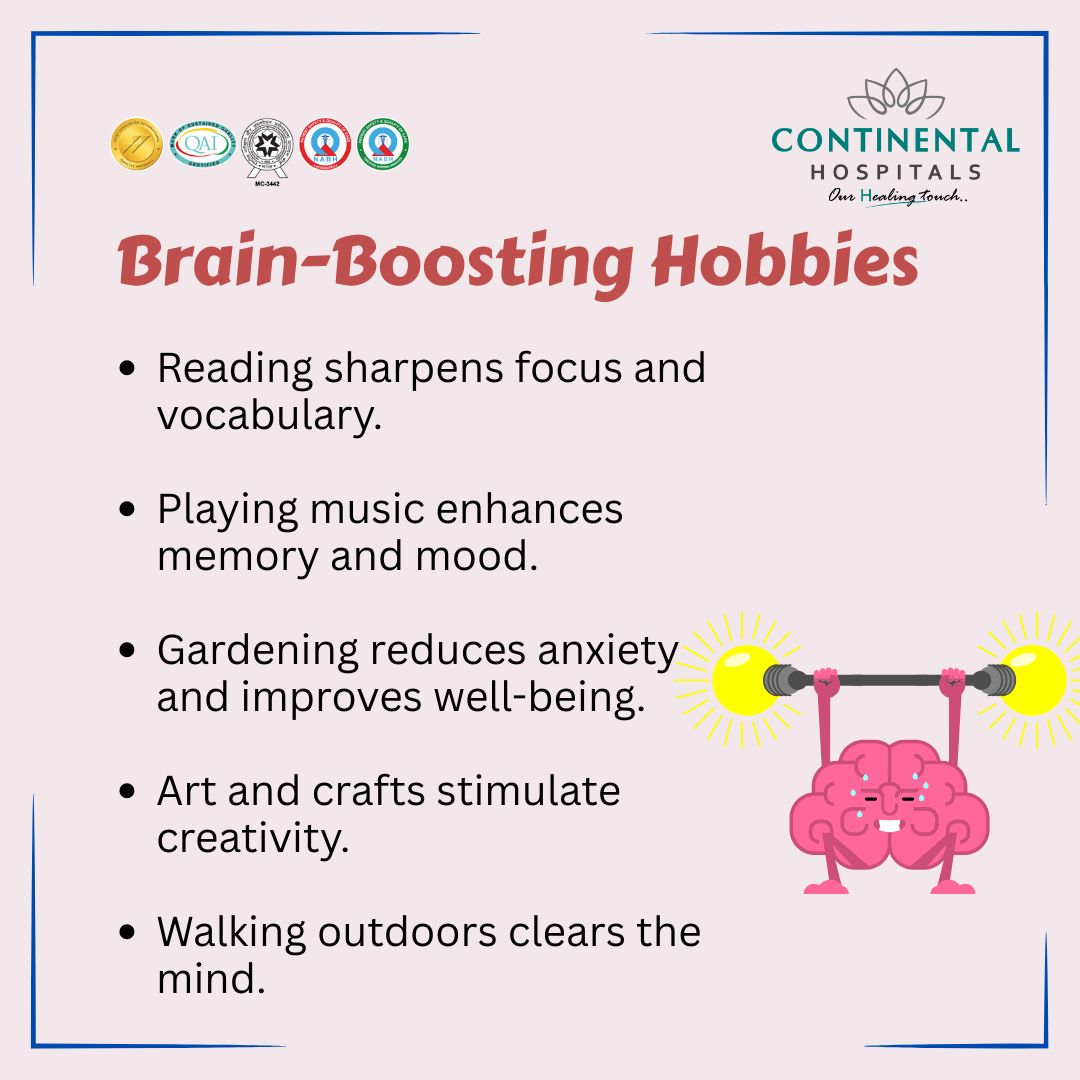
Creativity has a direct impact on emotional health. Activities like drawing, painting, coloring, writing, or playing music can serve as calming activities that allow your brain to express itself freely.

Why it works: Creative hobbies activate multiple parts of the brain, improve memory and focus, and help release dopamine—a feel-good chemical.

Examples: Journaling, watercolor painting, playing an instrument, digital illustration.

These creative hobbies for stress relief help build mindfulness, a key factor in reducing anxiety and improving overall mental balance.

Second Opinion

2. Brain Exercise Hobbies for Focus and Memory

Just like your body, your brain needs exercise to stay sharp. Cognitive activity ideas such as puzzles, chess, or learning a new language strengthen your brain’s processing speed and improve memory.

Why it works: These brain-boosting activities encourage the growth of new neurons and improve logical thinking.

Examples: Sudoku, crosswords, strategy board games, language apps, and brain training games.

These hobbies are especially useful for people looking for hobbies for memory improvement or those aiming to keep their cognitive abilities strong as they age.

3. Relaxation Hobbies to Manage Stress and Anxiety

Not every hobby has to challenge your brain. Some simply help you relax and breathe. Stress-relieving hobbies like gardening, knitting, or even slow walking can lower your heart rate and calm your thoughts.

Why it works: Slow, repetitive activities reduce anxiety and help shift your mind into a meditative state.

Examples: Knitting, nature walks, gardening, pottery.

Need an Appointment?

These hobbies for mental wellness are ideal for people who need a break from fast-paced routines and are looking for simple, effective ways to reset.

4. Physical Hobbies That Benefit the Brain

Physical movement is known to boost mental health. Active hobbies such as dancing, swimming, or yoga not only improve body health but also enhance brain performance.

Why it works: Physical activities increase blood flow to the brain, reduce stress hormones, and support the release of endorphins.

Examples: Tai Chi, aerobic dance, hiking, swimming, yoga.

These are perfect hobbies for brain health and also work as hobbies to fight anxiety, making them a powerful tool for emotional regulation.

5. Social Hobbies That Improve Emotional Health

Spending time with others while enjoying a shared activity can significantly improve mental wellness. Group-based mental health hobbies foster connection, reduce loneliness, and increase serotonin levels.

Why it works: Social interactions keep the brain engaged and reduce the risk of depression and cognitive decline.

Examples: Book clubs, community volunteering, group sports, group cooking classes.

If you’re looking for hobbies for focus and emotional resilience, combining social engagement with creativity or physical activity is highly effective.

How to Choose the Right Hobby for Better Brain Health and Less Stress?

Not every hobby will suit every person. To get the most out of your activity, choose something that aligns with your interests and availability. Here are a few tips:

  • Start small - 10 to 15 minutes a day is enough.
  • Choose an activity that brings joy, not pressure.
  • Rotate between creative, physical, and mental activities to engage different areas of your brain.
  • Track how you feel before and after each session to understand its impact.

Over time, these small changes can lead to big improvements in your brain health and stress levels.

Why Choose Continental Hospitals for Mental and Brain Health Support?

At Continental Hospitals, we understand the deep connection between your brain, your emotions, and your lifestyle. Our team of specialists, including neurologists, psychiatrists, and psychologists, is dedicated to helping you achieve better cognitive and emotional health through a holistic, patient-focused approach.

We combine expert diagnosis with tailored therapies, lifestyle counseling, and integrative care to ensure every patient receives the right support. Whether you're facing anxiety, memory loss, chronic stress, or attention problems, our specialists can help you build a recovery plan that includes both clinical and lifestyle-based strategies—including the power of hobbies.

Conclusion

Engaging in the right hobby can significantly improve brain function, memory, and emotional balance. Whether you're drawn to puzzles, painting, yoga, or gardening, incorporating hobbies into your daily life is a simple but powerful way to promote mental wellness and reduce stress.

Looking to boost brain health and reduce stress? Visit Continental Hospitals to consult our Best Neurologist in Hyderabad for personalized wellness tips.

Related Blogs:

How Cholesterol Levels Affect Brain Health and Dementia Risk

Frequently Asked Questions

Many hobbies can strengthen brain function while helping you feel calmer and more relaxed. Reading, painting, gardening, playing a musical instrument, yoga, meditation, puzzles, and learning a new language are excellent examples. These activities stimulate different parts of the brain, improve memory, increase focus, and encourage creativity. They also reduce stress hormones by promoting relaxation and mindfulness. Spending time on enjoyable hobbies can improve emotional well-being and help prevent mental fatigue. Even dedicating 20 to 30 minutes a day can make a noticeable difference. Consistency is more important than duration. Choosing a hobby you genuinely enjoy makes it easier to maintain as part of your daily routine. A balanced lifestyle that includes hobbies, healthy eating, exercise, and quality sleep supports long-term brain health and emotional resilience.
Hobbies provide a healthy escape from daily responsibilities and mental pressure. Engaging in enjoyable activities shifts your attention away from worries and reduces the production of stress hormones such as cortisol. Many hobbies encourage mindfulness, allowing you to stay focused on the present moment instead of dwelling on stressful thoughts. Creative hobbies also promote the release of dopamine and serotonin, which improve mood and create a sense of accomplishment. Physical hobbies like gardening, dancing, or walking further reduce stress by releasing endorphins. Spending regular time on hobbies can improve emotional balance, reduce anxiety, and enhance overall mental well-being. They also improve sleep quality, making it easier for the brain to recover from daily stress. Over time, hobbies become an effective and sustainable way to manage stress naturally.
Yes, learning a new skill challenges the brain and encourages the formation of new neural connections. Activities such as learning a musical instrument, a foreign language, photography, cooking, or digital design stimulate multiple cognitive functions. They improve concentration, memory, problem-solving abilities, and mental flexibility. The brain becomes more adaptable through continuous learning, which supports cognitive health as people age. Research suggests that mentally stimulating activities may help reduce the risk of age-related cognitive decline. Learning new skills also builds confidence and provides a sense of achievement, which positively affects mental health. Regular practice keeps the brain active and engaged. Combining learning with healthy lifestyle habits offers even greater benefits for long-term brain function.
Puzzles and brain games are excellent tools for maintaining cognitive function. Activities such as crossword puzzles, Sudoku, chess, memory games, and logic challenges stimulate areas of the brain responsible for reasoning, attention, and memory. Regular mental exercises improve concentration and encourage strategic thinking. These activities may help slow cognitive decline by keeping the brain actively engaged. Brain games also provide a relaxing and enjoyable way to reduce mental stress while improving problem-solving skills. Although puzzles alone cannot prevent neurological diseases, they contribute to overall brain fitness when combined with physical activity, social interaction, and a healthy diet. Practicing brain games consistently can improve mental sharpness and support healthy aging.
Gardening combines physical movement, creativity, and exposure to nature, making it beneficial for both the brain and emotional health. Spending time outdoors lowers stress, reduces anxiety, and improves mood. Gardening requires planning, attention, memory, and problem-solving, which help stimulate cognitive function. Caring for plants also creates a sense of responsibility and accomplishment that boosts emotional well-being. Exposure to sunlight supports vitamin D production, which is important for brain health. Gentle physical activity during gardening improves blood circulation, including blood flow to the brain. Many people experience better sleep and reduced mental fatigue after regular gardening. It is an enjoyable hobby suitable for people of all ages and can be adapted to different physical abilities.
Creative hobbies such as painting, drawing, music, writing, and crafting encourage self-expression and emotional release. These activities activate different regions of the brain responsible for creativity, memory, and emotional processing. They help reduce anxiety by allowing individuals to focus on enjoyable tasks instead of stressful thoughts. Playing or listening to music can lower heart rate, reduce blood pressure, and promote relaxation. Creative hobbies also improve concentration, boost confidence, and provide a healthy sense of achievement. Over time, they support emotional resilience and encourage positive thinking. Participating in creative activities regularly contributes to better mental health and overall quality of life. They can also be shared socially, which further strengthens emotional well-being.
Experts generally recommend spending at least 20 to 30 minutes a day on enjoyable hobbies to experience mental health benefits. Even short sessions performed consistently can improve focus, reduce stress, and support brain function. The most important factor is regular participation rather than the amount of time spent in one session. People with busy schedules can divide hobby time into smaller intervals throughout the day. Choosing activities that are enjoyable makes it easier to build a lasting habit. Combining hobbies with exercise, nutritious meals, quality sleep, and meaningful social interactions further enhances cognitive health. Regular engagement also helps prevent burnout and improves work-life balance. Making hobbies part of your routine supports lifelong mental wellness.
Occasional forgetfulness and temporary stress are common, but persistent memory problems should not be ignored. If you experience frequent confusion, difficulty concentrating, personality changes, trouble performing routine tasks, persistent headaches, dizziness, or worsening memory, consult a neurologist for evaluation. Long-term stress can also affect brain function and emotional health. Early diagnosis helps identify conditions such as anxiety disorders, depression, vitamin deficiencies, neurological disorders, or dementia. A specialist can recommend appropriate tests, lifestyle modifications, medications, or therapies based on the underlying cause. Seeking medical advice early improves the chances of effective treatment and better outcomes. Never ignore symptoms that interfere with your daily life or continue to worsen over time.
Disclaimer: The information provided in this blog is intended for general knowledge and informational purposes only, and does not constitute medical advice. Always consult with a qualified healthcare professional for any medical concerns or before making any decisions about your health.

Get in Touch With Us

Whether you are from India or abroad, we are here to help you with your medical queries. Please fill out the form below and our team will connect with you shortly.

  • ✔ Quick response from our medical experts
  • ✔ Secure data handling & privacy
  • ✔ Easy upload for reports & documents
banner_image

Chat with our medical experts on WhatsApp for quick assistance and hassle-free appointment booking

Recent Posts