post-title

Left Hand and Shoulder Pain: What Could It Mean?

Written by - Editorial Team
Medically Reviewed by - Dr S Kiran Reddy

Left hand and shoulder pain is a common complaint that can range from mild discomfort to a serious health concern. While many people associate this pain with muscle strain or poor posture, sometimes it can signal an underlying heart or nerve-related condition. Understanding the possible causes, symptoms, and treatment options can help you seek timely medical attention and prevent complications.

What Causes Left Hand and Shoulder Pain?

Pain in the left hand and shoulder can arise from muscles, bones, joints, tendons, nerves, or even internal organs like the heart. The exact location, nature, and duration of the pain often provide clues about its origin. Some people may experience a dull ache, while others feel sharp, radiating pain that extends down the arm or neck.

This discomfort can result from a simple muscle strain or point to more serious problems like a heart attack or nerve compression. Knowing when to take it seriously is crucial.

Persistent shoulder or hand pain should not be ignored. Visit the top orthopedic doctors in Hyderabad at Continental Hospitals, Hyderabad, for comprehensive orthopedic care from experienced specialists.
What are the common causes of left hand and shoulder pain?

1. Muscle Strain or Overuse
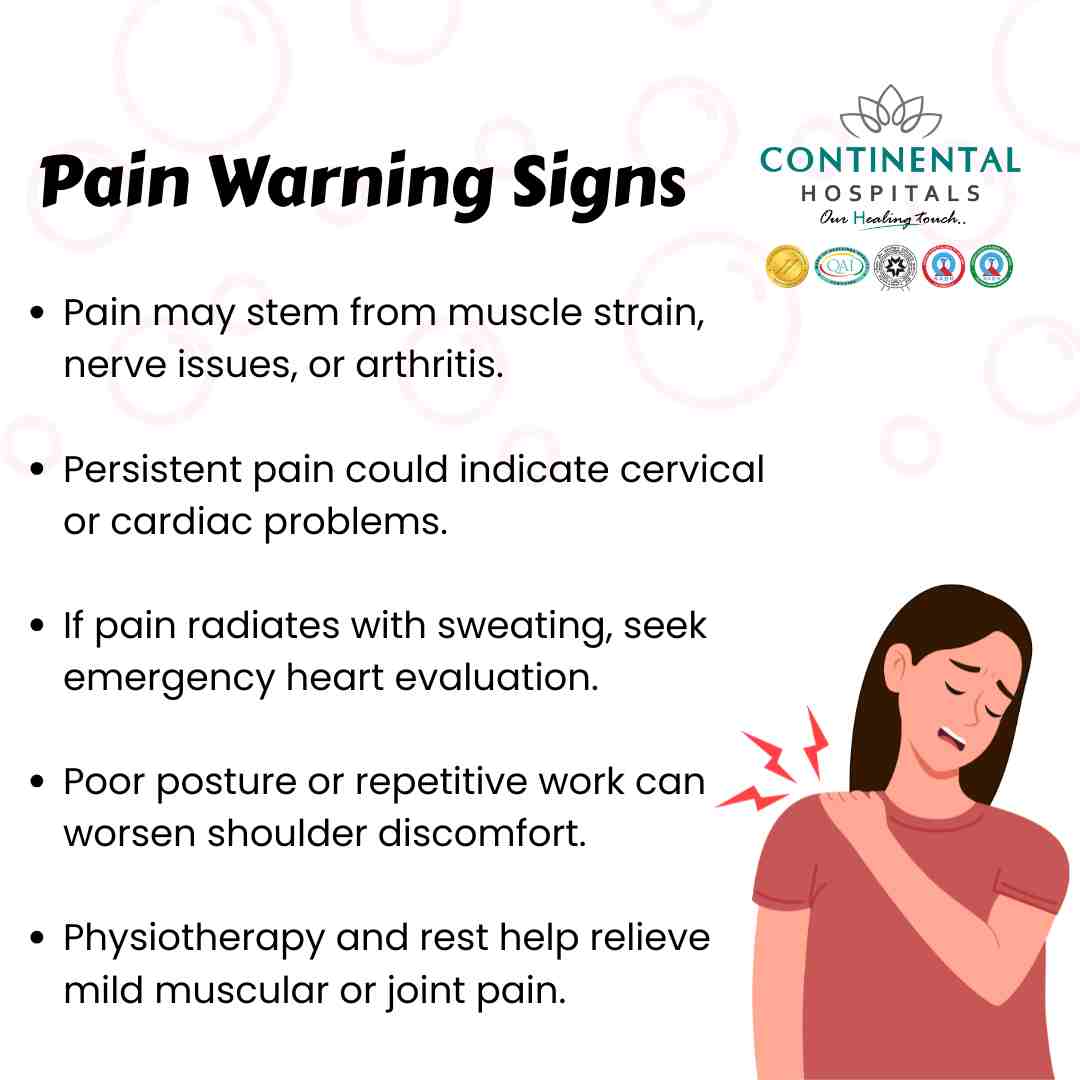
Repetitive activities such as lifting, typing, or exercising can strain shoulder and arm muscles. Overuse causes inflammation, leading to pain, stiffness, and weakness. Applying a cold compress, resting, and gentle stretching can relieve mild symptoms.

2. Rotator Cuff Injury
The rotator cuff is a group of muscles and tendons that stabilize the shoulder joint. Injuries or tears in these tissues cause pain that worsens with arm movement or while lying on the affected side. Persistent pain, weakness, or difficulty lifting the arm requires medical evaluation.

3. Frozen Shoulder (Adhesive Capsulitis)
This condition causes stiffness, pain, and restricted shoulder movement. It often develops after an injury or in people with diabetes. Physical therapy and guided exercises are essential for recovery.

4. Cervical Spondylosis (Neck Nerve Compression)
Age-related wear and tear in the cervical spine can compress nerves that travel to the shoulder and arm. This leads to tingling, numbness, or radiating pain from the neck to the fingertips. Posture correction and physiotherapy help reduce nerve pressure.

Second Opinion

5. Heart-Related Pain (Angina or Heart Attack)
Pain in the left shoulder and arm can sometimes indicate a heart problem. This type of pain may feel like pressure, heaviness, or squeezing, often accompanied by shortness of breath, dizziness, or sweating. Immediate medical attention is necessary if you suspect cardiac pain.

6. Bursitis or Tendinitis
Inflammation of the bursa (a fluid-filled sac that cushions joints) or tendons can cause pain around the shoulder and upper arm. It can result from repetitive motion or injury. Early physiotherapy helps in reducing inflammation and restoring movement.

7. Referred Pain from Other Organs
Sometimes, shoulder or arm pain originates from other organs such as the gallbladder, lungs, or heart. Identifying the root cause is essential for effective treatment.

When to See a Doctor?

It is important to consult a doctor if you experience:

  • Sudden, severe pain radiating to the jaw, neck, or back
  • Shortness of breath or chest discomfort
  • Persistent pain lasting more than a few days
  • Numbness, weakness, or tingling in the arm
  • Difficulty moving your shoulder or lifting objects

Ignoring symptoms can delay treatment and worsen the underlying problem.

How Is Left Hand and Shoulder Pain Diagnosed?

Your doctor will begin with a detailed medical history and physical examination. Diagnostic tests may include:

  • X-rays to check for fractures or arthritis
  • MRI or CT scans to detect soft tissue injuries
  • ECG or Echocardiogram if a heart-related cause is suspected
  • Nerve conduction studies to assess nerve compression

A clear diagnosis helps in designing an effective treatment plan tailored to the cause of pain.

Need an Appointment?

What are the treatment options for left hand and shoulder pain?

Treatment depends on the underlying reason for the pain. Common approaches include:

Rest and Physiotherapy: Helps restore mobility and reduce stiffness.

Medications: Anti-inflammatory or pain-relieving medicines can ease discomfort.

Heat and Cold Therapy: Applying ice or warm compresses helps manage swelling and pain.

Lifestyle Changes: Maintaining good posture, staying active, and avoiding heavy lifting prevent recurrence.

Surgical Intervention: Required only for severe injuries or nerve compression unresponsive to conservative therapy.

If the pain is linked to a heart problem, emergency treatment in a hospital is crucial.

Prevention Tips

You can reduce the risk of left hand and shoulder pain by following these preventive steps:

  • Stretch and warm up before any physical activity
  • Maintain proper posture while working at a desk or using a mobile phone
  • Take regular breaks during repetitive tasks
  • Strengthen shoulder and back muscles with regular exercise
  • Avoid sleeping on one side for long durations
  • Manage conditions like diabetes, high blood pressure, and cholesterol

Why Choose Continental Hospitals for Shoulder and Hand Pain?

Continental Hospitals in Hyderabad is one of the most trusted multispecialty hospitals, recognized for clinical excellence and patient safety. The hospital is accredited by Joint Commission International (JCI) and the National Accreditation Board for Hospitals (NABH), ensuring adherence to world-class medical standards.

Our team of orthopedic specialists, neurologists, and cardiologists work together to identify the root cause of shoulder and arm pain. We provide advanced diagnostic imaging, physiotherapy, and minimally invasive treatment options under one roof.

Patients benefit from:

  • 24x7 emergency and cardiac care services
  • Personalized treatment plans
  • Modern operation theatres and rehabilitation facilities
  • Compassionate and highly skilled medical staff

At Continental Hospitals, patient safety, accurate diagnosis, and fast recovery remain our top priorities.

Conclusion

Left hand and shoulder pain should never be ignored, especially when it appears suddenly or is associated with other symptoms like shortness of breath or chest pressure. While many cases are caused by muscle strain or nerve compression, it is always better to get evaluated by a specialist to rule out serious conditions.

If you suffer from persistent shoulder or hand pain, consult our Best Orthopedic Specialists in Hyderabad at Continental Hospitals, Hyderabad, for accurate diagnosis and advanced care.

Related Blogs:

  1. Shoulder Pain at Night? Causes and Simple Home Relief
  2. Left Arm and Shoulder Pain Causes and When to Worry

Frequently Asked Questions

Left hand and shoulder pain can result from several conditions, ranging from minor muscle strain to serious medical emergencies. Common causes include muscle overuse, rotator cuff injuries, tendonitis, frozen shoulder, cervical spondylosis, pinched nerves, arthritis, and poor posture. In some cases, pain may originate from the neck or upper back and radiate into the shoulder and arm. Nerve compression can also cause tingling, numbness, or weakness in the hand. Sometimes, left-sided shoulder pain may be an early warning sign of a heart attack, particularly when accompanied by chest pain, sweating, nausea, dizziness, or shortness of breath. Injuries from falls or sports can also contribute to shoulder discomfort. Persistent or severe pain should never be ignored. A thorough medical evaluation helps identify the underlying cause and ensures timely treatment to prevent complications.
Yes, left shoulder and hand pain can sometimes indicate a heart attack, especially when it occurs suddenly and is accompanied by chest pressure, shortness of breath, cold sweats, nausea, vomiting, dizziness, or pain spreading to the jaw, neck, or back. Heart-related pain often feels like pressure, heaviness, squeezing, or tightness rather than sharp pain. However, not everyone experiences classic symptoms, particularly women, older adults, and people with diabetes. Some individuals may notice only shoulder or arm discomfort without significant chest pain. Because heart attacks require immediate medical attention, anyone experiencing these symptoms should seek emergency care without delay. Early diagnosis and treatment significantly improve survival rates and reduce the risk of permanent heart damage.
Nerve-related shoulder pain often begins in the neck and travels down the shoulder into the arm, hand, or fingers. It may be associated with tingling, numbness, burning sensations, electric shock-like pain, or muscle weakness. Conditions such as cervical radiculopathy, herniated discs, or compressed nerves are common causes. Symptoms may worsen while turning the head, looking down, or maintaining poor posture for extended periods. Some people experience difficulty gripping objects or performing everyday tasks. Unlike muscle injuries, nerve pain often follows a specific pathway along the arm. Imaging studies such as MRI, along with neurological examination, can help confirm the diagnosis. Early treatment may include medications, physiotherapy, posture correction, or other interventions depending on the underlying condition.
Medical evaluation is recommended if your pain lasts more than a few days, becomes progressively worse, limits shoulder movement, or is associated with swelling, redness, fever, numbness, or weakness. Immediate emergency care is necessary if shoulder pain occurs along with chest pain, breathing difficulty, sudden sweating, dizziness, fainting, or pain radiating to the jaw or left arm. Persistent pain following an injury also requires prompt assessment to rule out fractures, ligament tears, or dislocations. Early diagnosis helps prevent long-term complications and allows treatment before permanent joint or nerve damage develops. Ignoring persistent symptoms may delay recovery and increase the risk of chronic pain.
Doctors begin by reviewing your medical history and performing a detailed physical examination. They assess shoulder movement, muscle strength, nerve function, and areas of tenderness. Depending on your symptoms, imaging tests such as X-rays, ultrasound, MRI, or CT scans may be recommended to evaluate bones, muscles, tendons, ligaments, and joints. If a nerve disorder is suspected, nerve conduction studies or electromyography may be advised. Blood tests may help identify infections, inflammatory diseases, or autoimmune conditions. If heart disease is a concern, an ECG, cardiac enzyme tests, echocardiogram, or stress test may be performed. These investigations help identify the exact cause and guide appropriate treatment.
Treatment depends on the underlying cause of the pain. Mild muscle strains often improve with rest, ice application, pain-relieving medications, and physiotherapy. Shoulder tendon injuries, arthritis, and frozen shoulder may require rehabilitation exercises, anti-inflammatory medications, corticosteroid injections, or specialized physical therapy. Nerve-related conditions may benefit from medications, posture correction, and targeted rehabilitation. Severe tendon tears or joint damage may require surgical treatment. If the pain is caused by a heart condition, emergency cardiac treatment is essential. Lifestyle changes such as maintaining good posture, regular stretching, strengthening exercises, and managing chronic conditions like diabetes or hypertension also support long-term recovery and reduce recurrence.
Yes, poor posture is a common cause of shoulder and arm pain, particularly among people who spend long hours using computers, mobile phones, or sitting at desks. Slouching places extra stress on the neck, shoulders, and upper back muscles, increasing the risk of muscle fatigue and nerve compression. Over time, poor posture may contribute to cervical spine problems and chronic shoulder discomfort. Symptoms may include stiffness, aching, tingling, and reduced range of motion. Correcting posture, using ergonomic workstations, taking regular movement breaks, and performing stretching and strengthening exercises can significantly reduce symptoms. If pain persists despite these measures, medical evaluation is recommended to identify any underlying structural issues.
Preventing left shoulder and hand pain involves maintaining healthy muscles, joints, and nerves through regular exercise and proper body mechanics. Strengthening shoulder and upper back muscles improves stability and reduces injury risk. Maintaining good posture while sitting, standing, and lifting heavy objects helps protect the neck and shoulders. Frequent stretching during desk work, avoiding repetitive strain, and taking breaks from prolonged activities are also beneficial. Managing medical conditions such as diabetes, arthritis, and heart disease reduces the likelihood of complications affecting the shoulder or nerves. Wearing appropriate protective equipment during sports and seeking early treatment for minor injuries can prevent long-term damage. Regular health checkups also help identify potential problems before they become severe.
Disclaimer: The information provided in this blog is intended for general knowledge and informational purposes only, and does not constitute medical advice. Always consult with a qualified healthcare professional for any medical concerns or before making any decisions about your health.

Get in Touch With Us

Whether you are from India or abroad, we are here to help you with your medical queries. Please fill out the form below and our team will connect with you shortly.

  • ✔ Quick response from our medical experts
  • ✔ Secure data handling & privacy
  • ✔ Easy upload for reports & documents
banner_image

Chat with our medical experts on WhatsApp for quick assistance and hassle-free appointment booking

Recent Posts