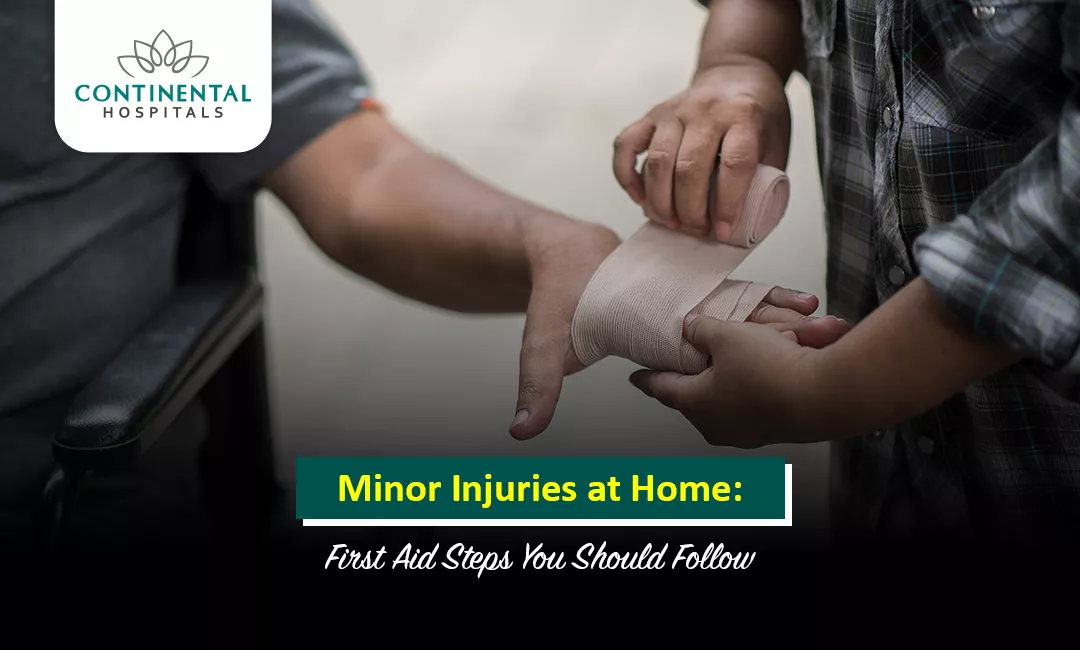
Home accidents may take place quite frequently, causing injury while engaging in usual everyday activities such as cooking, cleaning, gardening, playing, and using home items. Such minor injuries as small cuts, bruises, minor burns, scratches, and sprains might seem insignificant, yet lack of proper treatment may result in infection, inflammation, or other problems. It is useful to have an idea of how to treat these injuries in order to minimize any possible risks of aggravation.
Do you know what measures should be taken immediately after cutting yourself, burning your skin, or suffering from bruising at home? Correct and timely first aid treatment may save you from unnecessary pain, prevent further damages to the injured body part, and assist in faster recovery. Having knowledge of home first aid and being aware of when you need professional help is crucial for everyone.
What Are the Most Common Types of Minor Injuries at Home?
The minor injuries may affect both adults and kids. The most common minor injuries at home include:
- Cuts and bruises: They occur when one uses blades, scissors, broken glasses, or sharp objects at home.
- Minor burns: They arise when one touches hot water, cooking oil, steaming objects, or heated surfaces.
- Contusions: They are caused by accidental falling or bumps into furniture.
- Scrapes: They occur during contact with animals, plants, or sharp objects.
- Sprains: They occur when one twists their ankle, wrist, or any other joints.
Understanding the kind of injury enables one to select the proper first aid measure.
First Aid Care for Cuts and Wounds
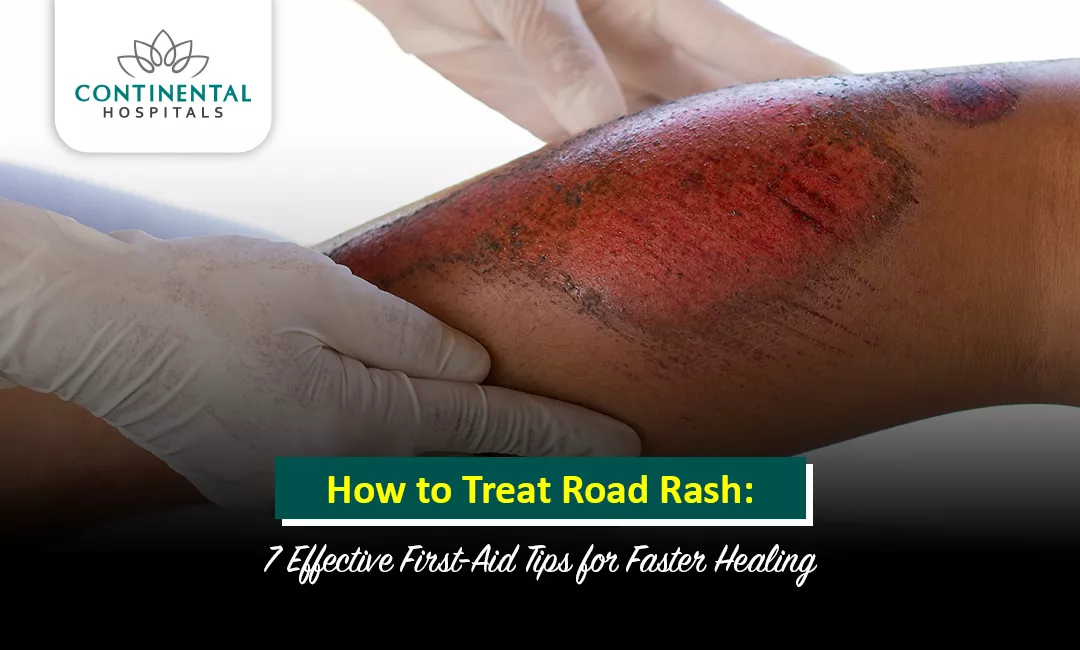
Among the commonest of all minor injuries that occur at home are cuts and wounds. The proper care of the wounds prevents infection and assists in their healing.
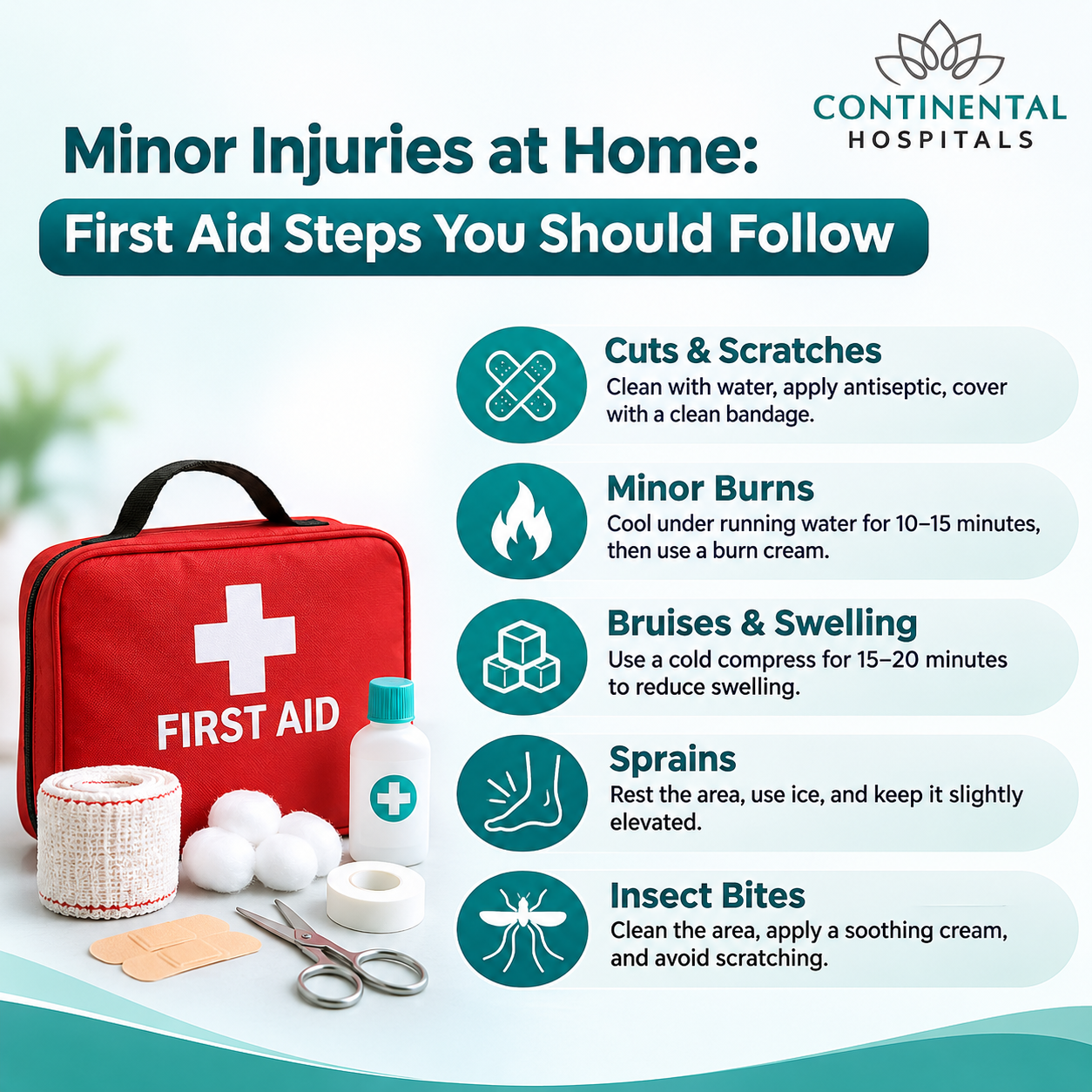
The following are some of the tips on how to treat cuts and wounds through first aid:
1. Wash your hands before handling the wound.
2. Use gentle pressure by applying it to the wound using gauze or any clean cloth in order to stop the bleeding.
3. Rinse the wound with clean running water after you have stopped the bleeding.
4. Clean the skin around the wound using soap.
5. Dress the wound using a sterilized dressing.
6. Change the dressing frequently and ensure cleanliness of the wound.
Consult a doctor if you experience continuous bleeding, a deep wound, separation of the edges, or signs of infection such as swelling, pus formation, and fever.

First Aid for Minor Burns - What Do You Need to Do?
Burns can occur when you are cooking, pressing your clothes, and using hot fluids. Prompt actions will help ease the pain and protect your skin from further damage.
What steps should you take after experiencing a minor burn?
- Leave the heat source right away.
- Run cool water over the burn for about 20 minutes.
- Remove any jewelry and tight clothing around the burned area if they are not attached to the skin.
- Apply a loose bandage made of a clean, non-fluffy material to the burn.
- Don’t put ice, toothpaste, butter, or home-made substances on the burn.
- Don’t burst the blisters. It can lead to the infection spreading.
What Should You Do for Bruises and Sprains?
Bruises and sprains usually happen as a result of accidents such as falls or movements that cause injuries while at home.
To treat bruises and sprains that are not severe, you should:
Take rest from any activity that would cause more pain or would place more pressure on the bruise or sprain.
Ice: Put an ice pack in a towel on the bruise or sprain for some time.
Compression: Use an elastic bandage, if necessary, but avoid making it tight.
Elevation: Elevate the bruise or sprain above the level of your heart.
Do not place ice directly onto your skin. Consult your doctor immediately if you feel severe pain, swelling, difficulty moving the joint, or a broken bone.
When Should One Visit a Doctor with Minor Injuries at Home?
Is it possible to treat all injuries in the home with first aid? Not always. There are some cases where what may seem like a small injury should be treated by a doctor.
Consult a doctor in case:
- The bleeding is uncontrolled with applied pressure.
- A deep cut or a wound sustained from rusty or dirty items.
- Symptoms of infection in the area – swelling, warmth, pain, pus formation.
- Intense pain or increased swelling.
- Significant burn or blister formation.
- Inability to move an injured limb.
- Potential fractures or a head injury.
- An animal bite or a deep scratch.
In addition, it is necessary to determine if the person had a vaccine against tetanus after an injury.
How to Avoid Small Injuries in Your House?
Small steps can be taken to lower the chances of having small injuries in your house.
Use these steps to prevent accidents:
- Do not leave sharp tools like scissors and knives accessible to children.
- Safely store chemical substances.
- Place non-slip carpets in the bathrooms and slippery areas of the house.
- Dry the floors to avoid slip injuries.
- Be cautious when handling hot utensils and cookers.
- Keep a fully supplied first aid kit in the house.
- Educate children about the safety tips in the house.
Why Opt For Continental Hospitals in Case of Emergencies and Injuries?
Why is it important to get medical attention right after an injury? Small injuries can be taken into professional consideration as a risk of infections, tissue injuries, or further problems.
Continental Hospitals in Hyderabad aims at delivering professional medical services with the help of skilled doctors, high-class diagnostic services, and medical equipment. Continental Hospitals holds well-known JCI and NABH certifications and maintains quality services in terms of patient safety and professional treatment. Multidisciplinary medical specialists assist patients in making proper diagnoses and treatments for various kinds of injuries.
Continental Hospitals of Hyderabad is known as one of the best hospitals in the city, as it pays great attention to providing patient-centered healthcare services.
Conclusion
Home accidents can occur anytime, but if one has knowledge about the correct measures for providing first aid, it can make a world of difference. In case of any accident at home, be it a cut, a burn, a bruise, or a sprain, proper and prompt treatment can provide relief from pain and complications.
It should always be kept in mind that home first aid cannot be considered a substitute for proper medical care when an injury is severe or fails to heal. For any deep cut, heavy bleeding, severe burn, swelling, or other injury requiring immediate medical attention, see our best emergency medicine specialist in Hyderabad at Continental Hospitals, Hyderabad.