
post-title

Sinus Headache: Why It Happens and How to Find Relief

Written by - Editorial Team
Medically Reviewed by - Dr Dushyanth Ganesuni

Have you ever felt pressure around your forehead, cheeks, eyes, or nose along with a headache? If you also have a blocked or runny nose, facial pressure, or discomfort that becomes worse when you bend forward, it may be a sinus headache. Sinus headaches are often linked to inflammation or congestion in the sinus passages, which can create pressure and pain around the face.

Understanding what causes a sinus headache can help you identify the right treatment and avoid unnecessary discomfort. While mild symptoms may improve with simple measures, persistent or severe symptoms may require medical evaluation. At Continental Hospitals, Hyderabad, specialists can assess the underlying cause of your headache and recommend appropriate sinus headache treatment based on your symptoms.

What Is a Sinus Headache?

A sinus headache is a type of headache associated with inflammation, swelling, or congestion in the sinuses. The sinuses are air-filled spaces located around the forehead, cheeks, nose, and eyes. When these spaces become blocked or inflamed, pressure can build up and cause sinus pain.

Common symptoms may include:

  • Pressure or pain around the forehead, cheeks, nose, or eyes
  • Blocked or stuffy nose
  • Thick nasal discharge
  • Facial tenderness
  • Reduced sense of smell
  • Headache that becomes worse when bending forward
  • Feeling of pressure around the eyes
  • Tiredness or general discomfort

Visit the ENT Specialist Department at Continental Hospitals, Hyderabad. Our experienced ENT specialists can evaluate the underlying cause and recommend the right treatment to help you find lasting relief.

What Causes A Sinus Headache?

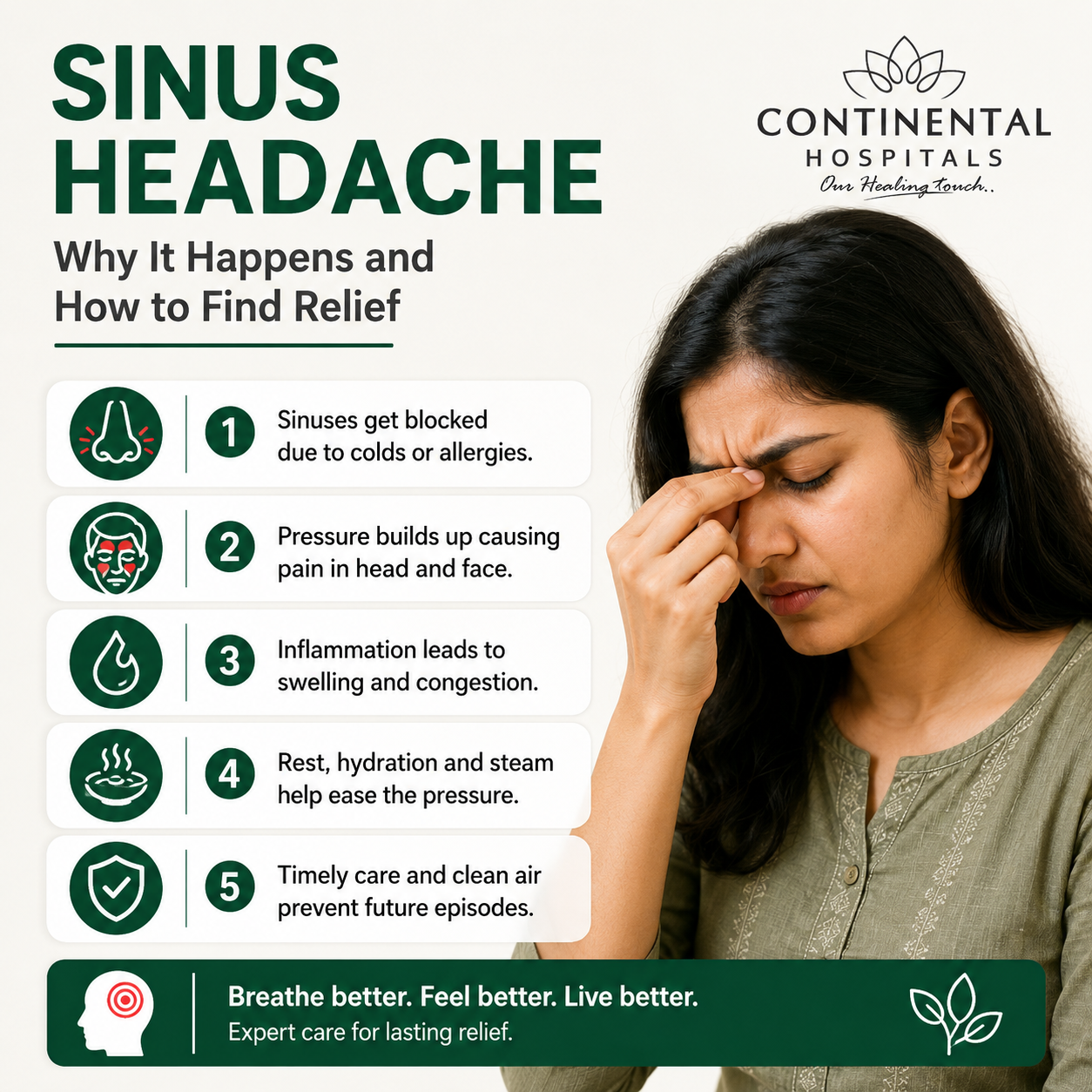
A sinus headache happens when the sinuses do not drain like they should. Some things can make the sinuses get blocked and swollen.

Some common things that cause this are:

  • Sinus infections
  • Allergies
  • The cold
  • Nasal congestion
  • Swelling inside the nose
  • A deviated nasal septum
  • Nasal polyps
  • Being around dust, smoke, or other things that irritate you

When the sinuses stay swollen, the mucus does not come out right. This makes the pressure inside the sinuses go up and can cause a sinus headache.
Second Opinion

How Can You Tell If It Is a Sinus Headache?

Not every headache you get when your nose is blocked is a sinus headache. Some other kinds of headaches like migraines can feel similar.

You probably have a sinus headache if you get a headache or pain in your face along with things like the following:

  • Your nose being there. Congested
  • Thick mucus in your nose
  • Feeling pressure, in your face
  • Your face being tender
  • Not being able to smell things well
  • Symptoms of a sinus infection

If you keep getting headaches or they do not get better, you should see a doctor to figure out what is really causing them.

What Can Trigger Sinus Headaches?

Certain factors can increase the chance of sinus congestion and sinus pain.

Some common triggers include:

  • allergies
  • Dust and air pollution
  • Respiratory infections
  • Sudden changes in weather
  • Cigarette smoke
  • Strong chemical smells
  • Untreated nasal problems

Identifying and avoiding personal triggers may help reduce recurring symptoms.

How Can You Get Sinus Headache Relief at Home?

Mild sinus headache symptoms may improve when congestion is reduced and the sinuses are allowed to drain

Need an Appointment?

Some helpful measures include:

  • Drink fluids to stay hydrated.
  • Use a compress over the face.
  • Take rest.
  • Use saline nasal rinses when appropriate.
  • Avoid cigarette smoke and other irritants.
  • Keep spaces clean and reduce dust exposure.
  • Manage known allergies with guidance.

These measures may provide headache relief, but they may not address the underlying cause of recurring symptoms.

When Should You Go See a Doctor for a Sinus Headache?

You should think about going to see a doctor when you get sinus headaches a lot. They are really bad or they do not go away even when you try to take care of yourself at home. It is especially important to see a doctor if your symptoms are getting worse or if they are making it hard for you to do things you need to do every day.

You should go see a doctor if you have:

A bad headache that does not go away

Sinus headaches that keep coming back

  • A Pain in your face
  • Swelling around your eyes
  • Problems with your vision
  • A stuffy nose that will not go away
  • Symptoms that do not get better
  • Sinus infections that happen a lot

A doctor can figure out if your symptoms are caused by sinusitis, allergies, migraines, or something else.

What Do Doctors Do to Treat Sinus Headaches?

The way doctors treat sinus headaches depends on what's causing them. Treatment might be about reducing swelling, helping your sinuses drain, dealing with allergies, or taking care of an infection if you have one.

Depending on what's wrong, treatment might include the following:

  • Using saline to clean out your nose
  • Medicines to help with allergies
  • Treatment to reduce swelling in your sinuses
  • Medicines to help with pain
  • Antibiotics if you have an infection and a doctor says you need them
  • Further tests to see if you have any problems, with the structure of your nose

You do not need antibiotics for every sinus problem. You should only take them if a doctor who knows what they are doing says you need them.

Why Choose Continental Hospitals for Sinus Headache Care?

Continental Hospitals Hyderabad provides comprehensive medical care supported by experienced specialists, modern diagnostic facilities, and multidisciplinary expertise. The hospital follows established standards for patient safety and quality care and holds internationally and nationally recognized accreditations, including Joint Commission International (JCI) and National Accreditation Board for Hospitals & Healthcare Providers (NABH) accreditation.

Patients with recurring headache, sinus congestion, facial pressure, or related symptoms can receive appropriate evaluation to understand the underlying cause and choose a suitable treatment approach.

What Is the Key Takeaway About Sinus Headaches?

A sinus headache can be uncomfortable, especially when sinus congestion, facial pressure, and nasal symptoms occur together. However, not every headache with nasal symptoms is caused by the sinuses. Identifying the correct cause is important for effective sinus headache treatment and long-term sinus headache relief.

If you suffer from frequent sinus headaches, persistent sinus pain, or recurring congestion, consult an ENT specialist for proper evaluation and personalized treatment at Continental Hospitals, Hyderabad.

Conclusion

Sinus headaches can often be managed effectively when the underlying cause is identified early. Simple measures may provide temporary relief, but recurring symptoms should not be ignored. Proper diagnosis can help distinguish sinus-related pain from migraine and other types of headaches and guide the right treatment.

If your sinus headache keeps coming back or affects your daily life, consult our best ENT specialist in Hyderabad at Continental Hospitals, Hyderabad, for expert evaluation and appropriate care.

Related Blogs:

  1. Common Headache Reasons: What Your Head Pain May Be Telling You
  2. When to Consider Sinus Surgery for Lasting Relief
  3. Can Wheat Roti Cause Allergies, Sinus, and Migraines?

Frequently Asked Questions

A sinus headache is usually described as pain or pressure around the forehead, cheeks, eyes, or nose. It may feel worse when you bend forward or lie down. Sinus inflammation can cause swelling inside the nasal passages and sinuses. This swelling can interfere with normal mucus drainage. You may also experience a blocked or runny nose. Some people notice facial tenderness or pressure around the eyes. Headache may occur along with sinusitis symptoms. Thick or discolored nasal mucus can also occur with sinus infections. A reduced sense of smell may be another associated symptom. However, many headaches believed to be sinus headaches are actually migraines. Migraine can also cause nasal congestion and facial pressure. Correctly identifying the cause is important for choosing appropriate treatment. A healthcare professional can help determine whether sinus inflammation or another headache condition is responsible.
Sinus headaches can occur when inflammation affects the sinuses and surrounding nasal passages. Sinus inflammation may develop after a common cold or respiratory infection. Viral infections are a common cause of acute sinusitis. Swelling can block normal drainage from the sinus cavities. This may lead to mucus buildup and feelings of pressure. Allergies can also contribute to nasal and sinus inflammation. Environmental irritants such as smoke may worsen nasal symptoms. A blocked nose can make facial pressure feel more noticeable. Sinusitis may cause pain around the forehead, cheeks, eyes, or upper teeth. Fever and thick nasal discharge may occur when infection is present. However, migraine is a common cause of symptoms mistaken for sinus headaches. A proper evaluation can help distinguish sinusitis from migraine or other headache disorders.
A sinus-related headache commonly occurs with nasal or facial symptoms. You may feel pressure or pain around the forehead, cheeks, eyes, or nose. The discomfort may become stronger when bending forward. A blocked or stuffy nose may occur at the same time. Some people develop thick yellow or green nasal mucus. A reduced sense of smell can also accompany sinusitis. Facial tenderness may occur around the affected sinus areas. Upper tooth pain can sometimes occur with sinus inflammation. Fever may be present when an infection is involved. Migraine can produce similar facial pressure and nasal symptoms. Migraine is more likely when nausea, vomiting, or sensitivity to light or sound occurs. Symptoms alone may not always identify the exact cause. A doctor can assess your symptoms and determine whether further evaluation is needed.
Treatment depends on whether sinus inflammation, infection, allergy, or another headache condition is responsible. Mild sinusitis often improves without antibiotics. Adequate rest and drinking enough fluids may support recovery. Saline nasal rinses can help clear nasal mucus and improve comfort. Pain relievers may help reduce headache and facial discomfort. Some people may benefit from appropriate nasal treatments recommended by a healthcare professional. Allergy-related symptoms may require antihistamines or other allergy treatments. Steroid nasal sprays may be recommended to reduce nasal and sinus swelling. Antibiotics are not routinely needed because many sinus infections are caused by viruses. If the headache is actually a migraine, migraine-specific treatment may be more appropriate. Repeated or persistent symptoms should be evaluated by a healthcare professional. Treatment should therefore be based on the underlying cause rather than assuming every headache is sinus-related.
Yes, sinus inflammation can cause pain, pressure, or tenderness in the face. The discomfort may occur around the cheeks, forehead, eyes, or nose. Some people also experience aching in the upper teeth. Facial pressure may become more noticeable when bending forward. Nasal congestion can occur alongside facial discomfort. Swelling inside the sinuses can interfere with normal mucus drainage. This can create a feeling of fullness or pressure. Sinusitis may also cause a reduced sense of smell. Thick nasal mucus and postnasal drainage may occur with an infection. However, facial pressure does not automatically mean that sinusitis is present. Migraine can also cause facial pressure and nasal symptoms. A healthcare professional can help distinguish sinus-related pain from migraine. Persistent, severe, or worsening facial pain should be medically assessed.
Allergies can contribute to nasal inflammation and congestion. When nasal tissues become swollen, normal airflow and mucus drainage may be affected. This can create feelings of pressure around the nose and face. Allergy symptoms may include a stuffy or runny nose. Sneezing and an itchy nose or eyes can also occur. Some people may experience headaches when nasal symptoms are significant. Avoiding known allergy triggers can help reduce symptoms. Common triggers can include dust, pollen, smoke, or other environmental irritants. Saline nasal rinsing may help clear allergens and mucus from the nose. Doctors may recommend allergy medicines when symptoms are persistent. Antihistamines may be useful when allergies are responsible for symptoms. Nasal steroid sprays may also be recommended in appropriate cases. If headaches continue despite allergy control, another headache condition should be considered.
Reducing nasal inflammation and avoiding known triggers may help prevent recurring sinus symptoms. Managing allergies can be useful when they contribute to congestion. Avoiding cigarette smoke and other nasal irritants may also help. Drinking enough fluids can support normal mucus consistency. Saline nasal cleansing may help keep the nasal passages comfortable. Good hand hygiene can reduce exposure to respiratory infections. Treating allergy symptoms appropriately may reduce repeated nasal inflammation. Maintaining regular sleep can also support overall headache management. Regular physical activity may help reduce the frequency of some headache disorders. Identifying personal headache triggers can be useful when migraine is involved. Keeping a headache diary may help identify patterns and recurring triggers. Frequent headaches should not simply be assumed to be sinus-related. Medical evaluation can help identify the correct cause and prevention strategy.
You should consider medical evaluation when headaches are severe, persistent, or repeatedly returning. Seek medical advice if pain does not improve with appropriate self-care. Sinus symptoms that last longer than expected may also require evaluation. Repeated episodes of sinusitis should be discussed with a healthcare professional. Headaches occurring frequently may have causes other than sinus inflammation. A headache that interferes with work, sleep, or daily activities should not be ignored. Seek urgent medical care if there is swelling or redness around the eyes. High fever with severe sinus symptoms may require prompt assessment. Confusion, double vision, or other vision changes are warning signs. A stiff neck associated with a severe headache also requires urgent medical attention. A sudden, extremely severe headache should be treated as an emergency. New neurological symptoms such as weakness, numbness, seizures, or difficulty speaking also require immediate care. Proper evaluation can help identify the cause and prevent inappropriate treatment.
Yes, some headaches people call sinus headaches are actually migraines. Migraine can produce facial pressure and nasal congestion. This can make migraine symptoms appear similar to sinusitis. Migraine may also cause a clear, watery nasal discharge. Sinusitis is more commonly associated with thick or discolored nasal mucus. Sinusitis often develops after a cold or respiratory infection. A reduced sense of smell may occur with sinusitis. Migraine may cause nausea or vomiting in addition to headache pain. Sensitivity to bright light or loud sounds can also suggest migraine. Sinus-related headaches usually occur with other signs of sinus inflammation. The pattern, duration, and associated symptoms can help doctors distinguish the conditions. Most people who believe they have recurring sinus headaches may need evaluation for other headache types. Identifying migraine correctly can help ensure that treatment targets the actual cause. Anyone experiencing frequent or disabling headaches should discuss the symptoms with a healthcare professional.
Disclaimer: The information provided in this blog is intended for general knowledge and informational purposes only, and does not constitute medical advice. Always consult with a qualified healthcare professional for any medical concerns or before making any decisions about your health.

Get in Touch With Us

Whether you are from India or abroad, we are here to help you with your medical queries. Please fill out the form below and our team will connect with you shortly.

  • ✔ Quick response from our medical experts
  • ✔ Secure data handling & privacy
  • ✔ Easy upload for reports & documents
banner_image

Chat with our medical experts on WhatsApp for quick assistance and hassle-free appointment booking

Recent Posts