
post-title

Strawberry Legs: When Should You Consult a Dermatologist?

Written by - Editorial Team
Medically Reviewed by - Dr. Anusha Potula

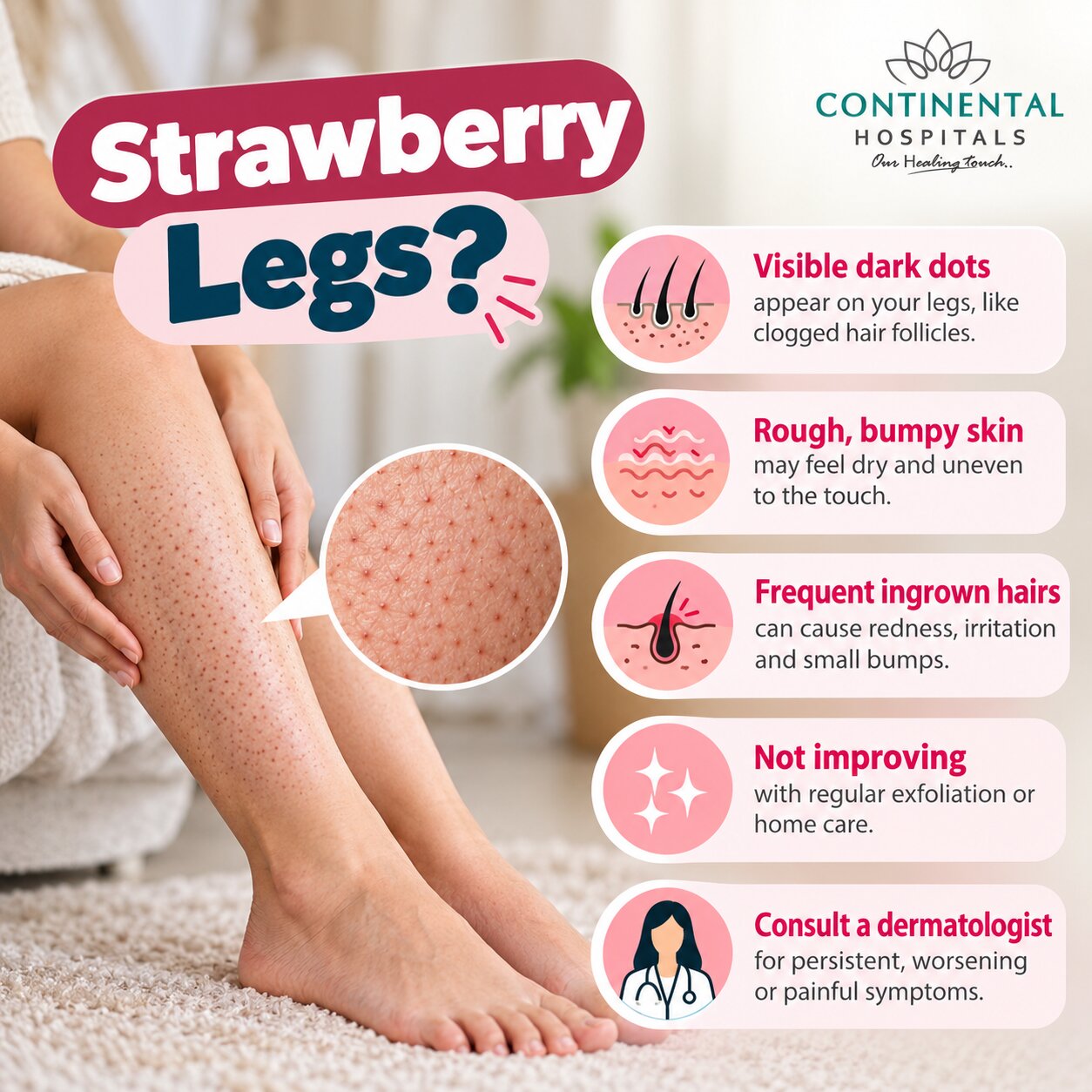
Strawberry legs is a common skin concern in which small dark spots appear on the legs, making the skin look similar to the surface of a strawberry. These spots often develop around hair follicles and may become more noticeable after shaving. Strawberry legs are usually harmless, but they can affect the appearance and smoothness of the skin.

What causes strawberry legs, and when should you seek professional help? Several factors, including clogged pores, ingrown hairs, dry skin, and inflammation of hair follicles, can contribute to this condition. Understanding the strawberry legs causes and choosing the right skincare routine can help improve your skin. However, if the dark spots persist, become painful, or develop signs of infection, consulting a dermatologist is important.

What Are the Common Symptoms of Strawberry Legs?

How can you identify strawberry legs? The condition usually appears as small, dark dots across the skin, particularly on the thighs and lower legs. The appearance may vary depending on your skin type and the underlying cause.

Common strawberry legs symptoms include:

  • Small dark spots: Tiny black or brown dots appear around hair follicles.
  • Visible pores: Hair follicles may look more noticeable than usual.
  • Rough skin texture: The skin may feel uneven or bumpy.
  • Ingrown hairs: Hair may grow back into the skin, causing small bumps.
  • Redness or irritation: Some people experience irritation after shaving or hair removal.
  • Dryness: Dry skin may make the spots and rough texture more noticeable.

Strawberry legs do not always cause discomfort. However, itching, pain, swelling, or pus may indicate another skin problem that needs medical attention.

Visit the Dermatology Department at Continental Hospitals, Hyderabad, for expert skin care and effective treatment options.

What Causes Strawberry Legs?

Why do dark spots appear on the legs? Strawberry legs can develop for several reasons, and more than one factor may contribute to their appearance.

The common strawberry legs causes include:

  • Clogged pores: Oil, dead skin cells, and other debris can block hair follicles, making them appear dark.
  • Shaving irritation: Using a dull razor or shaving without sufficient lubrication may irritate the skin.
  • Ingrown hairs: Hair that grows back into the skin can cause bumps and dark marks.
  • Folliculitis: Inflammation or infection of hair follicles may cause red bumps and spots.
  • Dry skin: Lack of moisture can make the skin look rough and uneven.
  • Keratosis pilaris: This common skin condition causes small, rough bumps around hair follicles.

Identifying the underlying cause helps determine the most suitable strawberry legs treatment.

Second Opinion

How Can You Get Rid of Strawberry Legs at Home?

Can strawberry legs improve with simple skincare? Yes, mild cases may improve with gentle skin care and appropriate hair removal techniques. However, results depend on the cause and your skin type.

Here are some useful strawberry legs remedies:

  • Exfoliate gently: Use a suitable exfoliating product to help remove dead skin cells. Avoid harsh scrubbing, which can worsen irritation.
  • Moisturize daily: Apply a fragrance-free moisturizer to keep the skin soft and hydrated.
  • Use a clean, sharp razor: Replace dull blades regularly to reduce irritation.
  • Shave carefully: Wet the skin with warm water and use shaving gel or cream. Shave gently in the direction of hair growth.
  • Avoid picking at spots: Picking can damage the skin and increase the risk of infection and dark marks.
  • Protect your skin from the sun: Apply sunscreen to exposed legs to help prevent dark spots from becoming more noticeable.

Avoid using harsh home remedies or strong skincare products without guidance, especially if your skin is sensitive.

When Should You Consult a Dermatologist for Strawberry Legs?

When is professional treatment necessary? If strawberry legs do not improve with regular skincare, or if the skin becomes uncomfortable, a dermatologist can help identify the cause and recommend suitable treatment.

Consult a dermatologist if you notice:

  • Persistent dark spots despite proper skincare.
  • Painful, swollen, or increasingly red bumps.
  • Pus or other signs of infection.
  • Severe itching or skin irritation.
  • Repeated ingrown hairs after shaving.
  • Dark marks that continue to spread or worsen.

A dermatologist may examine your skin and recommend treatments based on the underlying condition. These may include moisturizers, chemical exfoliants, topical medicines, or treatment for folliculitis when appropriate. In selected cases, laser hair removal may help reduce recurring ingrown hairs and irritation associated with hair removal.

Need an Appointment?

Why Choose Continental Hospitals for Dermatology Care?

Why is specialist care important for persistent strawberry legs? Similar-looking dark spots can develop from different skin conditions, so the right diagnosis helps prevent unsuitable treatments and further irritation.

Continental Hospitals, Hyderabad, provides comprehensive dermatology care supported by experienced specialists, modern diagnostic facilities, and multidisciplinary medical expertise. The hospital holds national and international healthcare accreditations, including National Accreditation Board for Hospitals and Healthcare Providers (NABH) and Joint Commission International (JCI), reflecting its commitment to established healthcare quality and patient safety standards.

Patients can receive an appropriate skin assessment and an individualized treatment plan based on their skin type, symptoms, and underlying condition. The aim is to improve skin health while reducing irritation and the risk of further skin changes.

Conclusion

Strawberry legs are a common skin concern that may result from clogged pores, shaving irritation, ingrown hairs, or other skin conditions. Gentle exfoliation, regular moisturizing, and proper shaving techniques may help improve mild cases. However, persistent dark spots or signs of inflammation should not be ignored.

If you suffer from persistent strawberry legs, recurring ingrown hairs, painful bumps, or unexplained dark spots on your legs, consult our best dermatologist in Hyderabad at Continental Hospitals, Hyderabad, for professional evaluation and personalized treatment. Early assessment can help identify the cause and guide you towards healthier, smoother skin.


Frequently Asked Questions

Strawberry legs is a common term for small dark spots on the skin of the legs. These spots often resemble the seeds on a strawberry. They usually appear around hair follicles. The condition may make the skin look dotted or uneven. Clogged pores can contribute to their appearance. Dead skin cells and excess oil may collect inside hair follicles. Shaving can also make the spots more noticeable. Ingrown hairs may contribute to similar bumps. In some cases, folliculitis may cause redness or irritation. Strawberry legs are generally harmless. However, their appearance can affect a person's confidence. The right treatment depends on the underlying cause. A dermatologist can examine the skin and recommend suitable care.
Strawberry legs can develop for several reasons. Clogged hair follicles are one common cause. Dead skin cells may accumulate inside the pores. Excess oil can contribute to blocked follicles. Shaving may leave dark follicular openings visible. Using a dull razor can increase skin irritation. Ingrown hairs can also create small bumps and dark spots. Dry skin may make the texture more noticeable. Keratosis pilaris can cause rough, follicular bumps. Folliculitis may produce inflamed spots around hair follicles. Some people may experience more noticeable pigmentation after irritation. The exact cause varies from person to person. Identifying the cause helps determine the most appropriate treatment.
Strawberry legs are usually harmless. They commonly affect the appearance and texture of the skin. Most cases do not indicate a serious medical problem. Dark spots may develop around normal hair follicles. Dryness and clogged pores can make them more noticeable. Shaving may also contribute to their appearance. Mild cases can often be managed with a gentle skincare routine. Regular moisturising may help improve skin texture. Avoid scratching or squeezing the affected areas. These actions can increase irritation and pigmentation. However, painful, swollen, or pus-filled bumps may indicate another condition. Persistent redness or spreading inflammation also needs medical attention. Consult a dermatologist if the spots worsen or do not improve.
Treatment for strawberry legs depends on the underlying cause. Gentle cleansing can help remove sweat and surface impurities. Regular moisturising helps reduce dryness. Products containing lactic acid or urea may improve rough skin. Salicylic acid may help unclog pores in suitable cases. Introduce exfoliating products gradually to avoid irritation. Avoid harsh scrubs that can damage the skin barrier. Use a clean, sharp razor when shaving. Shave in the direction of hair growth to reduce irritation. Avoid shaving too closely if it triggers bumps. Do not pick or squeeze dark spots. Persistent symptoms may require prescription treatment. A dermatologist can recommend products suited to your skin. Consistent skincare may gradually improve the appearance of the legs.
Shaving can make strawberry legs more noticeable. A razor may leave hair follicle openings visible on the skin. Shaving can also irritate sensitive skin. Dull blades may increase friction and discomfort. Shaving against the direction of hair growth can encourage ingrown hairs. These hairs may cause small bumps and dark marks. Using a clean, sharp razor can help reduce irritation. Wet the skin with warm water before shaving. Apply a gentle shaving gel or cream. Shave in the direction of hair growth. Avoid repeatedly passing the razor over the same area. Moisturise the skin after shaving. Consider other hair removal methods if shaving repeatedly causes irritation. Seek dermatological advice if bumps become painful or inflamed.
You should consult a dermatologist if strawberry legs persist despite regular skincare. Medical advice is important when the spots keep getting worse. Painful or itchy bumps may need professional evaluation. Redness, swelling, or pus can indicate inflammation or infection. Seek care if the affected area feels unusually warm. Spreading redness should be assessed promptly. Repeated ingrown hairs may require a different hair removal approach. Persistent dark marks may need targeted treatment. A dermatologist can distinguish strawberry legs from other skin conditions. They may examine your hair follicles and skin texture. Treatment could include suitable topical products or prescription medicines. Avoid using strong exfoliants without professional guidance if your skin is irritated. Early evaluation can help prevent further irritation and pigmentation. Seek urgent medical attention if redness spreads rapidly or you develop fever.
Strawberry legs can improve with appropriate skincare. The outcome depends on what causes the dark spots. Clogged pores may improve with gentle cleansing and suitable exfoliation. Dry skin often benefits from regular moisturising. Shaving-related irritation may decrease when shaving habits change. Ingrown hairs may improve with better hair removal techniques. Dark marks can take longer to fade than bumps. Avoid picking or scratching the affected skin. Use sunscreen on exposed legs to help prevent pigmentation from becoming darker. Introduce new skincare products gradually. Stop using products that cause burning or persistent irritation. Some conditions may need treatment from a dermatologist. Improvement may take several weeks or longer. A consistent routine can help maintain smoother-looking skin.
You may be able to reduce the appearance of strawberry legs with simple skincare habits. Cleanse your legs gently every day. Apply a moisturiser to help maintain the skin barrier. Use a clean, sharp razor when shaving. Wet your skin and apply shaving gel before using a razor. Shave in the direction of hair growth. Avoid shaving repeatedly over the same area. Exfoliate gently when your skin tolerates it. Do not use harsh scrubs on irritated skin. Avoid squeezing bumps or digging out ingrown hairs. Wear comfortable clothing if friction worsens irritation. Use sunscreen on exposed skin to help limit darkening. Choose skincare products suited to your skin type. Consult a dermatologist if the spots continue to recur.
Not every case of strawberry legs requires medical treatment. Mild cases may improve with gentle skincare and moisturising. The need for treatment depends on the underlying cause. Clogged pores may respond to suitable exfoliating products. Shaving-related irritation may improve with better shaving techniques. Keratosis pilaris may require ongoing skin care. Folliculitis may need specific treatment depending on its cause. Persistent pigmentation may benefit from a dermatologist's advice. Avoid using prescription creams without medical guidance. Strong exfoliants can worsen irritation when used incorrectly. A dermatologist can identify the condition responsible for the spots. They can recommend appropriate products or procedures if needed. Seek medical advice if symptoms persist, worsen, or become painful. Professional evaluation helps ensure that treatment addresses the actual skin concern.
Disclaimer: The information provided in this blog is intended for general knowledge and informational purposes only, and does not constitute medical advice. Always consult with a qualified healthcare professional for any medical concerns or before making any decisions about your health.

Get in Touch With Us

Whether you are from India or abroad, we are here to help you with your medical queries. Please fill out the form below and our team will connect with you shortly.

  • ✔ Quick response from our medical experts
  • ✔ Secure data handling & privacy
  • ✔ Easy upload for reports & documents
banner_image

Chat with our medical experts on WhatsApp for quick assistance and hassle-free appointment booking

Recent Posts