
post-title

What Happens to Your Body When You Donate Blood? 7 Benefits Explained

Written by - Editorial Team
Medically Reviewed by - Dr Divya Varikallu

Blood donation is a very easy process that can actually change somebody's life. People require blood on a regular basis for their surgeries, road traffic accidents, cancer treatment, childbirth complications, and various medical emergencies. By donating blood, you are actually providing a life-saving material to the one who needs it. But do you want to know what exactly goes on in your body once you have donated blood?

Blood donation is basically the process of taking a little quantity of blood from a healthy individual under the guidance of professionals. Your body will start restoring the fluid that is lost along with producing new blood. Blood donation not only helps the patients but also gives you a chance to check your overall health status. However, keep in mind that blood donation is primarily meant for helping other people.

Seven Advantages of Blood Donation?

Why is it crucial for everyone to donate blood in order to benefit both individual people and the community? Take a look at these seven benefits.

1. What Is the Significance of Blood Donation in Saving Lives?

One of the most essential blood donation benefits lies in its ability to save the lives of those who need a blood transfusion. Blood donation helps people going through some serious surgical operation, chemotherapy, and other types of emergency treatments.

It should be noted that donated blood can be divided into several components (red blood cells, plasma, and platelets), depending on the process of separation. That way, one blood donation may help several patients.

2. Can Blood Donation Improve Your Health Status?

When it comes to blood donation, before giving your blood, some preliminary tests will be conducted, which will include checking your hemoglobin levels, blood pressure, pulse rate and your eligibility to give blood.

These tests do not serve as a full medical check-up and cannot substitute medical examinations.

Visit the General Medicine Department at Continental Hospitals, Hyderabad, for expert medical care and guidance.

3. Is Blood Donation Good for Maintaining Normal Iron Levels?

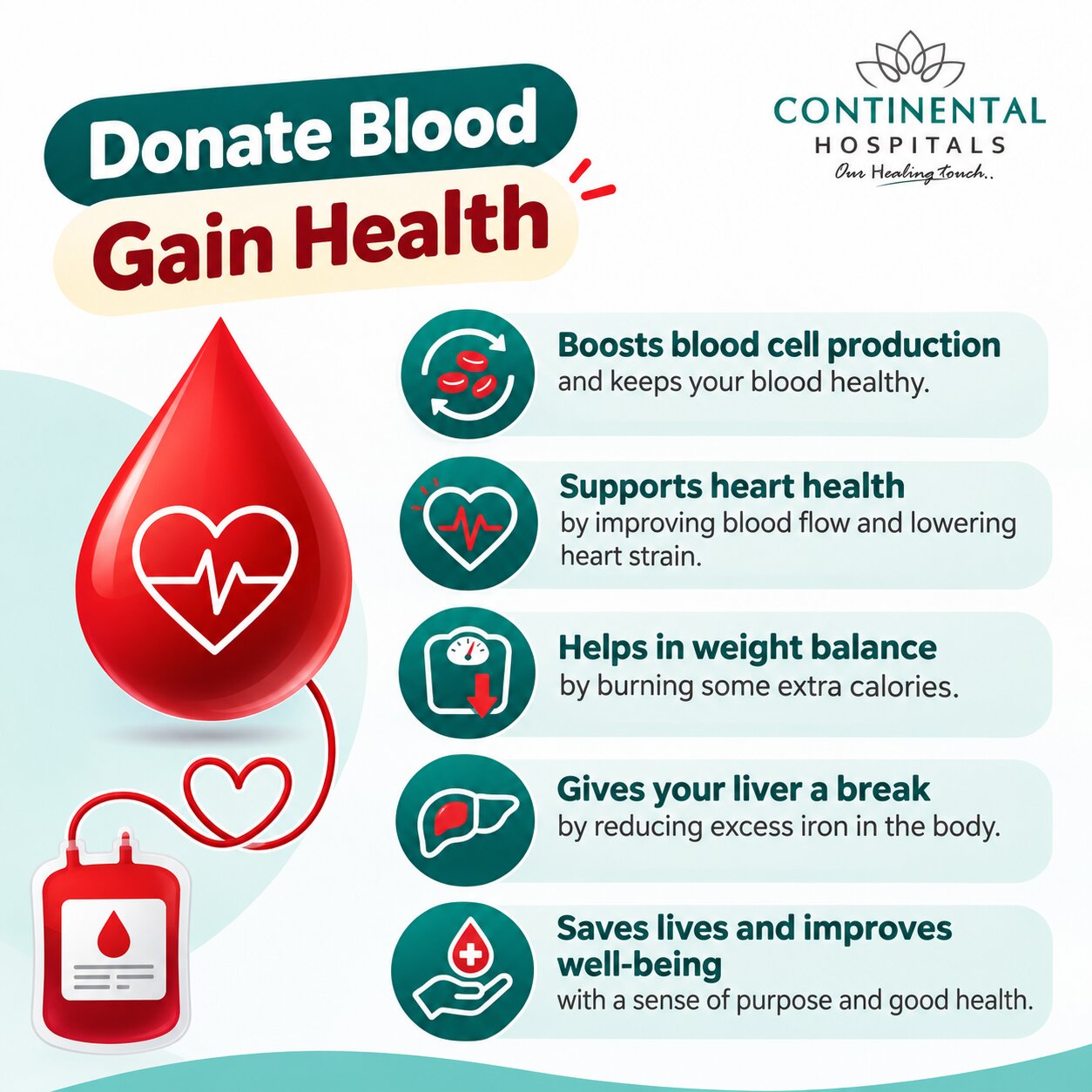
How is iron affected by blood donation? The process involves removal of some amount of red blood cells, which in turn leads to depletion of iron. The body uses iron to make new hemoglobin and red blood cells.

Second Opinion

In cases where individuals have too much iron because of some medical conditions, the doctor may suggest the removal of blood as a treatment method. Yet, the blood donation itself cannot be viewed as the means of lowering the iron level without consulting a physician. It can also cause iron deficiency.
4. Is Blood Donation Helpful for Having a Healthy Heart?

Is there any relationship between blood donation and having a healthy heart? There have been studies that looked into the connection between regular blood donation and its impact on cardiovascular system. However, there is no sufficient evidence to recommend blood donation as prevention from heart disease.

It is important to keep a proper diet, exercise, control blood pressure, and not smoke to maintain a healthy heart.

5. How Is Blood Donation Important in Case of Medical Emergencies?

Hospitals require a blood supply in order to be prepared for any emergency situation. Accident victims, complicated surgeries, and people losing a lot of blood at once may need a transfusion of blood at once.

Blood donors will make it possible to get access to blood and receive timely medical aid.

6. Will Blood Donation Lead to a Healthier Way of Living?

The process of becoming a regular blood donor will make you think more about your overall well-being. You will start to care more about your hydration, diet, sleep, and healthy living.

Need an Appointment?

7. Does Blood Donation Have a Positive Influence on Community?

Blood donation brings people together because of the same purpose. Voluntary donors will provide an assured source of blood for those patients who may not get any immediate assistance otherwise.

Community blood drives will help people realize the importance of helping each other in case of a medical emergency.

What Happens to Your Body When Donating Blood?

How does your body react to donating blood? The procedure usually takes place in these phases:

1. Registration: Personal information and medical background are taken down.
2. Health Assessment: Your hemoglobin level, blood pressure, and pulse rate are checked by healthcare workers.
3. Blood Drawing: Blood is withdrawn using new and sterile instruments.
4. Rest Period: It is necessary for you to rest and drink fluids.
5. Regeneration: Your body regenerates plasma quite quickly, but it takes weeks for red blood cells to recuperate.

This procedure is normally harmless for eligible donors, who undergo it under the supervision of trained medical personnel.

Who Can Give Blood and Who Can’t?

Is it possible for anyone to give blood? No. The eligibility of blood donation varies according to your age, weight, hemoglobin, past health records, and local blood donation requirements.

The following people may need to delay their blood donation or shouldn’t consider giving blood at all:

  • Those who have a low hemoglobin count or anemia.
  • Individuals who have a fever or an ongoing infection.
  • Women who are pregnant or have recently delivered.
  • Patients with some kinds of chronic diseases.
  • People on medicines that can interfere with the process of blood donation.
  • Those who gave blood very recently.

Make sure to take a medical examination before giving blood.

How to Look After Yourself After Blood Donation?

  • Have lots of water.
  • Consume nutritious food with lots of iron.
  • Do not indulge in vigorous physical activity for the rest of the day.
  • Keep the dressing as recommended by the health professional.
  • Do not smoke soon after blood donation.
  • If feeling dizzy, remain sitting or lying down.
  • In case of any problem, contact the health professionals.

Why Select Continental Hospitals for Blood and Medical Services?

What are the reasons for selecting a properly equipped hospital for the provision of blood-related medical service? Blood transfusion, blood disorders, and other medical emergencies need proper assessment, proper clinical procedures, and professional health-care providers.

Hyderabad-based Continental Hospitals offer all kinds of medical services with the help of skilled and knowledgeable specialists along with up-to-date diagnostic and medical services. Continental Hospitals are internationally recognized and accredited healthcare hospitals, as they have got Joint Commission International (JCI) and NABH (National Accreditation Board for Hospitals and Healthcare Providers).

Continental Hospitals practice evidence-based medicine and a patient-centered approach and hence support those patients who need blood-related services.

Conclusion

Blood donation is an effective measure to support the patients who rely on the transfusion of their bodies in emergencies, surgeries, and medical procedures. Also, blood donation comprises basic health checks and promotes awareness towards maintaining your health. While blood donation must not be seen as a solution to improve your cardiovascular health or decrease iron content in the body, there is no denying the significance of blood donation in saving lives.

In case of anemia, unexplained tiredness, or any other issues related to your blood, consult our best general physician in Hyderabad at Continental Hospitals, Hyderabad. In case you want to donate blood, make sure you qualify for it and have medical guidance for before and after the blood donation.

Related Blogs:

  1. Why Are Blood Donation Rates Declining?
  2. Why Blood Donation Is a Lifesaving Habit

Frequently Asked Questions

When you donate blood, approximately 350 to 450 ml of blood is collected, depending on your eligibility and local donation guidelines. The process usually takes around 8 to 15 minutes for whole blood collection. Before donation, your health and haemoglobin levels are checked. A sterile, single-use needle is used to collect blood. Your body immediately begins replacing the lost fluid. Plasma volume is generally restored within a day or two. Red blood cells take several weeks to replenish. Your bone marrow produces new blood cells to replace those donated. You may experience mild tiredness or dizziness temporarily. Drinking enough water helps support recovery. Eating a healthy meal before and after donation is important. Most healthy, eligible donors recover quickly. Blood donation also helps provide blood for patients who need transfusions.
Blood donation provides an important benefit to patients who need life-saving transfusions. It helps people undergoing major surgeries and emergency treatments. Patients with severe injuries may require donated blood. People receiving cancer treatment may also need transfusions. Blood donation supports individuals with certain blood disorders. Donating blood also gives you an opportunity to check basic health parameters. These checks may include haemoglobin, blood pressure and pulse. Eligible donors may receive information about their blood group. Regular donation can help maintain a reliable blood supply. It encourages awareness about community health needs. Some observational studies have explored possible cardiovascular benefits, but these are not firmly established. Blood donation should not be considered a treatment for preventing heart disease. The most established benefit is helping save and improve other people's lives.
Blood donation has been studied for its possible effects on cardiovascular health. Some research has explored the relationship between blood donation and iron levels. Excess iron stores have been investigated for their potential role in oxidative stress. However, evidence that blood donation directly improves heart health is limited. Donating blood does not guarantee protection against heart disease. It should not replace regular heart health check-ups. Maintaining healthy blood pressure is important for cardiovascular wellness. Eating a balanced diet supports heart function. Regular physical activity also helps maintain a healthy heart. Avoiding smoking can reduce cardiovascular risks. Managing diabetes and cholesterol is equally important. People with existing heart conditions should consult their doctor before donating blood. Blood donation should always be based on medical eligibility. Its primary proven benefit is supporting patients who require blood.
Blood donation requires your body to replace the blood components that are collected. This process involves energy and metabolic activity. However, donating blood is not a reliable or recommended way to burn calories. Some estimates suggest that the body uses additional energy while replenishing donated blood. The exact calorie expenditure varies between individuals. Blood donation should never be considered a weight-loss method. It does not replace exercise or healthy eating habits. Your body needs adequate nutrition after donation. Iron-rich foods help support red blood cell production. Foods such as spinach, lentils and beans can contribute dietary iron. Vitamin C helps improve the absorption of iron from plant-based foods. Drinking enough water also supports recovery. Healthy weight management requires consistent lifestyle habits. Donate blood only when you meet the recommended eligibility criteria.
Your body starts replacing donated blood immediately after collection. The fluid component, known as plasma, is usually replenished within 24 to 48 hours. Red blood cell production takes considerably longer. It generally takes several weeks to replace the donated red blood cells. The exact recovery time varies depending on your health and iron levels. Iron stores may take several months to recover completely. Eating iron-rich foods supports healthy red blood cell production. Include lentils, beans, leafy vegetables and fortified cereals in your diet. Vitamin C-rich fruits can improve iron absorption. Drinking sufficient fluids helps restore blood volume. Avoid strenuous exercise immediately after donating blood. Get adequate rest if you experience tiredness. Follow the recommended interval before your next donation. Consult a healthcare professional if unusual weakness or dizziness continues.
Eating nutritious food after blood donation helps support your recovery. Choose meals containing iron to support red blood cell production. Spinach, lentils and beans are useful plant-based iron sources. Eggs and lean meat can also provide important nutrients. Include vitamin C-rich foods such as oranges and guavas. Vitamin C improves the absorption of iron from plant-based foods. Whole grains provide energy and essential nutrients. Nuts and seeds can contribute iron and other minerals. Drink plenty of water throughout the day. Avoid skipping meals after donating blood. Limit alcohol consumption immediately after donation. Avoid heavy exercise for the rest of the day. A balanced diet supports the replacement of blood components. If you have low haemoglobin or iron deficiency, seek medical advice about appropriate dietary changes.
Not everyone is eligible to donate blood. People with low haemoglobin levels may need to postpone donation. Individuals with certain active infections should not donate until they recover. People with specific medical conditions may require additional assessment. Pregnant women are generally not eligible to donate blood. Individuals who have recently undergone certain surgeries may need to wait. Some medications can temporarily affect donation eligibility. People with a history of certain blood-borne infections may be permanently deferred under applicable guidelines. Individuals who feel unwell on the day of donation should postpone it. Minimum age and weight requirements must also be satisfied. Eligibility criteria may vary according to national guidelines and blood bank policies. A medical screening is conducted before donation. Always share your complete medical history with the blood donation team.
The frequency of blood donation depends on the type of donation and applicable medical guidelines. For whole blood donation in India, the usual minimum interval is three months for men and four months for women. These intervals help allow the body to replenish donated blood components. Your haemoglobin level must meet the required eligibility criteria. Iron stores are also important for maintaining healthy red blood cell production. Donating more frequently than recommended can increase the risk of iron deficiency. Blood banks conduct health screening before accepting donations. Your age, weight and medical history are considered. People who feel weak or unwell should postpone donation. Maintaining a balanced diet supports recovery between donations. Always follow the advice of the blood bank medical team. Do not donate blood more frequently than permitted. Regular voluntary donation can help maintain an adequate blood supply for patients.
Disclaimer: The information provided in this blog is intended for general knowledge and informational purposes only, and does not constitute medical advice. Always consult with a qualified healthcare professional for any medical concerns or before making any decisions about your health.

Get in Touch With Us

Whether you are from India or abroad, we are here to help you with your medical queries. Please fill out the form below and our team will connect with you shortly.

  • ✔ Quick response from our medical experts
  • ✔ Secure data handling & privacy
  • ✔ Easy upload for reports & documents
banner_image

Chat with our medical experts on WhatsApp for quick assistance and hassle-free appointment booking

Recent Posts