post-title

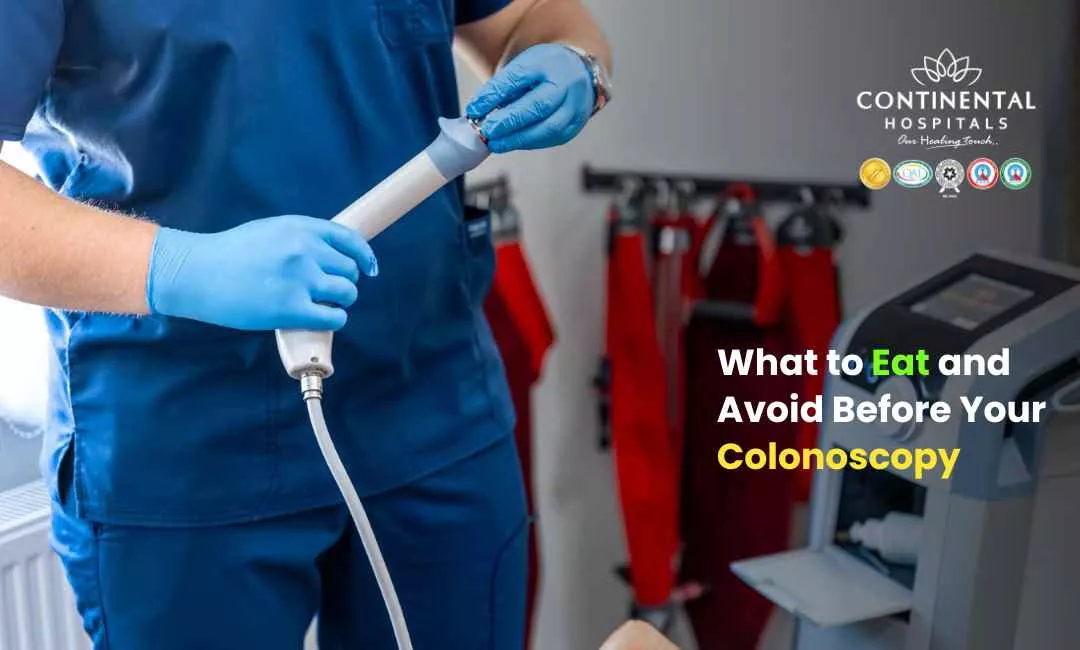
What to Eat and Avoid Before Your Colonoscopy

Written by - Editorial Team
Medically Reviewed by - Dr Guru N Reddy

Preparing for a colonoscopy may feel overwhelming, especially when it comes to what you should eat and what you must avoid. But with the right guidance, this preparation can be simple, safe, and effective. A colonoscopy is a vital test that helps doctors look inside your colon and rectum to detect conditions like polyps, bleeding, inflammation, or even early signs of colorectal cancer. To ensure the results are accurate, your digestive tract must be completely clean. This is where diet plays a very important role.

Why does diet matter before a colonoscopy?

Your doctor needs a clear view of the inside of your colon to make an accurate diagnosis. If your bowel is not properly cleaned, small polyps or abnormalities may be missed, and you may even have to repeat the procedure. That is why following dietary instructions carefully is just as important as the procedure itself.

Think of your diet before colonoscopy as part of the treatment process. By eating the right foods and avoiding the wrong ones, you help your doctor get a clear picture of your health and avoid delays or complications.

Visit our gastroenterology specialist doctors at Continental Hospitals, Hyderabad, for expert diagnosis and advanced treatment for all digestive and liver conditions.
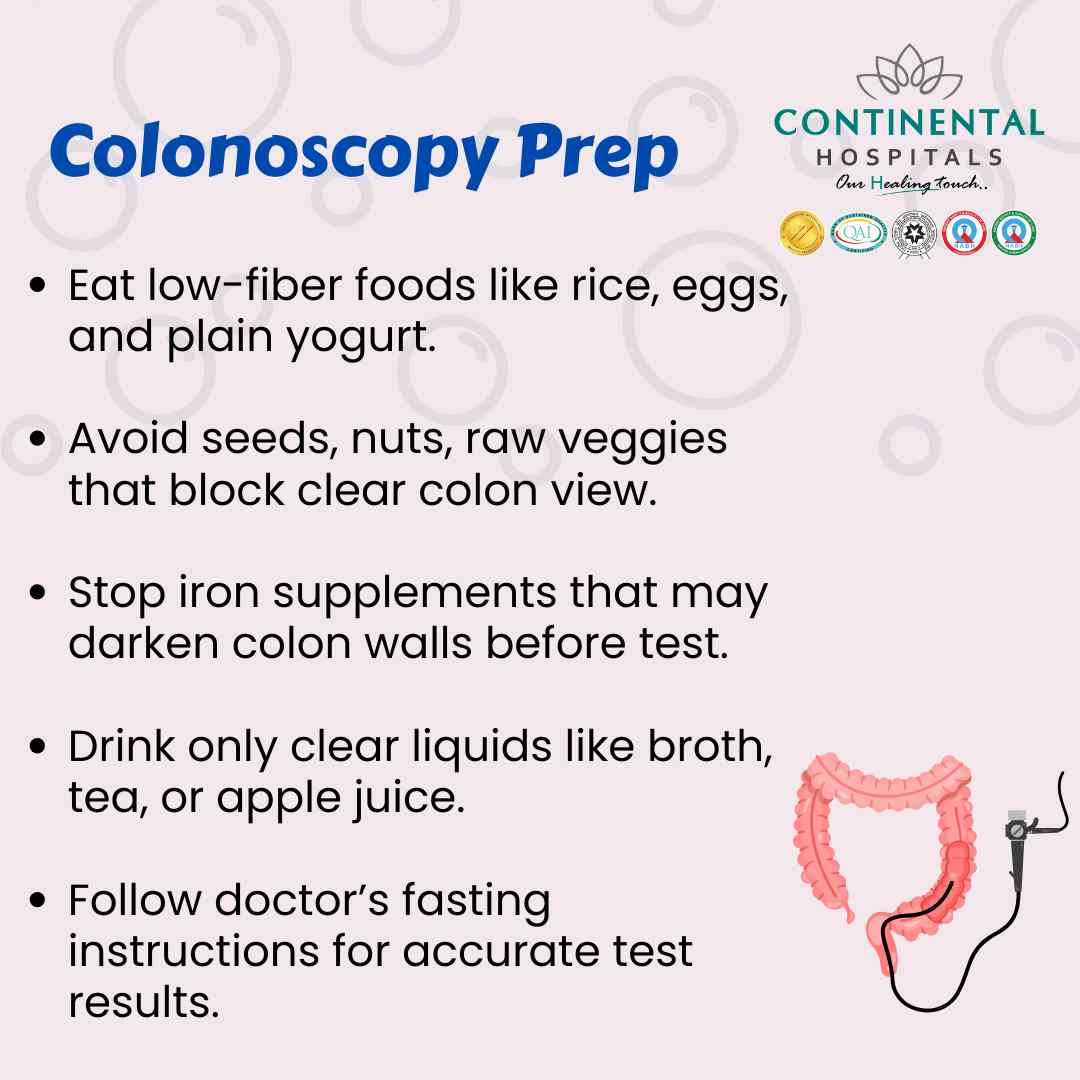
What foods can I eat before a colonoscopy?

1. Clear Liquids

Clear liquids are your best friend during preparation. These include:

  • Water
  • Clear broth (vegetable, chicken, or beef)
  • Coconut water
  • Herbal teas without milk
  • Apple juice or white grape juice
  • Clear sports drinks

Clear liquids keep you hydrated and provide energy without leaving residue in your digestive tract.

2. Low-Fiber Foods

Fiber is normally healthy, but before a colonoscopy, it can leave residue that blocks visibility. Choose foods that are low in fiber such as:

  • White rice
  • White bread or plain toast
  • Plain pasta
  • Eggs
  • Lean chicken or fish without skin

Well-cooked peeled vegetables like carrots or pumpkin

Second Opinion

3. Easy-to-Digest Snacks

Light snacks that don’t strain your stomach include:

  • Yogurt without seeds or fruit bits
  • Plain crackers
  • Gelatin desserts (without red, blue, or purple coloring)

These foods keep your energy up while preparing your bowel.

What foods should I avoid before a colonoscopy?

1. High-Fiber Foods
Stay away from:

  • Whole grains like brown rice, oats, and multigrain bread
  • Nuts, seeds, and popcorn
  • Raw vegetables, leafy greens, and corn
  • Fruits with skins or seeds such as apples, grapes, or tomatoes

These foods leave residue that makes it harder for the doctor to see inside your colon.

2. Red, Blue, or Purple Foods and Drinks
Avoid food or liquid with these colors because they can stain the lining of your colon and look like blood during the test.

3. Fatty or Fried Foods
Greasy or fried food takes longer to digest and can interfere with bowel cleansing.

4. Dairy with Additives
Skip milk with added fiber, cheese with seeds, or flavored yogurts with fruit bits. These may create residue.

Need an Appointment?

What is a sample diet plan before colonoscopy?

Here s a simple example of what you can eat in the two days before your colonoscopy:

Two Days Before

  • Breakfast: White bread toast with boiled eggs
  • Lunch: White rice with clear vegetable broth
  • Snack: Plain yogurt or crackers
  • Dinner: Grilled chicken with mashed pumpkin

One Day Before

  • Breakfast: Herbal tea with plain toast
  • Mid-morning: Clear apple juice
  • Lunch: Clear broth and plain crackers
  • Snack: Coconut water or sports drink
  • Dinner: Gelatin dessert or clear soup

On the evening before your test, you will likely be asked to drink a prescribed bowel preparation solution. This flushes out your intestines to ensure they are completely clean.

How do I prepare for a colonoscopy smoothly?

Hydrate well: Drink plenty of clear fluids to avoid dehydration.

Follow instructions exactly: Your doctor’s prep plan is customized for you, so do not skip steps.

Stay comfortable: Keep tissues, petroleum jelly, or wipes handy as frequent bowel movements may cause irritation.

Rest well: Adequate sleep will help your body recover after the preparation and procedure.

What Happens If You Don’t Follow the Diet?

If you eat the wrong foods or skip instructions, your colon may not be clean enough for the doctor to examine. This can lead to:

  • Rescheduling of your test
  • Increased risk of missed diagnosis
  • More discomfort and extra preparation

That is why it is always better to prepare properly the first time.

Why Choose Continental Hospitals for Colonoscopy?

At Continental Hospitals, we understand that preparing for a colonoscopy can be stressful. That is why we provide clear guidance, patient-friendly care, and advanced medical support at every step.

International Accreditations: Continental Hospitals is accredited by JCI (Joint Commission International) and NABH, ensuring world-class safety and quality standards.

Expert Specialists: Our team of gastroenterologists and endoscopists are highly experienced in performing colonoscopies with precision and care.

Advanced Technology: We use state-of-the-art endoscopy equipment to provide accurate results.

Comprehensive Care: From pre-procedure counseling to post-procedure monitoring, our doctors and nursing teams ensure complete patient comfort.

Trusted Reputation: Recognized as one of the leading multispecialty hospitals in Hyderabad, Continental Hospitals is known for excellence in digestive and liver care.

Choosing Continental Hospitals means choosing quality, safety, and compassionate care.

Conclusion

Your diet before colonoscopy is not just a small detail, it is the key to ensuring that your doctor gets the clearest possible view of your colon. Eating the right foods like clear liquids, low-fiber meals, and easy-to-digest snacks while avoiding high-fiber, fatty, or colored foods will help make your test successful.

If you suffer from digestive issues, persistent abdominal pain, rectal bleeding, or have a family history of colon cancer, a colonoscopy could be life-saving.

Book your appointment today with our best gastroenterologist in hyderabad at Continental Hospitals, Hyderabad, and get the care you deserve.

Related Blog Topics

  1. Colonoscopy Prep: Step-by-Step Guide for First-Timers
  2. Colonoscopy Prep Diet: Foods to Eat and Skip

Frequently Asked Questions

A few days before your colonoscopy, choose foods that are easy to digest and low in fiber. Good options include white rice, white bread, plain pasta, potatoes without skin, eggs, lean chicken, fish, yogurt, cheese, and clear soups. These foods leave less residue in the colon, making bowel preparation more effective. Drink plenty of water throughout the day to stay hydrated. Avoid overeating and choose smaller, balanced meals. Follow your doctor's instructions regarding when to switch to a clear liquid diet, usually one day before the procedure. Proper food choices help ensure a clean colon, improve visibility during the examination, and reduce the chances of repeating the procedure because of inadequate bowel preparation.
Avoid foods that are high in fiber, difficult to digest, or likely to leave residue in the intestines. This includes whole grains, brown rice, nuts, seeds, popcorn, beans, lentils, raw vegetables, salads, and fruits with skin or seeds. Stay away from corn, berries, dried fruits, and spicy or fried foods. These foods can remain in the colon and interfere with the doctor's ability to clearly examine the intestinal lining. Also avoid alcohol unless your doctor advises otherwise. Following the recommended diet helps improve bowel cleansing, reduces the risk of missed abnormalities, and ensures the colonoscopy can be completed successfully in a single visit.
Some fruits and vegetables may be allowed several days before the procedure if they are well cooked, peeled, and low in fiber. However, during the final days leading up to your colonoscopy, it is best to avoid raw vegetables, leafy greens, berries, apples with skin, grapes, tomatoes, and any produce containing seeds. These can leave particles inside the colon that are difficult to remove during bowel preparation. If you want to eat vegetables, choose peeled and well-cooked options only if permitted by your healthcare provider. Always follow the specific dietary instructions provided by your gastroenterologist, as recommendations may vary depending on your health condition and procedure schedule.
The day before your colonoscopy, you will usually be advised to consume only clear liquids. Acceptable choices include water, clear vegetable or chicken broth, apple juice without pulp, white grape juice, clear soft drinks, black coffee without milk, plain tea, oral rehydration solutions, and clear sports drinks. You may also have plain gelatin that does not contain red, blue, or purple coloring. Staying well hydrated is important because the bowel preparation medicine can lead to significant fluid loss. Avoid milk, creamy beverages, alcohol, smoothies, fruit juices with pulp, and any drink with artificial colors that could interfere with the examination.
Red, blue, and purple colored foods or drinks can leave stains inside the colon that may resemble blood or other abnormalities during the examination. This can make it difficult for the gastroenterologist to accurately assess the lining of the colon. Colored gelatin, sports drinks, candies, ice pops, and fruit beverages containing these dyes should be avoided during the clear liquid phase of preparation. Choosing clear or lightly colored liquids helps provide a better view during the procedure. Following these recommendations supports accurate diagnosis, reduces unnecessary confusion, and helps your doctor identify polyps or other abnormalities more effectively.
Many routine medications can be continued, but some require adjustment before a colonoscopy. Blood thinners, diabetes medications, iron supplements, and certain herbal products may need to be stopped or modified based on your doctor's advice. Never discontinue prescribed medicines without consulting your healthcare provider. Inform your gastroenterologist about all prescription medications, over-the-counter drugs, vitamins, and supplements you are taking. Your doctor will provide individualized instructions depending on your medical history and the type of colonoscopy planned. Proper medication management helps reduce the risk of complications while ensuring the procedure is performed safely and effectively.
Yes, fasting is an essential part of colonoscopy preparation. Most patients are instructed to stop eating solid foods the day before the procedure and consume only clear liquids. You will also be asked to stop drinking all liquids a few hours before the scheduled examination, depending on your doctor's instructions and the type of sedation used. Fasting reduces the risk of aspiration during sedation and ensures the bowel remains clean for accurate examination. Carefully following the fasting schedule improves safety, enhances the quality of the procedure, and helps your gastroenterologist thoroughly evaluate the entire colon.
Not following the recommended diet before a colonoscopy can result in incomplete bowel cleansing. Food particles or stool remaining in the colon may block the doctor's view, making it difficult to detect polyps, inflammation, bleeding, or early signs of colorectal cancer. In some cases, the procedure may take longer or need to be repeated on another day, causing unnecessary inconvenience and additional expense. Following the dietary guidelines, taking the bowel preparation exactly as instructed, and staying well hydrated greatly improve the success of the examination. Careful preparation helps ensure accurate results and reduces the likelihood of repeat procedures.
Disclaimer: The information provided in this blog is intended for general knowledge and informational purposes only, and does not constitute medical advice. Always consult with a qualified healthcare professional for any medical concerns or before making any decisions about your health.

Get in Touch With Us

Whether you are from India or abroad, we are here to help you with your medical queries. Please fill out the form below and our team will connect with you shortly.

  • ✔ Quick response from our medical experts
  • ✔ Secure data handling & privacy
  • ✔ Easy upload for reports & documents
banner_image

Chat with our medical experts on WhatsApp for quick assistance and hassle-free appointment booking

Recent Posts