
post-title

When to Consult an Orthopedic Doctor for Joint Pain

Written by - Editorial Team
Medically Reviewed by - Dr Arun Reddy Mallu

Joint pain is a common issue that can affect anyone, regardless of age. Whether it’s mild discomfort or chronic pain, understanding when to seek help from a specialist is key to preventing long-term damage. An orthopedic doctor specializes in diagnosing and treating conditions related to bones, joints, muscles, and ligaments. If you’ve been wondering whether your joint pain requires medical attention, this guide will help you understand the signs, symptoms, and benefits of early orthopedic consultation.

What Is Joint Pain?

Joint pain can stem from many causes such as injury, overuse, inflammation, or chronic conditions like arthritis. It may affect any joint in the body, including the knees, hips, shoulders, elbows, wrists, or ankles. The pain can range from a dull ache to sharp, disabling discomfort.

While occasional joint discomfort may be manageable with rest and basic care, ongoing or worsening pain should not be ignored. That’s where an orthopedic joint pain specialist comes in.

visit the top orthopedic doctors in Hyderabad at Continental Hospitals. Our team of the best orthopedic specialists in Hyderabad provides personalized care, accurate diagnosis, and advanced treatment options to help you regain mobility, reduce pain, and get back to living life comfortably.
What are the common causes of joint pain?

Understanding the source of your joint pain helps guide proper treatment. Some of the most common causes include:

Osteoarthritis: A degenerative condition where joint cartilage wears down over time.

Rheumatoid arthritis: An autoimmune condition causing joint inflammation.

Injury: Falls, sports injuries, or trauma can result in ligament tears, dislocations, or fractures.

Second Opinion

Tendonitis or Bursitis: Inflammation of tendons or bursae due to repetitive motion or strain.

Gout: A form of arthritis caused by the buildup of uric acid crystals in joints.

If you're experiencing symptoms that point to these conditions, it's time to see a joint pain doctor for an accurate diagnosis.

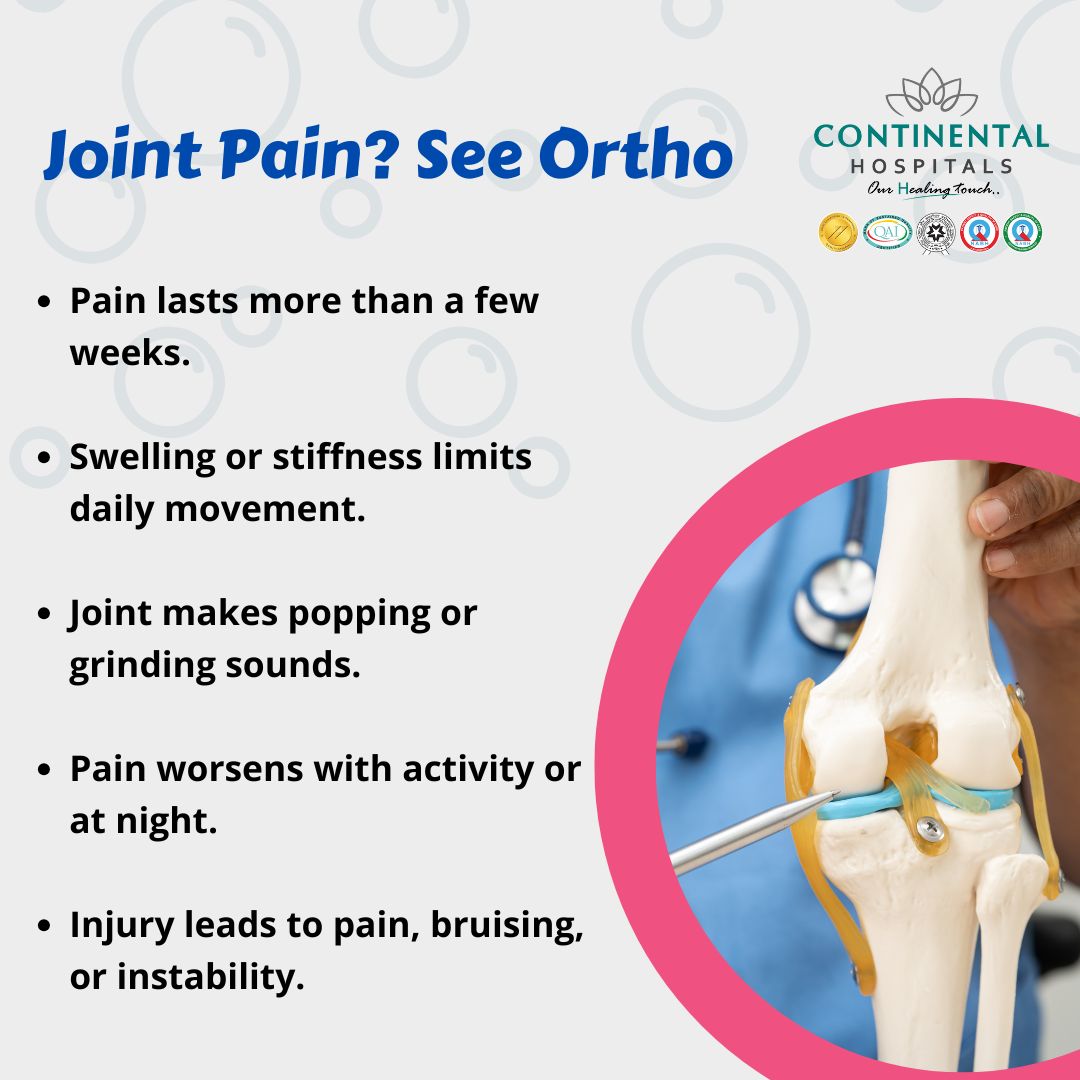
What are the signs you need to see an orthopedic doctor?

Many people try to live with joint pain, hoping it will go away on its own. However, ignoring the symptoms can lead to long-term joint damage or reduced mobility. Here are clear signs you should book an orthopedic consultation:

1. Persistent or Worsening Pain
If joint pain lasts more than a few days or gets worse with movement or rest, it may be a sign of an underlying issue that needs attention.

2. Swelling or Redness Around Joints
Inflammation is a common indicator of conditions like arthritis or infection. Joint swelling and pain that do not improve should be evaluated by a bone and joint doctor.

3. Limited Range of Motion
Difficulty moving the joint, stiffness after waking up, or trouble bending or straightening a limb can signal joint damage.

Need an Appointment?

4. Joint Instability or Weakness
If your joints feel weak, wobbly, or unstable during daily activities, it may indicate ligament issues or cartilage wear.

5. Grinding or Popping Sounds
Noises like popping or grinding (crepitus) when moving your joints could point to cartilage deterioration.

6. Joint Deformity
Visible changes in joint structure or alignment may need surgical correction from an orthopedic surgeon's consultation.

What type of doctor should I see for joint pain?

Orthopedic doctors specialize in different types of care depending on the joint and condition. Here are some common specialties you may encounter:

  • Knee Pain Specialist: Treats conditions such as meniscus tears, ligament injuries, and osteoarthritis.
  • Hip Pain Doctor: Manages hip fractures, labral tears, and joint replacements.
  • Spine and Shoulder Specialists: Address conditions like rotator cuff injuries and spinal disorders.

If you're unsure which specialist to see, start with a general orthopedic near me consultation to get a full evaluation.

What are the benefits of early orthopedic treatment?

Seeking early treatment from a qualified orthopedic doctor provides several advantages:

Accurate Diagnosis: Proper imaging and tests can pinpoint the root cause of your pain.

Personalized Care Plan: From physical therapy to surgical options, treatment is tailored to your needs.

Improved Quality of Life: Reducing pain, increasing mobility, and preventing further damage can help you return to daily life comfortably.

Avoiding Complications: Ignoring chronic joint pain can lead to permanent joint damage or the need for more extensive surgery.

When Should I See an Orthopedic Doctor for Joint Pain?

Not all joint issues require surgery, but if conservative treatments like medication or therapy don’t work, a musculoskeletal pain expert may recommend surgery. Joint replacement, arthroscopy, or tendon repair may be options to restore function and relieve pain.

If you're experiencing chronic joint pain that interferes with your lifestyle, it’s best to consult an orthopedic surgeon before the condition worsens.

Why Choose Continental Hospitals for Orthopedic Care?

At Continental Hospitals, we offer expert orthopedic care with a multidisciplinary team approach. Our orthopedic specialists are experienced in treating a wide range of joint conditions—from arthritis symptoms to complex joint surgeries.

Here’s why patients trust us:

Advanced Diagnostics: Our imaging and testing services ensure accurate assessments.

Experienced Specialists: Our team includes top knee pain specialists, hip pain doctors, and musculoskeletal experts.

Comprehensive Treatment Plans: We provide both non-surgical and surgical solutions based on your unique condition.

Rehabilitation Support: Our physiotherapy and rehab units support full recovery after treatment.

Patient-Centric Approach: We focus on comfort, education, and long-term care for every patient.

Continental Hospitals is your trusted destination when searching for an orthopedic doctor near me or an orthopedic treatment center for long-lasting relief.

Conclusion

Joint pain is not just a part of getting older—it’s a condition that deserves expert attention. Whether it’s joint stiffness, swelling, or ongoing discomfort, the right orthopedic care can improve your mobility and quality of life.

If you suffer from joint pain that’s limiting your daily activities, it’s time to consult our Best Orthopedic Specialists in Hyderabad at Continental Hospitals. Our specialists are ready to guide you with personalized care, accurate diagnosis, and advanced treatment options.


Frequently Asked Questions

You should consult an orthopedic doctor if your joint pain lasts for more than a few days, keeps returning, or starts affecting your daily routine. Pain that worsens while walking, climbing stairs, lifting objects, or performing simple movements should not be ignored. Swelling, stiffness, redness, or warmth around the joint may indicate inflammation or injury. Difficulty bending or straightening the joint is another warning sign. If over-the-counter pain medicines provide only temporary relief, a specialist evaluation is recommended. Joint pain after a fall, accident, or sports injury also requires prompt medical attention. Early diagnosis helps identify the exact cause and prevents long-term joint damage. An orthopedic doctor can recommend the most suitable treatment, including medication, physiotherapy, injections, or surgery if needed.
Persistent joint pain can develop due to several medical conditions and injuries. Osteoarthritis is one of the most common causes, especially in older adults. Rheumatoid arthritis and other autoimmune disorders can also lead to chronic joint pain and swelling. Sports injuries, ligament tears, cartilage damage, and fractures may result in long-term discomfort if not treated properly. Repetitive movements at work or during exercise can strain the joints over time. Excess body weight places additional pressure on weight-bearing joints such as the knees and hips. Infections and metabolic conditions like gout may also trigger severe joint pain. Identifying the exact cause through clinical evaluation and imaging helps ensure the right treatment plan.
Joint pain may be considered serious if it is severe, sudden, or associated with swelling, redness, fever, or inability to move the joint. Pain that wakes you up at night or continues despite rest should also be evaluated. If you notice joint deformity, instability, or locking, medical attention is necessary. Difficulty bearing weight on the affected leg or using the affected arm is another warning sign. Pain following an injury should always be assessed to rule out fractures or ligament damage. Persistent symptoms lasting more than one or two weeks should not be ignored. Early diagnosis helps prevent complications and improves recovery. An orthopedic specialist can determine the cause through physical examination and appropriate diagnostic tests.
Some mild joint pain caused by temporary strain or overuse may improve with rest, ice application, and activity modification. However, persistent or recurring pain often indicates an underlying problem that requires medical evaluation. Ignoring chronic joint pain may allow the condition to worsen over time. Untreated arthritis, ligament injuries, or cartilage damage can lead to reduced mobility and permanent joint damage. Delaying treatment may also increase the need for more complex procedures in the future. Early diagnosis allows doctors to recommend conservative treatments that may prevent surgery. If your symptoms continue beyond a few days or interfere with daily activities, consult an orthopedic doctor for proper assessment.
An orthopedic doctor begins with a detailed medical history and physical examination to understand your symptoms. Depending on the findings, imaging tests such as X-rays may be recommended to assess bone and joint structure. MRI scans provide detailed images of cartilage, ligaments, tendons, and soft tissues. CT scans may be used for complex bone injuries. Blood tests can help identify infections, inflammatory arthritis, or autoimmune diseases. Joint fluid analysis may be performed if infection or gout is suspected. These investigations help identify the underlying cause accurately. A correct diagnosis enables the doctor to develop an effective and personalized treatment plan.
Treatment for joint pain depends on the underlying cause, severity, and overall health of the patient. Mild cases may respond to rest, lifestyle changes, medications, and physiotherapy. Weight management and regular strengthening exercises can reduce stress on the joints. Braces or supportive devices may improve stability and reduce pain. In some cases, corticosteroid or hyaluronic acid injections are recommended for symptom relief. Advanced arthritis or severe joint damage may require minimally invasive arthroscopy or joint replacement surgery. Modern orthopedic treatments focus on restoring movement while reducing pain. Your orthopedic specialist will recommend the most suitable option based on your condition.
Yes, healthy lifestyle habits play an important role in managing joint pain and improving joint function. Maintaining a healthy body weight reduces pressure on the knees, hips, and ankles. Regular low-impact exercises such as walking, swimming, and cycling help strengthen muscles that support the joints. Stretching exercises improve flexibility and reduce stiffness. Eating a balanced diet rich in calcium, vitamin D, and anti-inflammatory foods supports bone and joint health. Avoiding smoking and limiting alcohol consumption may also benefit joint health. Good posture and proper lifting techniques help prevent unnecessary joint strain. Lifestyle changes work best when combined with medical advice from an orthopedic specialist.
Early treatment helps identify the exact cause of joint pain before permanent damage occurs. Many orthopedic conditions respond better when treated in their initial stages. Timely medical care can reduce pain, improve mobility, and slow disease progression. Early intervention may prevent complications such as joint deformity, muscle weakness, and loss of function. It can also reduce the likelihood of needing major surgery later. Personalized treatment plans often include medication, physiotherapy, lifestyle modifications, or minimally invasive procedures. Regular follow-up allows your doctor to monitor progress and adjust treatment when necessary. Seeking orthopedic care early helps preserve joint health and supports a more active, pain-free life.
Disclaimer: The information provided in this blog is intended for general knowledge and informational purposes only, and does not constitute medical advice. Always consult with a qualified healthcare professional for any medical concerns or before making any decisions about your health.

Get in Touch With Us

Whether you are from India or abroad, we are here to help you with your medical queries. Please fill out the form below and our team will connect with you shortly.

  • ✔ Quick response from our medical experts
  • ✔ Secure data handling & privacy
  • ✔ Easy upload for reports & documents
banner_image

Chat with our medical experts on WhatsApp for quick assistance and hassle-free appointment booking

Recent Posts