post-title

Why Does Chemotherapy Cause Hair Loss? Causes, Timeline and Regrowth

Written by - Editorial Team
Medically Reviewed by - Dr P Jagannath

Chemotherapy is a significant cancer treatment that uses drugs to kill cancer cells or slow their growth. Nevertheless, many individuals face hair loss, which affects their personal self-image, self-esteem, and feelings during chemotherapy. Hair loss is one of the most visible side effects of chemotherapy, but it is not experienced by everyone. The degree of hair loss depends on the type of drugs used in chemotherapy, the dose of drugs used, and the form of cancer treatment.

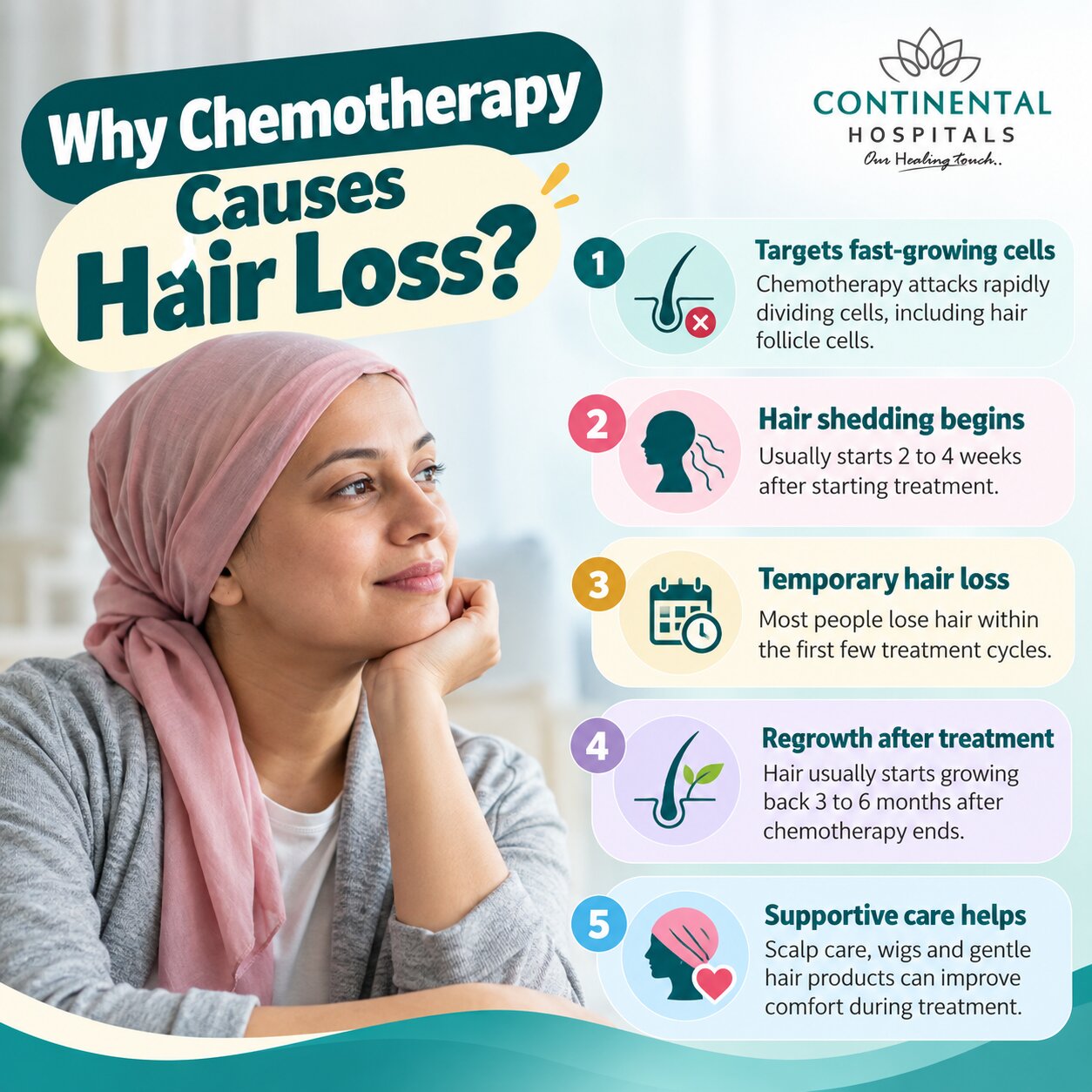
What is the reason for hair loss due to chemotherapy? The explanation lies in the mechanism of action of chemotherapy drugs. These drugs target rapidly growing cells, thus affecting not only cancer cells but healthy cells, too. The reason why some normal cells are affected is their rapid growth, meaning hair follicle cells may not be working as well as hair started to grow. It is quite important to understand what chemotherapy hair loss is, how long hair loss lasts, and how hair regrows.

What Causes Hair Loss Because of Chemotherapy?

The hair emanates from certain follicles in the skin. These follicles contain actively dividing cells that produce hair. The drugs used during chemotherapy can negatively affect these active cells. 

Because of this, chemotherapy can lead to hair loss, which can be called chemotherapy-induced alopecia. Usually, the scalp is the one that suffers from this kind of hair loss, but other forms can be affected, namely the eyebrows, eyelashes, etc.

The common effects are as follows:

  • Hair thinning: The hair becomes gradually thinner than usual.  
  • Hair shedding: There is more hair loss while taking care of the hair.    
  • Partial hair loss: Usually, people suffer from hair loss in certain places only.    
  • Complete hair loss: There are chemotherapy drugs causing hair disturbance.    
  • Change in hair texture: After treatment, new hair may be of a different texture than usual.  

Nevertheless, hair loss is not caused by all chemotherapy drugs. 

Visit the best cancer specialist in Hyderabad at Continental Hospitals, Hyderabad, for expert cancer care and personalized treatment support.

When Does Hair Loss Start in Chemo?

So, when will you experience hair loss from chemotherapy treatments? In most cases, hair starts falling out about two to four weeks after the first round of chemo starts, though this can differ significantly depending on the individual.

Essentially, the schedule for hair loss from chemotherapy follows these stages:

Second Opinion

Week 1: Slightly to no changes in your hair are noted.

Week 2-4: There may be visible loss of hair.

Month 1-2: Hair loss may vary depending on the medications used.

During the treatment, the hair loss can continue on and off depending on the subsequent treatments.

After treatment: The process of hair regrowth starts, bringing hope for many people.
Does everyone suffer from hair loss due to chemotherapy?

Not everyone undergoing chemotherapy has the same experience of hair loss. Some individuals may experience total hair loss while some only experience thinning of hair. Certain chemotherapy drugs are more likely to produce hair loss than others.

Need an Appointment?

The following variables can affect hair loss during chemotherapy:

  • The type of chemotherapy medicine.
  • The frequency of the given dose.
  • The combination of drugs being applied in treatments.
  • Individual response and hair growth patterns.
  • The use of other forms of cancer treatment alongside chemotherapy.

Will Hair Regrow After Chemotherapy? 

Yes, it is typical to experience hair regrowth after chemotherapy because in many cases, hair follicles return to normal functioning after being damaged by a treatment. So, when chemotherapy is completed and hair follicles start to heal, hair can appear.

Numerous people report regrowth in the first few weeks or months after chemotherapy. The hair that regrows may be fine, soft, curly, or otherwise differ in color or texture from the old hair.

The speed of hair regrowth can vary from case to case, depending on multiple factors. However, in some situations, hair loss may be drawn out or even permanent, especially following some treatments. Please get in touch with your oncologist if the hair does not grow back on time.

How Should You Care for Your Hair While Undergoing Chemotherapy?

Is it possible to minimize hair loss during cancer treatment? You can practice good hair care habits, which will protect your scalp and lessen hair breakage, although complete hair loss cannot be avoided during this type of treatment.

Here are some useful tips:

  • Opt for mild shampoos and lukewarm water.
  • Avoid strong chemical treatments, bleaching, and heat styling as much as possible.
  • Keep your hair soft and avoid tight hairstyles.
  • Keep your scalp protected from the sun's rays and cold weather.
  • You may want to think about buying a soft cap, a scarf, or even a wig.
  • Speak with your doctor about using cooling caps.

Why Continental Hospitals Should Be Considered for Treatment of Cancer?

Why is it necessary for patients on chemotherapy to be under specialist care? Processing and vigorous monitoring of cancer treatment are required so as to address side effects while guaranteeing success during procedures.

Continental Hospitals Hyderabad offers holistic solutions for cancer treatment with assistance of highly qualified oncologists and a multimodal team. The hospital is accredited with international and national responsibilities, including NABH and JCI.

Patients are offered a personalized plan of treatment along with guidance on how to cope with adverse effects of chemotherapy, such as losing hair, issues related to foods and general condition of the body.

Conclusion

Chemotherapy hair loss occurs because certain cancer medicines affect rapidly growing cells in hair follicles. Although it can be emotionally challenging, hair loss is often temporary, and regrowth commonly begins after treatment ends. The timing and extent of hair loss depend on the medicines used and individual factors.

Remember these important points:

  • Hair loss may begin within a few weeks of starting chemotherapy.
  • Not all chemotherapy medicines cause the same degree of hair loss.
  • Gentle scalp care can help protect sensitive skin.
  • Hair regrowth often begins within weeks to months after treatment.
  • Your oncologist can guide you on prevention options and recovery expectations.

If you are undergoing chemotherapy or are concerned about hair loss during cancer treatment, consult our best oncologist in Hyderabad at Continental Hospitals, Hyderabad, for personalized guidance. If you experience unexpected or prolonged hair loss during or after treatment, your specialist can evaluate the cause and recommend appropriate care.

Related Blogs:

  1. Should Chemotherapy Patients Get Vaccinated? What Experts Say
  2. What is Chemotherapy? Process & Side Effects

Frequently Asked Questions

Chemotherapy can cause hair loss because it affects rapidly dividing cells in the body. Cancer cells often divide quickly, which makes them targets for many chemotherapy medicines. However, some healthy cells also divide rapidly. Hair follicles contain cells that actively grow and produce hair. Certain chemotherapy drugs can damage these cells and interrupt normal hair growth. This may cause hair to become thinner or fall out. Hair loss can affect the scalp, eyebrows, eyelashes, and other body areas. Not all chemotherapy medicines cause hair loss. The severity depends on the drugs, dosage, and treatment schedule. Some patients experience complete hair loss, while others notice only mild thinning. Hair loss usually begins after treatment has started. In most cases, chemotherapy-related hair loss is temporary, and hair begins to regrow after treatment ends.
Chemotherapy-related hair loss commonly begins within two to three weeks after treatment starts. The exact timing depends on the medicines and the individual's response. Some people notice increased hair shedding before visible thinning develops. Others may experience sudden or more noticeable hair loss. Hair loss can occur after the first treatment cycle or develop gradually over several cycles. Scalp hair is often affected first. Eyebrows, eyelashes, and body hair may also thin during treatment. The amount of hair loss varies from person to person. Not every chemotherapy regimen causes significant hair loss. Your oncologist can explain the likelihood of hair loss with your specific treatment. Gentle hair care may help reduce additional breakage. Preparing for possible hair loss can also help you feel more comfortable during treatment.
No, not all chemotherapy medicines cause hair loss. The likelihood depends on the specific drug and treatment combination. Some medicines commonly cause noticeable hair thinning or complete hair loss. Others may cause only mild thinning or no visible changes. The dosage and frequency of treatment can also influence hair loss. Individual factors may affect how your hair responds. Hair loss can involve the scalp, eyebrows, eyelashes, and body hair. Some patients notice changes in hair texture before shedding begins. Your oncologist can explain the expected side effects of your prescribed regimen. Scalp cooling may help reduce hair loss for selected patients receiving certain treatments. However, it is not suitable or effective for every chemotherapy regimen. Never change or stop cancer treatment because of concerns about hair loss without discussing your options with your oncology team.
Chemotherapy-related hair loss is usually temporary, although recovery varies between individuals. Hair shedding often continues during the period when the responsible medicines affect hair follicles. After chemotherapy ends, the follicles can gradually resume normal hair production. Many people notice new hair growth within one to three months after treatment. Visible coverage may take several additional months to develop. The speed of recovery depends on the treatment regimen and individual factors. Some people experience temporary changes in hair thickness or texture. Hair may initially grow back softer, curlier, or a different colour. Eyebrows and eyelashes may regrow on a different timeline. Certain treatments can cause prolonged or occasionally permanent hair loss. Your oncology team can discuss the expected recovery pattern for your medicines. Seek medical advice if regrowth is unexpectedly delayed or your scalp develops concerning symptoms.
Hair regrowth often begins within a few weeks to a few months after chemotherapy ends. The timing depends on the medicines used and the individual's hair growth cycle. Some people notice fine, soft hair appearing first. Others may need more time before new growth becomes visible. Hair commonly grows around one centimetre per month, although growth rates vary. It can take several months for the scalp to regain noticeable coverage. Returning to the previous hair length may take a year or longer. Newly grown hair may initially have a different texture or colour. Eyebrows, eyelashes, and body hair can recover at different rates. Gentle washing and careful brushing can help prevent unnecessary hair breakage. A balanced diet supports general health during recovery. Supplements are not routinely necessary unless a deficiency is identified. Speak with your oncology team if hair regrowth is significantly delayed.
Yes, hair may grow back differently after chemotherapy. Some people notice that their new hair is curlier or straighter than before. Hair colour or thickness may also temporarily change. These differences can occur as hair follicles recover from treatment. Newly growing hair may initially feel soft or fine. Changes in texture are often temporary, but they can persist in some people. The outcome depends on the chemotherapy medicines and individual biology. Hair growth may occur unevenly during the early recovery period. Eyebrows and eyelashes may also return with a different appearance. Gentle hair care can help protect fragile new growth. Avoid harsh chemical treatments and excessive heat while the scalp and hair recover. Consult your healthcare professional if you notice persistent scalp irritation or unusual hair loss. Most people experience gradual changes as their hair continues to grow.
Hair loss from chemotherapy cannot always be prevented. However, scalp cooling may reduce hair loss for some patients. This technique uses a cooling cap to lower the temperature of the scalp during selected chemotherapy treatments. Its effectiveness depends on the cancer treatment regimen and individual circumstances. Scalp cooling is not suitable for every patient or cancer type. Your oncologist can discuss its potential benefits and limitations. Gentle hair care may help reduce breakage but cannot prevent drug-related follicle damage. Use a mild shampoo and avoid vigorous brushing. Limiting heat styling and harsh chemical treatments may protect fragile hair. Some people choose shorter hairstyles before treatment begins. Wigs, scarves, and head coverings can provide practical options during hair loss. Do not use unproven supplements or medicines to prevent hair loss without medical advice. Discuss available hair-preservation options with your oncology team before chemotherapy starts.
Gentle scalp care can help keep your skin comfortable during chemotherapy. Use a mild shampoo and lukewarm water when washing your scalp. Avoid vigorous rubbing and use a soft towel to dry your hair. Choose a soft brush or comb to reduce pulling on fragile strands. Protect your scalp from direct sunlight with a hat or suitable sunscreen. In cold weather, a soft cap may help keep your head warm. Avoid harsh dyes, chemical straighteners, and excessive heat styling. If your scalp becomes dry, ask your healthcare team about a suitable moisturizer. Do not apply irritating products to inflamed or broken skin. Keep your scalp clean and check for redness, sores, or signs of infection. A balanced diet supports overall recovery but does not guarantee faster hair growth. Seek medical advice if you develop severe itching, pain, or persistent scalp changes.
Discuss expected hair loss with your oncologist before chemotherapy begins. Your doctor can explain which medicines may affect your hair and when shedding may start. Ask whether scalp cooling is appropriate for your treatment plan. A healthcare professional can also recommend practical ways to protect your scalp. Hair loss that continues long after treatment may need further assessment. Other factors, including thyroid problems or nutritional deficiencies, can affect hair growth. Do not start hair-growth medicines or supplements without professional advice. Some products may interact with cancer treatment or may not be appropriate during recovery. Seek medical attention if your scalp develops painful sores or signs of infection. Your oncology team can help you understand the expected regrowth timeline. Emotional support or counselling may also help if hair loss affects your confidence. Every person's recovery is different, so individualized advice is important.
Disclaimer: The information provided in this blog is intended for general knowledge and informational purposes only, and does not constitute medical advice. Always consult with a qualified healthcare professional for any medical concerns or before making any decisions about your health.

Get in Touch With Us

Whether you are from India or abroad, we are here to help you with your medical queries. Please fill out the form below and our team will connect with you shortly.

  • ✔ Quick response from our medical experts
  • ✔ Secure data handling & privacy
  • ✔ Easy upload for reports & documents
banner_image

Chat with our medical experts on WhatsApp for quick assistance and hassle-free appointment booking

Recent Posts