.webp)


Summer brings intense heat, dehydration, and fatigue. During this season, choosing the right foods can help maintain hydration, energy, and overall health. One fruit that perfectly suits summer wellness is watermelon. Known for its refreshing taste and high water content, watermelon is not just delicious but also packed with essential nutrients.
Watermelon contains vitamins, antioxidants, and natural hydration that support many bodily functions. From improving heart health to boosting skin glow, the health benefits of watermelon make it one of the best fruits to include in your summer diet. Whether you eat watermelon slices or drink watermelon juice, this fruit offers multiple advantages for people of all ages.
Why Watermelon is Perfect for Summer
Watermelon is made up of nearly ninety percent water. This makes it an excellent fruit for preventing dehydration during hot weather. It is also low in calories but rich in nutrients like vitamin C, vitamin A, potassium, and antioxidants such as lycopene.
Many people enjoy watermelon as a refreshing snack, while others prefer watermelon juice for quick hydration. Both forms provide similar nutritional benefits and help the body stay cool and energized.
Visit our nutrition specialists at Continental Hospitals for expert guidance on hydration, diet, and seasonal health concerns. Get personalized care to stay healthy and energized.
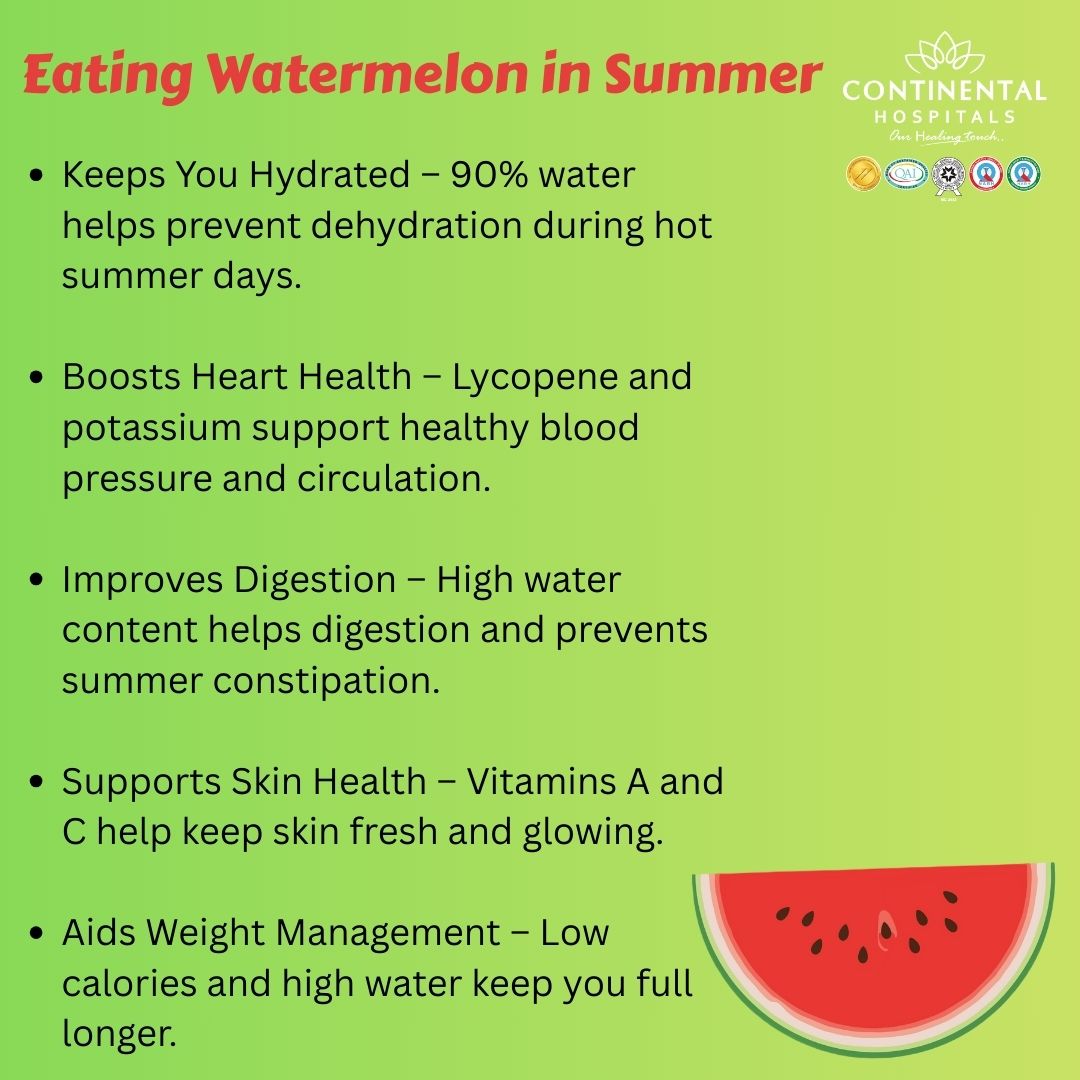
10 Amazing Health Benefits of Watermelon
1. Keeps the Body Hydrated
One of the biggest watermelon benefits is hydration. The high water content helps replenish fluids lost through sweat during summer.
Eating watermelon regularly can support proper hydration, which helps maintain body temperature, improve digestion, and support healthy circulation.

2. Supports Heart Health
Watermelon contains lycopene, an antioxidant that supports cardiovascular health. Lycopene may help reduce inflammation and improve blood vessel function.
Potassium present in watermelon also helps regulate blood pressure levels. Including watermelon in a balanced diet can contribute to better heart health over time.
3. Improves Skin Health
The watermelon health benefits for skin are widely recognized. Watermelon contains vitamins A and C, which play an important role in skin repair and collagen production.
Regular consumption may help maintain skin elasticity, improve hydration, and support a natural healthy glow during the hot summer months.
4. Helps in Digestion
Watermelon contains both water and fiber, which support healthy digestion. The water helps food move smoothly through the digestive tract, while fiber promotes regular bowel movements.
People who experience digestive discomfort during summer may benefit from including watermelon in their daily diet.
5. Supports Eye Health
Vitamin A in watermelon plays a vital role in maintaining good vision. This nutrient helps protect the eyes and supports healthy retinal function.
Adding watermelon to your diet can contribute to long term eye health while also providing refreshing hydration.
6. May Help Reduce Muscle Soreness
Watermelon contains an amino acid called citrulline. This compound may help improve blood flow and reduce muscle soreness after physical activity.
Many athletes prefer watermelon juice benefits for recovery after workouts because it supports muscle relaxation and hydration.
7. Helps Maintain Healthy Weight
Watermelon is naturally low in calories while still providing a feeling of fullness due to its high water content.
People trying to manage their weight can eat watermelon as a healthy snack instead of processed sweets. It satisfies sweet cravings while providing essential nutrients.
8. Strengthens the Immune System
Watermelon contains vitamin C, a key nutrient that supports immune health. Vitamin C helps the body fight infections and supports overall immunity.
Including watermelon in your summer meals may help the body stay strong against seasonal illnesses.
9. Supports Kidney Health
Proper hydration is essential for kidney function. Since watermelon contains high levels of water, it helps the body flush out toxins naturally.
Drinking watermelon juice or eating fresh slices can support kidney health by promoting healthy fluid balance.
10. Boosts Energy Levels
During hot weather, many people experience fatigue and low energy. Watermelon provides natural sugars, hydration, and essential nutrients that help restore energy levels.
Eating watermelon as a mid day snack can provide a refreshing boost without feeling heavy.
Watermelon Juice Benefits
Many people prefer watermelon juice as a refreshing summer drink. Watermelon juice benefits are similar to eating fresh fruit because the juice retains most of the nutrients.
Benefits of watermelon juice include
- Quick hydration during hot weather
- Improved energy levels
- Support for healthy skin
- Better muscle recovery after exercise
- Natural cooling effect for the body
Fresh watermelon juice without added sugar is one of the healthiest summer beverages.
How to Eat Watermelon for Maximum Benefits?
To enjoy the full health benefits of watermelon, it is important to consume it in the right way.
- Choose fresh and ripe watermelon with a deep red color
- Eat watermelon as a morning or afternoon snack
- Drink fresh watermelon juice without added sugar
- Combine watermelon with other fruits for a nutritious fruit bowl
- Avoid overeating watermelon at night if digestion is sensitive
Adding watermelon to salads, smoothies, or simply eating fresh slices can help you enjoy its refreshing taste and nutritional value.
Are There Any Side Effects of Eating Too Much Watermelon?
Watermelon is generally safe and healthy when consumed in moderation. However, excessive intake may cause digestive discomfort in some people.
People with diabetes should monitor portion size because watermelon contains natural sugars. Consulting a doctor can help determine the right portion based on individual health conditions.
Why Choose Continental Hospitals in Hyderabad for Nutritional and Health Guidance?
Continental Hospitals is widely recognized as the best hospital in Hyderabad, offering advanced healthcare services and expert medical guidance. The hospital is known for its patient centered approach, modern infrastructure, and highly experienced specialists.
Continental Hospitals holds internationally recognized accreditations such as Joint Commission International accreditation and National Accreditation Board for Hospitals certification. These accreditations reflect the hospital’s commitment to global healthcare standards, patient safety, and clinical excellence.
The hospital brings together multidisciplinary teams including nutritionists, physicians, endocrinologists, and internal medicine specialists who provide comprehensive care for lifestyle related health concerns.
Patients receive evidence based dietary advice, preventive health guidance, and personalized treatment plans that support long term wellness.
When Should You Consult a Doctor?
Although watermelon offers many health benefits, certain symptoms should not be ignored.
Consult a doctor if you experience
- Persistent digestive discomfort after eating fruits
- Uncontrolled blood sugar levels
- Severe dehydration during summer
- Frequent fatigue or weakness
- Kidney related symptoms or fluid imbalance
Early medical guidance helps identify underlying health issues and ensures the right dietary and medical care.
Conclusion
Watermelon is one of the most refreshing and nutritious fruits to enjoy during summer. Its high water content, vitamins, and antioxidants support hydration, heart health, digestion, skin wellness, and overall energy levels.
The numerous health benefits of watermelon make it an excellent addition to a balanced summer diet. Whether you choose to eat watermelon slices or drink watermelon juice, this fruit offers natural nourishment that helps the body stay cool and healthy.
If you experience health concerns related to hydration, nutrition, or seasonal fatigue, it is important to seek medical guidance. At Continental Hospitals, consult our best nutrition specialists, who provide expert evaluation and personalized health advice for managing hydration, diet, and seasonal health concerns.
Related Blog Topics: