.webp)


Gas pain is a common digestive complaint that affects people of all ages. Many individuals notice discomfort after eating certain meals and often wonder, can spicy food cause gas? Is there a link between oily food and bloating? Does acidity and spicy food make symptoms worse? Understanding how your diet affects digestion can help you prevent gas pain and improve overall gut health.
What Is Gas Pain?
Gas pain occurs when excess gas builds up in the stomach or intestines. This trapped gas creates pressure and causes discomfort. The pain may feel sharp, cramp-like, or dull. It can also be associated with bloating, burping, or passing gas.
Common symptoms include:
• Abdominal discomfort or cramps
• Feeling of fullness or tightness
• Frequent burping
• Passing gas frequently
• Stomach pain after spicy food
• Indigestion after oily food
While occasional gas pain is normal, frequent or severe symptoms may indicate digestive sensitivity or an underlying condition.
Visit our Gastroenterology Department at Continental Hospitals, Hyderabad, for expert care, early diagnosis, faster relief, and better digestive health.
Can Spicy Food Cause Gas?
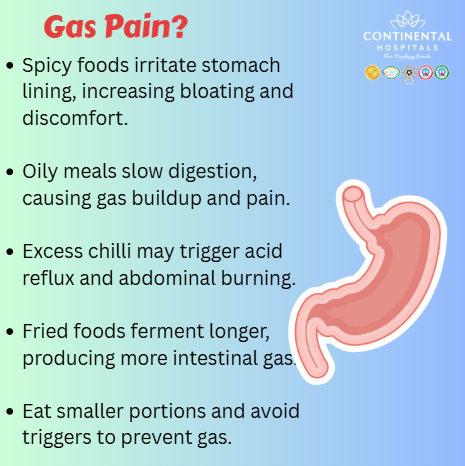
Yes, spicy food and gas pain are often connected. Spices such as chili peppers contain a compound called capsaicin. This ingredient can irritate the lining of the stomach in some people.
Here is how spicy food may contribute to gas pain:
• It increases stomach acid production
• It irritates sensitive digestive linings
• It may slow down digestion in some individuals
• It can worsen acidity and spicy food reactions

When the stomach lining becomes irritated, digestion may not happen smoothly. This can lead to fermentation of food in the gut, producing gas and causing gas pain.
People who already suffer from acid reflux, gastritis, or irritable bowel syndrome are more likely to experience gas pain after eating spicy meals.
Does Oily Food Cause Bloating and Gas?
Oily food and bloating are closely linked. Foods that are high in fat take longer to digest. When digestion slows down, food stays in the stomach for a longer time, increasing the chances of gas formation.
Common reasons oily food leads to gas pain include:
• Slow digestion process
• Increased pressure in the stomach
• Fermentation of undigested food
• Indigestion after oily food
Fried snacks, fast food, creamy gravies, and heavy meals are common triggers. If your stomach struggles to break down fats efficiently, you may notice gas pain, heaviness, and discomfort after such meals.
Why Do Some People Feel More Gas Pain Than Others?
Not everyone reacts the same way to spicy or oily food. Several factors influence how your body responds:
• Individual digestive sensitivity
• Existing acidity and spicy food intolerance
• Gut bacteria balance
• Eating speed and portion size
• Underlying conditions such as IBS or gastritis
Some people have a sensitive digestive tract that reacts quickly to irritants. Others may tolerate spicy or oily meals without significant symptoms.
How Acidity and Spicy Food Are Connected
Acidity occurs when excess stomach acid irritates the esophagus. Spicy food can trigger this condition in many people. When acidity increases, it may lead to:
• Burning sensation in the chest
• Stomach pain after spicy food
• Bloating and gas formation
• Repeated gas pain
The irritation caused by acidity can disturb normal digestion, contributing to further gas production.
Signs That Gas Pain Needs Medical Attention
Occasional gas pain is usually harmless. However, consult a doctor if you experience:
• Severe or persistent abdominal pain
• Frequent indigestion after oily food
• Unexplained weight loss
• Vomiting or blood in stool
• Difficulty swallowing
• Continuous acidity and spicy food intolerance
These symptoms may signal conditions like peptic ulcers, gallbladder disease, or inflammatory bowel disorders.
Practical Tips to Prevent Gas Pain
You do not always need to eliminate spicy or oily foods completely. Moderation and smart eating habits can reduce gas pain significantly.
Follow these simple tips:
• Eat smaller, balanced meals
• Avoid overeating
• Chew food slowly and properly
• Limit extremely spicy dishes
• Reduce fried and greasy food intake
• Drink enough water
• Include fiber-rich foods
• Avoid lying down immediately after eating
Lifestyle adjustments can make a big difference in managing gas pain.
Foods That May Help Reduce Gas Pain
Certain foods support digestion and reduce gas buildup:
• Curd and probiotics
• Ginger
• Jeera water
• Peppermint
• Warm water
• Steamed vegetables
These options help soothe the digestive tract and promote smoother digestion.
When to See a Gastroenterologist?
If spicy food and gas pain continue despite dietary changes, it is important to seek expert advice. Chronic gas pain may be linked to:
• Gastroesophageal reflux disease
• Gastritis
• Food intolerances
• Gallbladder problems
• Irritable bowel syndrome
Early diagnosis ensures proper treatment and prevents complications.
Why Choose Continental Hospitals for Digestive Care?
Continental Hospitals is recognized as one of the best hospitals in Hyderabad for comprehensive digestive care. Our Gastroenterology Department offers advanced diagnosis and treatment for gas pain, acidity, indigestion after oily food, and other gastrointestinal concerns.
Key highlights include:
• NABH and JCI accredited hospital
• Advanced endoscopy and diagnostic facilities
• Experienced gastroenterologists
• Multidisciplinary care approach
• Patient focused treatment plans
• International standards of safety and hygiene
Our commitment to quality healthcare and global accreditations reflects our dedication to patient safety and excellence. We follow strict clinical protocols to ensure accurate diagnosis and effective treatment for digestive disorders.
How We Diagnose the Cause of Gas Pain
At Continental Hospitals, specialists may recommend:
• Detailed clinical evaluation
• Blood tests
• Ultrasound abdomen
• Endoscopy
• Food intolerance assessment
Identifying the exact cause helps create a personalized treatment plan.
Treatment Options for Gas Pain
Treatment depends on the underlying cause. Options may include:
• Antacids for acidity and spicy food related symptoms
• Digestive enzymes
• Probiotics
• Dietary counseling
• Lifestyle modification guidance
• Treatment for underlying conditions
Our goal is to relieve gas pain while improving long term digestive health.
Conclusion
So, can spicy food cause gas? Yes, especially in people with sensitive digestion. Spicy food and gas pain are often linked due to increased acid production and irritation. Similarly, oily food and bloating occur because fatty meals slow digestion and promote gas formation.
While occasional gas pain is common, frequent discomfort should not be ignored. Understanding your body’s response to food can help you prevent stomach pain after spicy food and indigestion after oily food.
If you suffer from persistent gas pain, acidity, or digestive discomfort, consult our best gastroenterology specialists at Continental Hospitals, Hyderabad. Early evaluation ensures proper care, faster relief, and better digestive health.
Related Blog Topics: