.webp)


Sugar is a regular part of modern diets. From tea and coffee to packaged snacks and soft drinks, sugar is almost everywhere. While small amounts are acceptable, too much sugar can seriously affect your health. Many people do not realize how quickly sugar builds up in the body and how it impacts vital organs over time.
Understanding the effects of sugar helps you make smarter food choices. This guide explains the side effects of eating too much sugar, the high sugar symptoms you should watch for, and when to seek medical help.
What Happens When You Eat Too Much Sugar?
When you consume sugar, your body breaks it down into glucose. Glucose enters the bloodstream and gives energy. The hormone insulin helps move this glucose into cells. However, when you keep eating sugar frequently, your body struggles to manage the overload.
Over time, this can lead to:
• Weight gain
• Insulin resistance
• Fatty liver
• Heart problems
• Increased inflammation
The effects of sugar are not always visible immediately. But regular overeating gradually damages your system.
Visit our Endocrinology Department at Continental Hospitals for expert care in diabetes, metabolic, and hormone disorders. Book your consultation today.
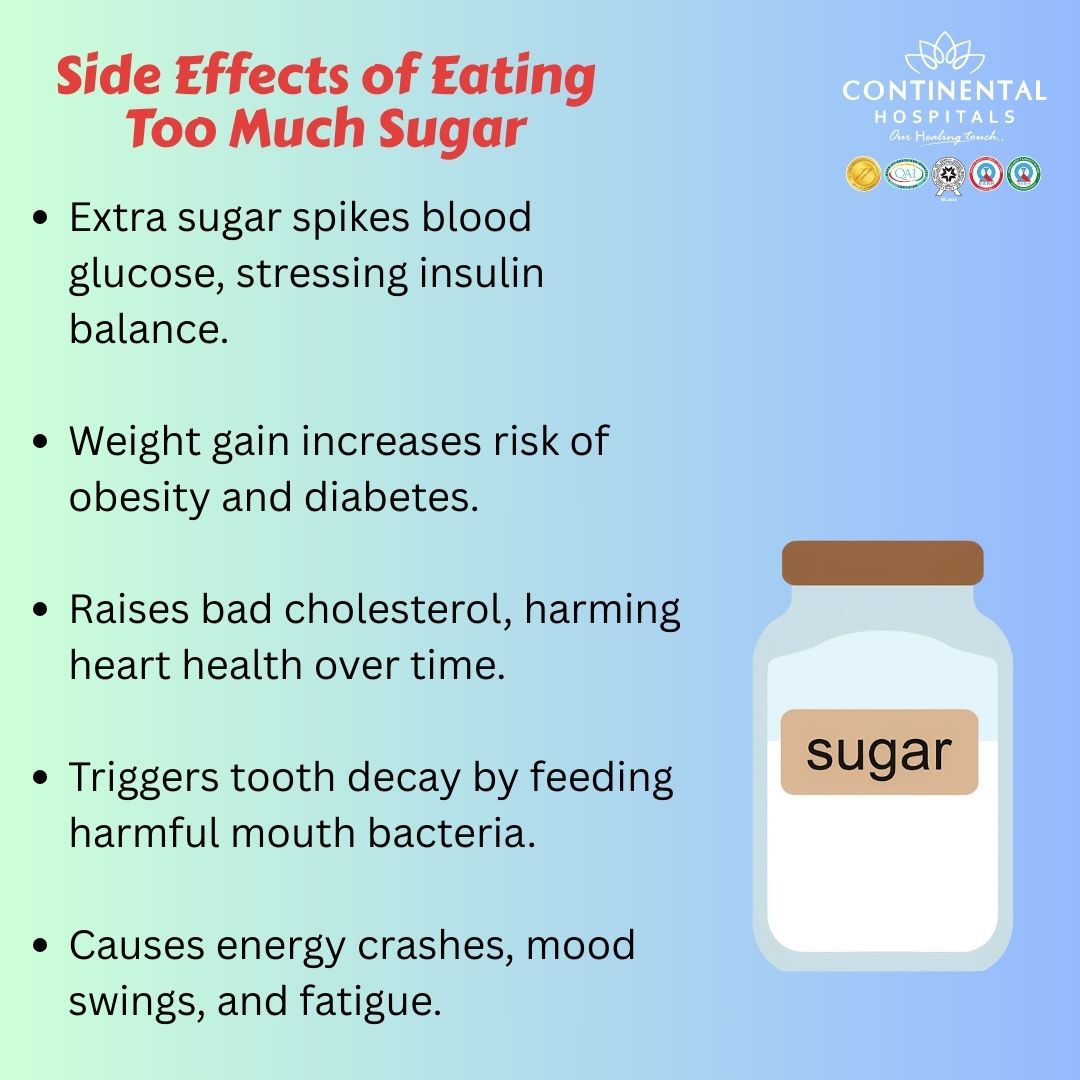
1. Weight Gain and Obesity

One of the most common sugar side effects is weight gain. Sugary foods are high in calories but low in nutrients. They do not keep you full for long. This leads to overeating and frequent snacking.
Too much sugar, especially from sugary drinks, increases belly fat. Excess abdominal fat is linked to diabetes and heart disease. The effects of too much sugar often begin with slow and unnoticed weight gain.
2. Increased Risk of Type 2 Diabetes
Eating sugar frequently forces your pancreas to produce more insulin. Over time, your cells stop responding properly. This condition is called insulin resistance.
High sugar levels in the blood may cause:
• Frequent urination
• Excessive thirst
• Fatigue
• Blurred vision
These are common high sugar symptoms. If untreated, this can develop into Type 2 diabetes. Early screening and lifestyle changes can prevent long term complications.
3. Heart Health Problems
The dangers of sugar extend to the heart. Diets high in sugar increase bad cholesterol and triglycerides. They also raise blood pressure and cause inflammation in blood vessels.
Research shows that excessive eating sugar is linked to:
• Higher risk of heart attacks
• Stroke
• Atherosclerosis
The effects of sugar on the body include long term damage to the cardiovascular system.
4. Fatty Liver Disease
The liver plays a major role in processing sugar. When you consume too much sugar, especially fructose, the liver converts it into fat.
This may lead to non alcoholic fatty liver disease. Symptoms may not appear in early stages, but over time it can cause liver inflammation and scarring.
At Continental Hospitals, our hepatology specialists provide advanced diagnostic support for liver disorders related to high sugar intake.
5. Tooth Decay and Gum Disease
Sugar feeds harmful bacteria in the mouth. These bacteria produce acids that damage tooth enamel.
Common sugar side effects in oral health include:
• Cavities
• Tooth sensitivity
• Gum inflammation
Reducing sugar intake and maintaining oral hygiene are essential to prevent long term dental problems.
6. Skin Problems and Premature Ageing
Too much sugar affects collagen and elastin in the skin. This process is known as glycation. It weakens skin structure and causes wrinkles.
High sugar levels may also worsen:
• Acne
• Skin dullness
• Slow wound healing
The effects of sugar on the body are visible on your skin when intake remains uncontrolled.
7. Sugar Addiction and Cravings
Sugar activates the brain's reward system. It releases dopamine, the feel good chemical. This makes sugar highly addictive.
Signs of sugar addiction include:
• Strong cravings
• Mood swings
• Irritability when reducing intake
• Frequent snacking
Breaking the habit requires gradual changes and professional guidance if needed.
8. Increased Inflammation in the Body
Chronic inflammation is linked to several diseases including cancer and arthritis. Eating sugar in excess increases inflammatory markers in the body.
The long term effects of too much sugar may silently increase the risk of serious chronic illnesses.
9. Impact on Mental Health
High sugar consumption can affect mood and mental clarity. Sudden spikes and crashes in blood sugar levels cause fatigue and irritability.
Some studies suggest a link between excess sugar and increased risk of depression and anxiety. Stable blood sugar supports better emotional balance.
High Sugar Symptoms You Should Not Ignore
How do you know if sugar is affecting your health?
Watch for these warning signs:
• Constant tiredness
• Increased hunger
• Frequent headaches
• Slow healing wounds
• Dark patches around the neck
• Unexplained weight gain
If you notice these symptoms, consult a specialist for evaluation.
How Much Sugar Is Too Much?
Natural sugar in fruits is different from added sugar found in processed foods. Added sugar is the main concern.
Common hidden sources include:
• Packaged fruit juices
• Flavoured yogurts
• Breakfast cereals
• Soft drinks
• Bakery products
Reading food labels carefully can help you reduce unnecessary sugar intake.
How to Reduce Sugar Safely?
Making small, practical changes can protect your health.
• Choose whole fruits instead of juices
• Replace sugary drinks with water or herbal tea
• Eat balanced meals with protein and fiber
• Avoid processed snacks
• Limit desserts to occasional treats
Gradual reduction prevents withdrawal symptoms and improves long term success.
Why Choose Continental Hospitals?
Continental Hospitals is recognized as the best hospital in Hyderabad for comprehensive metabolic and lifestyle care. Our hospital is accredited by national and international bodies, reflecting our commitment to patient safety and clinical excellence. These accreditations ensure that our diagnostic processes, treatment protocols, and patient care standards meet global benchmarks.
Our multidisciplinary team includes:
• Endocrinologists
• Cardiologists
• Gastroenterologists
• Hepatologists
• Nutrition specialists
We offer advanced diagnostic facilities, preventive health check programs, and personalized treatment plans for conditions related to too much sugar consumption.
Our patient centered approach focuses on early detection, accurate diagnosis, and long term disease management.
When Should You See a Doctor?
If you experience persistent high sugar symptoms such as frequent urination, unexplained fatigue, blurred vision, or rapid weight gain, it is important to seek medical advice.
Uncontrolled sugar levels can damage vital organs over time. Early intervention helps prevent complications and improves quality of life.
Conclusion
Sugar may seem harmless, but regular overconsumption can harm almost every organ in the body. From weight gain and diabetes to heart disease and liver damage, the effects of sugar are far-reaching.
Understanding the dangers of sugar empowers you to make healthier choices. Limiting eating sugar, reading food labels, and maintaining a balanced diet can significantly reduce health risks.
If you are experiencing symptoms related to high sugar levels or struggling with sugar addiction, consult our best endocrinology team at Continental Hospitals. Our expert endocrinologists specialize in diagnosing and managing diabetes, metabolic disorders, and hormone-related conditions.