.webp)


Gas pain is a common problem that can affect anyone at any time. It can cause discomfort, bloating, and sometimes sharp abdominal pain. Understanding the causes of gas and learning how to relieve it effectively can improve your comfort and overall digestive health.
What Causes Gas Pain?
Gas in the digestive system is normal, but sometimes it can become excessive and painful. Common causes include:
- Swallowing air while eating or drinking
- Eating gas-producing foods like beans, lentils, and carbonated drinks
- Digestive disorders such as irritable bowel syndrome or constipation
- Food intolerances such as lactose or gluten sensitivity
- Stress and irregular eating habits
Knowing the cause can help prevent gas pain and allow you to manage it better.
Visit our Gastroenterology department at Continental Hospitals for expert evaluation and lasting relief from persistent gas pain.
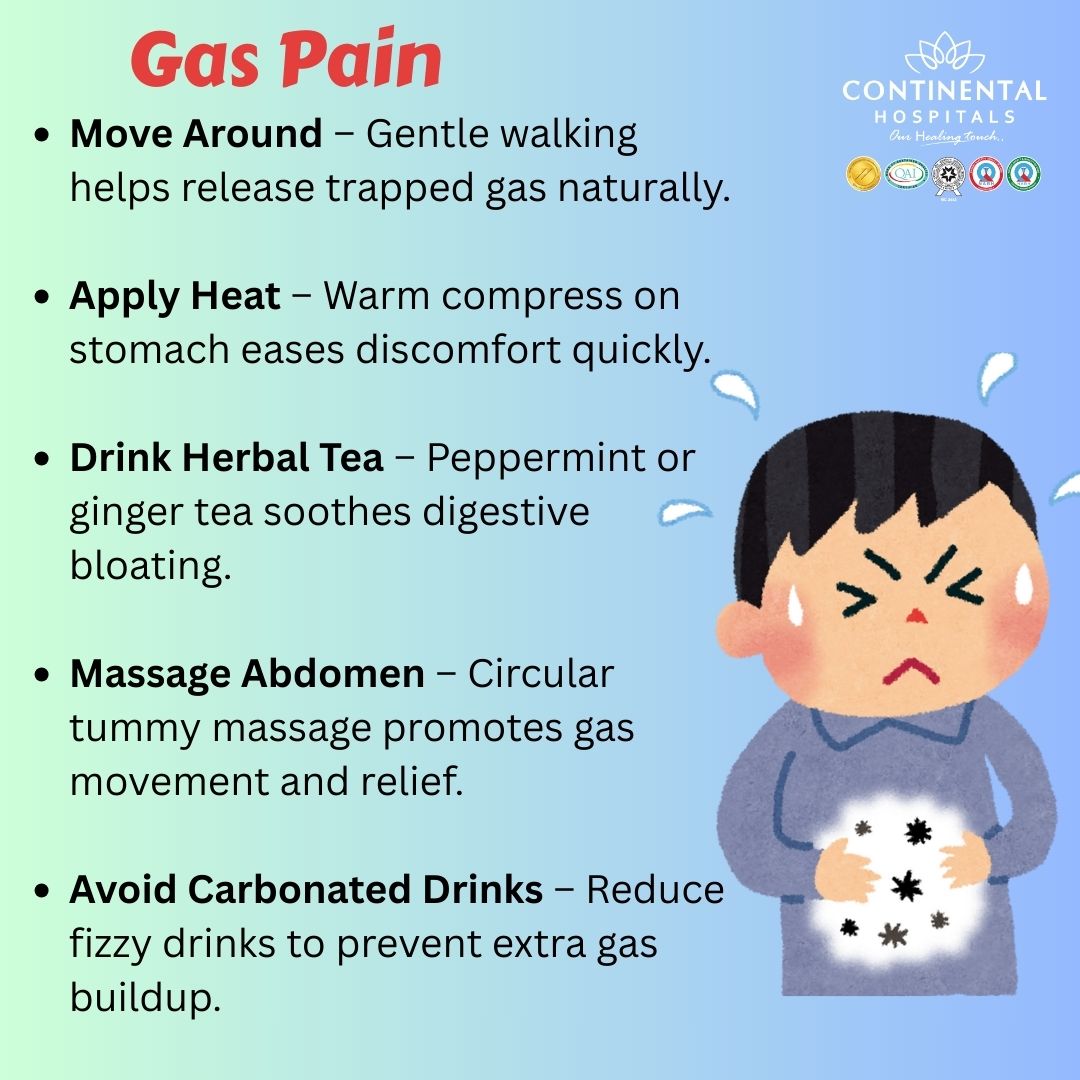
Simple Ways to Relieve Gas Pain Quickly
If you are experiencing discomfort from gas, there are several ways to relieve it. Here are some effective tips:
Walk Around
Gentle walking or light physical activity can help move trapped gas through the digestive system. This is one of the easiest ways to get quick relief.
Apply Heat
Placing a warm compress or heating pad on your abdomen can relax the muscles and ease gas pain. Heat increases blood flow and helps digestion.
Try Over-the-Counter Remedies
Simethicone-based products can break up gas bubbles in the stomach and intestines. Antacids may also provide relief if your gas is linked to indigestion.

Practice Gentle Stretches
Certain yoga poses like lying on your back and pulling your knees to your chest, or the “child’s pose,” can help release trapped gas.
Drink Warm Fluids
Warm water, herbal teas, or ginger tea can stimulate digestion and ease bloating. Avoid carbonated drinks as they can worsen gas.
Massage Your Abdomen
Massaging your stomach in a clockwise direction can help move trapped gas along your digestive tract.
Eat Slowly and Chew Well
Eating too quickly causes you to swallow more air, which can increase gas. Chewing food properly also aids digestion and reduces bloating.
Avoid Gas-Producing Foods Temporarily
Foods like beans, cabbage, cauliflower, onions, and carbonated drinks may cause bloating. Identify triggers and limit them to prevent gas pain.
Stay Hydrated
Drinking sufficient water helps your digestive system function smoothly and prevents constipation, which can contribute to gas accumulation.
Consider Probiotics
Probiotics can help balance gut bacteria and improve digestion, reducing excessive gas formation over time.
Lifestyle Changes for Long-Term Gas Relief
While quick remedies help in the moment, certain lifestyle adjustments can prevent frequent gas pain:
- Eat smaller, more frequent meals
- Avoid chewing gum or drinking through straws
- Include high-fiber foods gradually in your diet
- Exercise regularly to maintain healthy digestion
- Manage stress through meditation, breathing exercises, or relaxation techniques
When to See a Doctor
Most cases of gas pain are not serious, but you should consult a doctor if you experience:
- Severe or persistent abdominal pain
- Blood in stool or vomit
- Unexplained weight loss
- Difficulty swallowing or frequent nausea
These could indicate underlying digestive conditions that require professional evaluation.
Why Choose Continental Hospitals for Gas Pain Relief?
Continental Hospitals in Hyderabad is recognized as one of the best hospitals in the city. It has earned accreditations for quality healthcare, patient safety, and advanced medical practices. Choosing Continental Hospitals ensures you receive:
- Expert care from experienced gastroenterologists and internal medicine specialists
- Advanced diagnostic tools for accurate assessment of digestive disorders
- Personalized treatment plans tailored to your needs
- Comprehensive follow-up care to prevent recurrence of gas-related issues
With a commitment to high standards, Continental Hospitals offers modern facilities and compassionate care to help patients manage gas pain and other digestive problems effectively.
FAQs on Gas Pain and Relief
Q: How can I get stomach gas relief at home?
A: Gentle walking, warm compress, abdominal massage, and drinking warm fluids can help release trapped gas.
Q: What foods should I avoid to prevent gas?
A: Beans, cabbage, cauliflower, onions, carbonated drinks, and certain dairy products can cause bloating.
Q: Can gas pain be a sign of a serious condition?
A: Persistent or severe gas pain with other symptoms like blood in stool or weight loss should be evaluated by a doctor.
Q: Are probiotics helpful for gas?
A: Yes, probiotics can help balance gut bacteria and improve digestion, reducing excessive gas over time.
Q: How quickly can I relieve gas pain naturally?
A: Many home remedies like walking, stretching, or applying heat can provide relief within minutes to a few hours.
Q: Does stress cause gas pain?
A: Yes, stress can slow digestion and lead to bloating and trapped gas. Managing stress helps reduce gas pain.
Q: Should I take medication for gas?
A: Over-the-counter remedies like simethicone or antacids can provide short-term relief, but persistent issues require professional evaluation.
Q: Can lifestyle changes prevent gas pain?
A: Yes, eating slowly, exercising regularly, staying hydrated, and avoiding trigger foods can prevent frequent gas problems.
Conclusion
Gas pain can be uncomfortable, but with the right remedies and preventive measures, it can be managed effectively. Simple lifestyle changes, dietary adjustments, and quick relief techniques can make a big difference.
If you suffer from persistent gas pain, consulting a qualified doctor is essential. Consult our best gastroenterologists at Continental Hospitals are equipped to provide expert evaluation and personalized treatment plans to help you find lasting relief.
Related Blog Topics: