• Share this:
post-title

Can Type 2 Diabetes Be Reversed? What Experts Say

Written by - Editorial Team
Medically Reviewed by - Dr Sunil Epuri

Can a person actually roll back a diagnosis of type 2 diabetes? For decades, medical wisdom treated this condition as a permanent, one-way street that only gets worse over time. Today, the global medical consensus has shifted dramatically, revealing that many individuals can successfully reverse the course of this disease.

What does it truly mean to reverse type 2 diabetes? When experts talk about this process, they use the medical term clinical remission. This status means your blood sugar levels return to a completely healthy range without the help of standard glucose-lowering medications. According to global health guidelines, if your HbA1c level stays below 6.5% for at least 3 months after stopping diabetes medication, you have achieved remission. While this does not mean the condition is permanently cured, it does mean the active disease process has stopped, protecting your body from long-term damage.

What Are the Main Ways to Reverse Type 2 Diabetes?

Medical research highlights three primary strategies that help individuals lower their blood sugar levels back to normal ranges.

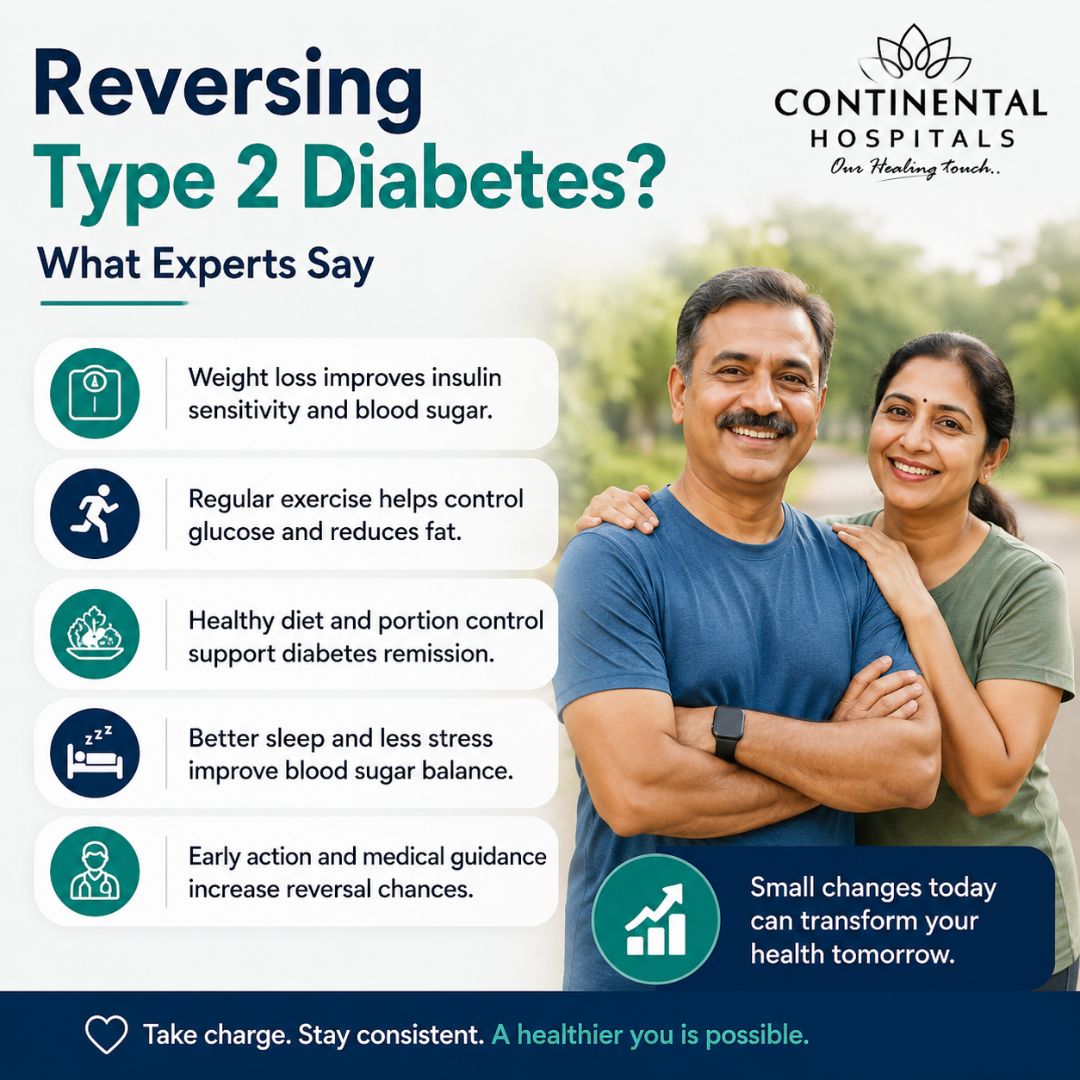
  • Structured Medical Weight Loss: Studies show that losing a significant amount of weight can strip away fat layers around your internal organs. When you lose this deep belly fat, your liver and pancreas recover their natural functions, allowing your body to process insulin correctly again.
  • Targeted Nutritional Changes: Adopting a structured, low-carbohydrate or plant-rich eating plan lowers the total glucose entering your system. This reduces the heavy workload on your pancreas and keeps blood sugar spikes from happening.
  • Advanced Metabolic Interventions: For individuals carrying a very large amount of extra body weight, specialized metabolic surgeries offer an effective path. These procedures alter your digestive system to fundamentally shift how your body regulates insulin and hormones.

If you are struggling with high blood sugar or type 2 diabetes, expert care can make all the difference. Visit our Endocrinology Department at Continental Hospitals for personalized diabetes management and advanced treatment solutions tailored to your health needs.

Why Does Weight Loss Help Reverse Type 2 Diabetes?

To understand why losing weight alters the course of this disease, you have to look at how your internal organs manage fuel.

  • Clearing the Liver: When you carry extra weight, the body stores fat inside your liver. A fatty liver stops responding to insulin signals, causing it to pump unneeded glucose into your bloodstream even when you are not eating.
  • Unclogging the Pancreas: Extra fat also builds up inside your pancreas, the organ responsible for making insulin. Research reveals that losing less than one gram of fat from the pancreas can restore its ability to produce insulin properly.
  • Restoring Insulin Sensitivity: Once these internal fat stores decrease, your muscle and tissue cells can easily absorb sugar from your blood, dropping your overall HbA1c levels.
Who Has the Best Chance to Reverse Type 2 Diabetes?

Not every individual will achieve complete remission, but specific factors greatly increase your chances of success.

  • Time Since Diagnosis: Your chances are highest if you take action during the first few years after your diagnosis. Over a long period, the insulin-producing cells in the pancreas can become permanently damaged.
  • The Amount of Weight Lost: Medical trials show a direct link between the amount of weight you lose and your rate of remission. Dropping a substantial, clear amount of weight is the strongest driver for turning the condition around.
  • Your Personal Genetic Makeup: Every individual possesses a unique metabolic makeup. Some people can achieve normal blood sugar levels with modest changes, while others require more intensive medical assistance.

Is Reversing Type 2 Diabetes a Permanent Cure?

It is crucial to understand that clinical remission is a state of management, not a permanent cure.

  • The Threat of Weight Regain: If an individual returns to old lifestyle habits and gains back the lost weight, the fat will gather around the liver and pancreas once more, causing blood sugar levels to rise again.
  • The Need for Constant Monitoring: Even when your blood sugar numbers look perfect without medication, you still need regular medical checkups and blood tests at least once a year to ensure your body stays in balance.
  • Long-Term Health Protection: Even if you only maintain remission for a few years, you give your blood vessels and organs a massive break, significantly lowering your lifelong risk of heart, eye, and kidney issues.

Why Choose Continental Hospitals for Your Diabetes Care?

Managing and reversing metabolic conditions requires an advanced, highly coordinated medical team. Continental Hospitals stands out as the best hospital in Hyderabad for comprehensive metabolic and diabetic care.

Our facility is built on world-class clinical standards, holding prestigious national and international recognitions for patient safety and treatment quality. Continental Hospitals is proudly accredited by both the National Accreditation Board for Hospitals & Healthcare Providers (NABH) and the Joint Commission International (JCI). These accreditations guarantee that your treatment plan aligns with the safest, most advanced medical protocols available globally.

Second Opinion

Our dedicated Endocrinology and Lifestyle Medicine teams design personalized treatment programs tailored to your specific health goals. We provide access to advanced diagnostic testing, expert dietary planning, structural weight management options, and modern metabolic treatments all under one roof. At Continental Hospitals, we focus on treating the root cause of your condition, helping you regain control over your health with safety and long-term success.

Conclusion

Can type 2 diabetes be reversed? The answer from modern medical experts is a clear yes. Through structured weight loss, dedicated lifestyle modifications, and expert medical oversight, achieving clinical remission is a realistic goal for many individuals. Taking charge of your health early gives your body the best opportunity to heal its metabolic pathways.

If you suffer from high blood sugar or need expert guidance on how to reverse type 2 diabetes safely, do not navigate this journey alone. Reach out to our specialized medical team today to build a personalized path back to health. Book your consultation with our best endocrinologist in Hyderabad at Continental Hospitals today.

Related Blog Topics:

  1. Can Soft Drinks Increase Your Risk of Type 2 Diabetes?
  2. Can Bariatric Surgery Cure Type 2 Diabetes?
  3. How Regular Exercise Can Help Control Type 2 Diabetes

Need an Appointment?

Frequently Asked Questions

Yes, many people with Type 2 Diabetes can achieve remission through significant lifestyle changes and medical management. Remission means blood sugar levels remain within a healthy range without the need for diabetes medications for an extended period. Experts emphasize that remission is not a permanent cure because blood sugar levels can rise again if healthy habits are not maintained. Weight loss, a balanced diet, regular physical activity, and medical supervision play important roles in achieving remission. Research shows that individuals who lose a substantial amount of weight, especially soon after diagnosis, have a higher chance of remission. However, results vary from person to person. Factors such as age, duration of diabetes, genetics, and overall health influence outcomes. Early intervention generally offers better chances of success. Regular monitoring remains essential even after remission is achieved.
Diabetes remission and a cure are not the same. Remission occurs when blood glucose levels remain within the normal or near-normal range without the need for diabetes medications for several months or longer. A cure would mean the disease is completely eliminated and can never return. Currently, there is no guaranteed cure for Type 2 Diabetes. Experts use the term remission because the condition can come back if weight is regained or lifestyle habits change. Remission is still a significant achievement because it reduces the risk of diabetes-related complications. People in remission should continue healthy eating, exercise, and regular health checkups. Monitoring blood sugar levels remains important. Understanding this distinction helps patients maintain realistic expectations and stay committed to long-term health management.
Weight loss is one of the most effective ways to achieve Type 2 Diabetes remission. Excess body fat, especially around the liver and pancreas, contributes to insulin resistance and poor blood sugar control. Losing weight helps reduce fat deposits in these organs, allowing them to function more efficiently. As insulin sensitivity improves, the body can use glucose more effectively. Studies have shown that losing 10% to 15% of body weight can significantly improve blood sugar levels. In some cases, substantial weight loss has led to diabetes remission. Healthy weight loss should be achieved through a balanced diet, regular exercise, and professional medical guidance. Rapid or extreme diets are generally not recommended. Sustainable lifestyle changes offer the best long-term results.
Diet plays a major role in managing and potentially achieving remission of Type 2 Diabetes, but it is usually most effective when combined with other lifestyle changes. A healthy diet helps control blood sugar levels, supports weight loss, and improves insulin sensitivity. Experts often recommend reducing refined carbohydrates, sugary foods, and highly processed meals. Increasing vegetables, whole grains, lean proteins, healthy fats, and fiber-rich foods can improve metabolic health. Some individuals have achieved remission through structured dietary programs and significant weight loss. However, every person responds differently. Factors such as physical activity, sleep quality, stress levels, and medical conditions also influence outcomes. Consulting a healthcare professional ensures a personalized nutrition plan that is safe and effective.
Regular physical activity is a key component of Type 2 Diabetes management and remission. Exercise helps muscles use glucose more efficiently, reducing blood sugar levels and improving insulin sensitivity. Both aerobic activities, such as walking, cycling, and swimming, and strength training exercises provide benefits. Consistent exercise can also support weight loss and improve cardiovascular health. Experts recommend at least 150 minutes of moderate-intensity activity each week. Physical activity helps reduce the risk of diabetes complications while improving energy levels and overall well-being. Even small increases in daily movement can have positive effects. Combining exercise with a healthy diet often produces better outcomes than either approach alone. Individuals should consult their healthcare provider before starting a new exercise program.
People diagnosed with Type 2 Diabetes relatively recently tend to have a higher chance of achieving remission. Those who are overweight or obese and successfully lose a significant amount of weight often see the greatest improvements. Younger individuals and people with better remaining pancreatic function may also respond more favorably. However, remission is possible for many individuals regardless of age when appropriate lifestyle changes are made. Factors such as genetics, duration of diabetes, overall health, and commitment to treatment influence outcomes. Early diagnosis and prompt action improve the likelihood of success. Healthcare professionals can assess individual risk factors and create a tailored management plan. Every patient's journey is unique, and remission rates vary considerably.
Bariatric surgery has been shown to significantly improve blood sugar control and can lead to Type 2 Diabetes remission in many individuals with obesity. Procedures such as gastric bypass and sleeve gastrectomy often result in substantial weight loss and hormonal changes that improve insulin function. Many patients experience lower blood sugar levels soon after surgery, sometimes even before major weight loss occurs. However, surgery is not suitable for everyone and requires careful medical evaluation. Long-term success depends on maintaining healthy eating habits and regular follow-up care. While remission rates can be high, diabetes may return if weight is regained. Bariatric surgery should be considered as part of a comprehensive treatment strategy under specialist supervision.
Experts recommend maintaining healthy lifestyle habits even after achieving diabetes remission. Consistent weight management is one of the most important factors in preventing blood sugar levels from rising again. A balanced diet rich in vegetables, lean proteins, whole grains, and healthy fats supports long-term metabolic health. Regular physical activity helps maintain insulin sensitivity and overall fitness. Routine health checkups and blood glucose monitoring remain essential. Adequate sleep, stress management, and avoiding tobacco use can also contribute to better outcomes. Patients should continue working closely with their healthcare team to monitor their progress. Remission is an ongoing process rather than a one-time achievement. Long-term commitment to healthy habits offers the best chance of sustained success.
Disclaimer: The information provided in this blog is intended for general knowledge and informational purposes only, and does not constitute medical advice. Always consult with a qualified healthcare professional for any medical concerns or before making any decisions about your health.

Get in Touch With Us

Whether you are from India or abroad, we are here to help you with your medical queries. Please fill out the form below and our team will connect with you shortly.

  • ✔ Quick response from our medical experts
  • ✔ Secure data handling & privacy
  • ✔ Easy upload for reports & documents
0 / 100
Checkboxes Section


Chat with our medical experts on WhatsApp for quick assistance and hassle-free appointment booking

Recent Posts
Language Based Image
0 / 100