.webp)

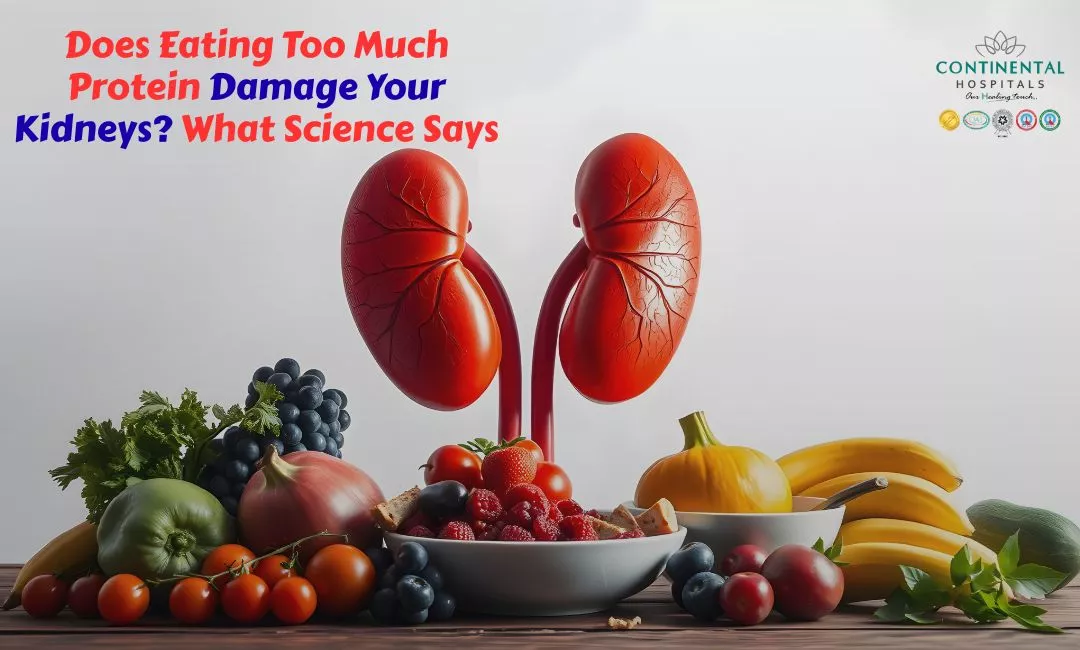
Protein has become one of the most talked about nutrients in modern diets. From gym enthusiasts to people trying to lose weight, many are increasing their protein intake. High protein diets are often promoted for muscle growth, weight management, and improved metabolism. But a common concern still exists. Does eating too much protein damage your kidney?
Many people worry that high protein intake may harm kidney health or lead to kidney failure. This article explains what science says about protein and kidneys, how protein affects kidney function, and who should be careful with high-protein diets.
Understanding the Role of Protein in the Body
Protein is an essential nutrient required for many important functions in the body. It helps build muscles, repair tissues, produce enzymes and hormones, and support the immune system.
Every day, the body breaks down protein into amino acids which are used for growth and repair. After this process, the kidneys help remove waste products produced during protein metabolism.
This is where the connection between protein and kidneys begins. Because kidneys filter waste from protein metabolism, many people assume that eating too much protein can overwork the kidneys.
Concerned about kidney health? Visit the Nephrology Department at Continental Hospitals for expert care, early diagnosis, and timely treatment to protect your kidneys.
How the Kidneys Work
The kidneys are two bean shaped organs located in the lower back. Their primary role is to filter waste products and excess fluids from the blood. They also help regulate blood pressure, balance minerals, and maintain overall kidney health.
Inside each kidney are tiny filtering units called nephrons. These structures filter blood and remove waste products through urine.
When a person consumes protein, the body produces a waste product called urea. The kidneys filter urea from the blood and remove it through urine. Because of this function, some people worry that too much protein may cause kidney damage.

Does Protein Cause Kidney Damage?
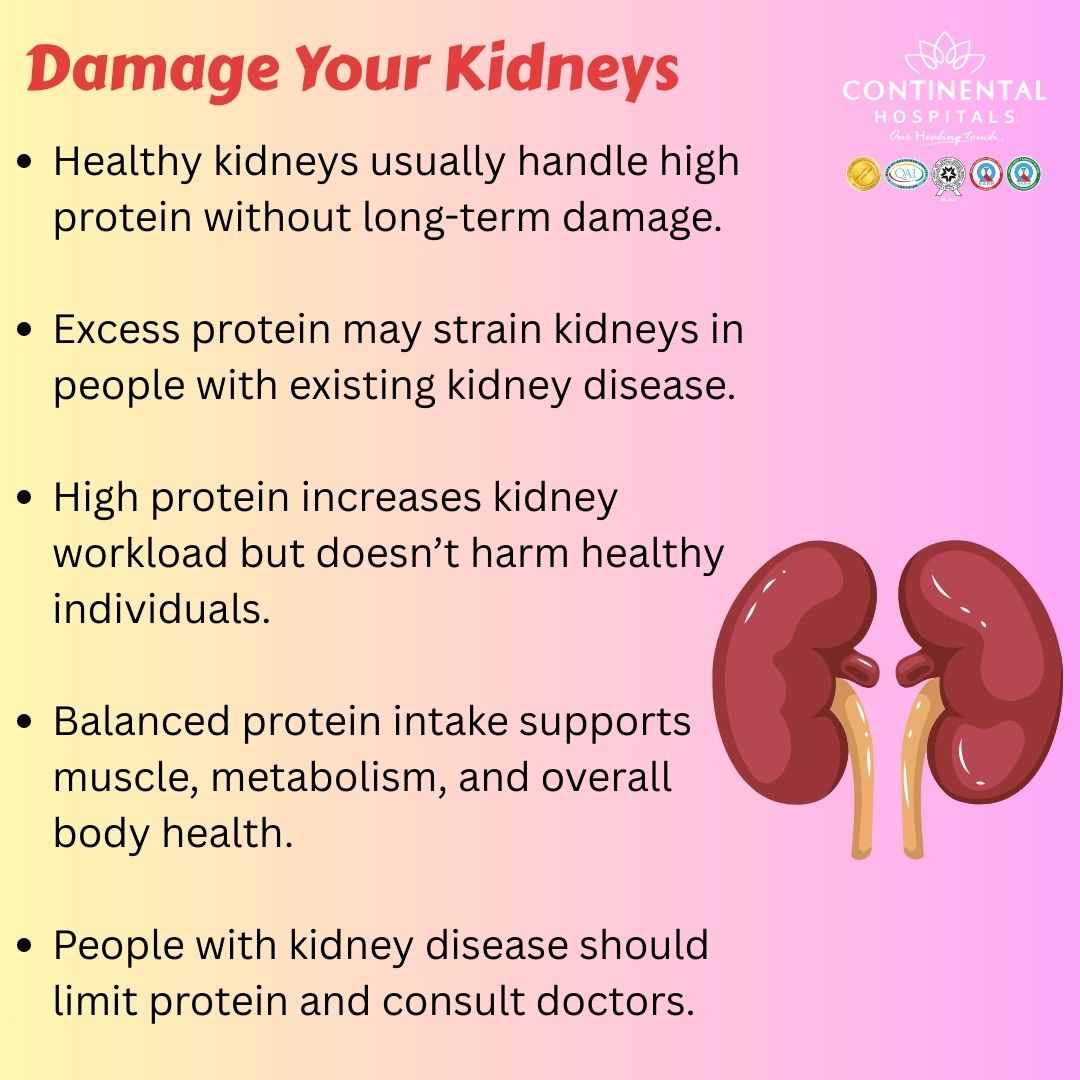
For healthy individuals with normal kidney function, research shows that moderate to high protein intake does not cause kidney damage.
Scientific studies have found that healthy kidneys are capable of adjusting to higher protein intake. When protein consumption increases, the kidneys simply work slightly harder to filter waste products. This process is known as increased filtration and it is a normal physiological response.
There is no strong evidence that high protein intake causes kidney failure in people who already have healthy kidneys.
However, the situation is different for individuals who already have kidney disease.
Protein Intake in People with Kidney Disease
People who already have kidney disease must be more careful with protein intake. When kidneys are damaged, their ability to filter waste products is reduced.
In such cases, eating too much protein can increase the workload on the kidneys and worsen kidney damage over time. Doctors often recommend controlled protein intake for patients with chronic kidney disease to protect kidney health.
This is why people with existing kidney problems should always follow medical advice regarding protein consumption.
Signs Your Kidneys May Not Be Healthy
Kidney disease often develops slowly and symptoms may appear only in later stages. Paying attention to early warning signs can help protect kidney health.
Some symptoms that may indicate kidney problems include:
• Persistent fatigue and weakness
• Swelling in the legs, feet, or face
• Changes in urination patterns
• Foamy or bloody urine
• Difficulty concentrating
• High blood pressure
• Nausea or loss of appetite
If these symptoms appear, it is important to consult a doctor and undergo proper kidney evaluation.
How Much Protein Is Considered Too Much?
Protein needs vary depending on age, weight, physical activity, and health conditions.
For most healthy adults, a balanced diet with moderate protein intake is safe and beneficial. Athletes or people involved in intense physical activity may require higher protein intake to support muscle recovery.
However, extremely high protein diets for long periods without medical supervision may not be suitable for everyone. Excess protein from supplements or processed sources can sometimes place unnecessary stress on the body.
Maintaining balance in the diet is important for protecting kidney health and overall wellbeing.
Best Protein Sources for Kidney Health
Choosing the right sources of protein can make a big difference for overall health.
Healthy protein sources include:
• Eggs
• Fish
• Lean chicken
• Dairy products
• Lentils and beans
• Nuts and seeds
• Soy based foods
These foods provide essential nutrients along with protein and support both kidney health and general wellbeing.
Highly processed protein supplements and excessive red meat intake should be limited, especially for people at risk of kidney disease.
Tips to Protect Your Kidney Health
Maintaining healthy kidneys requires a combination of balanced nutrition and healthy lifestyle habits.
Important tips include:
• Drink adequate water throughout the day
• Maintain healthy blood pressure levels
• Control blood sugar if you have diabetes
• Eat a balanced diet rich in fruits and vegetables
• Avoid excessive salt intake
• Exercise regularly
• Avoid unnecessary use of painkillers
• Get regular health checkups
These habits help reduce the risk of kidney damage and support long term kidney health.
What Science Really Says About Protein and Kidneys?
- Scientific evidence shows that protein itself is not harmful to healthy kidneys. The kidneys are designed to handle protein metabolism efficiently.
- The real risk occurs when kidney disease is already present. In those cases, uncontrolled protein intake can accelerate kidney damage.
- For healthy individuals, a balanced diet with adequate protein supports muscle growth, metabolism, and overall health without harming the kidneys.
- Understanding the difference between healthy kidney function and existing kidney disease is important when evaluating the relationship between protein and kidneys.
Why Choose Continental Hospitals for Kidney Care?
Continental Hospitals is recognized as the best hospital in Hyderabad for advanced kidney care and comprehensive medical services.
The hospital is known for its patient centered approach, modern technology, and experienced specialists who provide accurate diagnosis and personalized treatment.
Continental Hospitals holds internationally recognized accreditations including JCI and NABH. These accreditations reflect the hospital's commitment to global standards of safety, quality care, and clinical excellence.
The hospital offers:
• Advanced diagnostic facilities for kidney diseases
• Expert nephrologists and multidisciplinary specialists
• Comprehensive treatment for kidney failure and kidney disorders
• State of the art medical infrastructure
• Evidence based patient care
With a strong focus on innovation and compassionate care, Continental Hospitals continues to be a trusted destination for patients seeking reliable kidney treatment.
Conclusion
Protein plays an essential role in maintaining strength, muscle health, and overall body function. For people with healthy kidneys, moderate to high protein intake does not cause kidney damage according to current scientific research.
Concerns about protein harming the kidneys mainly apply to individuals who already have kidney disease. For them, controlled protein intake and regular medical supervision are necessary.
Maintaining a balanced diet, staying hydrated, and monitoring kidney health through regular checkups are the best ways to prevent kidney failure and protect long term kidney function.
Are you experiencing symptoms such as swelling, changes in urination, fatigue, or persistent high blood pressure? These could be warning signs of kidney problems.
If you suffer from kidney-related symptoms or have concerns about kidney health, consult our best nephrologist at Continental Hospitals. Early diagnosis and timely treatment can help prevent kidney damage and protect your long-term health.
Related Blog Topics: