.webp)

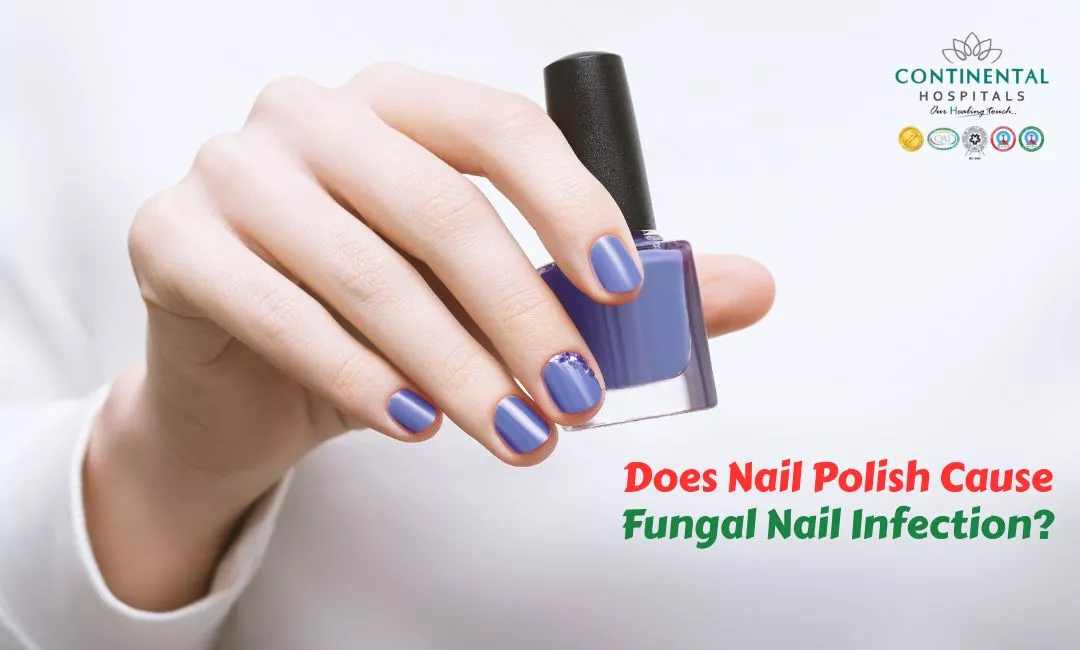
Healthy, shiny nails look beautiful. Many people love wearing nail polish to enhance their appearance. But a common question remains: Does nail polish cause fungus? Can regular use of polish lead to nail fungus or a fungal nail infection?
Let us understand the facts in simple language and clear points.
What Is Nail Fungus?
Nail fungus is a common fungal infection that affects the nails of the hands or feet. It is medically known as onychomycosis. This condition happens when fungi grow under or inside the nail.
A fungal nail infection usually starts as a small white or yellow spot under the nail. Over time, the nail may become thick, brittle, discolored, or even painful.
Visit our Dermatology Department at Continental Hospitals for expert diagnosis and advanced fungal nail treatment with personalized care.
Common signs of nail fungus include:
• Yellow, brown, or white discoloration
• Thickened nails
• Crumbly or brittle edges
• Distorted nail shape
• Foul smell in severe cases
Without proper nail fungus treatment, the infection can spread and worsen.

Does Nail Polish Cause Fungus?
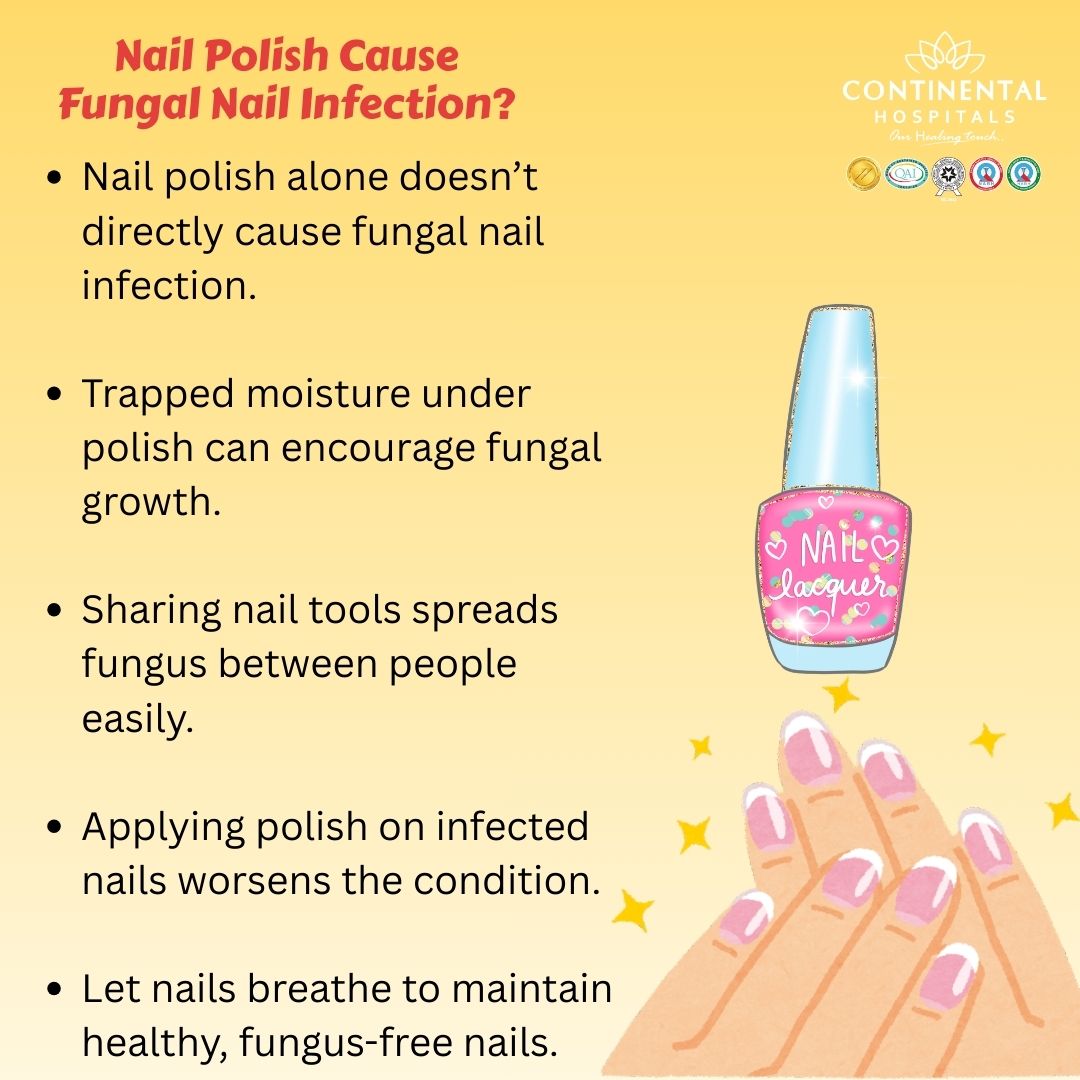
The short answer is no, nail polish alone does not directly cause nail fungus. However, nail polish and fungal infection can be linked in certain situations.
Here is how:
Trapped moisture
When nail polish is applied on already moist nails, it can trap moisture. Fungi grow well in warm and damp environments. This can increase the risk of a fungal nail infection.
Covering early symptoms
Nail polish can hide early signs of nail fungus like discoloration. If symptoms are hidden, treatment may be delayed.
Sharing nail products
Using shared nail polish bottles, nail tools, or visiting salons with poor hygiene can spread fungal infection.
Artificial nails and gel polish
Frequent use of artificial nails or gel polish can damage the nail surface. Damaged nails are more vulnerable to nail fungus.
So if you are wondering does nail polish cause fungus? The polish itself is not the main reason. Poor nail care, hygiene issues, and damaged nails are the real causes.
Fungal Nail Infection Causes
Understanding fungal nail infection causes can help prevent the problem.
• Sweaty feet
• Wearing tight shoes
• Walking barefoot in public places
• Diabetes
• Weak immune system
• Nail injuries
• Poor foot care
• Using contaminated nail tools
People who frequently visit swimming pools, gyms, or salons are at higher risk of fungal infection.
How Nail Fungus Develops
Nail fungus usually begins when fungi enter through tiny cracks in the nail or surrounding skin. The infection slowly grows under the nail.
Fungi thrive in:
• Dark environments
• Moist conditions
• Warm temperatures
Feet are more commonly affected because shoes create a closed and moist environment.
If ignored, nail fungus can spread to other nails or even to the skin.
Nail Polish and Fungal Infection Myths
Many myths surround nail polish and fungal infection. Let us clear them.
Myth 1: Colored nail polish causes nail fungus
Fact: Color does not cause infection. Hygiene and moisture are the main issues.
Myth 2: Breathable nail polish prevents nail fungus completely
Fact: It may reduce moisture but does not guarantee protection.
Myth 3: Removing polish frequently prevents fungal nail infection
Fact: Removal helps you inspect nails but does not eliminate risk if hygiene is poor.
How to Treat Nail Fungus?
If you notice signs of nail fungus, early treatment is important.
Here is how to treat nail fungus effectively:
Topical antifungal creams
These are applied directly on the affected nail.
Oral antifungal medicines
Doctors may prescribe tablets for moderate or severe fungal nail infection.
Medicated nail lacquer
Special antifungal nail polish can help in mild cases.
Laser therapy
In some cases, advanced treatment options may be suggested.
Proper nail trimming
Keeping nails short helps reduce fungal growth.
Nail fungus treatment may take several weeks or months because nails grow slowly. Patience and consistency are important.
Simple Foot Care Tips to Prevent Nail Fungus
Prevention is always better than treatment. Follow these foot care tips:
• Keep nails clean and dry
• Change socks daily
• Wear breathable footwear
• Avoid sharing nail tools
• Disinfect nail clippers regularly
• Let nails breathe between polish applications
• Remove nail polish after some days
• Avoid applying polish on damaged nails
Good foot care reduces the chances of fungal infection and supports healthy nails.
When Should You See a Doctor?
Do not ignore nail fungus if you notice:
• Persistent discoloration
• Pain while walking
• Thickened nails
• Infection spreading to other nails
• Diabetes along with nail changes
Early medical attention prevents complications.
Why Choose Continental Hospitals?
If you are looking for the best hospital in Hyderabad for nail fungus treatment, Continental Hospitals offers expert care with advanced facilities.
Continental Hospitals is known for:
• NABH accredited healthcare services
• NABL accredited laboratory services
• Modern diagnostic technology
• Experienced dermatologists and internal medicine specialists
• Comprehensive fungal nail treatment plans
• Focus on patient safety and hygiene
The hospital follows strict infection control practices and international treatment standards. Patients receive accurate diagnosis and personalized care for fungal nail infection and other skin conditions.
The dermatology and internal medicine teams work together to identify the root cause of nail fungus and provide effective solutions.
How Continental Hospitals Helps in Nail Fungus Treatment
At Continental Hospitals, doctors focus on:
• Detailed nail examination
• Identifying fungal nail infection causes
• Lab testing when required
• Customized nail fungus treatment plans
• Monitoring recovery progress
Whether the infection is mild or severe, the team ensures proper care and guidance.
If you are confused about does nail polish cause fungus, specialists provide clear answers and preventive advice.
Frequently Asked Concern: Can You Wear Nail Polish During Treatment?
Doctors usually advise avoiding cosmetic nail polish during active nail fungus treatment. This allows medication to work effectively and helps monitor progress.
Once the fungal infection is completely cured, nail polish can be used again with proper precautions.
Protect Your Nails the Right Way
Nail fungus is common but manageable. Nail polish itself does not directly cause nail fungus, but improper use and poor hygiene can increase risk.
Healthy habits make a big difference:
• Inspect nails regularly
• Maintain good foot care
• Seek early treatment
• Follow medical advice
Ignoring a fungal nail infection can lead to complications, especially in people with diabetes or weak immunity.
Conclusion
Does nail polish cause fungus? Not directly. However, nail polish and fungal infection can be connected when hygiene is poor, moisture is trapped, or early symptoms are ignored.
Nail fungus is treatable with the right approach. Early diagnosis, proper nail fungus treatment, and consistent foot care are key to recovery.
If you suffer from nail fungus, discoloration, or thickened nails, do not delay medical consultation.
Consult our best dermatologist at Continental Hospitals. Our experienced team provides accurate diagnosis, advanced fungal nail treatment, and personalized care to restore your nail health safely and effectively.
Related Blog Topics: