post-title

Healthy Weight Loss: What Is a Safe Rate to Lose Weight?

Written by - Editorial Team
Medically Reviewed by - Dr Sunil Epuri

The healthy weight loss process must take place slowly and steadily and also provide the body with proper nourishment, physical energy, and time for adaptation. The process of healthy weight loss does not only aim at making the number on one’s weighing scale lower but also aims at enhancing fitness, metabolic health, and weight management over the long period of time.

So what is a normal weight loss rate? The rate of weight loss is a unique parameter that depends on many factors such as starting body weight, age, dieting habits, physical activity, health situation, and so forth. Following the gradual approach rather than extreme diets and fast weight loss is generally easier to keep.

How Much Weight Loss Is Healthy?

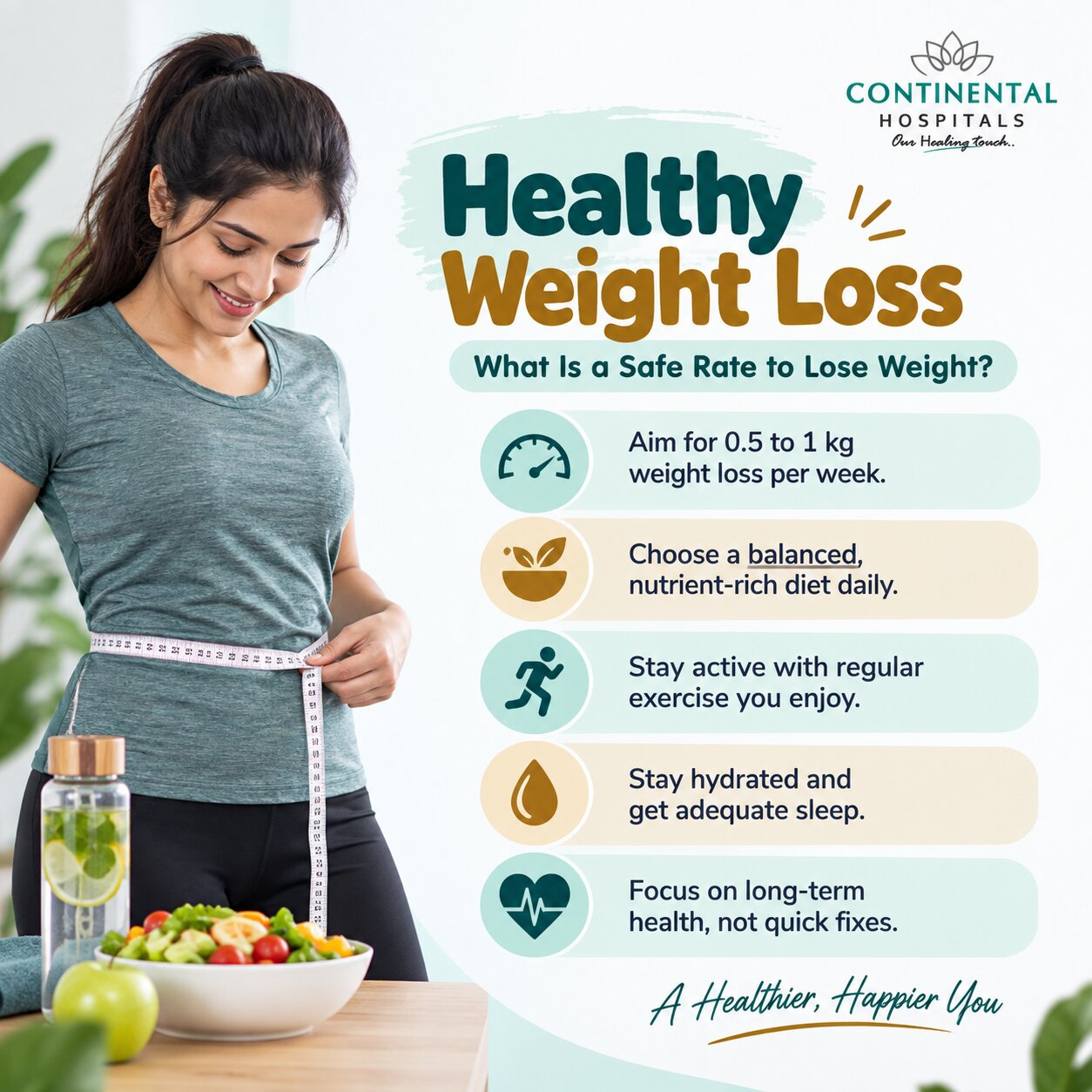
How much weight loss is acceptable and feasible for you? With most adults, losing weight at a steady rate of 0.5 – 1 kg per week is seen as reasonable. Still, this is not an absolute rule for all.

In general, the safe weight loss rate used in practice is subject to many underlying factors. People with higher body weight may experience a quicker loss in the first weeks, while it may take others a bit longer to lose weight. 

There is an emphasis on gradual weight loss rather than trying hard to lose as much as possible at once.

Visit the Endocrinology & Diabetology Department at Continental Hospitals, Hyderabad, for expert care focused on healthy weight management and metabolic health.

What are the advantages of gradual weight loss?

Weight loss should occur gradually for several reasons. Rapid weight loss may not always be sustainable and can lead to loss of muscle and nutrient deficiencies. Moreover, overly restricted diets can leave you feeling exhausted, hungry, and unable to stick to such a plan.

Sustainable weight loss allows you to develop new good habits, such as:

• Eating balanced meals
• Eating right portion sizes
• Staying active
• Getting enough sleep
• Drinking enough fluids
Managing stress
• Eating at regular intervals

Second Opinion

What amount of weight loss in a week is healthy?

Is there a standard weight loss requirement for all individuals? No. It should be personalized. Consider gradual weight loss instead of weight fluctuations that happen daily due to changes in water weight, food intake, hormonal changes, etc. 

Instead of asking simply, "How much weight was lost this week?" one could also ask these questions:

• Are there any improvements in eating habits?
• Is there an improvement in physical activity?
• Is the waist size changing?
• Are energy levels improving?
• Is it possible to follow the pattern of diet and fitness program?

Is rapid weight loss dangerous?

Can fast weight loss be healthy? The answer to this question is no. Rapid weight loss can involve extreme calorie cutting, starvation, or improperly balanced diets, which may lead to inadequate nutrition for the body.

The negative health aspects of quick weight loss may include:

• Loss of muscle
• Insufficient nutrition
• Tiredness and weakness
Dehydration
• Difficulties in keeping the weight down
• Possible gallstones in some patients
• Decreased chances of following the diet for a long time

It is essential to contact a doctor if you find yourself dropping a significant amount of weight without a reason or on a large scale.

Need an Appointment?

What Contributes to Healthy Weight Loss?

How can you lose weight safely? There is no universal solution in terms of dieting. Your choice of a weight-loss plan should depend on your health, lifestyle, diet, and habits.

Follow these simple tips:

1. Is it possible to lose weight through a balanced diet?

Indeed. Eating vegetables, fruits, whole grains, proteins, and healthy fats in moderation can help you achieve a healthy weight. Try to avoid ultra-processed foods and excess sugar.

2. Is Physical Activity Key to Losing Weight?

Of course. Keeping physically active will help you burn more calories. A combination of aerobic exercise and strength training may be very effective, too.

3. Will Sleeping Well Help You Lose Weight?

Definitely. If you do not sleep enough, it will have a negative effect on your appetite and food choices. Make sure that your sleep pattern is stable.

4. Is it Necessary to Monitor Progress?

You should track your weight, waistline, meal plan, physical activities, or other goals. However, the daily changes in your weight should not be regarded as your only achievement.

When is the Right Time to Ask for Medical Help?

When is it correct to see a medical professional concerning losing weight? Experts say that if you suffer from obesity, diabetes, high blood pressure, hormonal issues, sleep disorders, and other illnesses, then you need professional help.
They will evaluate your general health and help you come up with the right program for losing weight.

Why is Continental Hospital the Best in Weight Loss?

Why do we need expert help for successful weight management? Weight management consists of nutrition, metabolism, exercise, lifestyle factors, and other medical problems. Therefore, it is important to apply a complicated approach to treat the problems that arise from the above factors.

Continental Hospitals in Hyderabad is a renowned healthcare provider with the help of exceptionally educated healthcare professionals and sophisticated diagnostic tools. The facility has advanced infrastructure and medical expertise in various fields. The hospital has been accredited by JCI and NABH, thus proving its commitment to outstanding healthcare standards.

Those who are interested in weight-related healthcare issues can get personal attention for their complaints and goals.

What Are The Key Considerations When It Comes To Healthy Weight Loss?

• Weight loss should be gradual and not abrupt.
• What one considers a healthy weight loss varies from person to person.
• Sustainable weight loss emphasizes lifestyle changes.
• Proper nutrition is essential to keep energy levels high.
• Exercise helps one in weight management.
• Sleeping well and managing stress help maintain a healthy body.
• Unsafe diets may not be suitable for everyone.
• A medical professional will help in case of any issues with weight loss or diseases.

Conclusion

Is faster weight loss always better? Not necessarily. Healthy weight loss is about making sustainable changes that support your overall health rather than chasing rapid results. A gradual and personalized approach can make it easier to maintain your progress and develop healthier habits for the long term.

If you are struggling with excess weight, repeated weight gain, or difficulty achieving your weight management goals, consult our best endocrinologist & diabetologist in Hyderabad at Continental Hospitals, Hyderabad, for an individualized evaluation and appropriate guidance.

Related Blogs:

  1. Ozempic for Weight Loss: How It Works, Benefits, Risks and Who Can Use It
  2. Slow Weight Loss vs Fast Weight Loss: What Works Better?
  3. Safe Weight Loss Tips That Actually Work

Frequently Asked Questions

A gradual rate of weight loss is generally safer and easier to maintain. Many adults may aim to lose around 0.5 to 1 kg per week. The appropriate rate can vary from person to person. Starting weight can influence how quickly weight changes. Age, health conditions, and medications may also affect weight loss. A very rapid reduction may increase the risk of losing muscle. It may also make it harder to meet nutritional needs. Crash diets can be difficult to maintain over time. A balanced eating plan can support steady progress. Regular physical activity can help preserve muscle and improve fitness. Adequate sleep and hydration are also important. People with medical conditions should seek professional guidance. A healthcare professional can help set a realistic weight-loss goal.
Rapid weight loss is not always healthy or sustainable. Losing weight very quickly can sometimes involve losing muscle and water. Very restrictive diets may also reduce important nutrient intake. Some people may experience fatigue, weakness, or difficulty concentrating. Rapid weight loss can also make it harder to maintain results. Extreme dieting may lead to cycles of weight loss and regain. The reason for rapid weight loss also matters. Certain medical conditions can cause unexpected weight changes. A balanced calorie deficit is generally more sustainable. Protein-rich foods can help support muscle during weight loss. Regular strength and aerobic activity can also be beneficial. Individual needs vary based on health and body composition. Medical advice is recommended when weight loss is unusually fast or unintentional.
The amount of weight a person can lose in one month varies. A gradual weekly rate can translate to several kilograms over a month. However, individual results can be different. Starting body weight can influence the initial rate of weight loss. Changes in food intake and physical activity also affect results. Some early weight loss may come from changes in body water. Weight loss may become slower as the body adapts to a lower calorie intake. Sustainable progress is more important than a specific monthly number. A balanced diet should provide enough protein, vitamins, minerals, and fiber. Regular exercise can support fat loss and overall health. Sleep and stress management may also influence weight-management efforts. Avoid setting extreme monthly targets. A healthcare professional can help create a realistic goal based on individual needs.
Weight loss can occur without structured exercise when calorie intake is reduced. However, physical activity provides important health benefits. Exercise can help increase energy expenditure during a weight-loss plan. Strength training can help maintain muscle mass while losing weight. Walking and other everyday activities can also contribute to energy expenditure. Exercise can support cardiovascular health and physical fitness. It may also help with maintaining weight after weight loss. Food choices remain an important part of managing calorie intake. Protein, vegetables, fruits, whole grains, and healthy fats can support balanced eating. Portion sizes can also influence total calorie intake. People with physical limitations can choose activities suited to their abilities. Even small increases in daily movement can be useful. A healthcare professional can recommend appropriate activity based on individual health.
Healthy weight loss can include a variety of nutrient-rich foods. Vegetables can provide fiber and important vitamins and minerals. Fruits can add fiber and natural sweetness to meals. Protein-rich foods can help support fullness and muscle maintenance. Examples include eggs, fish, lean meats, beans, lentils, and dairy products. Whole grains can provide fiber and longer-lasting energy. Healthy fats can be included in moderate portions. Nuts, seeds, and some vegetable oils provide beneficial unsaturated fats. Drinking water instead of sugary beverages can reduce added calorie intake. Highly processed foods can be limited rather than completely avoided. Portion control can help manage overall calorie intake. A balanced eating pattern is generally more sustainable than restrictive diets. Individual food choices should consider allergies, medical conditions, and dietary preferences.
Safe weight loss usually begins with realistic and achievable goals. Focus on gradual progress instead of rapid changes. Choose a balanced eating pattern with nutrient-rich foods. Include adequate protein and fiber in regular meals. Pay attention to portion sizes and eating habits. Limit frequent intake of sugary drinks and highly processed foods. Stay physically active through walking, exercise, or other suitable activities. Include strength training when medically appropriate. Get enough sleep because sleep can affect appetite and weight management. Manage stress through healthy and practical strategies. Track progress using weight, measurements, or other meaningful health markers. Avoid extreme diets or unverified weight-loss products. A doctor or dietitian can provide personalized guidance when needed.
Weight loss can slow down as the body adapts to changes in calorie intake. A smaller body may require fewer calories than before. This can reduce the calorie deficit that initially produced weight loss. Changes in activity levels can also affect progress. Some early weight loss may include water, which can change quickly. Hormonal and metabolic factors may influence weight management. Muscle loss can also affect daily energy requirements. Food portions may gradually increase without being noticed. Stress and poor sleep can make healthy eating more difficult. Weight loss is rarely completely linear from week to week. Temporary plateaus are common during longer weight-loss efforts. Maintaining healthy habits can be more important than daily scale changes. A healthcare professional can help identify factors affecting progress.
Medical advice can be helpful when weight loss is difficult or unusually rapid. Unintentional weight loss should be evaluated by a healthcare professional. A doctor can check for medical conditions that may affect body weight. Certain medications can also influence appetite or weight changes. People with diabetes, thyroid disorders, or other health conditions may need personalized guidance. Medical support can also help when previous weight-loss attempts have not worked. A doctor can assess overall health before recommending major dietary changes. A dietitian may provide individualized nutrition guidance when appropriate. Seek medical advice if weight loss is accompanied by weakness or persistent fatigue. Other concerning symptoms should also be discussed with a healthcare professional. Safe weight management should consider overall health rather than weight alone. Professional guidance can help create realistic and sustainable goals. Early support can make long-term weight management more manageable.
Disclaimer: The information provided in this blog is intended for general knowledge and informational purposes only, and does not constitute medical advice. Always consult with a qualified healthcare professional for any medical concerns or before making any decisions about your health.

Get in Touch With Us

Whether you are from India or abroad, we are here to help you with your medical queries. Please fill out the form below and our team will connect with you shortly.

  • ✔ Quick response from our medical experts
  • ✔ Secure data handling & privacy
  • ✔ Easy upload for reports & documents
banner_image

Chat with our medical experts on WhatsApp for quick assistance and hassle-free appointment booking

Recent Posts